

How to Keep a Dog Bed From Developing Mold or Mildew
Mold grows in dog beds when moisture gets trapped. The key is stopping moisture before it reaches the foam. Use a waterproof liner.
Wash the cover regularly. Dry everything completely. Keep the room humidity below 50 percent.
These steps prevent mold from ever getting started.
Mold in a dog bed is one of those problems that creeps up slowly. You notice a faint musty smell first, then maybe a dark spot on the cover, and by the time you unzip it, the foam core is already ruined. Learning how to keep a dog bed from developing mold or mildew is one of the best things you can do for your dog’s health and your wallet.
The EPA states that indoor humidity levels above 60 percent create a breeding ground for mold spores. Combined with the moisture your dog brings in daily, a dog bed can become a perfect environment for fungal growth in as little as a few days. Let’s walk through exactly what causes it and how to stop it.
Why Mold and Mildew Are a Real Problem for Dog Beds
Mold and mildew don’t just make a bed smell bad. They pose real health risks for your dog. Inhaling mold spores can trigger respiratory issues, allergic reactions, and skin irritation.
Dogs with compromised immune systems or existing allergies are especially vulnerable.
The bed itself suffers too. Mold breaks down foam and filling materials, turning a supportive bed into a lumpy, unusable mess. Memory foam loses its structure.
Polyfill clumps up. The bed becomes uncomfortable and unsanitary long before you’d normally replace it.
Replacing a quality dog bed costs real money. A good orthopedic bed can run over a hundred dollars. Preventing mold means you replace beds less often, and your dog gets a cleaner, healthier place to sleep.
The EPA’s mold remediation guidelines confirm that controlling moisture is the single most effective prevention strategy.
What’s Bringing Moisture Into the Bed in the First Place
Before you can fix the problem, you need to know where the moisture is coming from. Most dog beds get wet from one of these sources:
- Drool and slobber. Heavy droolers like Mastiffs, Bulldogs, and Saint Bernards can soak a bed’s cover in a single night.
- Wet paws and coat. Dogs coming in from rain, snow, or muddy yards bring moisture directly onto the bed.
- Urine accidents. Puppies in training, senior dogs with incontinence, and excited dogs who leak can all contribute.
- Spilled water bowls. A tipped bowl near the bed means water soaks into the foam.
- High indoor humidity. Even without direct wetness, humid air penetrates the fabric and gets trapped inside the foam.
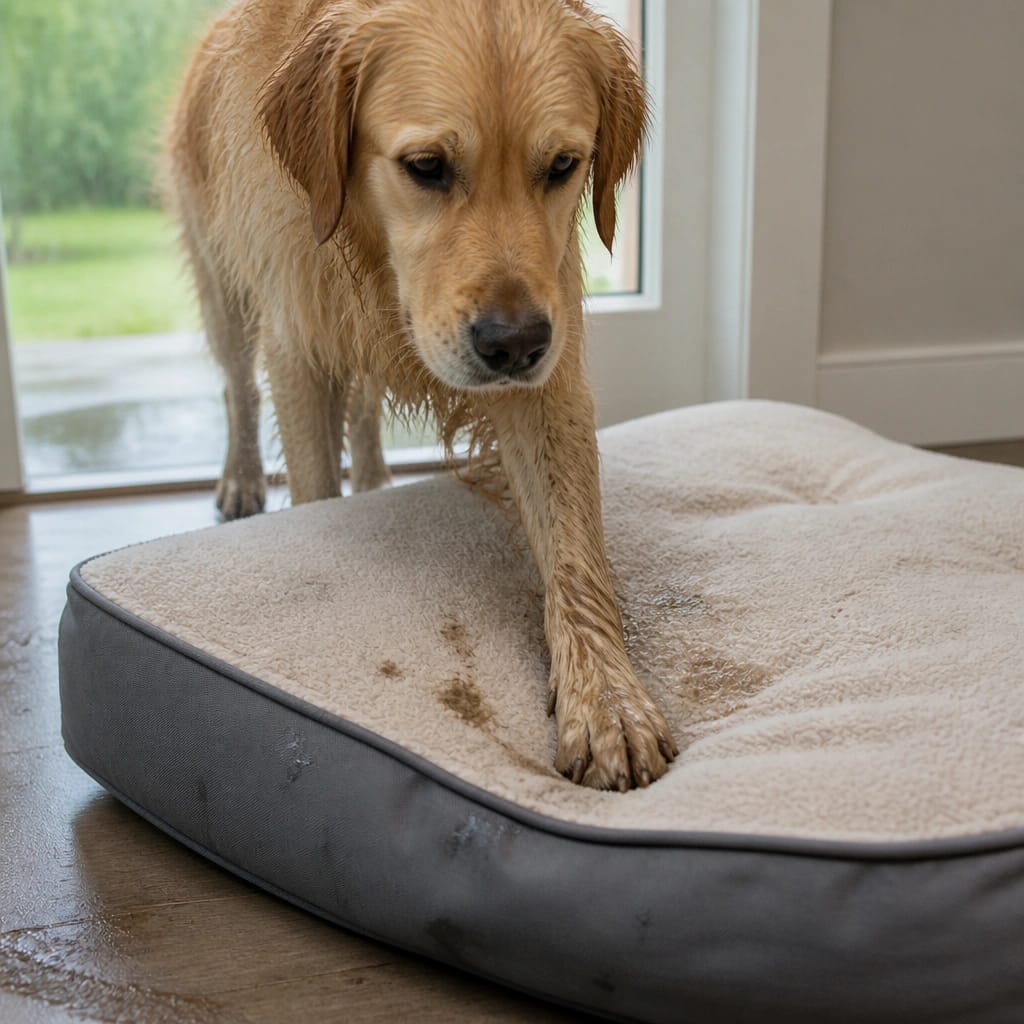
The key insight is that most owners only notice the visible moisture. The hidden problem is the moisture that soaks into the foam core and never fully dries out overnight. If you’re dealing with persistent urine odors, our guide on getting urine smell out of memory foam covers the next steps.
How Your Bed’s Material Changes the Mold Risk
Not all dog beds are equally vulnerable. The material of the bed determines how much moisture it can hold and how quickly it dries.
Memory foam. Dense and slow to dry. Once moisture penetrates the foam core, it can take days to fully evaporate. This makes memory foam beds the highest risk for hidden mold growth.
Polyfill or shredded foam. Lighter and more breathable. These materials dry faster than solid foam, but they still trap moisture in the center if the bed is thick.
Elevated cots. The best option for airflow. Mesh or fabric stretched over a frame allows air to circulate underneath and through the sleeping surface. Water runs right through instead of pooling.
Waterproof covers. These are a double-edged sword. A good waterproof liner protects the foam from spills and accidents. But a non-breathable liner can trap moisture against the foam if the cover gets wet on top.
Look for covers labeled as both waterproof and breathable, or use a separate waterproof dog bed liner under a breathable top cover.
Outdoor fabric beds. Made with quick-drying, mold-resistant materials. These are designed for damp environments but may not be as comfortable for indoor use.
The bottom line is that material choice affects both comfort and risk. A thick memory foam bed in a humid room needs more aggressive prevention than a breathable cot in a dry, well-ventilated area.
The Decision Tree: What to Do Based on Your Situation
There is no single solution that works for every dog and every home. The right approach depends on your specific situation. Here is a simple decision tree to follow.
If your dog drools heavily or has incontinence:
- Use a waterproof, breathable liner between the foam and the cover.
- Wash the cover and wipe down the liner every week.
- If the foam core smells musty, replace it immediately. Do not try to clean mold from deep inside foam.
If your dog comes in from wet weather regularly:
- Wipe paws and dry the coat before letting the dog on the bed.
- Use a bed with a removable, machine-washable cover.
- Consider an elevated cot bed for the mudroom or entryway.
If the bed sits in a humid basement or poorly ventilated room:
- Run a dehumidifier to keep humidity below 50 percent.
- Place the bed on a raised platform or slatted frame to allow airflow underneath.
- Avoid placing the bed directly against an exterior wall where condensation can form.
If you have a puppy in potty training:
- Use a crate pad with a fully waterproof liner and a washable cover.
- Check the pad every morning and night for accidents.
- Wash and dry the pad completely before the next use. Damp foam left in a crate will mold within 24 hours.
If the bed is already showing signs of mold:
- Unzip the cover and inspect the foam core. Surface mold on the cover can often be washed out with hot water and pet-safe detergent. Mold inside the foam means the bed needs to be replaced. The crate pad vs crate mat comparison can help you choose a more mold-resistant option for replacement.
The most important principle is simple: dry beats wet every time. If you can keep the bed dry, mold cannot grow.
How to Wash and Dry a Dog Bed Without Trapping Moisture
Washing is only half the battle. Drying is where most people accidentally create a mold problem.
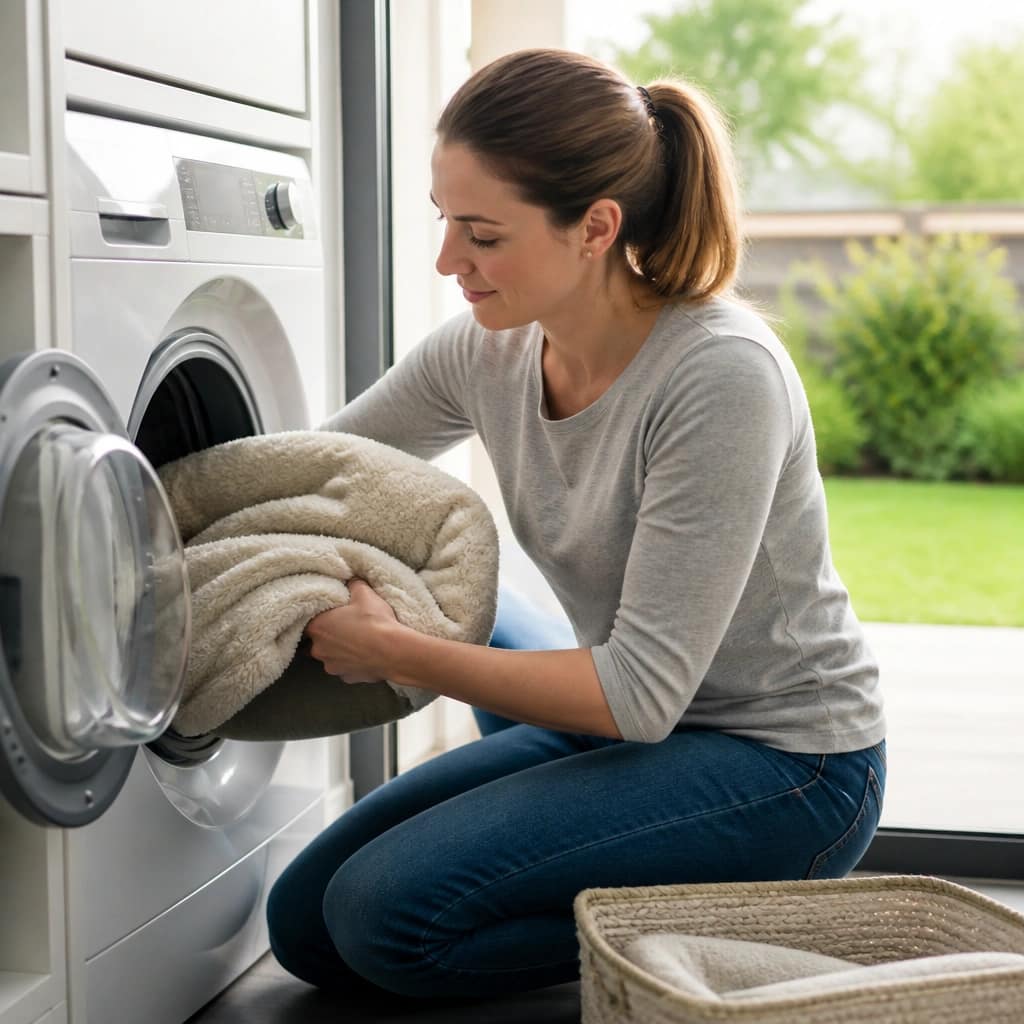
Machine wash the cover. Use hot water and a pet-safe detergent. Avoid fabric softener. It coats the fibers and reduces breathability, trapping moisture against the foam.
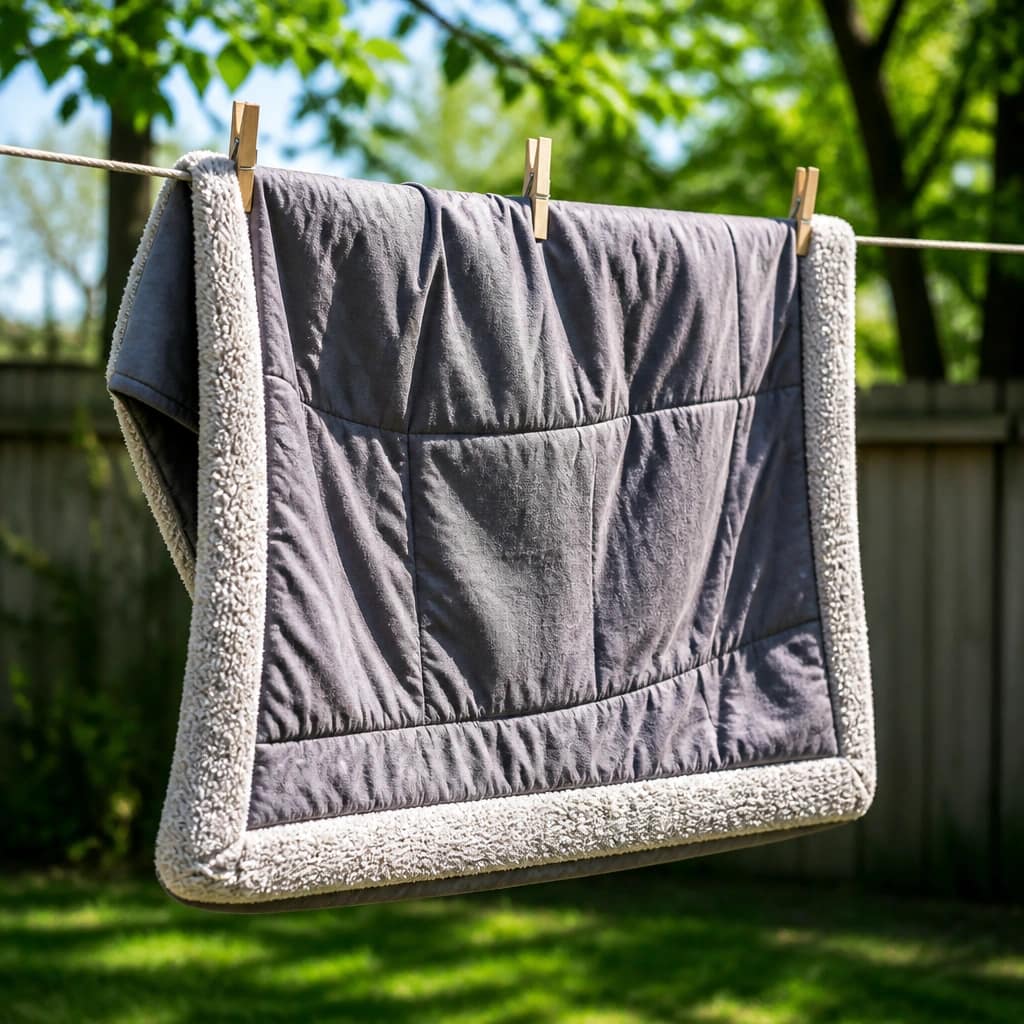
Dry the cover completely. This means bone dry, not just surface dry. Run it through the dryer on low heat for at least two cycles if needed. Hang drying works too, but only in direct sunlight with good airflow.
The sun’s UV rays also help kill mold spores naturally.
Never put foam in the washing machine. The agitation destroys the structure. Instead, spot clean the foam with a mild detergent and water, then squeeze out excess moisture. Let it air dry for 24 to 48 hours before putting the cover back on.
Check for dampness by feel. Press your hand into the center of the foam. If it feels cool or damp, it needs more drying time. Putting a damp cover over damp foam guarantees mold growth within days.
How to Prevent Mold From Coming Back Long-Term
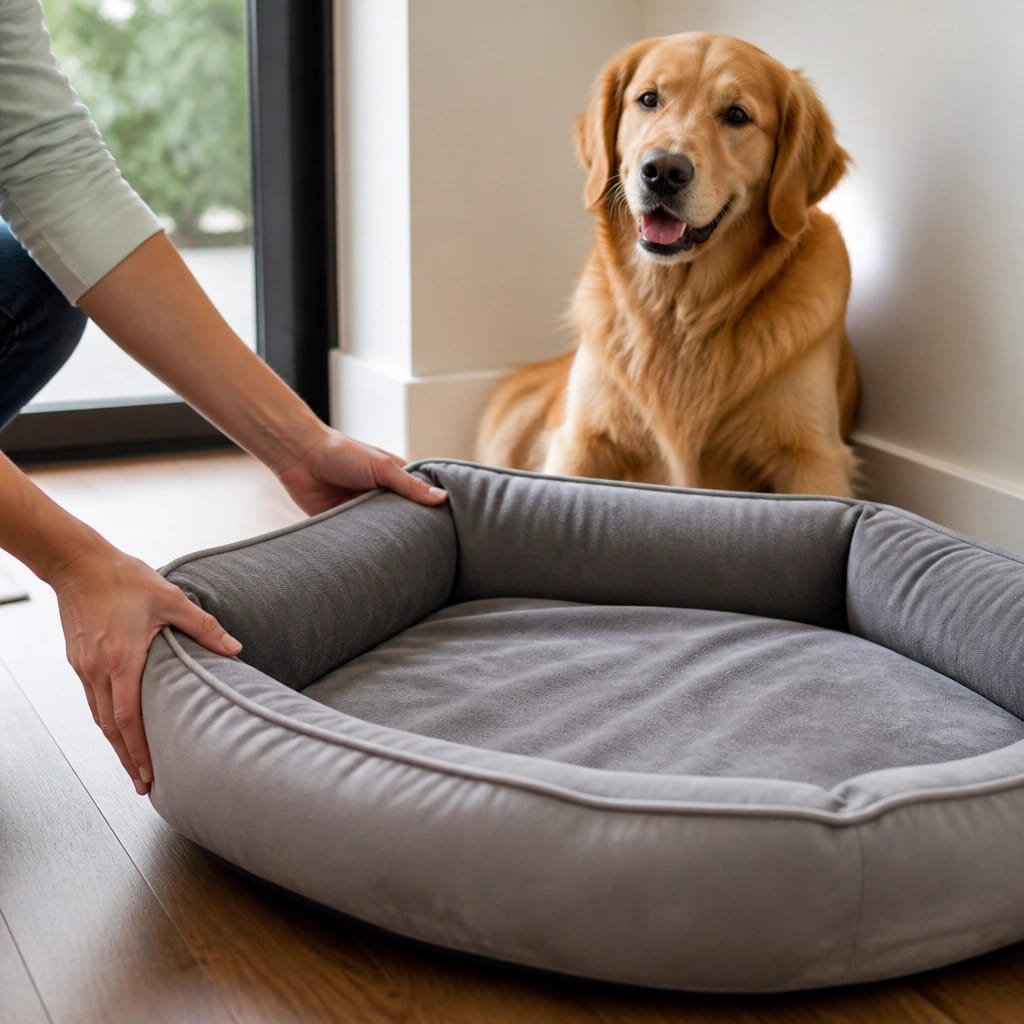
Prevention comes down to three things: airflow, moisture barriers, and routine.
Airflow. Place the bed where air can circulate around it. Avoid corners. Avoid placing it directly against a wall.
If the bed sits on the floor, lift it onto a slatted bed frame or a wire crate tray. This lets air move underneath and prevents moisture from getting trapped between the bed and the floor.
Moisture barriers. A waterproof liner between the foam and the cover is your best defense. It catches drool, urine, and spills before they reach the foam. Replace the liner every six to twelve months as the waterproof coating wears off.
Room humidity. Keep indoor humidity between 30 and 50 percent. A dehumidifier in the bedroom or basement makes a huge difference. If you don’t have one, open windows regularly and run a fan to keep air moving.
Rotate the bed. Flip and fluff the bed once a week. This redistributes the fill and allows trapped moisture to evaporate. It also helps you spot early signs of mold before they become a major problem.
Common Mistakes That Make Dog Beds Moldy Faster
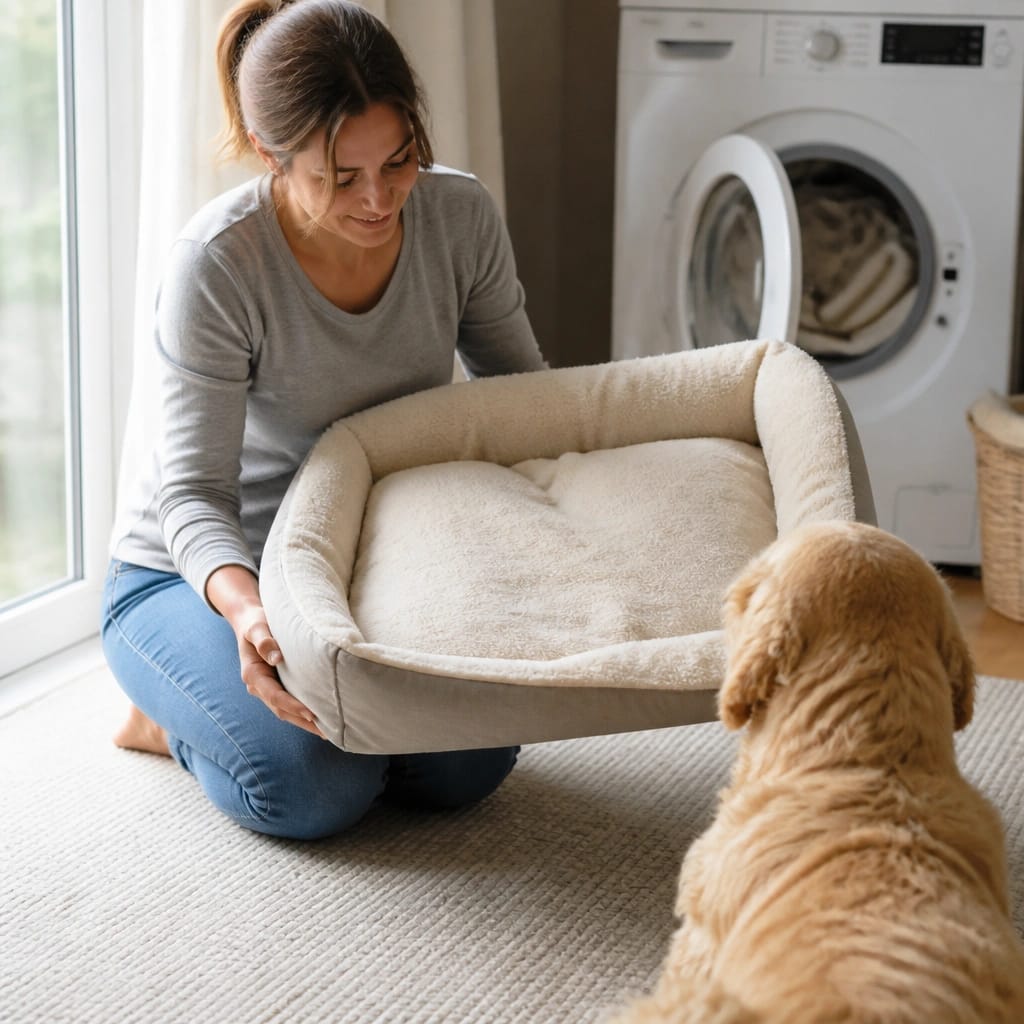
Putting the cover back on too soon. This is the most common mistake. The cover feels dry to the touch but still has moisture trapped in the seams and zipper area. Put it back on the foam and you seal that moisture in.
Wait an extra hour after the cover feels dry.
Using bleach. Bleach kills mold on hard surfaces but it damages fabric fibers. It also leaves a residue that can irritate your dog’s skin. Stick to hot water and pet-safe detergent or white vinegar for spot cleaning.
Ignoring the space under the bed. Dirt, dust, and moisture collect under the bed. Sweep or vacuum the area weekly. A damp floor underneath a bed creates a microclimate that keeps the bed damp.
Buying a bed without a removable cover. If you cannot remove and wash the cover, you cannot clean the bed properly. That bed will develop mold eventually. Choose a bed with a fully removable, machine-washable cover.
When to Toss the Bed and Start Fresh
Some beds cannot be saved. If the foam core has visible mold, black spots, or a musty smell that won’t wash out, replace it.
Mold inside the foam cannot be removed. The spores penetrate deep into the material. Cleaning the surface does not solve the problem. The mold will return.
Signs it is time to replace:
- The foam crumbles or feels spongy when pressed.
- The bed has a persistent musty odor even after washing.
- Your dog has developed unexplained skin irritation or coughing.
- The bed is more than two to three years old with heavy use.
When you buy a replacement, look for a bed with a removable cover, a waterproof liner, and a breathable foam core. Our dog bed size chart by weight can help you pick the right size for your dog.
A Simple Weekly Care Routine That Actually Works
Stick to this routine and you will never have a mold problem again.
Daily:
- Shake out the bed outside to remove dirt and hair.
- Wipe down the waterproof liner if your dog drools heavily.
Weekly:
- Vacuum the bed cover and the area underneath.
- Flip and fluff the bed.
- Check the foam core for dampness or odor.
Monthly:
- Wash the cover in hot water with pet-safe detergent.
- Dry the cover completely before putting it back on.
- Wipe the waterproof liner with a mild vinegar solution (one part vinegar to three parts water).
Seasonally:
- Replace the waterproof liner.
- Inspect the foam core thoroughly for any signs of mold.
If you are unsure where to place the bed for best airflow, our guide on bed placement around the house has practical recommendations.
Frequently Asked Questions
Can I use bleach to kill mold on a dog bed?
No. Bleach damages fabric fibers and leaves a residue that can irritate your dog’s skin. It also does not penetrate deep into foam where mold spores hide.
Use hot water and pet-safe detergent for covers. Use white vinegar diluted with water for spot cleaning.
How often should I wash my dog’s bed to prevent mold?
Wash the cover every two to four weeks for normal use. Wash weekly if your dog drools heavily, has accidents, or spends time outdoors in wet weather. The cover must be completely dry before you put it back on the foam.
Does sunlight really kill mold on dog beds?
Yes. Direct sunlight is a natural mold killer. The UV rays break down mold spores and help dry out moisture.
Hang the cover and foam outside for two to four hours on a sunny day. This works best in combination with regular washing.
Can mold in a dog bed make my dog sick?
Yes. Mold spores can cause respiratory issues, coughing, sneezing, and skin irritation. Dogs with allergies or weakened immune systems are more vulnerable.
If your dog develops unexplained symptoms, check the bed for mold immediately.
What type of dog bed is least likely to grow mold?
Elevated cot beds are the most mold-resistant option. Air circulates freely underneath and through the mesh surface. Water drains right through instead of pooling.
For plush beds, choose one with a removable cover and a waterproof, breathable liner.
Is it safe to put a dog bed in the dryer?
Only the cover. Never put foam or polyfill in the dryer. The heat and agitation destroy the structure.
Dry the cover on low heat and check that it is completely dry before putting it back on the bed.


