

Should a Dog Bed Be Raised Off the Floor?
A raised bed works well for many dogs but not all. It keeps your dog cool in summer and off cold floors in winter. Dogs with joint pain often benefit from the easier entry and exit.
But a floor bed can be better for anxious dogs who need to feel enclosed. The right choice depends on your dog’s specific needs.
Your dog’s bed is a big decision. Should a dog bed be raised off the floor? It depends on your dog’s age, health, your home environment, and the climate you live in.
Manufacturer specifications for elevated beds typically list weight capacities between 50 and 150 pounds, with frame heights ranging from 2 to 8 inches off the ground. Getting the right height for your dog starts with understanding how these factors work together.
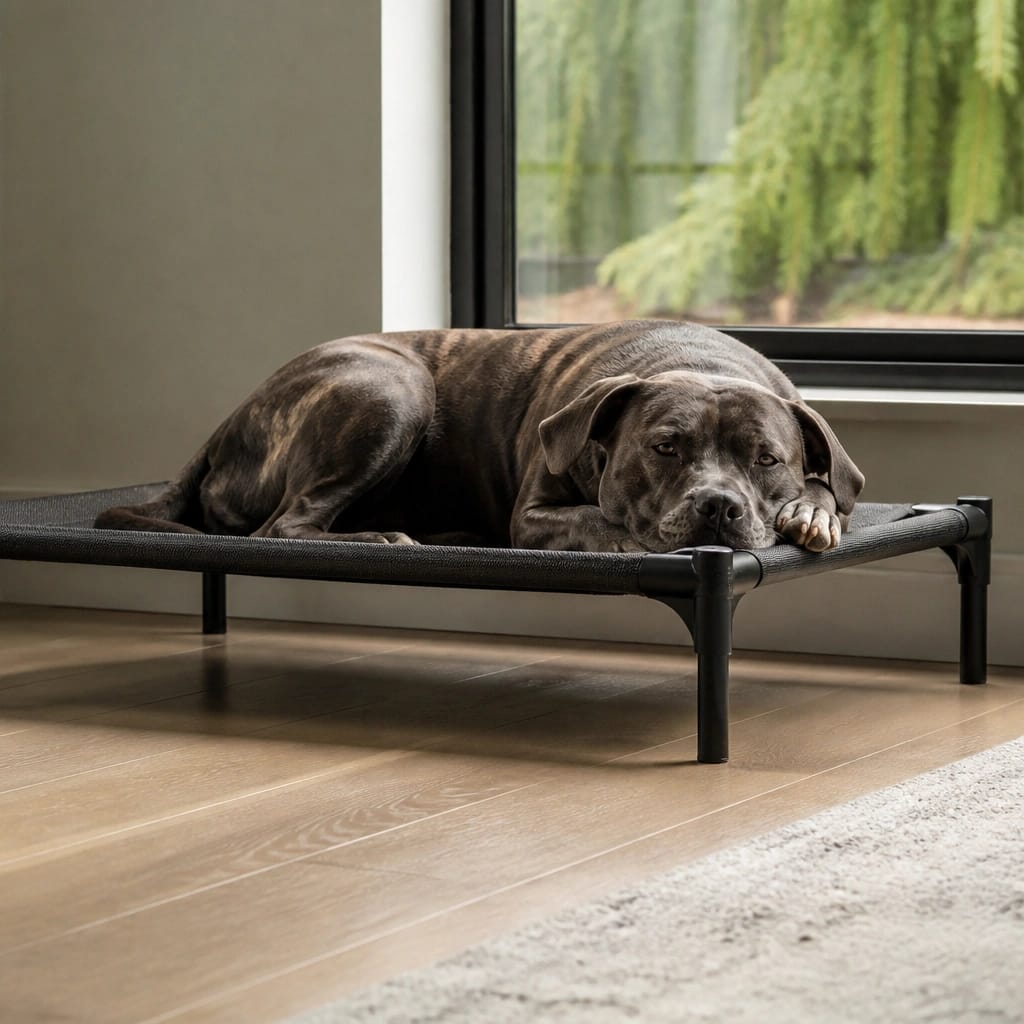
What Actually Changes When You Raise a Dog Bed?
Airflow is the biggest difference. A raised bed lets air circulate underneath the sleeping surface, which pulls heat away from your dog’s body. Floor beds trap heat and moisture against the ground.
Height also changes how your dog gets in and out. A bed that’s 4 to 6 inches off the floor requires less effort to stand up from than a flat mattress on the ground. That makes a real difference for older dogs or breeds prone to hip issues.
The material changes too. Most raised beds use a stretched fabric or mesh surface rather than thick foam padding. That means less cushioning but much better breathability and drainage.
If your dog tends to prefer sleeping on the floor over their own bed, the surface feel might be part of the reason.
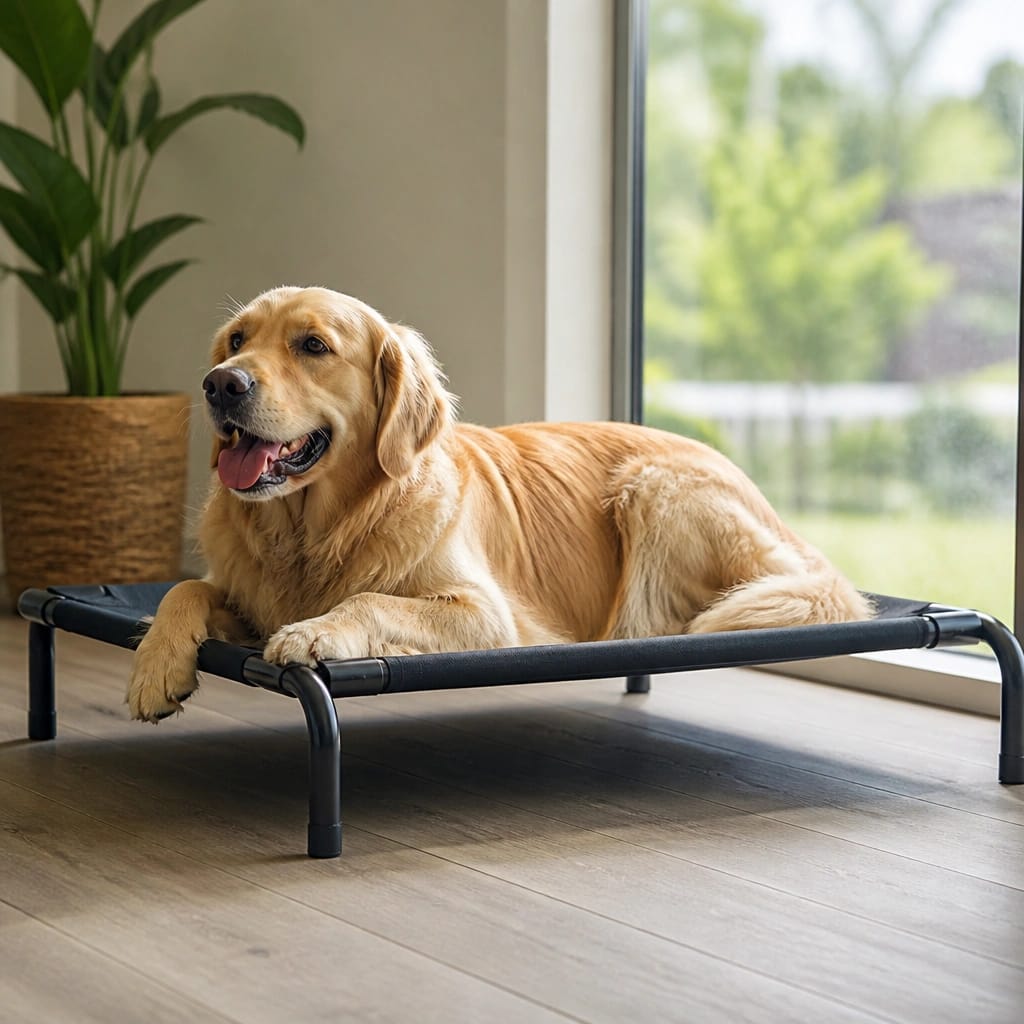
The Key Decision Factors
Your situation determines whether a raised bed makes sense. Here are the four factors that matter most.
Your Dog’s Age and Mobility
Puppies and young dogs usually adapt to either bed type easily. Senior dogs and dogs with arthritis or hip dysplasia often do better with a raised bed. The lower effort to stand up and lie down reduces joint strain.
If your dog has mobility issues, look for a bed height that lets them step onto the surface without jumping. A bed that’s too high can be worse than a floor bed for a dog with weak hind legs.
Your Flooring and Home Environment
Hard floors like tile, wood, or concrete get cold and stay cold. A raised bed lifts your dog off that surface and allows air to move underneath, which helps with both temperature and moisture. Carpeted rooms don’t have this problem as much.
The location of the bed matters too. Where you place your dog’s bed in the house affects how comfortable they feel using it. Raised beds work well in high-traffic areas because they keep the dog visible and off the cold floor.
Your Climate
Hot climates are a strong argument for a raised bed. The airflow underneath keeps the sleeping surface cooler than a foam bed that holds body heat. Dogs in humid areas also benefit from the increased ventilation, which reduces the risk of mold and mildew under the bed.
Cold climates are trickier. A raised bed in a drafty room can leave your dog exposed to cold air from underneath. In that case, a floor bed with thick insulation or a heated dog bed might be a better choice.
Your Dog’s Size and Weight
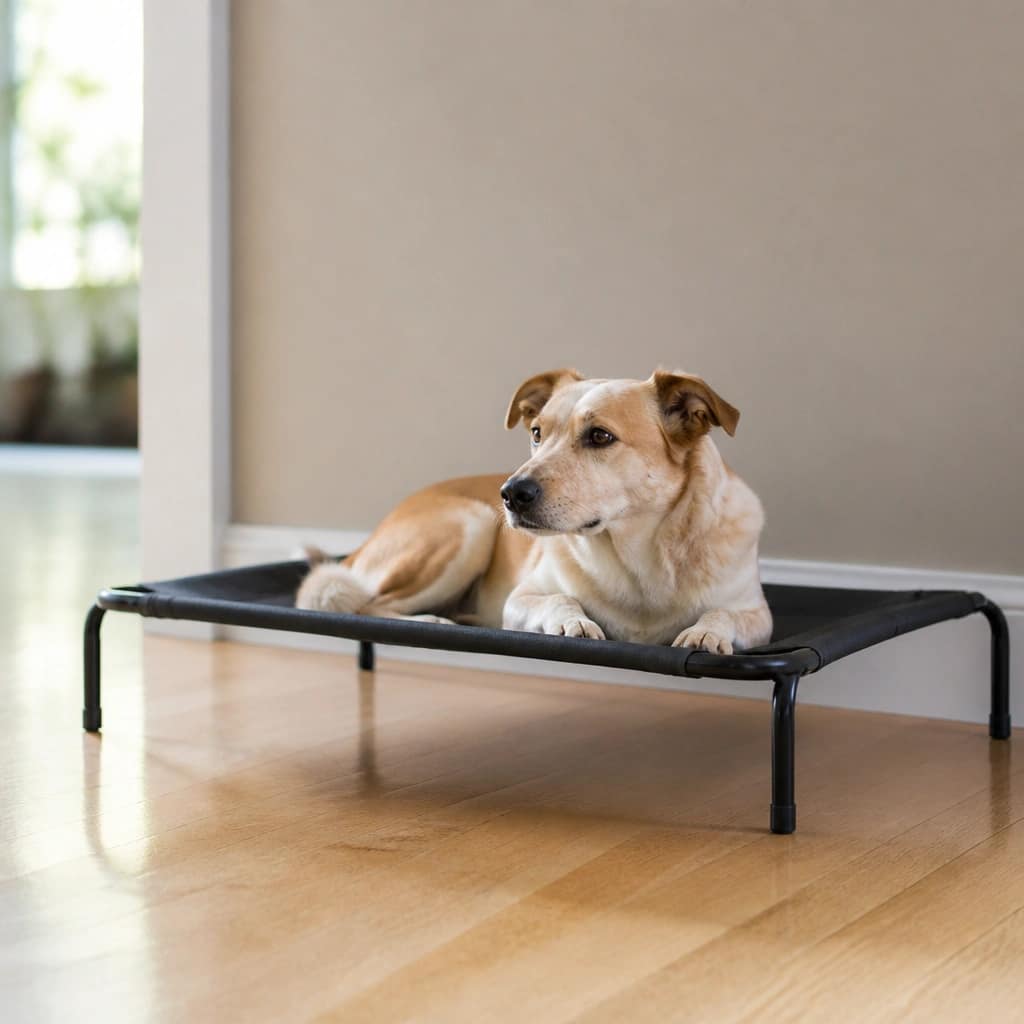
Larger dogs put more stress on a raised bed frame. You need a bed with a weight capacity that exceeds your dog’s actual weight by at least 20 to 30 pounds for safety. Small dogs under 25 pounds can use almost any raised bed without issue.
The right size also depends on how your dog sleeps. If your dog stretches out fully, measure from nose to tail base and add 4 to 6 inches. Using a proper size chart helps you avoid buying a bed that’s too small.
Raised Bed vs. Floor Bed: The Real Trade-Offs

Neither type is universally better. Each has clear strengths and weaknesses depending on your situation.
| Factor | Raised Bed | Floor Bed |
|---|---|---|
| Cooling | Excellent airflow underneath | Limited airflow, retains heat |
| Joint support | Easier entry and exit | More cushioning options |
| Security | Open, exposed feel | Enclosed, den-like options |
| Portability | Often folds flat | Bulky, hard to move |
| Durability | Frame lasts years | Foam degrades over time |
| Cleaning | Wipe or hose down | Machine wash or spot clean |
Where a Raised Bed Shines
Outdoor use is the clearest win. A raised bed keeps your dog off damp grass, hot concrete, and muddy ground. It also makes it harder for pests like fleas and ticks to reach your dog while they sleep.
Kennels, patios, garages, and camping trips are all situations where a raised bed outperforms a floor bed. The same applies if you switch between indoor and outdoor use regularly.
When a Floor Bed Makes More Sense
Anxious dogs often prefer the enclosed, cave-like feel of a bolster or donut bed. A raised bed’s open sides can make them feel exposed and vulnerable. Dogs that like to burrow or nest will also be happier with a cushioned floor bed.
If your dog sleeps in a crate, a raised bed can be a good option as long as it fits properly. But many crate-trained dogs prefer a flat pad or mat that feels more like a stable floor surface.
How to Choose the Right Height and Fit
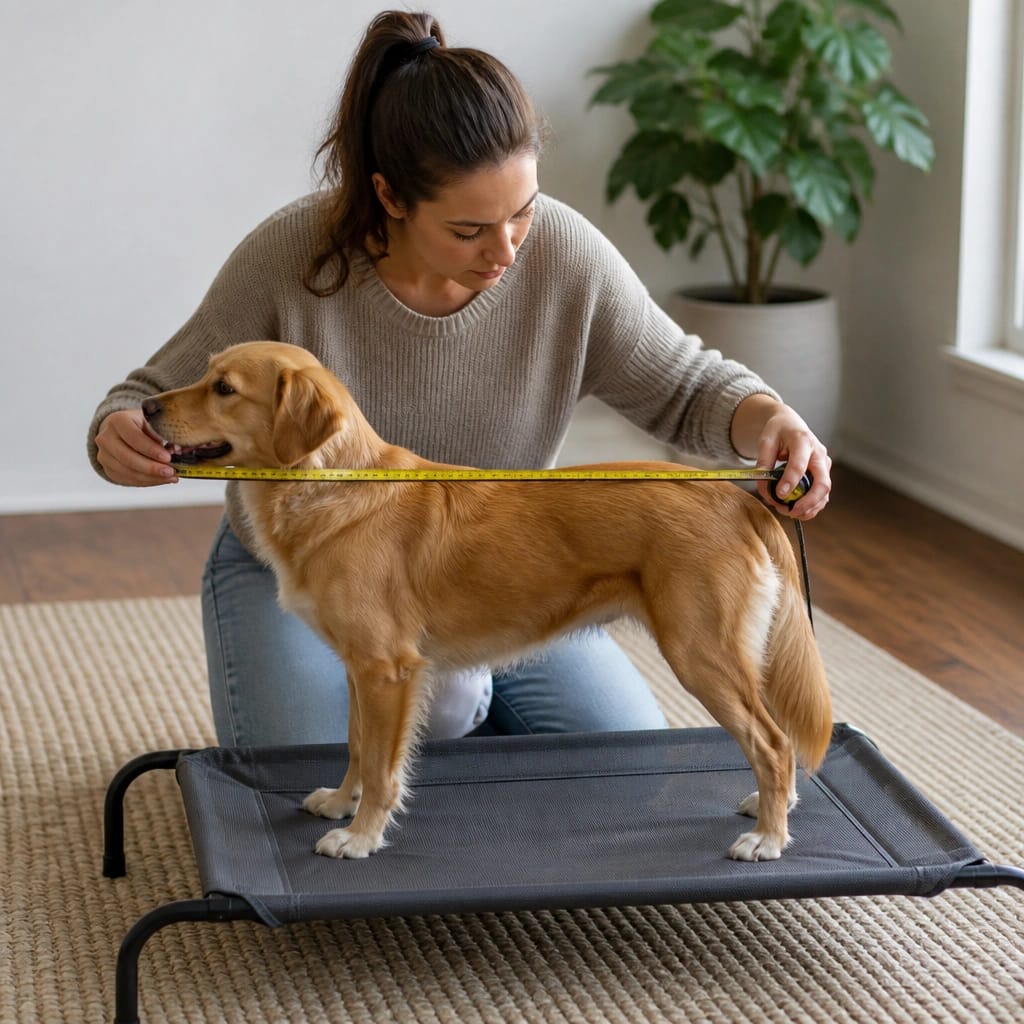
Measuring Your Dog Correctly
Measure your dog from the tip of the nose to the base of the tail while they stand in a natural position. Add 4 to 6 inches to that measurement for the bed length. For width, measure from shoulder to shoulder and add 6 to 8 inches.
For height, measure from the floor to the top of your dog’s shoulder. A good rule of thumb is that the bed height should be roughly half that measurement. A 6-inch-tall bed works well for most medium and large breeds.
Matching Bed Height to Mobility
Dogs with healthy joints can handle a bed height of 4 to 8 inches. Senior dogs or dogs recovering from surgery should have a bed between 2 and 4 inches high. The goal is to reduce the distance they need to step up or down.
If your dog is a breed with specific needs, like a French Bulldog with breathing issues, a lower bed height reduces the strain on their neck and chest. You can find breed-specific bed recommendations that take these factors into account.
Common Mistakes Owners Make
The most common mistake is buying a raised bed that’s too small. Dogs need room to stretch out, and a bed that’s too short forces them to curl up on the edge or hang off the side.
Another mistake is ignoring the weight limit. A frame rated for 80 pounds will fail eventually under a 75-pound dog that jumps on and off daily. Always leave a safety margin of at least 20 percent.
Some owners also assume a raised bed is always better for joint health. That’s not true for every dog. If your dog has severe arthritis, a thick orthopedic foam bed on the floor might provide better pressure relief than a stretched fabric surface.
Finally, don’t forget about the sound. Some raised beds have metal frames that squeak or rattle when the dog moves. Test the bed for noise before committing to it, especially if your dog is a light sleeper or easily startled.


