

Can a Dog Bed Be Placed in Direct Sunlight?
Most dog beds cannot handle direct sunlight for long. Heat breaks down foam and fabric over time. A few hours of morning sun is usually safe.
Afternoon sun is too harsh for most beds. Always feel the bed surface before your dog uses it.
That sunny spot by the window looks like the perfect napping place for your dog. But can a dog bed be placed in direct sunlight without causing problems? The answer isn’t a simple yes or no.
It depends on the bed material, the time of day, and your dog’s breed.
As of 2026, most memory foam dog beds are rated for surface temperatures up to 85°F. Above that, the foam can start to degrade. Understanding how sunlight affects your dog’s bed will help you make the right choice.

What Happens When a Dog Bed Sits in Direct Sunlight
Direct sunlight does two things at once. It heats up the bed surface, and it exposes the materials to UV radiation. Both can cause problems over time.
For memory foam beds, heat is the biggest enemy. Most foam starts to soften and lose its shape above 85°F. Repeated exposure can make the foam sag permanently.
You might notice the bed no longer springs back when you press on it.
For fabric covers, UV rays are the main concern. Colors fade faster in direct sun. The fabric itself can become brittle after weeks of constant exposure.
This is one reason why choosing a good location for your dog’s bed matters so much.
For your dog, a hot bed surface is uncomfortable. Dogs don’t sweat like people do. They rely on panting and finding cool surfaces to regulate their temperature.
A bed that feels warm to your hand can be too hot for your dog’s belly.

Why This Question Matters More Than You Think
This isn’t just about keeping your dog’s bed looking nice. It’s about your dog’s comfort and safety.
Dogs can overheat on a hot bed surface. Even if the room feels cool, the bed itself can trap heat. A dog lying on a hot surface can’t cool down effectively.
This is especially dangerous for puppies, senior dogs, and brachycephalic breeds like French Bulldogs and Pugs.
The bed itself also costs money. Replacing a damaged foam bed every few months adds up quickly. Understanding the right placement can extend your bed’s life by years.
Your dog’s sleeping habits can also tell you a lot. If your dog suddenly starts sleeping on the floor instead of their bed, the bed might be too hot. The American Kennel Club notes that dogs often seek cool surfaces when they’re overheating.
How Sunlight Affects Different Dog Bed Materials

Not all dog beds react the same way to sunlight. The material makes a big difference.
Memory Foam and Orthopedic Foam
Memory foam is heat-sensitive by design. It softens with body heat to contour around your dog. But direct sunlight pushes it past its comfort zone.
The foam can break down, lose support, and even develop permanent indentations.
Polyester Fill and Cotton Covers
Polyester fill holds heat longer than other materials. It can become uncomfortably warm for your dog. Cotton covers fade faster in direct sun but breathe better than synthetic fabrics.
Mesh and Cooling Gel Layers
Mesh beds are more breathable and handle sunlight better. They don’t trap as much heat. Cooling gel layers, however, can stop working properly if they get too hot.
The gel needs a lower temperature to activate.
When Direct Sunlight Is Actually Safe for a Dog Bed
There are situations where a little sun is fine. Here’s when it works.
- Morning sun only. Sunlight before 10 AM is much gentler. The UV index is lower, and the temperature is cooler. A few hours of morning sun won’t damage most beds.
- Light-colored beds. Light fabrics reflect heat instead of absorbing it. A white or light gray bed stays cooler than a black or dark blue one.
- Breathable materials. Mesh beds and elevated cots allow air to flow underneath. They don’t trap heat against your dog’s body.
- Cool climates. If you live in a northern region with mild summers, direct sunlight is less of a concern. The ambient temperature stays lower.
- Indirect sunlight. Light that comes through a window but doesn’t hit the bed directly is perfectly safe. It’s the direct beam that causes problems.
When You Should Never Put a Dog Bed in Direct Sunlight
Some situations are clear no-gos. Avoid these entirely.
- Afternoon sun in summer. The sun from noon to 4 PM is the most intense. Even a short time in direct afternoon sun can overheat a bed and your dog.
- Dark-colored beds in hot climates. Dark fabrics absorb more heat. A black bed in direct sun can reach surface temperatures well above 100°F.
- Memory foam without a breathable cover. Some covers trap heat more than others. If the cover doesn’t breathe, the foam underneath gets even hotter.
- Beds for dogs with flat faces. Brachycephalic breeds have a harder time cooling down. They should never sleep on a hot surface.
- Heated beds in direct sun. A heated bed that’s also sitting in direct sunlight is a fire risk and a heat hazard. Never combine these two.
How to Tell If Your Dog’s Bed Is Getting Too Hot
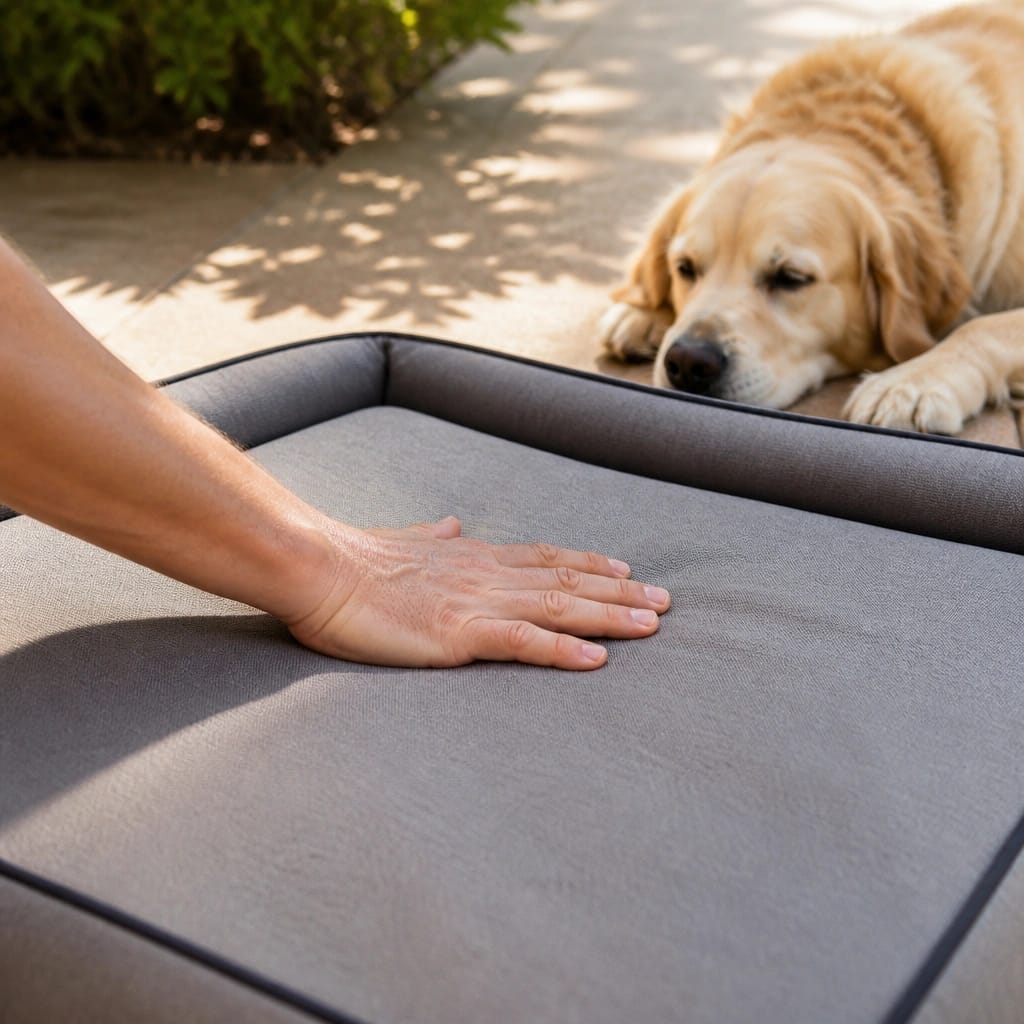
The hand test is the simplest way to check. Press your palm flat on the bed surface for five seconds. If it feels uncomfortably warm to you, it’s too hot for your dog.
Watch your dog’s behavior too. A dog that avoids their bed, pants heavily, or stretches out on cool tile instead is telling you something. The American Veterinary Medical Association warns that dogs can overheat quickly on hot surfaces.
Use a simple thermometer if you want precise data. Surface temperatures above 85°F are a red flag for memory foam. Above 95°F is unsafe for any dog bed.
The Real Risks of a Sun-Heated Dog Bed
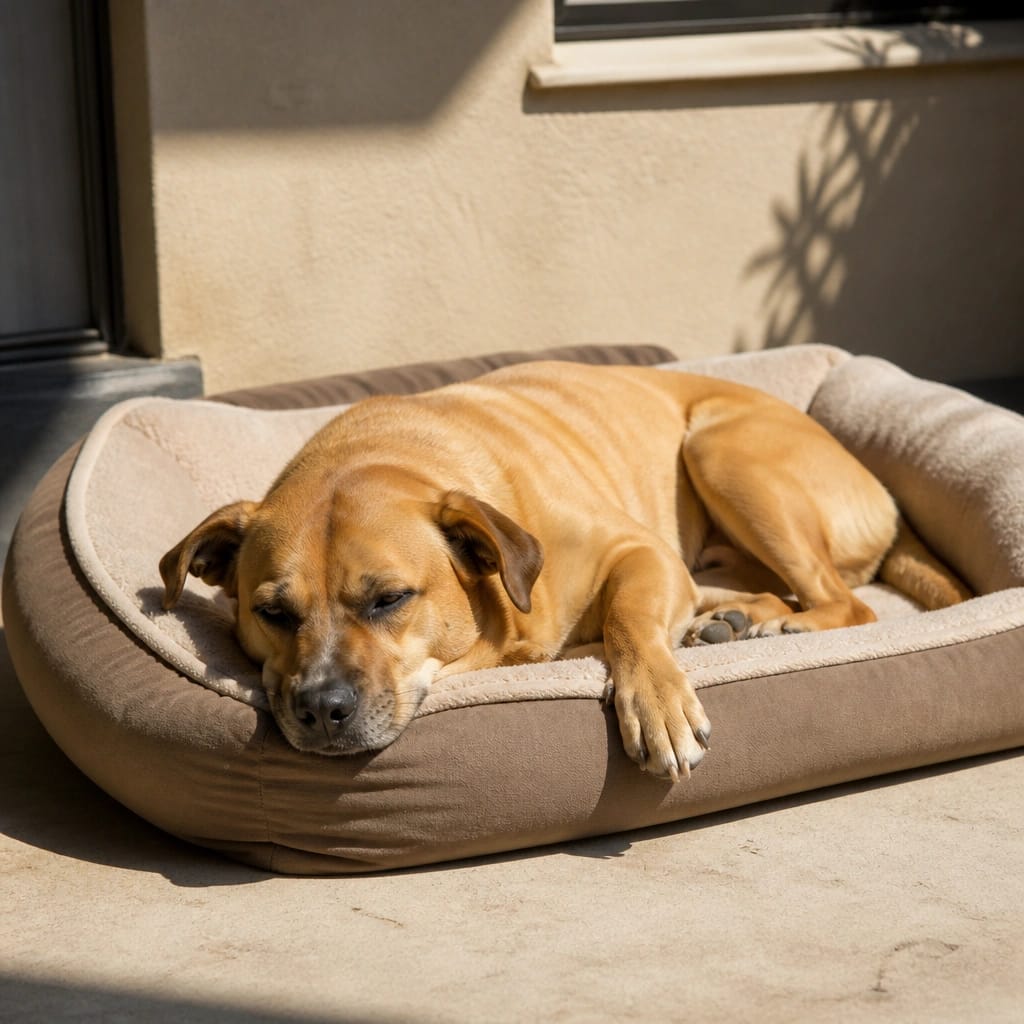
Heatstroke is the most serious risk. Dogs don’t cool themselves as efficiently as humans. A hot bed surface can push their body temperature dangerously high.
Brachycephalic breeds are especially vulnerable.
Foam degradation is the second major concern. Memory foam exposed to repeated heat cycles loses its support. The bed develops permanent dips and no longer cushions your dog’s joints properly.
This is especially important for senior dogs who need consistent support.
Fabric fading and material breakdown also happen over time. UV rays weaken the fibers in most bed covers. Covers that spend hours in direct sun may need replacement every few months instead of every few years.
Step-by-Step: How to Decide Where to Place Your Dog’s Bed
Follow these steps to find the right spot.
Step 1: Watch the sunlight pattern. Track where the sun hits during the day. Morning sun is safe. Afternoon sun is not.
Step 2: Check the bed material. Memory foam needs shade. Mesh and elevated beds handle more sun.
Step 3: Feel the temperature. Do the hand test before letting your dog use the bed. If it’s warm, move it.
Step 4: Consider your dog’s breed. Flat-faced breeds need cooler spots. Senior dogs with joint problems also benefit from a consistently cool bed.
Step 5: Monitor and adjust. Your dog’s sleeping habits will tell you if you got it right. If they choose the floor over their bed, try a different location.
Mistakes Dog Owners Make With Sun-Facing Bed Placement
Thinking a window filters the heat is a common mistake. Windows block UV rays but not heat. The greenhouse effect can actually make the bed hotter than it would be outside.
Assuming all beds are the same is another error. A dark-colored memory foam bed and a light mesh cot react very differently to sunlight. Treat them as completely different products.
Forgetting to move the bed when the seasons change also causes problems. A spot that’s safe in winter can become dangerous in summer. Recheck your dog’s bed placement every few months.
Ignoring your dog’s signals is the biggest mistake. If your dog avoids their bed, don’t assume they’re just being picky. They might be telling you the bed is too hot.
Special Considerations for Different Dogs and Climates
Brachycephalic Breeds and Heat Sensitivity
Flat-faced breeds like French Bulldogs, Pugs, and Boston Terriers overheat faster than other dogs. Their short airways make panting less effective. The American Kennel Club recommends keeping these breeds in consistently cool environments.
Their bed should never be in direct sunlight at any time of day.
Senior Dogs and Joint Pain
Older dogs often need the support of memory foam beds. But they also need those beds to stay cool. A hot memory foam bed can worsen joint stiffness.
Place senior beds in naturally cool areas away from windows.
Hot Climates vs. Cooler Regions
If you live in the southern US, direct sunlight is almost never safe for a dog bed. In northern regions with mild summers, a few hours of morning sun is usually fine. Adjust your placement based on your local climate, not a generic rule.
Frequently Asked Questions
Can a dog bed sit in a sunroom?
A sunroom is safe only if the bed stays out of direct afternoon sunlight. Morning sun through glass is fine. Afternoon sun creates a greenhouse effect that can overheat the bed.
How long does it take for sunlight to damage a dog bed?
Visible damage usually takes weeks of repeated exposure. Foam degradation can begin after a few hot afternoons in direct summer sun. Fabric fading shows up over several weeks.
Should I put my dog’s bed near a window?
Yes, if the window doesn’t get direct afternoon sun. North-facing windows are safest. South and west-facing windows can heat the bed too much.
What’s the best bed for a sunny spot?
Elevated mesh cots handle sunlight better than memory foam beds. Light colors and breathable fabrics are also good choices. Avoid dark colors and thick foam.
Can I use a cooling mat under a bed in sunlight?
A cooling mat can help, but it won’t fix a dangerously hot spot. The mat will also warm up eventually if the sunlight is too intense.
Quick Decision Guide: Sunlight and Your Dog’s Bed
- Morning sun only. Safe for most beds. Move the bed before noon.
- Afternoon sun. Not safe for any bed. Find a shaded spot.
- Memory foam bed. Keep out of direct sun entirely.
- Mesh or elevated bed. Can handle brief morning sun.
- Dark-colored bed. Avoid sun exposure. Light colors reflect heat.
- Flat-faced or senior dog. Never place their bed in direct sun.
- Hot climate. No direct sun at any time of day.
- Cool climate. Morning sun is fine. Afternoon sun still risky.


