

How Many Puppy Beds Do You Actually Need?
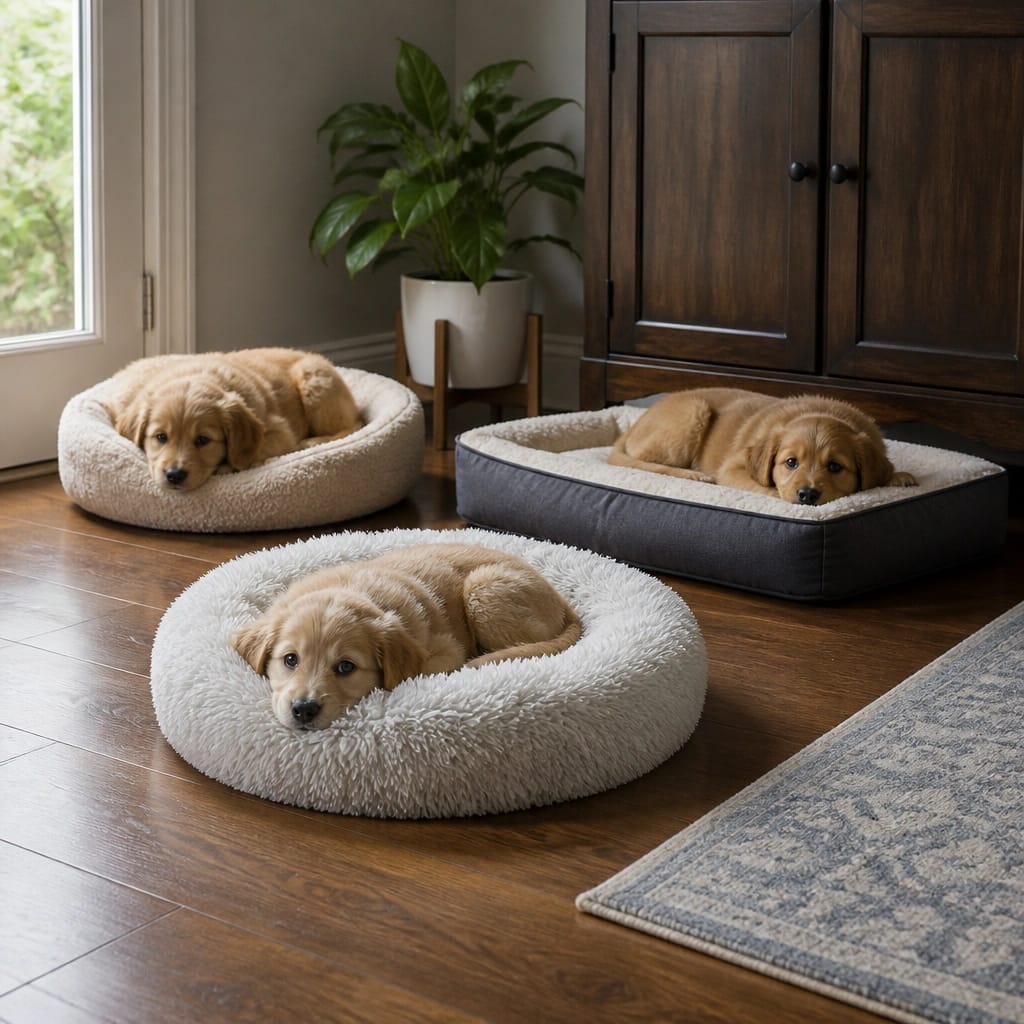
The honest answer is that most puppies do fine with two beds: one for their crate or bedroom and one for the main living area. If you live in a multi-story home, you might want a third to avoid carrying a bed up and down the stairs every day. The real key isn’t just the number, it’s having the right type of bed for each spot.
A crate needs a snug, washable mat, while the living room might call for a cozier bolster bed.
Puppies sleep 18 to 20 hours a day, according to the American Kennel Club. That means your puppy will spend more time on their bed than just about any other surface in your home. So the question “How Many Puppy Beds Do You Actually Need?” isn’t about counting, it’s about matching the bed to the spot.

Why “How Many?” Is the Wrong Question to Start With
Here’s the thing most people miss. The number of beds you need depends entirely on two things: your home layout and your puppy’s sleeping arrangement. Asking “how many?” without knowing those variables is like asking how many pairs of shoes you need without knowing where you’re walking.
A single-story home with a crate-trained puppy needs a different setup than a two-story house with a free-roaming puppy who follows you from room to room. The first person might get away with one bed. The second person might need three.
So before you can settle on a number, you need to understand your specific situation. Let’s break down the two factors that actually matter.
The Two Factors That Actually Determine Your Bed Count
Your Home Layout: Single Story vs. Multi-Story
In a single-story home, your puppy can easily access any bed in the house. You can keep one in the crate area and one in the living room, and your puppy will naturally rotate between them as they follow you around.
In a multi-story home, things change. Carrying a bed up and down stairs every day gets old fast. That’s why many owners end up with a dedicated bed on each floor.
It’s not about spoiling the puppy, it’s about convenience and consistency.
Your Puppy’s Sleeping Setup: Crate vs. Free Roam
Crate-trained puppies treat their crate as a den. A fitted crate mat or crate-specific bed is essential here. It needs to be the right size, snug enough to feel secure, comfortable enough for a full night’s sleep.
Free-roaming puppies pick their own napping spots. Giving them a bed in two or three of those spots helps them learn where they’re supposed to settle. It also prevents them from claiming the couch or your bed as their own.
Here’s a quick reference table showing how these factors combine:
| Home Layout | Sleeping Setup | Recommended Bed Count |
|---|---|---|
| Single story | Crate trained | 2 |
| Single story | Free roaming | 2–3 |
| Multi-story | Crate trained | 3 |
| Multi-story | Free roaming | 3 |
The Decision Tree: Find Your Exact Number

Image source: Wikimedia Commons / T-kita at English Wikipedia
Let’s walk through the four most common scenarios. Find yours.
Branch 1: Single-Story Home, Crate-Trained Puppy
You need two beds. One fitted crate mat for the crate, and one comfortable bed for the living room or wherever you spend most of your time. The crate mat should be washable and snug.
The living room bed can be a bolster bed or a flat orthopedic mat, depending on your puppy’s preferences.
Branch 2: Single-Story Home, Free-Roaming Puppy
Start with two beds. Place one in the main living area and one in the room where you sleep or work. Watch where your puppy naturally naps.
If they rotate between three spots, add a third. Within a week, you’ll know whether you need to adjust the number of beds you keep around the house.
Branch 3: Multi-Story Home, Crate-Trained Puppy
Plan for three beds. One fitted crate mat for the crate, one bed on the main floor, and one bed on the floor where you sleep. This setup means you never have to carry a bed up or down stairs.
Your puppy always has a comfortable spot no matter where they are.
Branch 4: Multi-Story Home, Free-Roaming Puppy
Three beds is your baseline. Place one on each floor your puppy has access to. If you spend most of your time on the main floor, that’s where the living room bed goes.
The bedroom floor gets a second bed. The third floor or basement level gets a third. This is the most common setup for two-story homes.
What Happens With Only One Bed
One bed sounds simple. But in practice, it creates a few problems.
First, you’ll be washing that bed constantly. Puppies have accidents. They drool.
They track in dirt. If you only have one bed, you’ll be washing it every few days, and waiting for it to dry before your puppy can use it again.
Second, you’ll be moving that bed from room to room. That gets old fast. You’ll find yourself carrying it to the living room during the day, then back to the bedroom at night.
After a week, most people give up and let the puppy sleep wherever the bed happens to be.
Finally, if your puppy damages the bed, and many puppies do, you’re left with nothing until the replacement arrives. Having a spare means you can keep your puppy’s routine consistent even when accidents happen. A waterproof dog bed liner can also help protect the bed from potty accidents and make cleanup easier.
When a Third Bed Actually Makes Sense

A third bed isn’t overkill. It’s practical in three specific situations.
First, multi-story homes. We covered this already, but it’s worth repeating. A third bed saves you from carrying a bed up and down stairs every day.
Second, frequent travel. If you take your puppy on trips, having a dedicated travel bed means you don’t have to pack the main bed. A simple, foldable mat or a cheap spare works perfectly for this.
Third, heavy chewers or puppies in the teething phase. If your puppy destroys beds, having a spare means you can swap them out while you repair or replace the chewed one. During this phase, consider a chew-proof material for the primary bed.
Why the Right Bed Matters More Than the Count
Here’s the truth that saves people money. A bed that doesn’t fit the spot is useless. The crate needs a different bed than the living room.
The living room needs a different bed than the bedroom.

Crate Beds: Snug, Washable, and Simple
A crate bed should fit like a fitted sheet. It should leave no gaps where your puppy can get a paw stuck. It should be easy to remove and machine washable.
A crate pad versus a crate mat is a real choice. Pads are softer but harder to clean. Mats are flatter but easier to wash.
Living Room Beds: Comfort and Durability
Living room beds need to handle chewing, digging, and the occasional accident. A bolster bed gives your puppy something to lean against. A flat orthopedic mat is better for heavy chewers.
The key is choosing a fabric that holds up and a cover that comes off for washing.
Common Mistakes That Mess Up the Number
The biggest mistake is buying a bed that’s too big for the crate. A crate should feel like a den. If the bed is too large, your puppy may start using one corner as a bathroom.
Another mistake is buying a bed that’s too small. Puppies grow fast. A bed that fits today might be cramped in two months.
Check how puppy and adult bed sizes differ before you buy.
The third mistake is forgetting the spare. If you only have one bed and it’s in the wash, your puppy ends up on the floor. That’s not a disaster, but it breaks the routine you’re trying to build.
Frequently Asked Questions
How many beds does a puppy really need?
Most puppies do well with two beds. One for the crate or sleeping area and one for the main living space. Add a third if you have a multi-story home or travel frequently.
Can I use one bed for the crate and the living room?
You can, but it’s inconvenient. You’ll move the bed twice a day. You’ll also wash it more often.
Two beds are much easier on your schedule.
What if my puppy ignores their bed?
Check the bed type first. Some puppies prefer firm, cool surfaces. A flat mat might work better than a plush bed.
Check whether your puppy is overheating or simply prefers the floor.
Should I buy a cheap bed for a growing puppy?
A mid-range, washable bed is usually the smartest choice. Cheap beds fall apart quickly. Expensive beds feel wasteful when your puppy outgrows them.
Durable and washable is the sweet spot.
How do I clean multiple puppy beds?
Look for beds with removable, machine-washable covers. Wash them weekly or after accidents. Use a cleaning method for memory foam beds if you need to remove tough odors.
Your Next Step: Match the Bed to the Spot
Count your floors. Count your puppy’s favorite resting spots. Add one bed for the crate.
That’s your number.
Start with two beds. Watch your puppy’s habits for a week. Add a third if you’re carrying a bed between floors or washing the same bed every other day.
The right number is the one that keeps your puppy comfortable and your routine simple.


