

Why Dog Beds Smell After Washing
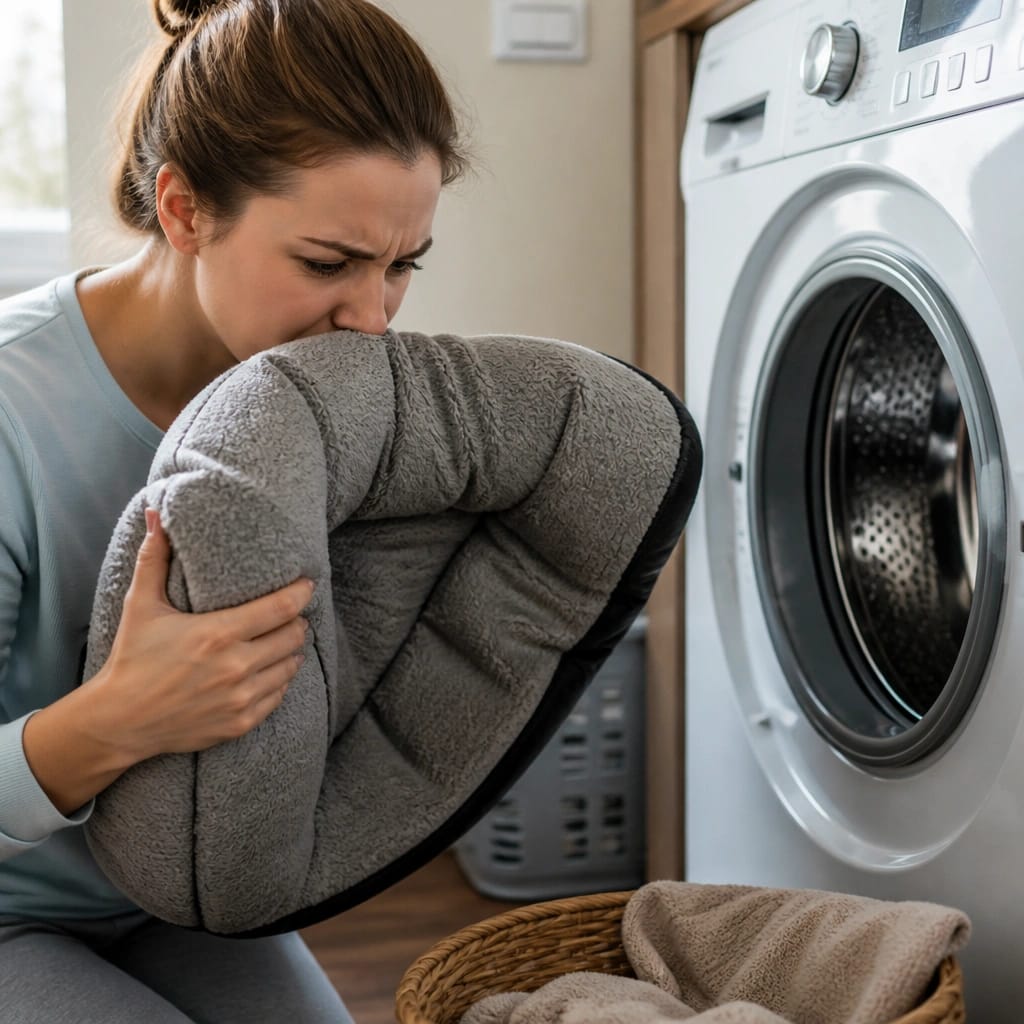
Dog beds smell after washing because of trapped moisture, detergent residue, or bacteria hiding in the foam core. The cover may feel clean, but the inner foam holds onto odors. Most washing machines can’t fully rinse or dry thick foam.
That’s where the smell comes back from.
You’ve just pulled your dog’s bed out of the washing machine, and it still smells. Worse, sometimes it smells even stronger than before. Why dog beds smell after washing is a frustrating mystery, but the answer is usually less about the washing itself and more about what happens underneath the surface.
The EPA notes that mold can begin growing in as little as 24 to 48 hours in damp conditions, which is a key reason why dog beds that don’t dry completely develop persistent odors. As of 2026, the most common culprit isn’t your dog at all. It’s the way the bed is built and how the washing machine interacts with it.
Let’s break down what’s really going on.
Quick Answer
The Real Reason Your Dog Bed Still Smells After Washing
Most dog beds are two-part systems. There’s the outer cover, which is what you see and wash. Then there’s the inner foam core, which is the thick mattress part.
The cover gets clean in the wash. But the foam core doesn’t go in the machine. And even if you try to wash it, most foam can’t handle a full cycle.
So the odors stay trapped inside.
The real problem is that the foam absorbs everything. Saliva and dander, urine, and oils from your dog’s skin all soak into the foam over time. When you wash the cover, you’re only treating half the problem.
The foam keeps releasing those trapped odors, which then seep back into the clean cover.
The 3 Main Causes of Lingering Dog Bed Odors
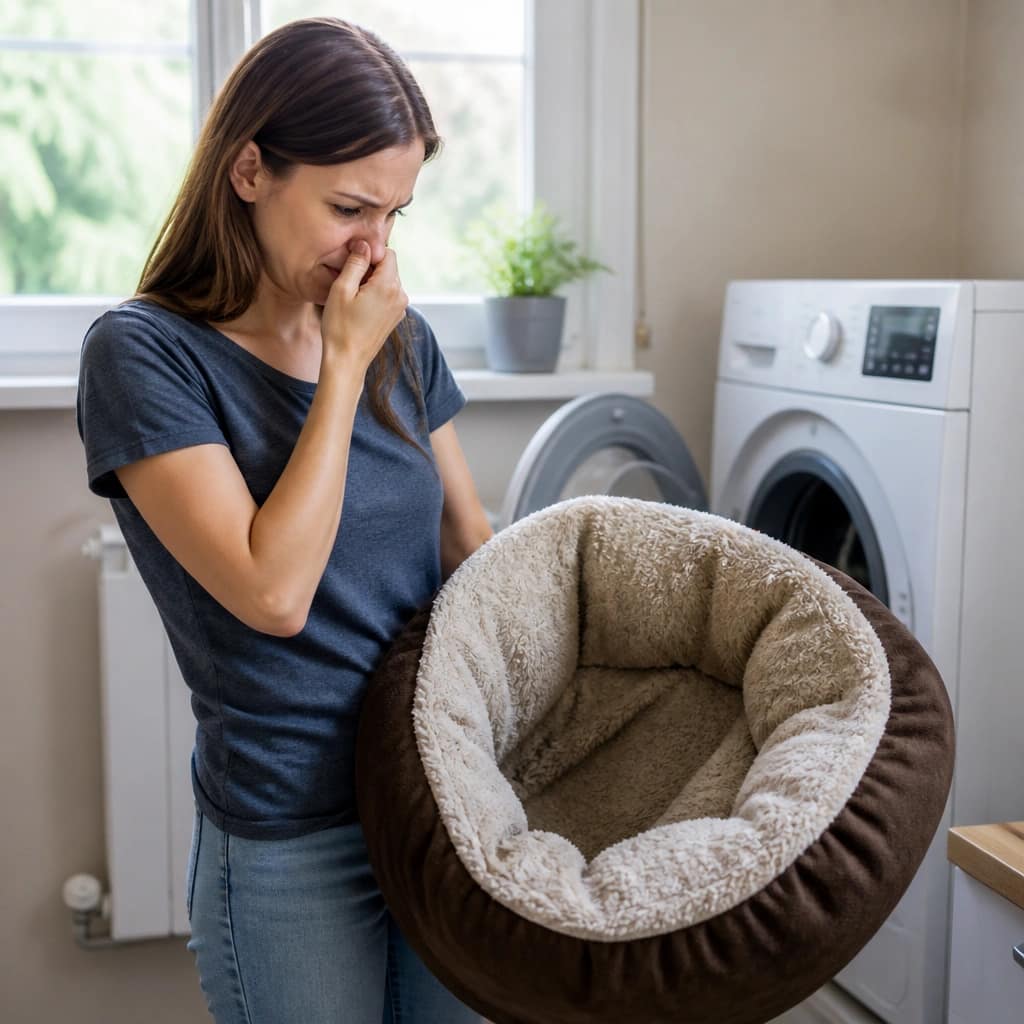
There are three main reasons that explain why dog beds smell after washing. Each one has a different cause and a different fix. Identifying the right one saves you time and frustration.
Cause #1: Detergent buildup. Using too much detergent or fabric softener leaves a sticky residue inside the fabric. This residue traps bacteria and odors, and over time it creates a smell that gets worse with each wash.
Cause #2: Moisture trapped in the foam. The foam core inside the bed acts like a sponge. If it doesn’t dry completely, moisture creates the perfect environment for mold and mildew.
Cause #3: Bacteria or mold in the fabric. Even with regular washing, bacteria can survive in the fabric fibers. This is especially common in beds that are washed in cold water or not dried thoroughly.
The cause you’re dealing with depends on how the bed smells and when you notice it. Different bed types behave differently, so the material matters too.
Cause #1: Detergent and Fabric Softener Buildup
This is the most common cause, and it’s also the easiest to fix. If your dog’s bed smells musty or sour right after washing, detergent buildup is likely the culprit.
High-efficiency washing machines need less detergent than you think. Using too much creates a soapy residue that gets trapped in the fabric fibers. Fabric softener makes it worse by coating the fibers with a waxy layer that traps odors and bacteria.
How to check: If the cover feels slightly sticky or stiff after drying, you have buildup. The smell might also be stronger when the bed is damp versus dry.
The fix: Run an extra rinse cycle with a cup of white vinegar. The vinegar breaks down the residue and neutralizes odors. Skip the fabric softener entirely.
Cause #2: Moisture Trapped in the Foam Core

This is the sneaky one. The foam core inside your dog’s bed is thick and dense. It holds onto moisture like a sponge.
Even if the cover feels dry, the foam underneath might still be damp.
The problem is that most foam beds can’t go in the washing machine. When you wash the cover separately, water can seep through the zipper and get into the foam. If the foam doesn’t dry completely, mold and mildew start growing within 24 to 48 hours.
The EPA notes that mold can begin growing in as little as 24 to 48 hours in damp conditions, which is exactly what happens inside a wet foam core.
How to check: Press down on the middle of the bed. If it feels damp or heavy, the foam is still wet. You might also notice a musty smell that gets stronger when you press on the bed.
The fix: Remove the foam core and let it dry completely. Place it in a well-ventilated area or in direct sunlight. This can take 24 to 48 hours depending on the thickness.
Never put foam in the dryer. A waterproof liner between the cover and foam can prevent this problem from happening again.
Cause #3: Bacteria or Mold Hiding in the Fabric
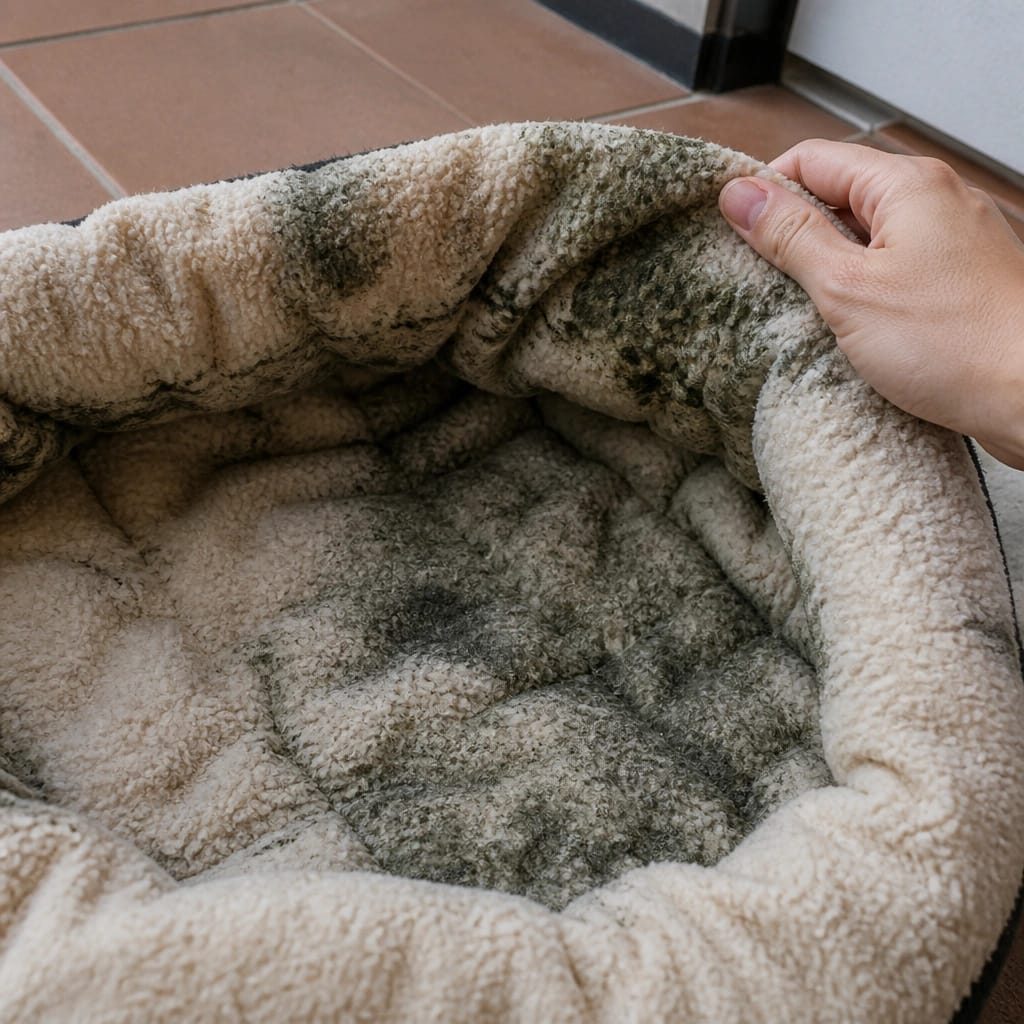
Sometimes the problem isn’t the foam. It’s the fabric itself. Bacteria and mold can live deep inside the fibers of the cover, even after a wash cycle.
This happens when the wash water isn’t hot enough. Most bacteria are killed at 140°F (60°C), but many dog beds are washed in cold or warm water. The label may say “machine wash cold,” which doesn’t kill bacteria.
How to check: If the bed has a sour or ammonia-like smell, it’s likely bacteria. If the smell is musty or earthy, it’s more likely mold.
The fix: Wash the cover in the hottest water temperature the fabric can handle. Add an enzyme cleaner designed for pet odors. These cleaners break down the bacteria and organic matter that cause the smell.
Also, make sure the cover dries completely in the dryer on high heat.
How to Fix Each Smell Problem (Step-by-Step)
The fix depends on which cause you identified. Here’s a quick guide.
If you have detergent buildup: Remove the cover. Wash it with no detergent and one cup of white vinegar added to the rinse cycle. Run an extra rinse.
Dry completely.
If the foam is wet: Remove the foam core. Place it flat in direct sunlight or a well-ventilated room. Let it dry for 24 to 48 hours.
Do not put foam in the dryer.
If bacteria or mold is in the fabric: Wash the cover in the hottest water the fabric allows. Use an enzyme-based pet odor cleaner. Dry on high heat if the label permits.
For stubborn smells, you may need to repeat the process. A single wash rarely fixes deep-set odors.
Common Washing Mistakes That Make the Smell Worse
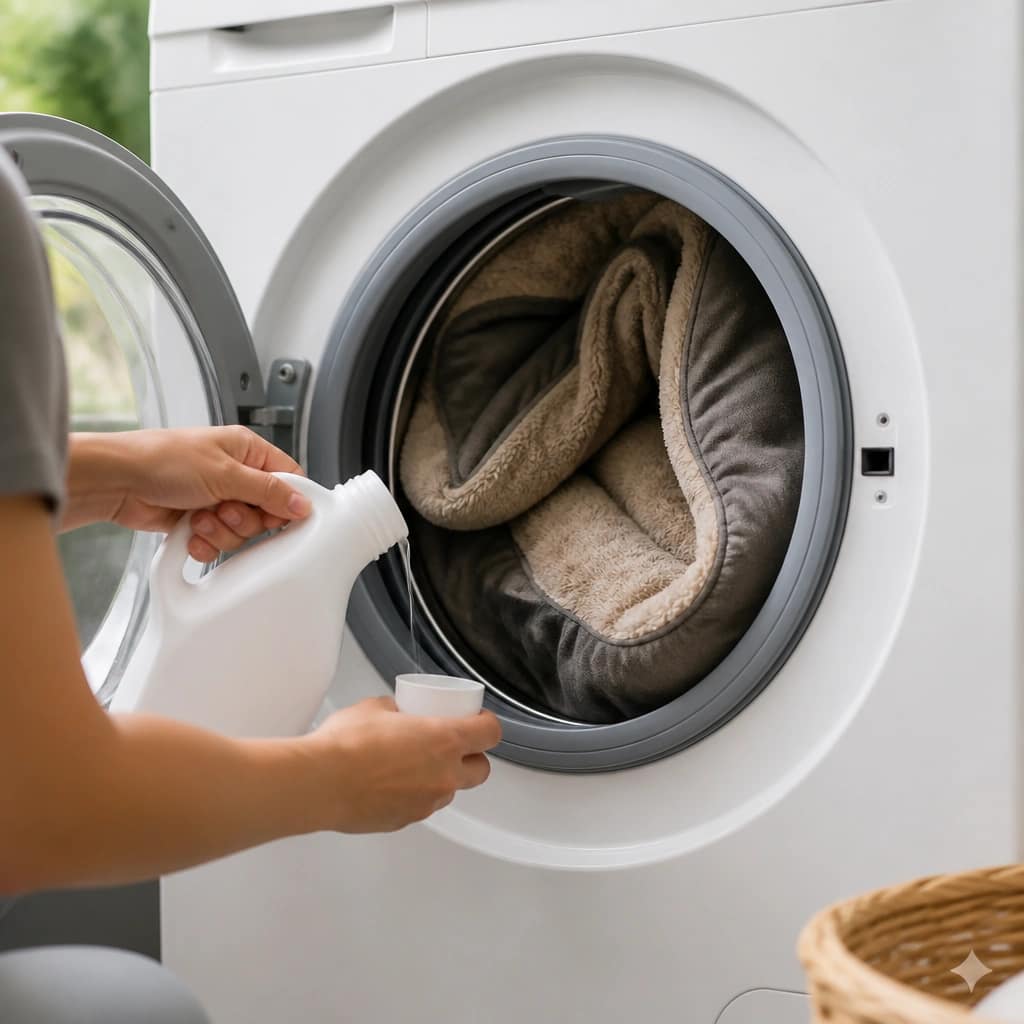
Most people make the same mistakes. Overloading the washing machine is a big one. The cover needs room to move freely so water and detergent can reach every part.
Using too much detergent is another common error. High-efficiency washers only need one to two tablespoons. More detergent means more residue.
Washing in cold water every time also causes problems. Cold water doesn’t kill bacteria or dissolve oils effectively. Hot water, when the fabric allows, works much better.
Skipping the extra rinse cycle traps detergent and odors in the fabric. Always run at least two rinse cycles for dog beds.
How to Prevent Dog Bed Odors Between Washes
Prevention is easier than fixing a smelly bed. A few small habits make a big difference.
Use a waterproof liner. A liner between the foam and cover stops moisture, urine, and oils from reaching the foam. This is the single most effective step you can take.
Wash the cover every one to two weeks. Regular washing prevents buildup. Don’t wait until the bed smells.
Air out the bed weekly. Take the cover off and let the foam breathe. Fresh air helps dry out any trapped moisture.
Spot clean accidents immediately. The longer urine or drool sits, the deeper it soaks into the foam. Blot it up right away.
Choosing the right bed placement also helps. Avoid damp areas like basements or bathrooms.
When to Replace the Bed Instead of Washing It
Sometimes washing just isn’t enough. If the foam core has visible mold or dark spots, replace it. Mold inside foam cannot be fully removed.
If the bed has a persistent ammonia smell after multiple washes, it’s time for a new one. That smell means urine has soaked deep into the foam.
Beds that are more than three to five years old often need replacing. Foam breaks down over time. It loses support and starts holding onto odors permanently.
If you’ve tried every fix and the smell returns within a few days, the foam is done. A new bed with a removable, washable cover and a waterproof liner will last much longer.
Frequently Asked Questions About Dog Bed Smells
Why does my dog’s bed smell like wet dog after washing?
That smell is usually bacteria or yeast still living in the fabric. Washing in cold water doesn’t kill them. Use hot water and an enzyme cleaner.
Dry on high heat if the label allows.
Can I put the foam core in the washing machine?
Most foam cores should not go in the machine. The agitator can tear the foam, and the foam holds too much water. It will take days to dry, leading to mold.
Spot clean the foam instead.
How often should I wash my dog’s bed?
Wash the cover every one to two weeks. If your dog has allergies or skin issues, wash weekly. The foam core should be aired out monthly.
Does vinegar remove dog bed odors?
Yes. White vinegar breaks down detergent residue and neutralizes odors. Add one cup to the rinse cycle.
The vinegar smell disappears as the bed dries.
What’s the best temperature to wash a dog bed?
Use the hottest water the fabric label allows. Most covers can handle warm or hot water. Hot water kills bacteria and dissolves oils better than cold water.
When should I throw away a smelly dog bed?
Throw it away if the foam has visible mold, a permanent ammonia smell, or if the smell returns within days of washing. Older beds over three to five years also need replacing.


