

How to Keep a Dog Bed Fresh Between Washes
Vacuum the bed daily. Remove hair with a rubber brush. Spot clean stains right away. Sprinkle baking soda to deodorize. Let it sit for 15 minutes. Vacuum again.
Use a washable blanket as a protective layer.
Your dog’s bed takes a beating. Hair, dander, drool, and the occasional muddy paw print all build up fast. Learning how to keep a dog bed fresh between washes saves you from that sour smell and keeps your pup’s sleeping spot clean.
It’s not complicated, but it does take a consistent routine.
According to manufacturer guidelines, most dog bed covers should be washed every one to two weeks. But what about the days in between? That’s where quick daily habits and a few simple tools come in.
Let’s start with the main reason those beds get smelly so fast.

Why Your Dog Bed Gets Smelly Between Washes
Your dog’s body heat, sweat, and natural oils soak into the fabric. Dander and hair build up. Drool, food crumbs, and moisture from outdoor adventures add to the mix.
Even a clean-looking bed can trap bacteria and odors.
The foam core or filling inside absorbs these smells over time. If you have a dog that digs or scratches at their bed, those habits can grind dirt deeper into the fibers. Understanding the source helps you target the right cleaning method.
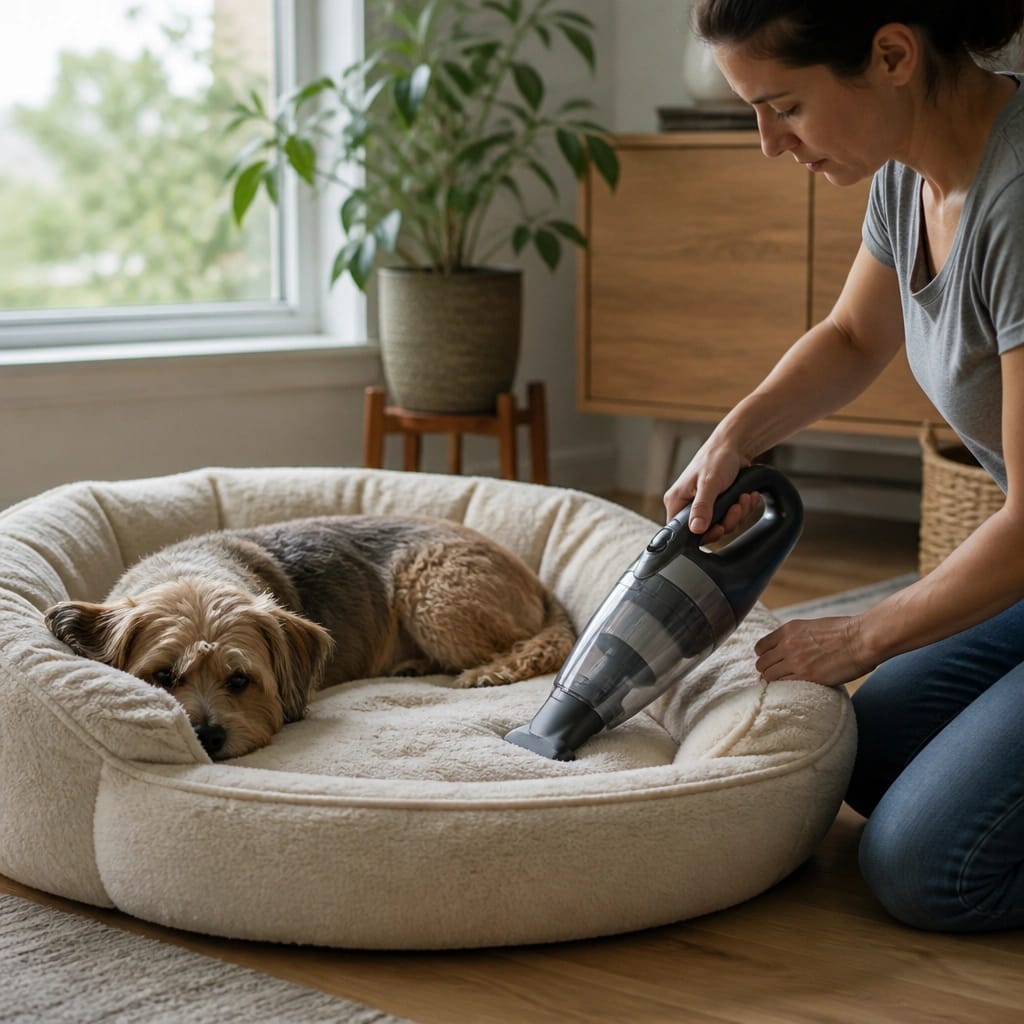
Does Your Dog Bed Have a Removable Cover?
This is your first decision point. If your dog bed has a zippered, removable cover, you have the easiest path. You can wash the cover regularly and spot clean the foam core.
For beds without a removable cover, you need to work with the whole unit. Vacuuming and spot cleaning become your main tools.
If the bed has a waterproof liner, that’s a bonus. It protects the foam from moisture and stains. For beds without one, consider adding a protective layer.
A washable blanket or a simple DIY cover can extend the life of the bed.
Quick Maintenance: The Daily and Weekly Routine
Start with the daily shake. Lift the bed and give it a good shake outside to remove loose hair and debris. This takes ten seconds and makes a big difference.
For the weekly deep clean, use a vacuum with an upholstery attachment. Run it over the entire surface, including the sides and seams. The crevice tool is great for edges and corners where hair collects.
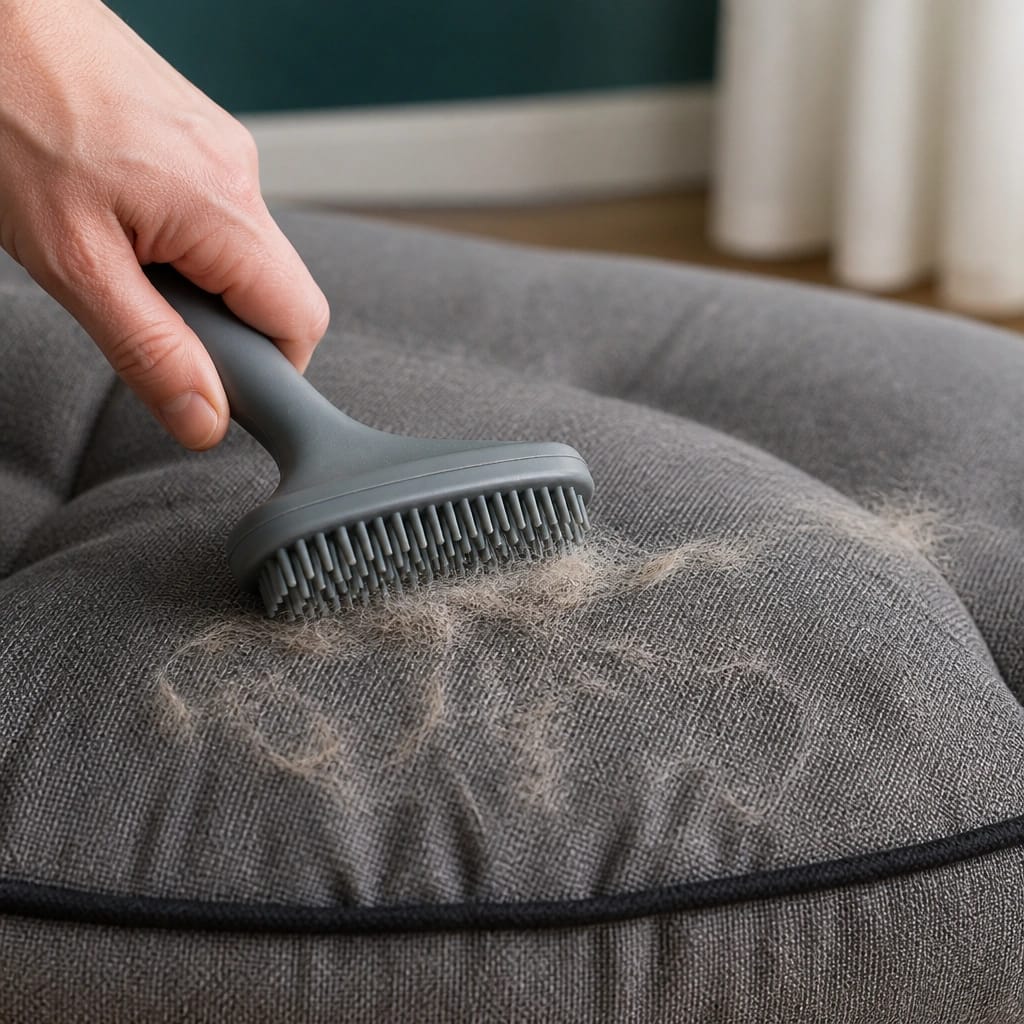
Next, use a rubber brush to lift embedded hair. Work in one direction, then the other. The rubber creates friction that pulls hair out of the fabric.
It’s especially effective on microfiber and fleece covers.
Finally, a lint roller catches any stragglers. This routine keeps the bed fresh between full washes and reduces the need for frequent laundry.
Spot Cleaning Fresh Stains and Accidents
Accidents happen. The key is to act fast. Blot the stain with a clean cloth to absorb as much liquid as possible.
Don’t rub, that spreads the stain.
Mix a small amount of mild dish soap with water. Dampen a cloth with the solution and blot the stain. Rinse with a clean damp cloth.
Blot dry.
For urine or vomit, use an enzymatic cleaner. These products break down the proteins that cause odor. Follow the instructions on the bottle.
Let the cleaner sit for the recommended time before blotting.
Always let the spot dry completely before letting your dog back on the bed. Damp fabric can grow mold or mildew if left wet. For tough urine odors that have set in, you may need to treat the foam core directly.
The ASPCA recommends using only pet-safe cleaning products to avoid skin irritation or accidental ingestion. Check the label on any cleaner before using it near your dog.
Baking Soda vs. Enzymatic Cleaner: Which One to Use
Both options work well. The right choice depends on what you’re dealing with.
Baking soda is a natural deodorizer. It absorbs odors from the fabric without adding chemicals. Sprinkle it evenly over the dry bed.
Let it sit for 15 to 30 minutes. Vacuum thoroughly. That’s it.
It’s best for general freshening between washes.
Enzymatic cleaners target biological stains. Urine, drool, vomit, and mud all contain proteins. Enzymatic cleaners break those proteins down at the molecular level.
This eliminates the odor instead of just covering it up.
| Method | Best For | How It Works | Dry Time |
|---|---|---|---|
| Baking soda | General odor, daily freshening | Absorbs smells | None (vacuumed off) |
| Enzymatic cleaner | Urine, drool, vomit, mud | Breaks down proteins | 30 min to 2 hours |
Use baking soda for routine maintenance. Reach for the enzymatic cleaner when you have a fresh stain or a lingering smell. If your dog seems to chew or lick their bed, stick with pet-safe enzymatic formulas that won’t irritate their mouth.
How to Freshen a Non-Washable Bed (Foam Core)
Foam cores cannot go in the washing machine. Water destroys the structure. You have to clean them in place.
Start by removing the cover if there is one. Wash that separately. Vacuum the foam core thoroughly on all sides.
Sprinkle baking soda over the entire foam surface. Rub it in gently with your hands. Let it sit for 30 minutes.
Vacuum every bit of it off. Use the crevice tool to get into the corners.

For stubborn odors, mix a small amount of white vinegar with water in a spray bottle. Lightly mist the foam. Do not soak it.
Let it air dry completely. Place the bed in a well-ventilated room or near a window.
If the foam has a strong urine smell that won’t come out, the odor may be trapped deep inside. In that case, the best option is to replace the foam core or the entire bed. No amount of surface cleaning will fix it.
Mistakes That Make the Bed Smell Worse

Some well-intentioned cleaning habits backfire. Here are the most common ones.
Using fabric softener is a big mistake. It coats the fibers with a waxy layer. That layer traps oils and odors.
It also reduces the fabric’s ability to breathe. Skip fabric softener entirely.
Using too much detergent is another problem. Excess soap leaves residue behind. That residue attracts dirt and bacteria.
Your dog’s bed ends up dirtier faster. Use a small amount of detergent and run an extra rinse cycle.
Not drying the bed completely is a serious issue. Damp fabric grows mold and mildew. That smell is hard to remove.
Always let the bed dry fully before letting your dog use it. In humid weather, this can take longer than expected.
Using bleach on a regular basis breaks down the fabric fibers. It irritates your dog’s skin. Stick to mild, pet-safe cleaners instead.
Protecting Your Bed with a Blanket or Liner
A simple protective layer saves you a lot of work. Lay a washable blanket or towel over the bed. Your dog sleeps on that layer instead of the bed itself.
You can wash the blanket every few days. It takes much less effort than washing the entire bed. The bed itself stays cleaner and fresher for longer.
If your dog has accidents or is still being house trained, a waterproof liner under the blanket is a good idea. It stops moisture from reaching the foam core. That prevents odors from setting in deep.
For dogs that dig or scratch before lying down, a blanket also protects the bed cover from wear and tear. It’s a cheap, easy solution that extends the life of the bed.
When to Skip the In-Between Fix and Wash It Anyway
The in-between methods work for maintenance. But they cannot replace a proper wash forever.
If you can smell the bed from across the room, it needs a full wash. If your dog has had an accident that soaked through to the foam, wash the cover and treat the foam. If the bed has visible dirt or grime that won’t come out with spot cleaning, wash it.
For beds with removable covers, wash the cover every one to two weeks. For beds without removable covers, a full hand wash or a professional cleaning may be needed every few months.
If your dog has skin allergies, the type of bed you choose can affect how often you need to clean. Some fabrics trap more allergens than others. Consider switching to a machine-washable bed if you find yourself washing constantly.
Frequently Asked Questions
How often should I vacuum my dog’s bed?
Vacuum the bed at least once a week. For heavy shedders, aim for two to three times per week. Daily vacuuming is best if your dog has allergies or spends a lot of time outdoors.
Can I use vinegar to deodorize my dog’s bed?
Yes. White vinegar neutralizes odors without harsh chemicals. Mix one part vinegar with three parts water.
Lightly mist the bed and let it air dry completely. The vinegar smell fades as it dries.
How do I get the wet dog smell out of a foam bed?
Sprinkle baking soda over the foam. Let it sit for 30 minutes. Vacuum thoroughly.
For stubborn smells, lightly mist with diluted vinegar. Let it dry in a well-ventilated room. If the odor persists, the foam may need replacing.
What’s the best way to remove dog hair from a bed?
A rubber brush works best. It creates friction that pulls embedded hair out of the fabric. Vacuum after brushing.
A lint roller catches any remaining stragglers.
Is it safe to put a dog bed in the dryer?
Check the manufacturer’s label first. Most removable covers can go in the dryer on low heat. Foam cores and memory foam beds should never go in the dryer.
High heat can damage the foam structure.
Final Word: Keep It Fresh Without the Work
A consistent routine makes all the difference. Vacuum weekly. Spot clean stains immediately.
Use a washable blanket as a protective layer. Sprinkle baking soda for quick deodorizing. These simple habits keep your dog’s bed fresh and extend its life between full washes.


