

How to Store a Dog Bed Without Creating Odors
If you’ve ever pulled a dog bed out of storage only to get hit with a musty, sour smell, you know the frustration. Learning how to store a dog bed without creating odors is straightforward once you understand what causes the problem. The answer comes down to two things: eliminating moisture before storage and choosing the right environment.
Dog beds are thick, dense, and hold moisture for a long time. A memory foam bed can take 48 to 72 hours to dry completely after washing, according to manufacturer care guidelines. If you seal it up even slightly damp, you’re giving mold and mildew a perfect environment to grow.
Let’s walk through the exact steps to avoid that.
Wash the bed thoroughly and dry it completely before storage. Check for hidden moisture by pressing a paper towel into the foam. Store the bed in a breathable container in a dry, climate-controlled space.
Avoid plastic bins that trap humidity. Use natural deodorizers like baking soda or activated charcoal. Inspect the bed every few months during long-term storage.
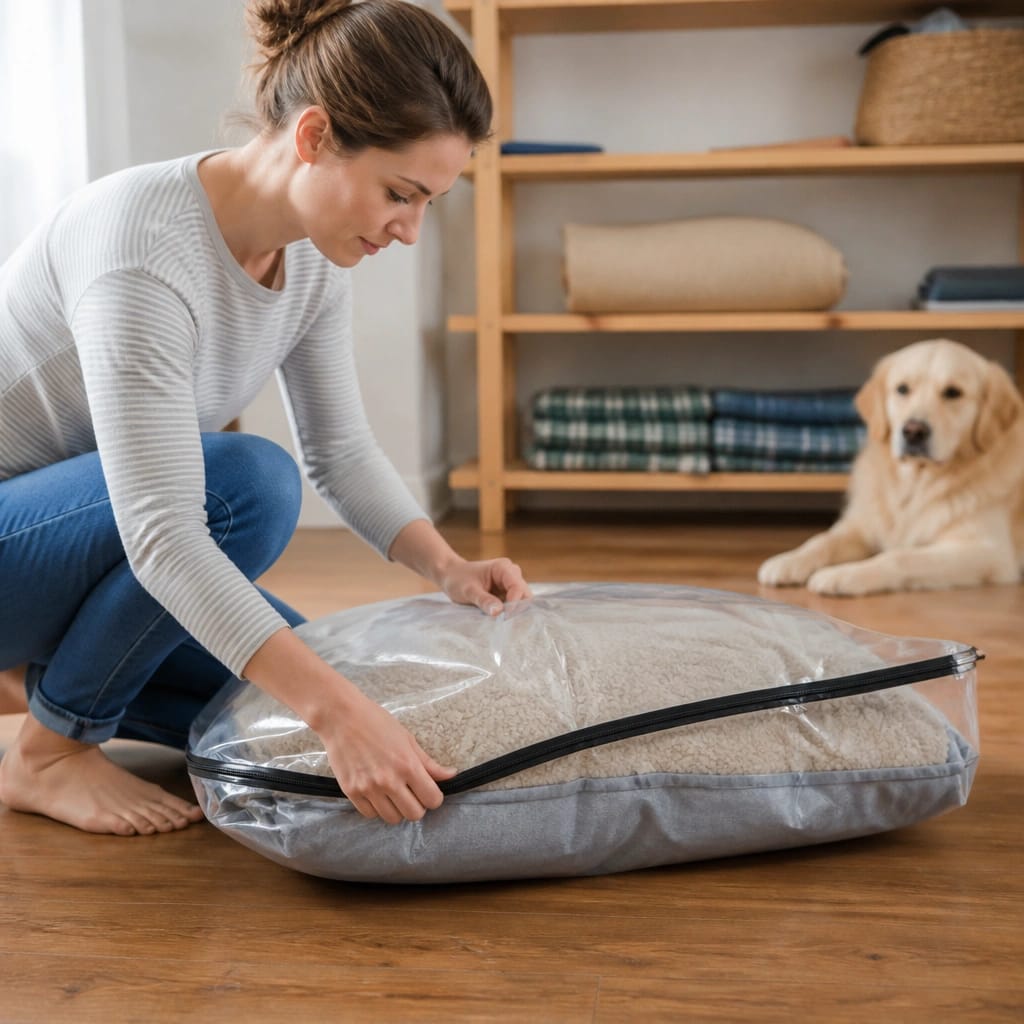
Why Dog Beds Smell After Storage (and What You’re Up Against)
The smell doesn’t come from nowhere. Dirt, dander, and oils from your dog’s skin build up in the fabric and foam over time. Bacteria and fungi feed on that organic material.
When you add moisture, even a little, they multiply fast.
The real problem is hidden moisture. Dog beds are thick and filled with dense foam or fiberfill. The outer cover might feel dry to the touch, but the center can still be damp.
Sealing that dampness in an airtight container creates a humid microclimate. That’s how you get that unmistakable musty odor.
Mold and mildew are the main culprits. They release spores that cause the smell and can also trigger allergies in both dogs and humans. If you’re dealing with a bed that has persistent urine odors, you’ll want to follow a separate removal process for that before storage.
We cover that in detail in our guide on dealing with those stubborn smells.
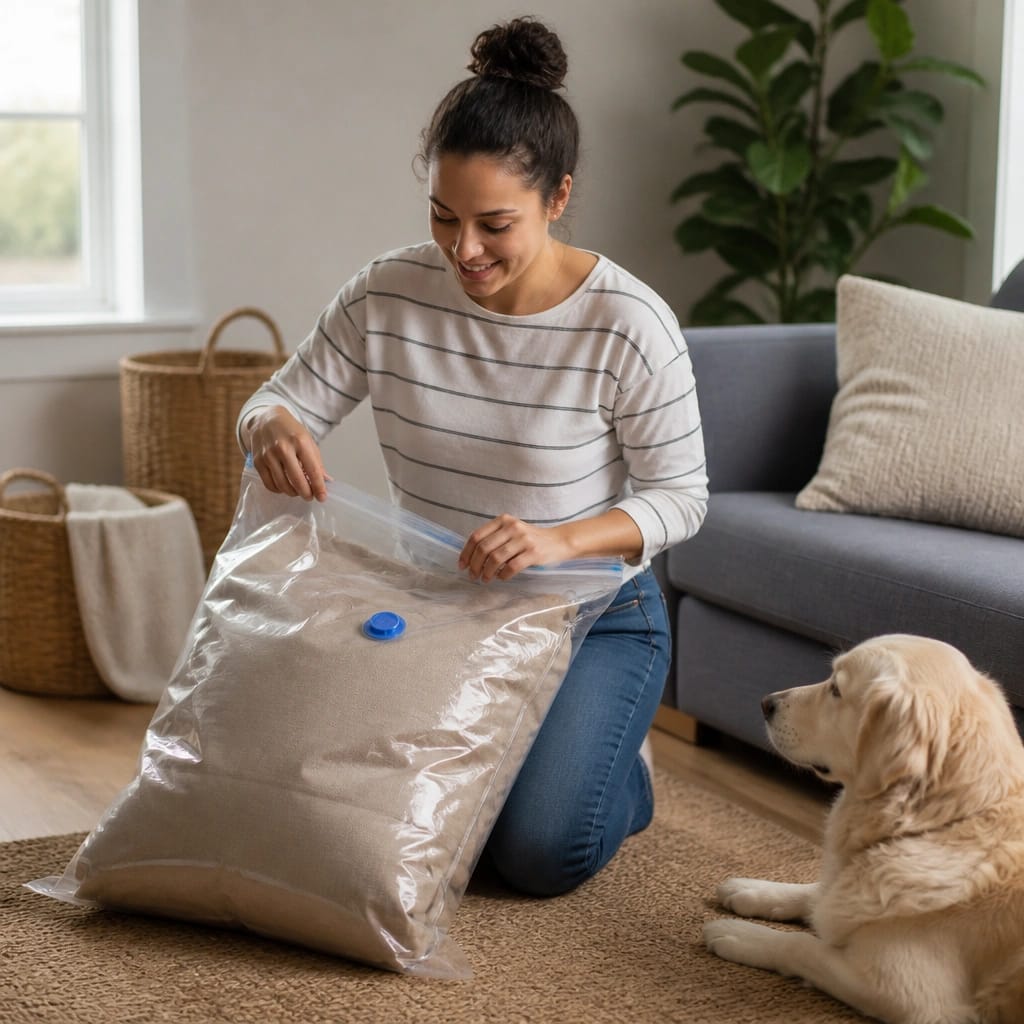
The Two Golden Rules: Clean and Bone-Dry
Everything else depends on these two rules. If you skip either one, you’re gambling with odors.
First, clean the bed. Remove the cover and wash it in hot water with a pet-safe detergent. For the foam core, spot clean with a mild soap and water solution, or use an enzyme cleaner to break down organic stains.
Rinse thoroughly. Any soap residue left behind can attract dirt and contribute to smells later.
Second, dry the bed completely. This is the step most people rush. The cover dries fast, but the foam or fiberfill inside can stay damp for days.
Why Drying Is the Make-or-Break Step
Moisture is the enemy of stored bedding. Even a small amount of trapped humidity creates conditions for mold, mildew, and bacteria to grow. The thicker the bed, the longer it takes to dry.
A fiberfill bed might dry in 24 hours in good air circulation. A memory foam bed can take two to three days. Sunlight helps.
UV rays kill bacteria and speed up drying. But never put memory foam in direct sunlight for too long, as it can degrade the foam structure.
How to Tell Your Bed Is Truly Dry (Not Just “Feels Dry”)
Touching the surface isn’t enough. You need to check the core.
Press a clean, dry paper towel or white cloth firmly into the foam. Hold it there for ten seconds. If the cloth comes away damp, the bed isn’t ready.
Do this in several spots, especially the thickest parts.
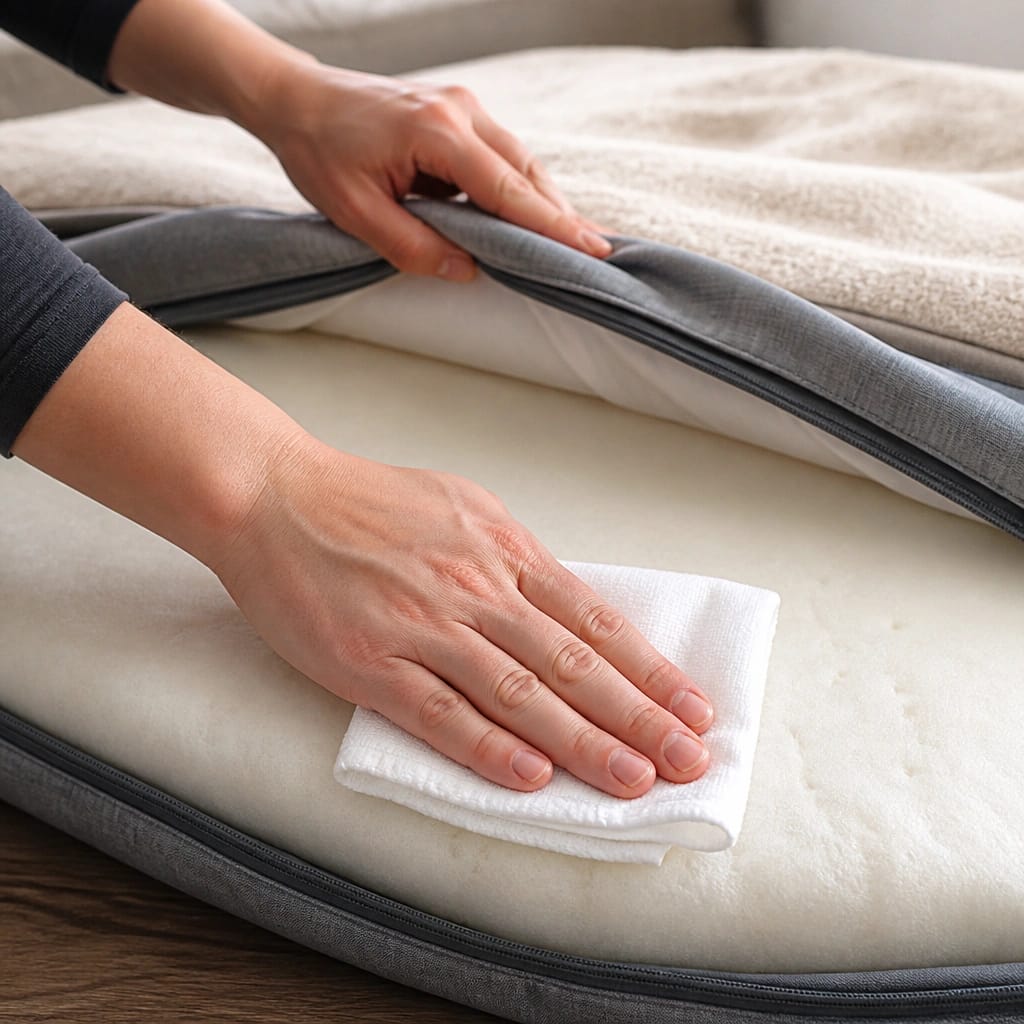
Another test: fold the bed. If you feel any coolness or see condensation between the layers, it needs more drying time. If you’re storing a bed for a dog with anxiety or noise phobia, make sure it’s completely dry so the comfort features don’t get ruined by mold.
What You Store It In Matters More Than You Think
The container you choose directly affects whether odors develop. The wrong choice traps moisture. The right one lets the bed breathe.
Breathable Storage vs. Airtight Storage
Airtight plastic bins seem like a good idea. They keep out pests and dust. But they also trap any moisture that remains in the bed.
Over weeks or months, that trapped humidity creates condensation inside the bin. That’s a direct invitation for mold.
Breathable storage is better for long-term storage. Fabric storage bags, cotton duffel bags, or canvas totes allow air circulation. This prevents moisture buildup.
If you must use a plastic bin, leave the lid slightly ajar or drill a few small ventilation holes.
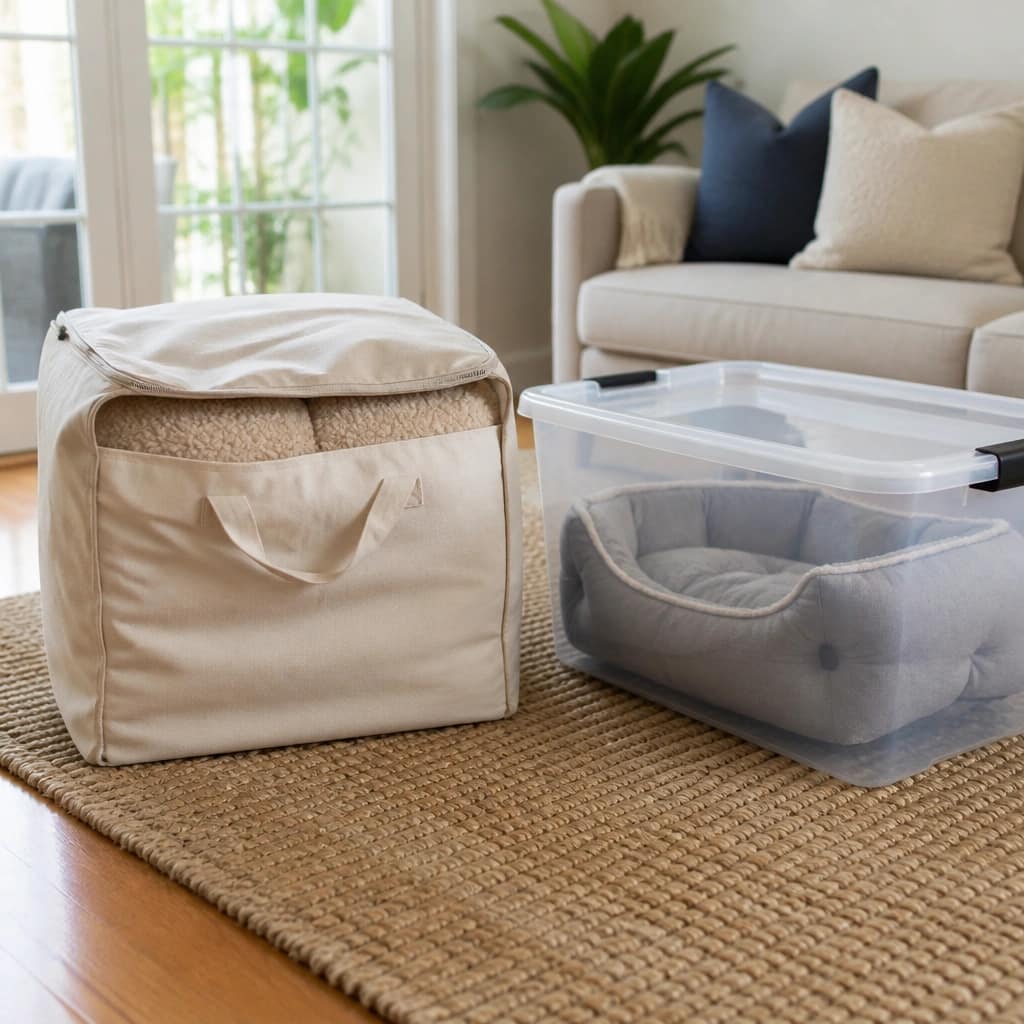
Vacuum Bags: When They Work and When They Wreck a Bed
Vacuum storage bags are popular for saving space. They work well for fiberfill beds because the filling compresses and bounces back. But they are risky for memory foam.
Vacuum compression can damage the foam’s cell structure, reducing its lifespan and support.
If you use a vacuum bag for a fiberfill bed, open it every few months to let the bed expand and air out. This prevents the filling from developing permanent compression odors. Beds with waterproof liners need extra care, as the liner can trap moisture against the foam during compression.
Where You Store It Changes the Odds
Location matters almost as much as the container. Temperature and humidity fluctuations are the main risks.
Climate-Controlled Storage
A climate-controlled space is ideal. Temperature stays between 60 and 75 degrees Fahrenheit, and humidity stays below 50 percent. A closet inside your home usually works fine.
A spare bedroom or under a bed in a dry room also works.
Garage, Basement, or Attic
These spaces are risky. Garages and basements often have high humidity. Attics can get extremely hot in summer, which can degrade foam and accelerate chemical breakdown.
If you have to store a bed in these areas, use a breathable container and check it regularly. During humid months, consider adding a dehumidifier to the room. Proper placement in your home makes a big difference for both storage and everyday use.
Decision Guide: Pick Your Bed Type, Get Your Method
Not all dog beds store the same way. The filling material determines the best approach.
Memory Foam and Orthopedic Beds
Memory foam is the most sensitive to moisture and compression. Wash only the removable cover. Spot clean the foam with a damp cloth and mild soap.
Never submerge it. Dry it flat on a towel rack or elevated surface. Air circulation underneath helps.
Drying time: 48 to 72 hours. Store in a breathable bag. Do not vacuum seal.
Polyester Fiberfill Beds
Fiberfill is more forgiving. You can wash the entire bed if it’s small enough, or just the cover. Fiberfill dries faster than foam, usually 12 to 24 hours.
You can vacuum seal these beds for space savings, but let them air out every few months. Store in a fabric bag or a ventilated bin.
Cotton-Filled or Natural Fill Beds
Natural fills absorb moisture easily. They require thorough drying. Sun drying is excellent for these beds.
Store them in a breathable cotton bag. Avoid plastic bins entirely. Check for musty smells every few weeks during storage.
Waterproof or Lined Beds
The waterproof layer traps moisture against the foam. Air drying takes longer. Unzip the cover and separate the liner from the foam during drying.
Store with the liner unzipped to allow airflow.
The Step-by-Step Storage Workflow
Remove the cover and wash it in hot water with a pet-safe detergent. Spot clean the foam core using an enzyme cleaner. Rinse thoroughly.
Dry the cover in a dryer or on a line. Dry the foam core flat on an elevated rack with airflow underneath. Give it 48 to 72 hours.
Use the paper towel test to confirm it’s bone-dry. Fold the bed loosely and place it in a breathable storage bag. Store it in a climate-controlled closet.
Natural Odor Preventers That Actually Work
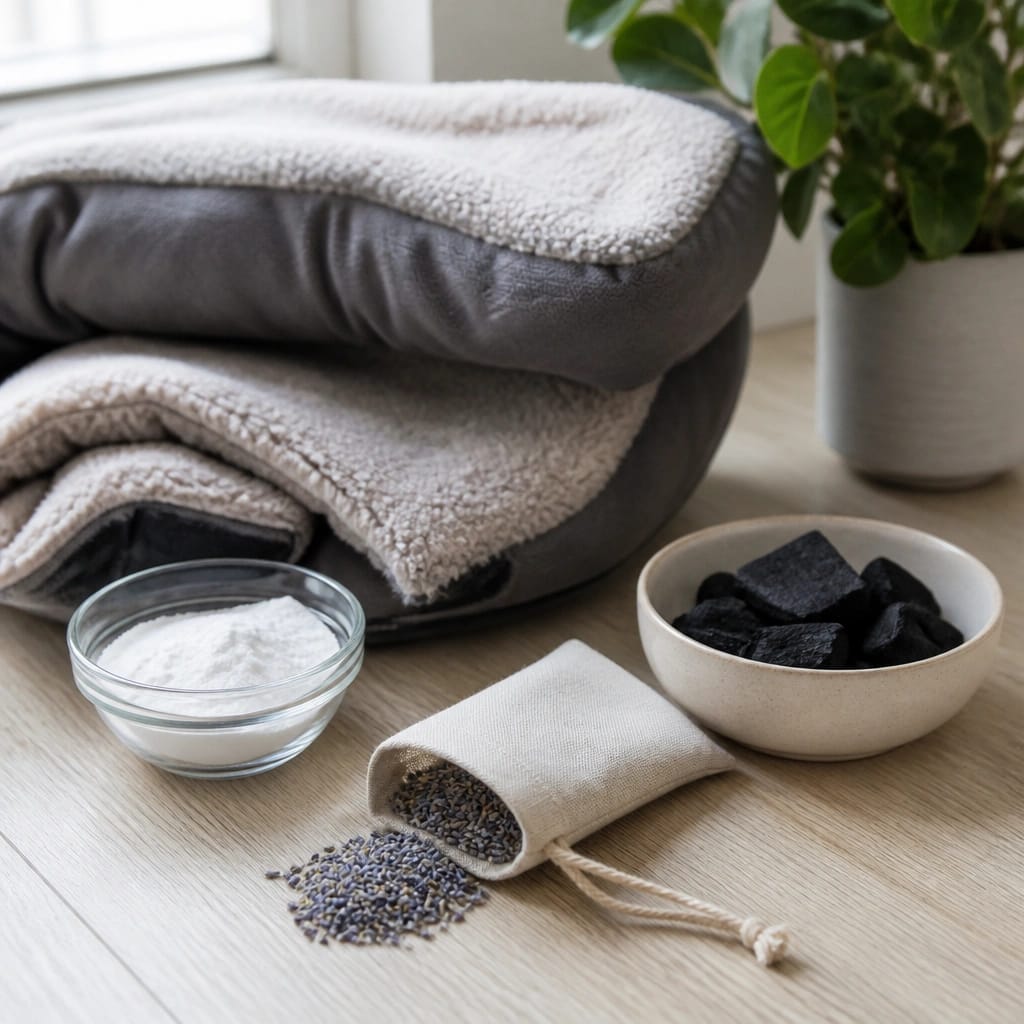
Baking soda is a reliable option. Sprinkle a thin layer into the storage bag before adding the bed. It absorbs moisture and neutralizes odors.
Activated charcoal bags work well too. They trap humidity and odors without any scent. Place one or two small bags inside the storage container.
Cedar chips add a fresh smell and repel insects. Make sure they come from a pet-safe source. Some dogs are sensitive to strong cedar oils, so check with your vet first.
Mistakes That Guarantee a Stinky Bed
Storing a damp bed is the number one mistake. Even slightly damp foam will develop mold within weeks.
Using an airtight plastic bin without ventilation is another common error. It traps humidity and creates condensation.
Skipping the cover wash is a mistake too. Oils and dander left in the fabric will oxidize and produce a rancid smell over time.
How to Rescue a Bed That Already Smells
Take the bed outside and let it air out in the shade for a full day. If the smell remains, wash the cover and spot clean the foam.
For persistent odors, soak the foam with a mixture of white vinegar and water (one part vinegar to two parts water). Let it sit for 15 minutes, then rinse thoroughly.
Dry the bed completely before using it again. If the smell is still there after two cleaning cycles, the foam may be permanently contaminated and needs replacement.
Frequently Asked Questions
Can I store a dog bed in a vacuum bag?
Yes, but only for fiberfill beds. Vacuum bags can damage memory foam. Open the bag every few months to let the bed air out.
How long can I store a dog bed without it smelling?
In the right conditions, six to twelve months. Check it every two months for any musty smell.
Should I store a dog bed with baking soda?
Yes, it helps absorb moisture and odors. Wrap it in a paper towel or use a breathable sachet so it doesn’t get into the fabric.
Can I store a dog bed in the garage?
It’s risky. Garages have high humidity and temperature swings. If you have no other option, use a breathable bag and check it monthly.
Does cedar cause problems for dogs?
Some dogs are sensitive to cedar oils. Use pet-safe cedar products and introduce them gradually. Watch for any signs of irritation.
Your Storage Checklist (Quick Reference)
| Step | Detail |
|---|---|
| Wash | Remove cover, wash in hot water with pet-safe detergent. Spot clean foam. |
| Dry | 48–72 hours. Use the paper towel test to confirm. |
| Container | Breathable bag or ventilated bin. Avoid airtight plastic. |
| Location | Climate-controlled closet. Avoid garage, basement, attic. |
| Deodorizer | Baking soda, activated charcoal, or pet-safe cedar. |
| Check | Every 2–3 months. Sniff test. Re-dry if needed. |
Follow this checklist, and you will not have to deal with musty smells when you pull the bed back out. The whole process takes about 15 minutes of active work plus drying time. It is worth the effort.
A properly stored bed lasts longer and stays fresh for your dog.


