

How to Make a Cooling Dog Bed at Home
Your dog is panting, restless, and searching for a cool spot on the tile floor. It’s a clear sign they’re too hot. How to Make a Cooling Dog Bed at Home is a practical way to help your pup sleep comfortably without spending a lot of money.
A DIY cooling bed gives you control over the materials and size, so you can tailor it to your dog’s needs.
According to the American Veterinary Medical Association, dogs can suffer heat stress at temperatures as low as 80°F, especially brachycephalic breeds like Bulldogs and Pugs. A well-designed cooling bed can reduce surface temperature by 5 to 10°F, making a real difference. Let’s look at what makes these beds work and why a DIY approach is worth considering.
Make a cooling dog bed with an elevated frame and breathable fabric. Use non-toxic gel packs sealed inside a waterproof pouch. Measure your dog and add 18 inches for length.
Avoid foam or padding that traps heat. Test the bed before letting your dog sleep on it.
What Makes a Cooling Dog Bed Work (and Why DIY Makes Sense)
A cooling dog bed removes heat from your dog’s body. It doesn’t add cold. The mechanism is simple: airflow, conduction, or evaporation.
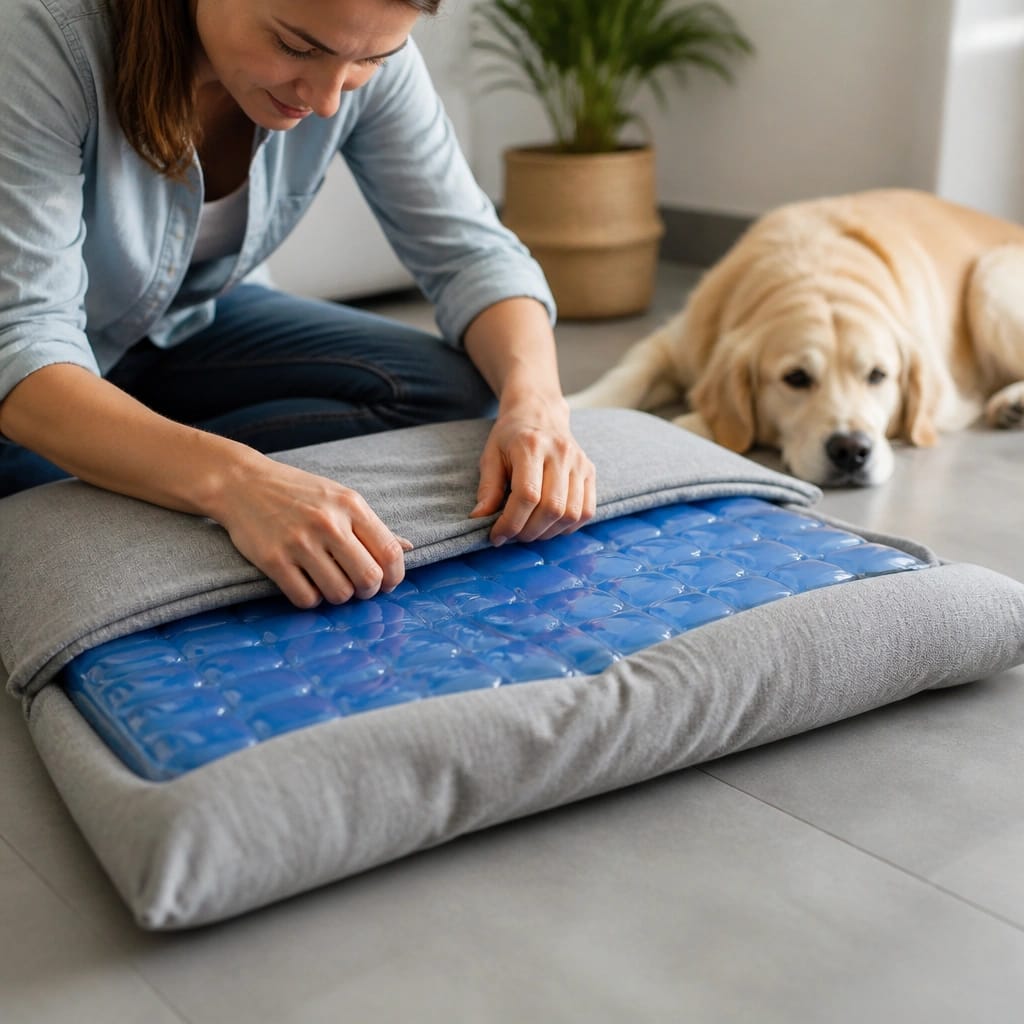
An elevated cot lets air circulate underneath and through the fabric. Your dog’s body heat dissipates into the moving air. A gel-filled pad absorbs heat through conduction, drawing warmth away from the fur and skin.
A water-filled bed works similarly, using the water’s high thermal mass to keep the surface cooler than the air.
The key is that the bed stays close to ambient temperature, not warmer from your dog’s body. Foam or memory foam beds trap heat. That’s the opposite of what you want.
A DIY approach lets you choose materials that breathe, and you can match the size exactly to your dog. For example, if you’ve ever wondered about the right bed height or firmness, you can check our guide on what kind of bed a French Bulldog needs for breed-specific advice.
The Safer Cooling Methods for Dogs at Home
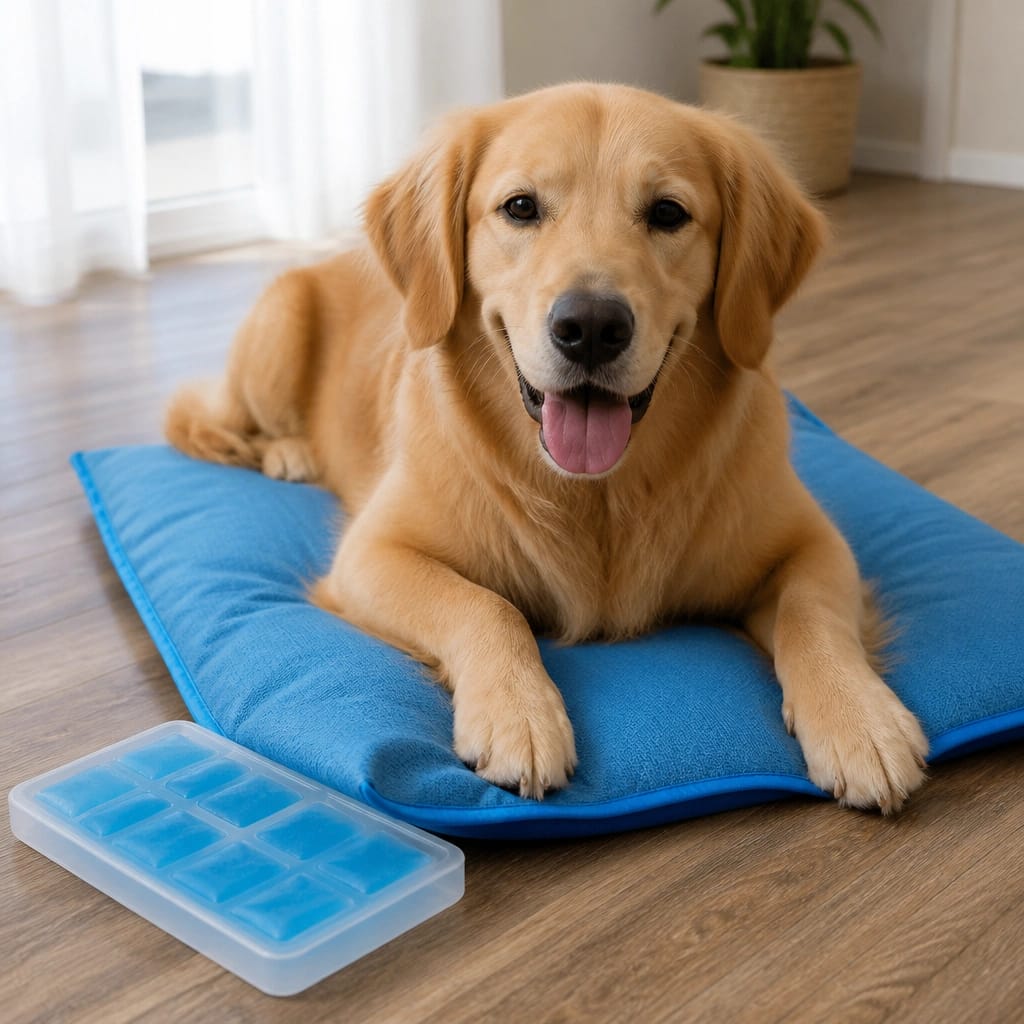
Not all cooling methods are safe. Some store-bought gel packs contain ethylene glycol, which is toxic if chewed. Frozen water bottles can cause frostbite on contact.
Here are the three safest DIY methods, ranked by ease and safety.
| Method | Safety Level | Cooling Duration | Best For |
|---|---|---|---|
| Elevated cot | Very high | Continuous (airflow) | All dogs, especially chewers |
| Gel-filled pad (non-toxic) | High | 1–4 hours | Indoor use, supervised |
| Water-filled bed | Moderate | 2–6 hours | Older dogs, calm dogs |
The elevated cot is the safest because it has no cooling medium to leak. The gel-filled pad is next, but only if you use food-grade, non-toxic gel packs. The water-filled bed works well but has a risk of leaks and mold if not maintained.
For a deeper look at which materials hold up best, see our piece on chew proof materials.
Before You Build: Measuring Your Dog and Choosing a Type
Measure your dog before you buy anything. Have your dog stand on all fours. Measure from the tip of the nose to the base of the tail.
That’s the length. Then measure the widest part of the body, usually across the chest or hips.
Add 18 inches to the length and 12 inches to the width. That gives your dog room to stretch out and change positions. If you have a puppy, check our guide on what size bed a puppy needs vs an adult dog so you don’t build a bed they’ll outgrow in three months.
Now choose your type based on your dog’s habits:
- If your dog chews fabric or bedding, go with an elevated cot. No padding to destroy.
- If your dog is older or has joint issues, a gel-filled pad offers more cushioning.
- If your dog is calm and doesn’t chew, a water-filled bed is very effective.
Method 1: The Elevated Cot Cooling Bed
This is the simplest and safest DIY cooling bed. It’s just a frame with fabric stretched across it. Air flows freely underneath, and your dog’s body heat dissipates naturally.
Materials You’ll Need
- PVC pipe (1/2-inch or 3/4-inch diameter, depending on dog size)
- Four corner elbows and four T-connectors
- Breathable fabric (600D or 1000D polyester mesh)
- Grommets or sturdy ties
- PVC pipe cutter or hacksaw
- Measuring tape and marker

Image source: Wikimedia Commons / Tomwsulcer
Step-by-Step Build
- Cut the PVC pipe into pieces: two long sides (length + 6 inches), two short sides (width + 6 inches), and four legs (4, 6 inches each).
- Assemble the frame using the elbows and T-connectors. The T-connectors go at the bottom corners for the legs.
- Stretch the fabric over the frame. Secure it with grommets and zip ties, or staple it if you’re not using PVC.
- Trim excess fabric. Make sure there are no sharp edges or loose threads.
How to Add Cooling Inserts
For extra cooling, you can slide gel packs or a phase-change material pad between the fabric layers. Use a waterproof pouch to prevent leaks. If your dog licks or chews their bed, you might want to check our article on why dogs lick or chew their bed for tips on managing that behavior.
Method 2: The Gel-Filled Cooling Pad
This method is more like a traditional mat. It uses gel packs inside a durable cover. The gel absorbs body heat and stays cool for hours.
Choosing a Non-Toxic Gel Pack
Look for gel packs labeled “non-toxic” or “food-grade.” Avoid packs that contain ethylene glycol or ammonium nitrate. Many gel packs intended for human use (like those for migraines) are safe. Check the manufacturer’s safety data sheet if you’re unsure.
Sewing or No-Sew Options
You can sew a fabric pouch with a waterproof liner, or use a no-sew method with fabric glue and a zipper. The pouch should have multiple compartments to keep the gel packs from shifting. Leave one side open so you can remove the packs for washing.
Securing the Gel Packs Safely
Place each gel pack inside a separate plastic bag before putting it in the pouch. This adds a second layer of protection. If your dog is a chewer, skip this method entirely.
Even non-toxic gel packs can cause a choking hazard or digestive upset if ingested.
Method 3: The Water-Filled Cooling Bed
This method uses a sealed water bladder inside a durable cover. Water has high thermal mass. It stays near room temperature and draws heat away from your dog.
Materials and Liner Options
You need a heavy-duty vinyl mattress (like a camping mattress repair patch) or a 2-mil waterproof liner. Use a 600D or 1000D fabric cover with a zipper. Avoid cheap shower curtains.
They tear easily.
Filling and Sealing
Fill the liner with cool tap water. Leave 10 percent air space so the water can shift. Seal the opening with a heat sealer or a strong waterproof zipper.
Double bag the liner inside the cover for leak protection.
Preventing Leaks and Mold
Check for leaks every week. Add a few drops of pet-safe disinfectant to the water to prevent algae and mold. Replace the water every two weeks.
If you notice condensation under the bed, move it to a drier spot.
Cooling Duration and What Affects It
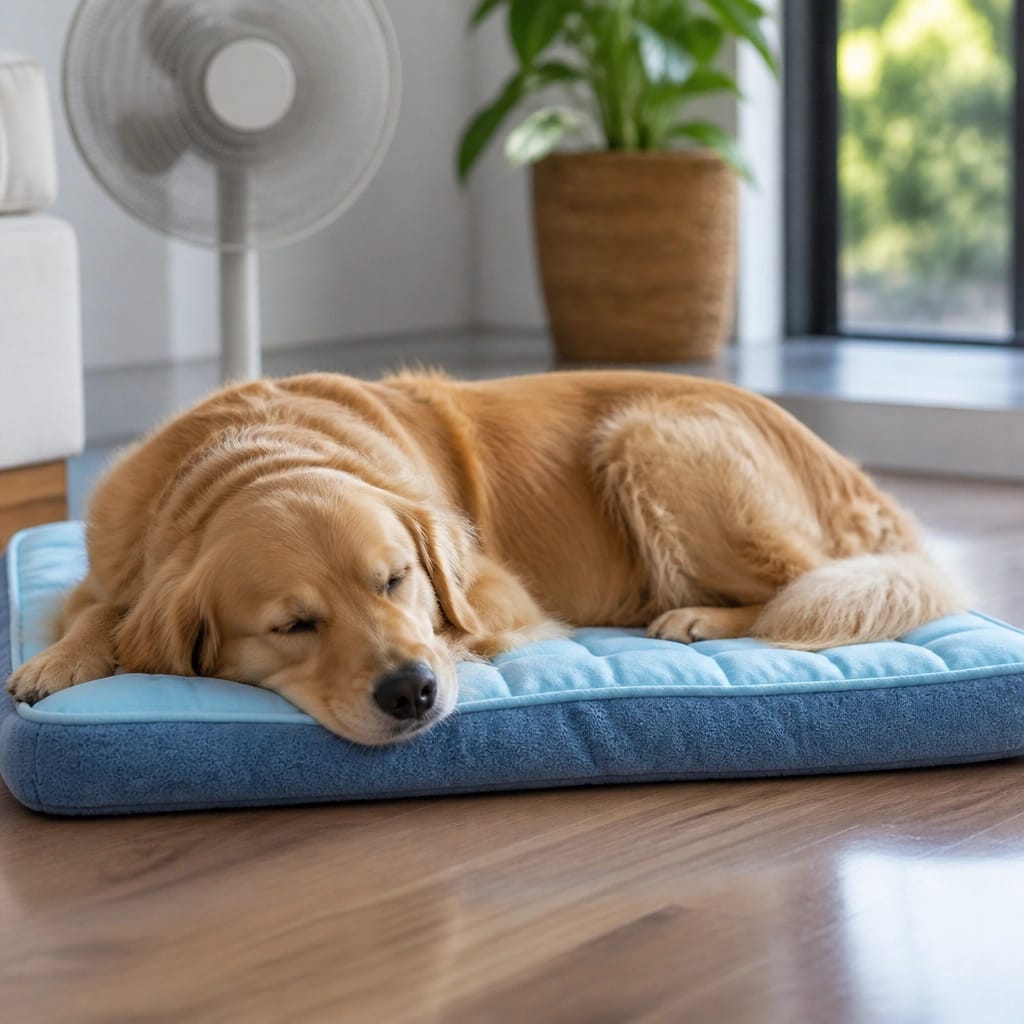
The elevated cot cools continuously because airflow is constant. Gel packs last 1 to 4 hours depending on the ambient temperature and your dog’s body heat. Water-filled beds stay cool for 2 to 6 hours before they need a water change.
If the room is above 85°F, no cooling bed works as well. The bed can only cool to near the air temperature, not below it. In extreme heat, combine the bed with a fan or move your dog to an air-conditioned room.
Mistakes That Can Harm Your Dog
The biggest mistake is using toxic gel packs. Some freezer packs contain ethylene glycol, which is poisonous if chewed. Always check the label for “non-toxic” or “food-grade.”
Another common error is building a bed that traps heat. Foam, thick padding, or non-breathable fabric can make your dog hotter. Stick to mesh or cotton for the sleeping surface.
Never leave a dog unsupervised with a DIY bed until you’ve tested it for stability. If the frame wobbles or the gel pack shifts, your dog could get hurt or ingest something.
When a DIY Cooling Bed Isn’t the Right Choice
If your dog is a heavy chewer, skip the gel and water methods. Even non-toxic materials can cause a blockage. Stick to the elevated cot, which has no removable parts.
For dogs with severe arthritis or mobility issues, a raised cot might be hard to climb. A gel pad on the floor is better. Just make sure it’s not too thick.
Check our guide on where to place a dog bed in the house for tips on positioning.
If your home has extreme humidity, moisture can build up under the bed. That can cause mold. Use the elevated cot or switch to a commercial cooling pad if you can’t keep the area dry.
How to Tell if Your Dog Is Actually Overheating
Panting is normal after exercise, but watch for excessive panting that doesn’t stop. Other signs include drooling, red gums, weakness, vomiting, or stumbling.
If you see these signs, get your dog to a cool area immediately. Offer water, but don’t force it. Wet their paws and ears with cool (not cold) water.
The AVMA recommends you seek veterinary help if symptoms don’t improve within 10 minutes.
A cooling bed helps prevent heat stress, but it’s not a treatment for overheating. If your dog is already showing symptoms, the bed alone won’t fix it.
Keeping the Bed Clean and Safe Long-Term
Wash the fabric cover every two weeks in hot water. Use a pet-safe detergent. For gel and water beds, wipe the liner with a mild disinfectant.
Check for mold or mildew monthly.
Replace gel packs yearly. The gel degrades and loses cooling power. PVC frames can last for years if stored indoors during winter.
Store the bed in a dry place when not in use.
Frequently Asked Questions
How long does a DIY cooling bed last?
An elevated cot frame lasts two to three years. Gel packs need replacement every 12 months. Water liners may last one season before developing leaks.
Can I use a regular freezer pack in a cooling bed?
Only if the pack is labeled non-toxic and food grade. Many freezer packs contain ethylene glycol, which is toxic to dogs. Always check the label.
What fabric is best for the sleeping surface?
600D or 1000D polyester mesh works best. It breathes well and dries fast. Avoid nylon or vinyl, which trap heat and cause sweating.
How do I stop my dog from chewing the bed?
If your dog chews, use the elevated cot design. It has no removable parts. You can also check our guide on why dogs dig or scratch at their bed for more tips.
Can I use this bed outdoors?
Yes, but keep it in the shade. Direct sunlight heats the surface and reduces cooling. Use UV resistant fabric if the bed stays outside.


