

Dog Bed Safety for Dogs That Chew
If your dog chews through their bed, you’re probably worried about more than just the mess. Dog Bed Safety for Dogs That Chew is about what happens after the fabric tears, the foam crumbles, or the zipper disappears. The real danger isn’t a ruined bed. It’s a trip to the emergency vet.
Veterinary estimates place intestinal obstruction surgery between $2,000 and $5,000 depending on severity and location. That’s before you factor in recovery time and the stress on your dog. Understanding what makes a bed safe, not just tough, is the difference between prevention and a medical crisis.
Let’s break down what actually matters.

Why Safety Matters More Than Durability
A bed that lasts three months but leaches chemicals or fills your dog’s stomach with foam is not a win. Durability is about how long the bed survives. Safety is about what happens when it doesn’t.
Many “tough” beds use fire retardants that meet TB117 but contain chemicals linked to endocrine disruption. Others use shredded foam fill that’s easy to ingest in small pieces. If your dog swallows enough, that foam can clump and cause a blockage.
The goal isn’t just a bed your dog can’t destroy. It’s a bed that won’t harm them if they do. That distinction matters more than any material claim.
If you’re curious about what drives that chewing behavior in the first place, it’s worth checking the reasons behind why dogs lick or chew their beds. Understanding the root cause helps you choose the right safety approach.
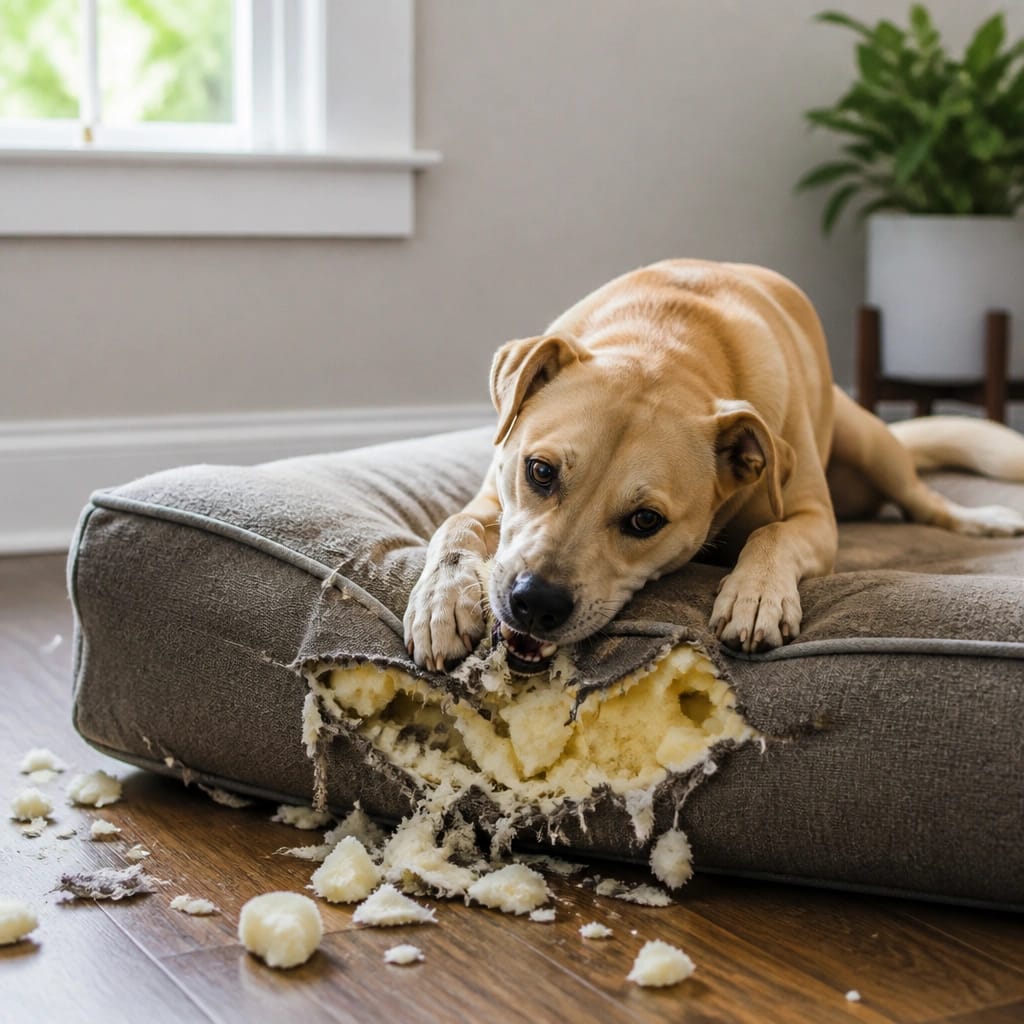
The Real Risks: What Happens When a Dog Chews a Bed
Three main risks come into play when a dog chews through a bed. Each one requires a different prevention strategy.
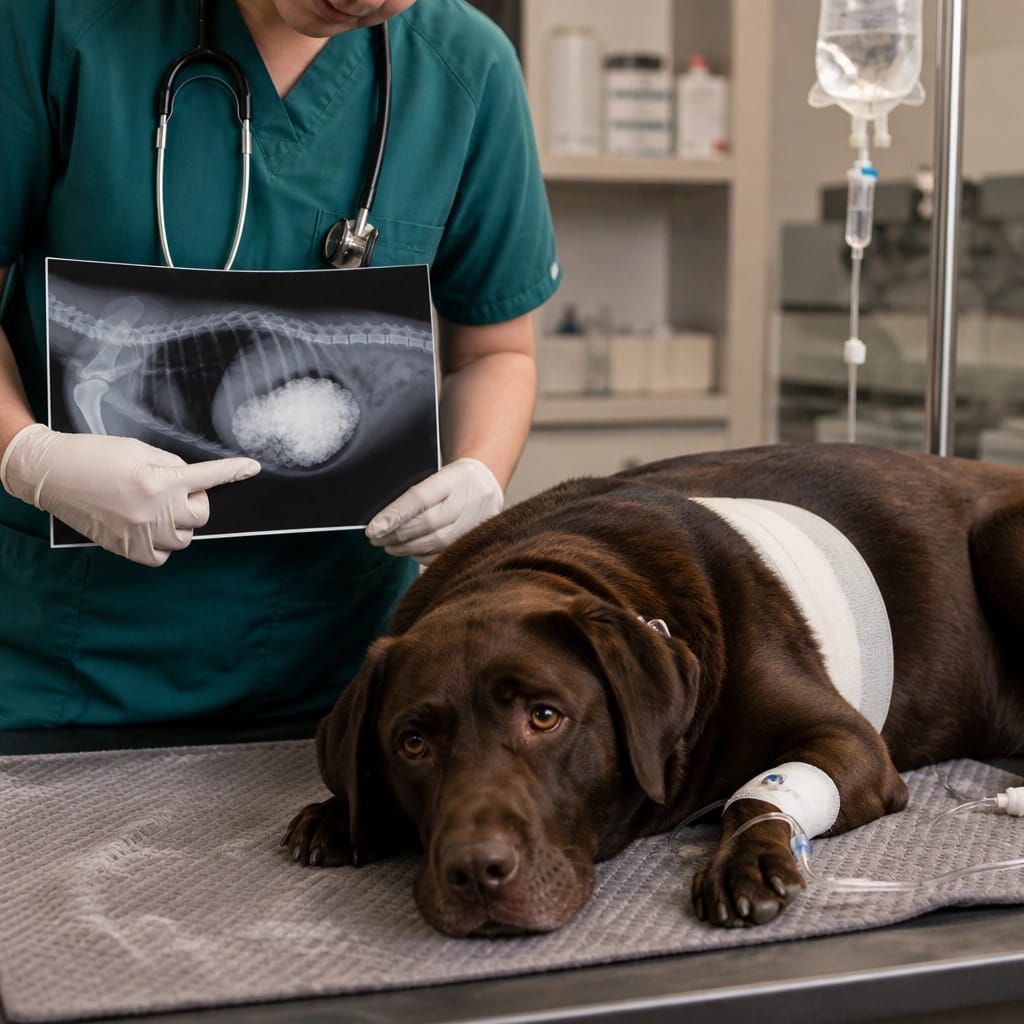
| Risk | What Happens | Urgency |
|---|---|---|
| Intestinal blockage | Fabric or foam lodges in the digestive tract | Emergency surgery needed |
| Choking hazard | Zippers, tags, buttons, or seams get lodged in the airway | Immediate life threat |
| Chemical exposure | Fire retardants, dyes, or foam additives leach into the body | Long-term health concern |
Blockage is the most common serious outcome. Dogs that swallow fabric may not show symptoms for 24 to 72 hours. Vomiting, lethargy, and loss of appetite are early signs.
If you see those, your vet needs to know immediately.
Choking is less common but faster. A zipper pull or a torn seam can block the trachea. If your dog is gagging, pawing at their mouth, or struggling to breathe, that’s a crisis.
Chemical exposure is slower but real. Foams that contain VOCs or certain fire retardants can cause skin irritation, respiratory issues, or hormonal disruption over time.
What “Chew-Proof” Actually Means (And What It Doesn’t)
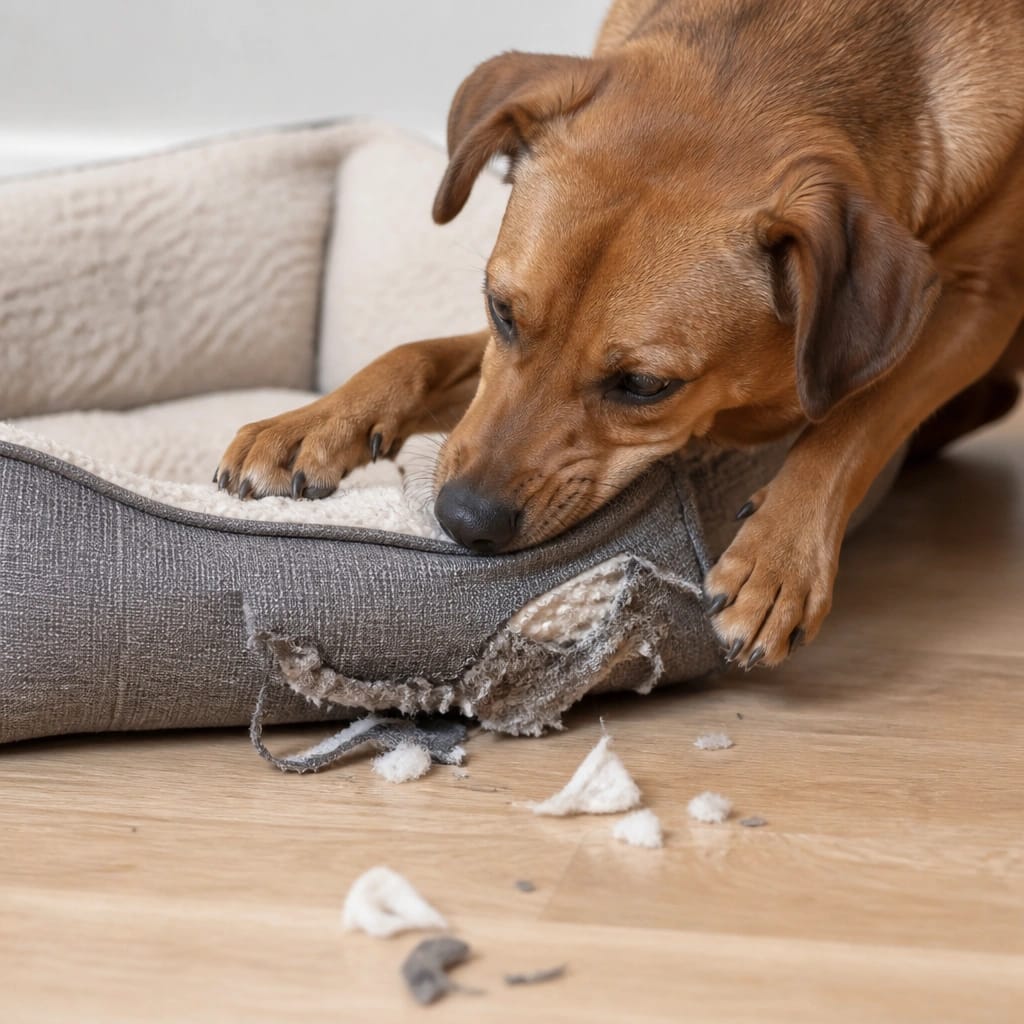
“Chew-proof” is a marketing term, not a certification. No standard body defines what qualifies as chew-proof. Most manufacturers test their beds against dog bite force, but there’s no universal test protocol.
Here’s what the term usually means:
- The fabric has high tear resistance (measured in denier or pounds of force)
- The seams are reinforced with double stitching or binding tape
- The zipper is heavy-duty or hidden behind a flap
Here’s what it does not mean:
- The bed is indestructible
- The foam is safe to ingest
- The bed is non-toxic
A bed with a 1680D ballistic nylon cover can survive a lot of chewing. But if your dog gets through that cover, the foam inside is often the same standard foam used in any other bed. That’s where the safety gap lives.
The safest approach is to treat “chew-proof” as a feature, not a guarantee. Combine it with non-toxic materials and close supervision.
Materials That Are Safer for Chewers
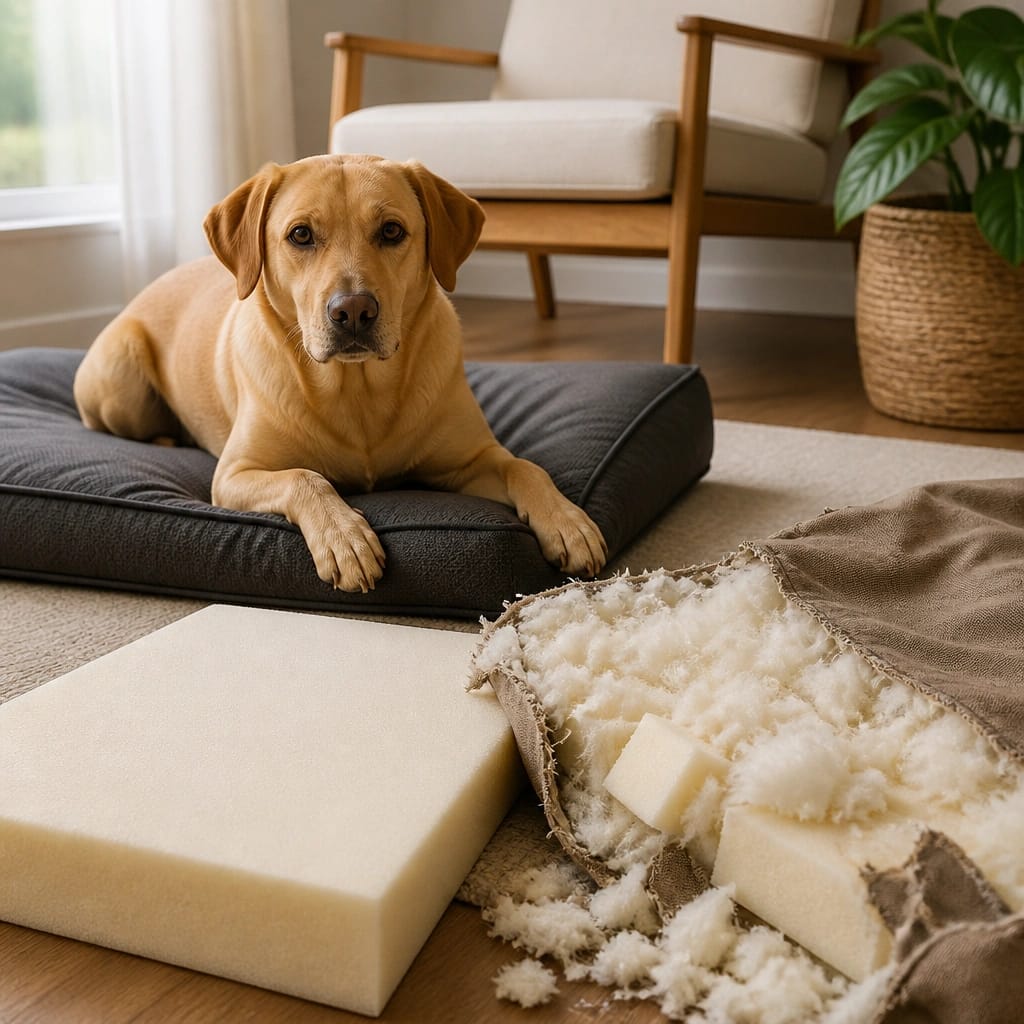
Not all fabrics and foams are equal. Some are safer than others, both in terms of resistance and toxicity.
Fabric types ranked by safety:
- Ballistic nylon (1680D or higher), highest tear resistance, low chemical leach
- Cordura nylon, similar to ballistic nylon, slightly less dense
- Canvas (heavy-weight), good resistance, but can fray over time
- Polyester fleece, low resistance, high risk of ingestion
Foam types ranked by safety:
- High-density solid foam, difficult to shred, less likely to be swallowed in large pieces
- Memory foam, dense but can be torn if cover is breached
- Shredded foam or fiber fill, easy to ingest, high blockage risk
Non-toxic certifications to look for:
- Greenguard Gold, limits VOCs and chemical emissions
- OEKO-TEX Standard 100, tests for harmful substances in textiles
- CertiPUR-US, applies to foam, tests for heavy metals and phthalates
If you’re considering a specialty fill like cedar, check the safety profile first. Some natural materials can cause respiratory irritation or allergic reactions in dogs.
Features That Reduce Risk
Beyond the materials themselves, certain design features make a bed safer for a dog that chews.
Zipperless designs remove the most common choking hazard. If the bed has no zipper, there’s nothing to pull off and swallow. Some beds use a flap-over closure or a drawstring instead.
Reinforced seams use double stitching or binding tape to prevent the cover from separating at the edges. A single-stitched seam can pull apart under moderate chewing pressure.
Waterproof liners between the cover and foam act as a second barrier. Even if your dog gets through the outer fabric, the liner can slow them down and reduce foam exposure.
Flat beds are generally safer than bolsters or donut beds. Bolsters are a natural chew target. They’re easier to grab and tear.
If you need a bed for a chewer, a flat mattress-style bed is a better starting point.
You can find more detail on how different bed styles compare in our breakdown of crate pad vs crate mat options. The right shape matters for safety.
For dogs that dig or burrow before settling, the nesting instinct can be strong. Some owners find that addressing that behavior with a separate play mat or blanket reduces the urge to chew the bed itself.


