

How to Teach a Dog to Stay on Their Bed
Teaching your dog to stay on their bed starts with a clear cue and a consistent reward. You guide the dog onto the bed, mark the moment with a click or a word like “yes,” then give a treat. Next you add a release cue such as “okay” or “free” so the dog knows when the stay ends. From there you gradually increase the time the dog stays and the distance you move away. Most dogs learn the routine within two to four weeks of short daily sessions. The key is moving at your dog’s pace and troubleshooting each step as you go.
How to Teach a Dog to Stay on Their Bed is a question most owners ask after their dog pops off the bed for the tenth time. The problem is rarely stubbornness. It’s usually a gap in one of three areas: the dog doesn’t understand the cue, doesn’t know how long to stay, or hasn’t practiced around enough distractions.
According to the American Kennel Club, the most reliable way to build a stay is through positive reinforcement training with gradual increases in duration, distance, and distraction. Most dogs pick up the basics within one to four weeks of short daily sessions. The trick is knowing which branch of the training tree to follow when your dog hits a specific snag.
Let’s start with the most common reasons the stay fails.
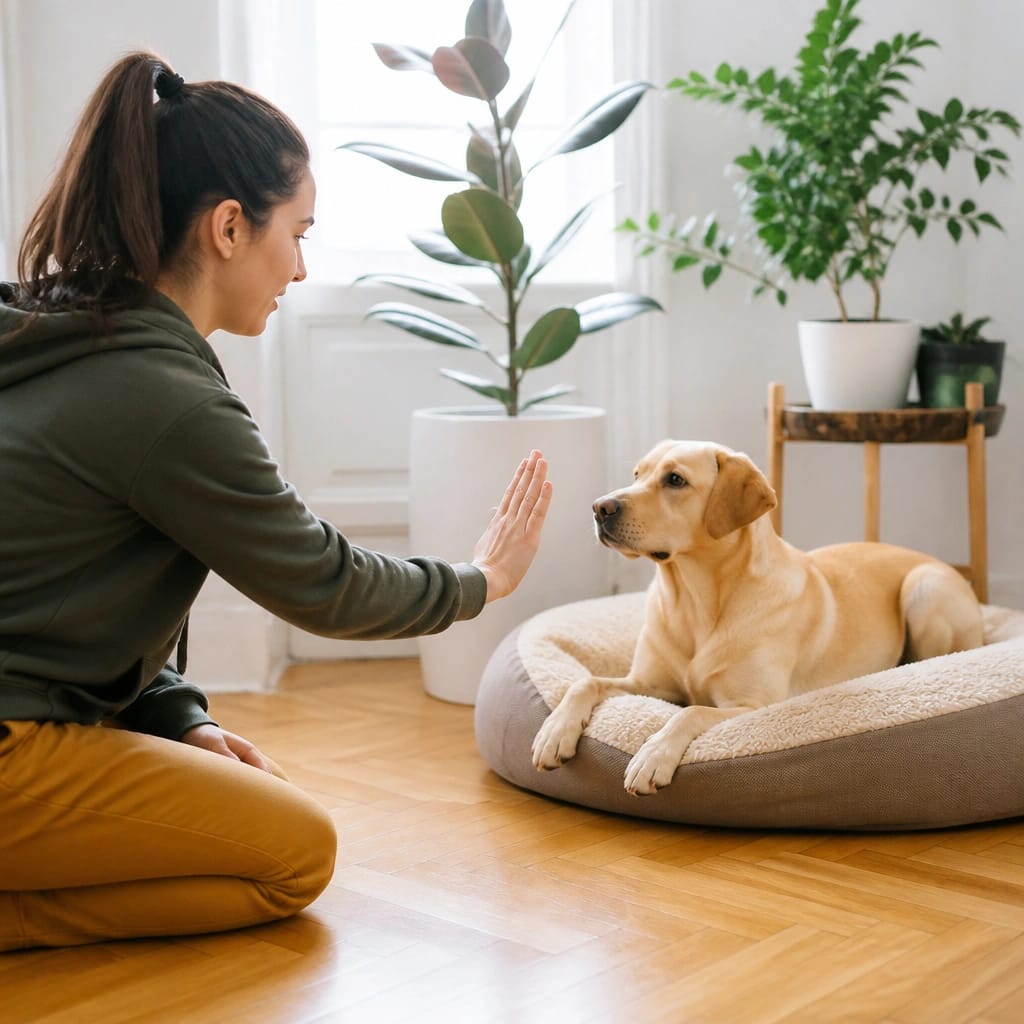
Why Your Dog Won’t Stay on Their Bed
Before you can fix the problem, you need to know what’s actually going wrong. The stay on a bed breaks down in three predictable ways:
- The dog won’t get on the bed. The bed might be uncomfortable, in a bad location, or the dog has a negative association with it.
- The dog gets up before the release cue. The dog doesn’t understand that the stay lasts until you say otherwise.
- The dog lies down but won’t stay put. Distractions, duration, or distance are too much too soon.
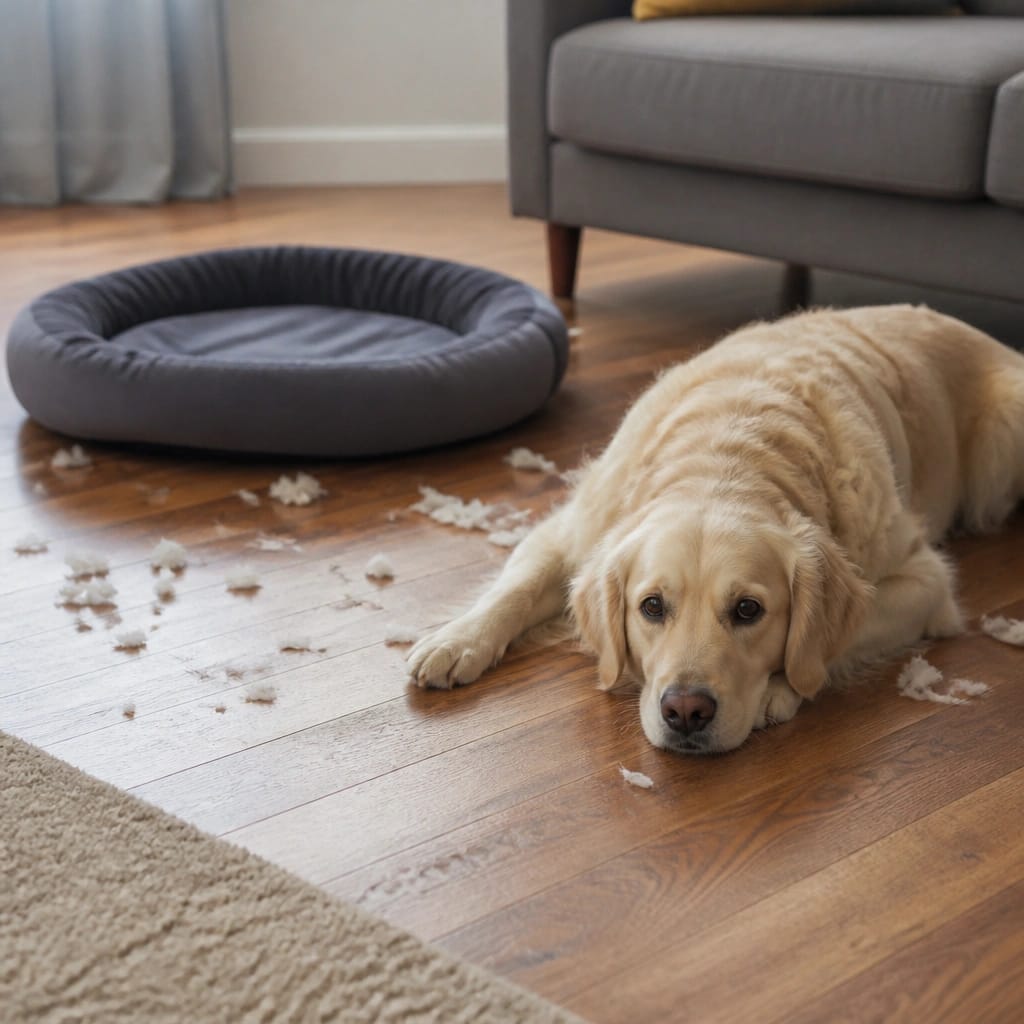
Each of these problems has a different fix. The next sections walk through each one so you can find the exact solution for your dog.
The Quick-Start Workflow: How to Teach Stay on Bed
Here’s the basic formula. Once you understand the steps, you can adjust them based on where your dog struggles.
- Lure or guide your dog onto the bed. Use a treat to lead them on. The moment all four paws touch the bed, mark the behavior with a clicker or a word like “yes” and give the treat.
- Add a verbal cue. Say “go to bed” or “place” right before the dog steps onto the bed. With repetition, the dog will associate the word with the action.
- Add a release cue. After a second or two of the dog staying on the bed, say “okay” or “free” and toss a treat off the bed. The dog learns to wait for that word.
- Increase duration. Wait two seconds before releasing. Then three seconds. Then five. Build slowly.
- Increase distance. Take one step away from the bed. Then two steps. Then cross the room.
- Add distractions. Practice with a knock on the door, a dropped toy, or another person walking by.
This is the skeleton. The next three sections cover the most common snags in detail.
Decision Branch 1: Dog Won’t Go to the Bed
If your dog avoids the bed entirely, don’t force them onto it. That creates a negative association. Instead, try these fixes.
Check the bed placement. If the bed is in a high-traffic area or near a noisy appliance, your dog might not feel safe there. A quiet, low-traffic corner works better. Proper bed positioning in the home makes a big difference in how willing your dog is to use the bed.
Make the bed rewarding. Drop treats on the bed throughout the day when you’re not training. Let the dog discover them. This builds a positive connection to the bed itself.
Try a different surface. Some dogs prefer a flat mat or blanket over a thick, plush bed. Experiment with a towel on the floor and see if the dog is more willing to go there.
Check the size. A bed that’s too small or too large can be unappealing. Make sure your dog can stretch out comfortably. Our size guide by weight can help you find the right fit.
If none of these work, shape the behavior slowly. Reward the dog for looking at the bed. Then for stepping one paw on it.
Then two paws. Build from there.
Decision Branch 2: Dog Gets Up Before the Release Cue
Your dog goes to the bed. They lie down. Then two seconds later they pop up like a spring.
This is the most common training issue.
The fix is simple: the dog doesn’t know when the stay ends. They’re guessing. Your job is to make the release cue crystal clear.
Start with very short stays. Ask for one second on the bed, then say your release word and toss a treat off the bed. Do this five times. Then try two seconds.
Then three.
Don’t test the dog. If you wait until the dog gets up on their own, you’re rewarding the self-release. Always release the dog before they decide to get up.
Use a high-value reward. For a dog that’s eager to leave, the treat on the bed needs to be worth staying for. Use small pieces of chicken or cheese instead of regular kibble.
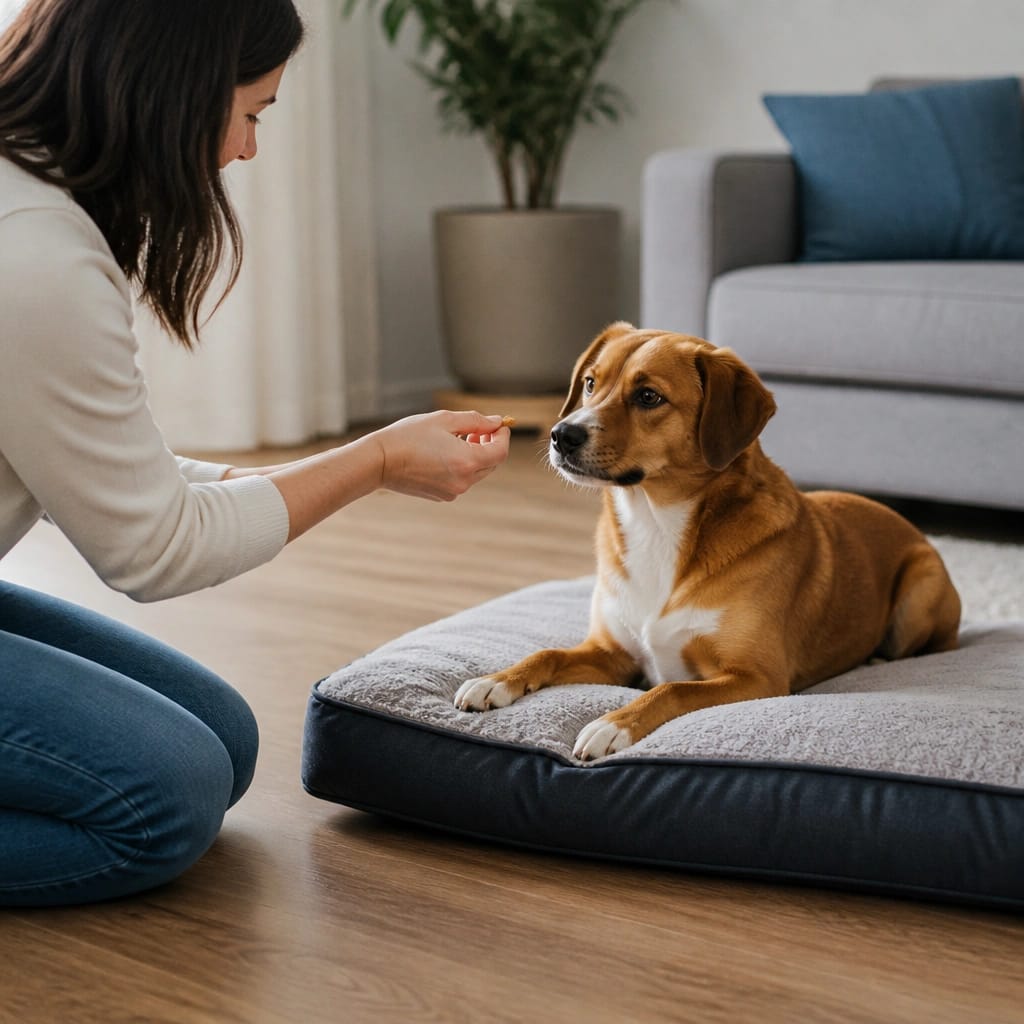
If the dog still gets up, you’ve moved too fast. Go back to one-second stays and rebuild from there. Be patient.
This step takes longer than most owners expect.
Decision Branch 3: Dog Lies Down but Won’t Stay Put
Your dog stays on the bed for a few seconds. Then they get up and wander off. The difference here is that the dog understands the concept.
They just can’t hold the stay for long.
Reduce the duration. If the dog breaks at five seconds, go back to two seconds. Build up in one-second increments.
Reduce the distance. If you’re standing across the room, come closer. The dog might be fine with the stay when you’re nearby but not when you’re far away.
Reduce distractions. If there are other people, pets, or noises in the room, the dog might be overwhelmed. Practice in a quiet room first. Then gradually add distractions.
Reward calm behavior. Don’t just reward the dog for staying. Reward them for being relaxed. A dog with their head down and body loose is more likely to hold the stay than one that’s tense and watching the room.
Once the dog can hold a stay for 30 seconds in a quiet room, start adding one variable at a time. More duration. More distance.
More distractions. Never add two at once.
Adding Duration, Distance, and Distractions Gradually
This is where most owners go wrong. They increase everything at once and the dog fails.
Only change one variable per session. If you add distance, keep the duration the same. If you add a distraction, stay close to the bed. Adding two changes at once makes it impossible for the dog to know what went wrong.
Use this rule of thumb: if your dog breaks the stay, drop back to the last successful level and try again. Three successes in a row means you can move forward.
Common Mistakes That Break the Stay
Moving too fast. This is mistake number one. Owners increase duration by ten seconds instead of one or two. The dog fails, and both of you get frustrated.
Repeating the cue. Saying “stay stay stay stay” teaches the dog to ignore the word. Say it once and wait.
Using the bed as punishment. If you send the dog to their bed when you’re angry, they’ll associate the bed with negative emotions. That makes training much harder.
Letting the dog self-release. If your dog gets up without the release cue and you don’t correct it, they learn the cue is optional. Always reset and try again.
Choosing the Right Bed and Location for Training
The bed itself matters. A bed that slides across the floor when the dog moves is a distraction. A bed that’s too small or too soft can make it hard for the dog to settle.
Look for a bed with a non-slip bottom. A flat, firm surface is easier for training than a deep, plush bed with high bolsters. You can switch to a more comfortable bed later.
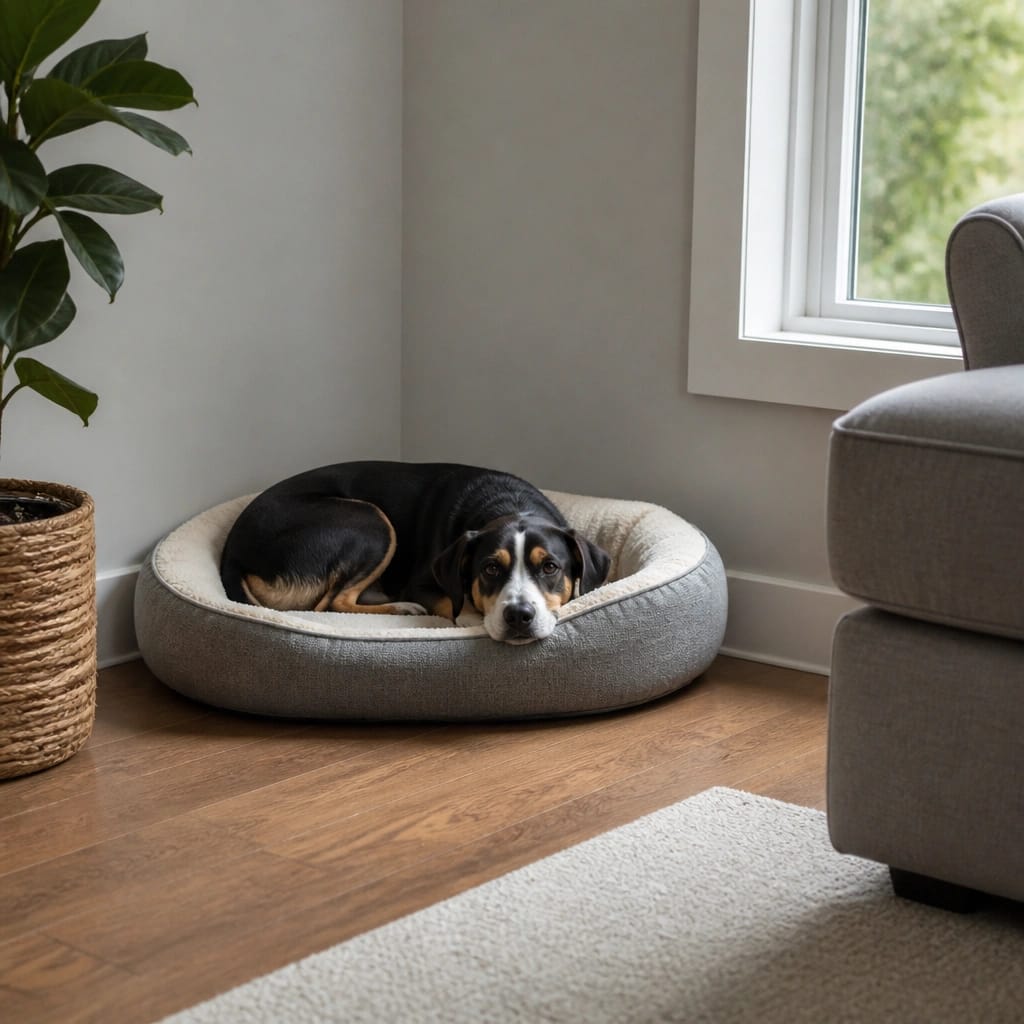
Location matters just as much. A corner of the living room with low foot traffic works well. Avoid spots near windows, doors, or heating vents.
If your dog is anxious, a bed designed for noise sensitivity can help them feel more secure.
Training Different Personalities: Puppies, Seniors, and High-Energy Dogs
Puppies have short attention spans. Keep sessions to two or three minutes. Use tiny treats.
End on a success even if the stay was only one second.
Senior dogs may have joint pain or hearing loss. A bed with good joint support helps. If they can’t hear the cue, use a hand signal.
Our guide on whether dogs need a pillow can help with comfort considerations.
High-energy dogs need to burn off steam before training. Take them for a short walk first. Then use high-value treats.
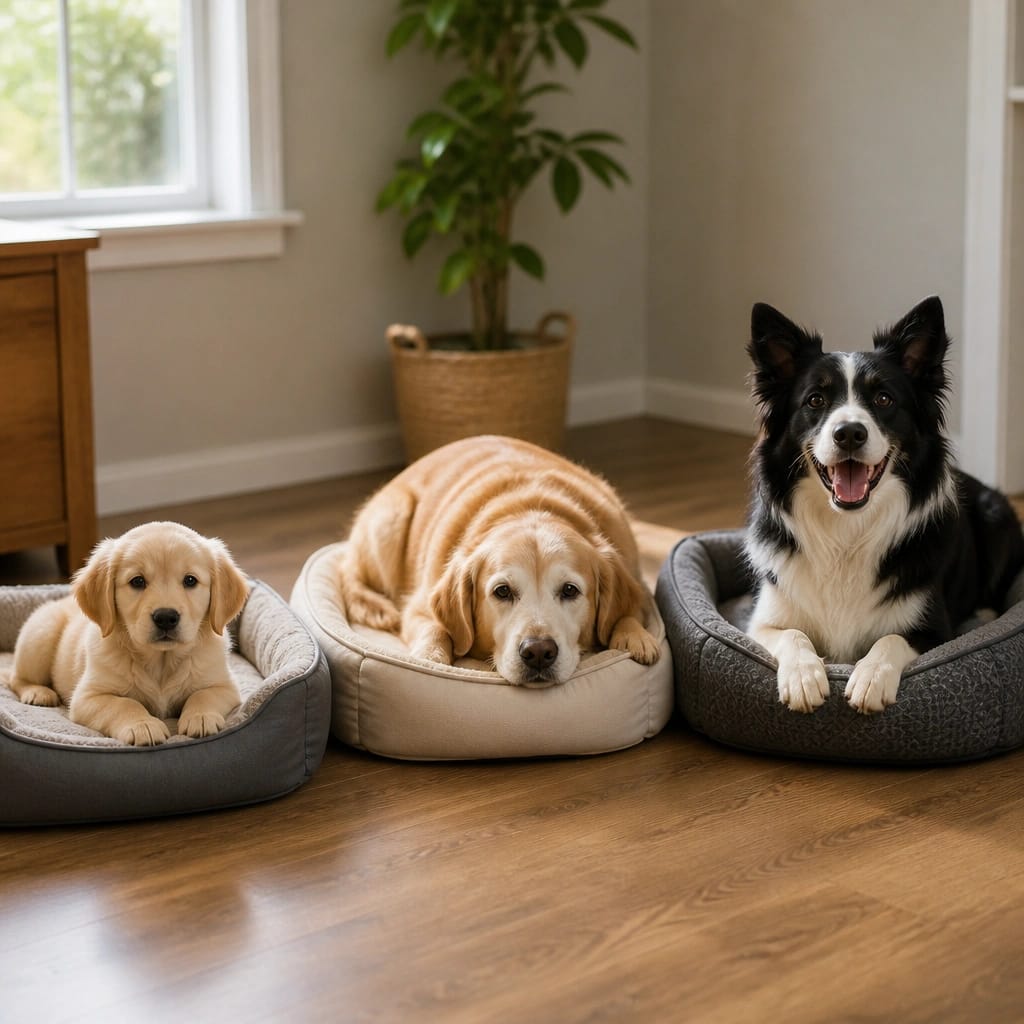
Keep the first few sessions very short to build the habit of lying still.
How Long Until It Clicks? Realistic Timelines and Expectations
Most dogs understand the basics within one to two weeks of daily training. A reliable stay with distance and mild distractions often takes three to four weeks.
Puppies and distractible dogs may take longer. That’s normal. The goal is not speed.
It’s consistency. A dog that learns slowly with clear boundaries will hold the stay better than a dog that was rushed through the steps.
Expert Tips for Faster, More Reliable Results
Use a consistent release word every time. “Okay” works well. “Free” is another solid choice.
Stick to one word and never use it in casual conversation.
Train before meals when your dog is most motivated. A hungry dog works harder for treats. End every session on a success even if it’s a very short stay.
Safety and Positive Training Practices
Never force your dog onto the bed. Never use the bed as a timeout spot. Both create negative associations that make training harder.
Keep sessions short. Two to three minutes for puppies. Five minutes for adult dogs.
Watch for signs of stress like yawning, lip licking, or avoiding the bed.
When to Seek Help from a Professional Trainer
If your dog shows fear or aggression around the bed, stop training. A certified professional trainer can help with underlying issues.
Seek help if your dog can’t hold a one-second stay after two weeks of daily practice. Some dogs need a different approach. A trainer can spot what you’re missing.
Frequently Asked Questions
How long does it take to teach a dog to stay on their bed?
Most dogs learn the basics in one to two weeks. A reliable stay with distance and distractions usually takes three to four weeks with daily practice.
What if my dog won’t go on the bed at all?
Check the bed placement and comfort. Try dropping treats on the bed throughout the day. If the dog still avoids it, switch to a flat mat or towel.
Can I use a mat instead of a bed?
Yes. A mat is often easier for training because it’s portable and has a flat surface. You can switch to a bed once the behavior is solid.
What’s the best release word to use?
Choose a word you don’t use in everyday conversation. “Free” and “okay” are common choices. Say it once and wait for the dog to move.
Should I use a clicker for this training?
A clicker helps mark the exact moment the dog is on the bed. It’s optional but useful for clear communication. A marker word like “yes” works too.
Your Next Steps: A Simple Decision Guide
If your dog won’t go to the bed, check the placement and comfort. If they get up early, shorten the duration and strengthen the release cue. If they can’t hold the stay, reduce distance and distractions.
Move one variable at a time. Be patient. The stay will come.


