

Why Some Dogs Prefer Hard Floors Over Soft Beds?
Your dog has a perfectly good memory foam bed, yet they choose the cold tile every single time. “Why Some Dogs Prefer Hard Floors Over Soft Beds” is one of the most common (and most confusing) complaints we hear from owners. But this isn’t a sign your dog is stubborn.
It’s usually a clue about how their body works.
In our research, adult dogs sleep roughly 12 to 14 hours per day according to veterinary sleeping-behavior literature. That’s a long time to be picky about a sleeping surface. Dogs don’t choose a spot to annoy you.
They choose it because the surface does something for them, whether that means cooling down, easing pressure, or just feeling more stable.
Let’s dig into the actual reasons, and what your dog might be trying to tell you.
The Real Reasons Dogs Choose Hard Floors
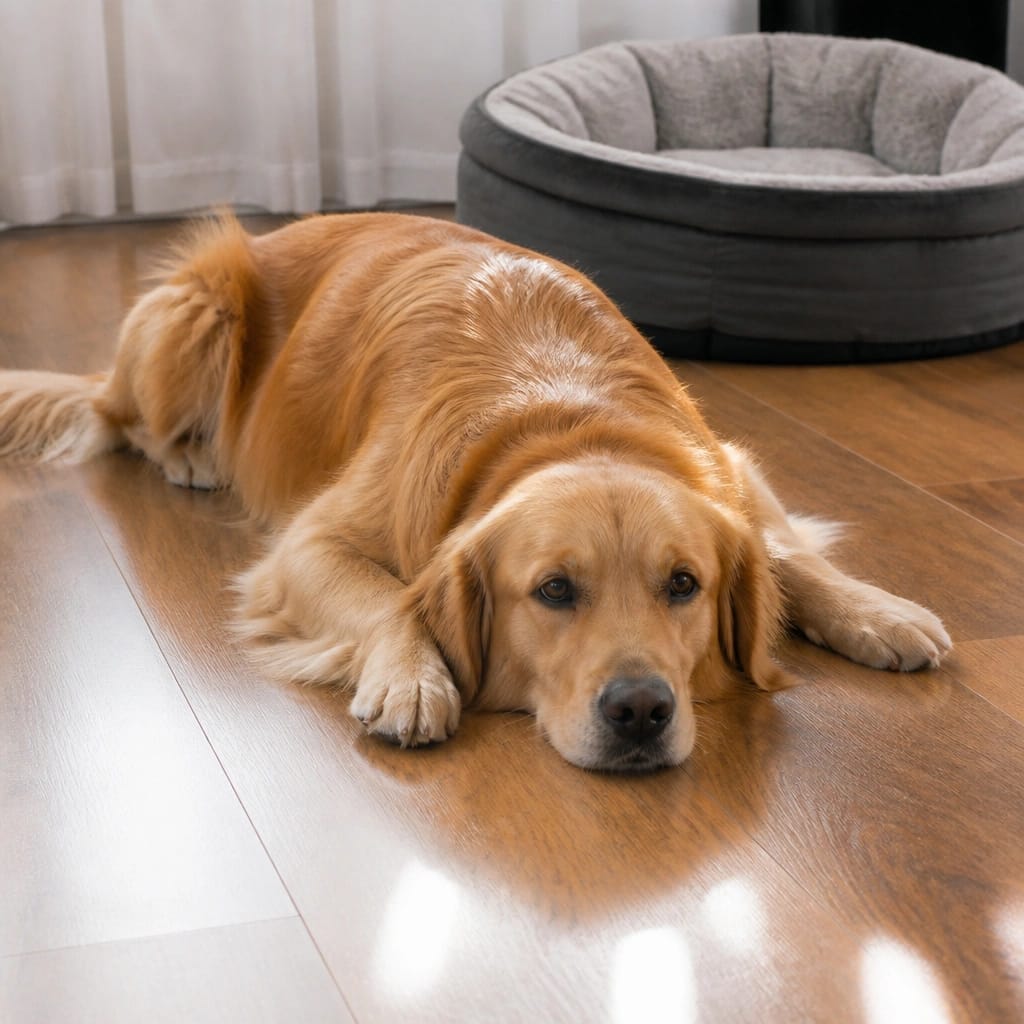
The biggest reason comes down to heat. Dogs don’t sweat like we do. They release body heat through their paw pads, their ears, and by pressing their belly against a cooler surface.
A hard floor like tile, hardwood, or concrete pulls heat away from their body quickly. A thick, plush bed traps that heat and turns your dog into a baked potato.
Coat type matters too. Double-coated breeds like Huskies, Golden Retrievers, and Malamutes are basically wearing a winter jacket all year. Their instinct to find a cold, hard surface is strong.
Even short-haired dogs can overheat on a bed made of heat-retaining foam.
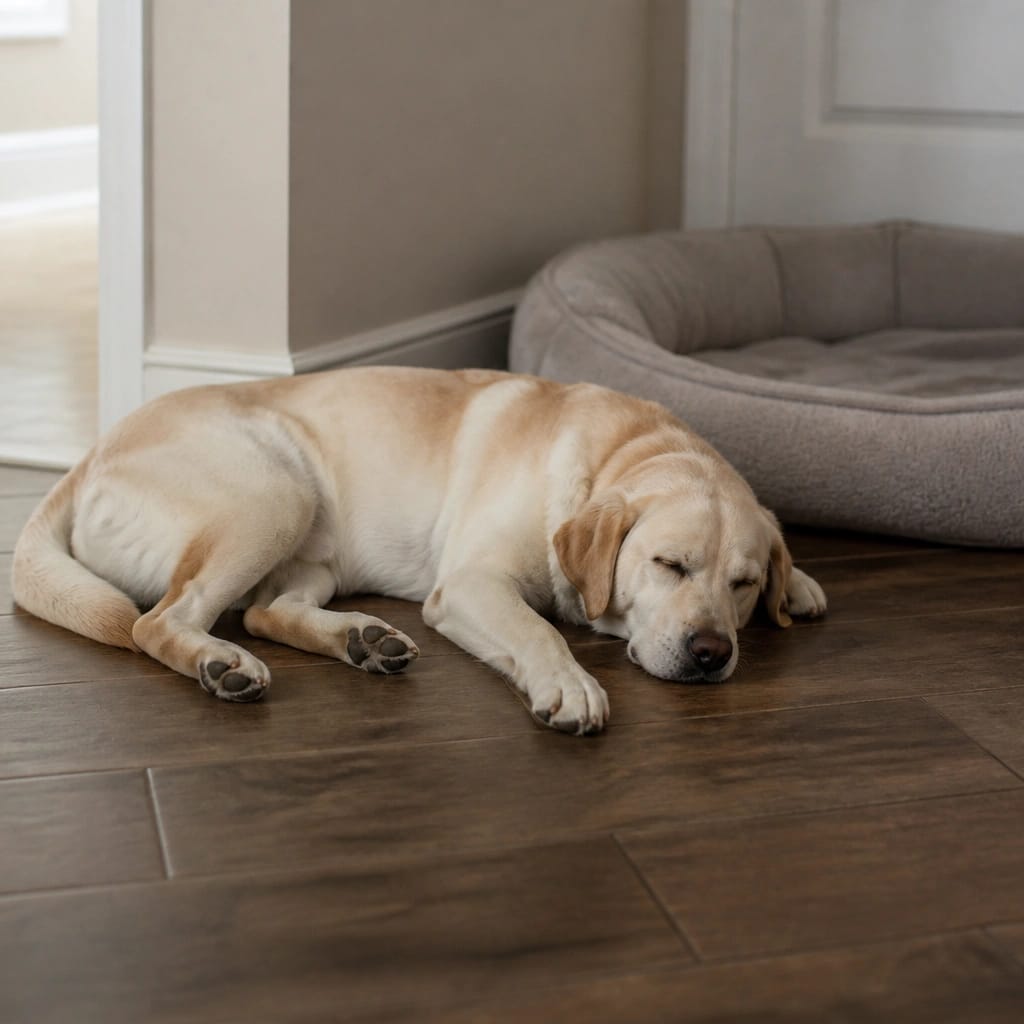
There’s also a firmness preference. Some dogs simply like a stable, solid surface under their joints. It’s the same reason some people prefer sleeping on a firm mattress.
A bed that’s too soft makes them feel like they’re sinking, and they don’t like it.
This behavior isn’t new. Many owners report their dog only uses the bed in winter, when the house is cooler. If your dog is choosing the floor, they’re not rejecting your generosity.
They’re making a comfort decision.
Is It a Preference or a Pain Warning?
Here’s where you need to pay close attention. Sometimes a dog prefers hard floors for a harmless reason, but sometimes it’s a sign of something more serious. The key difference is how suddenly the behavior started.
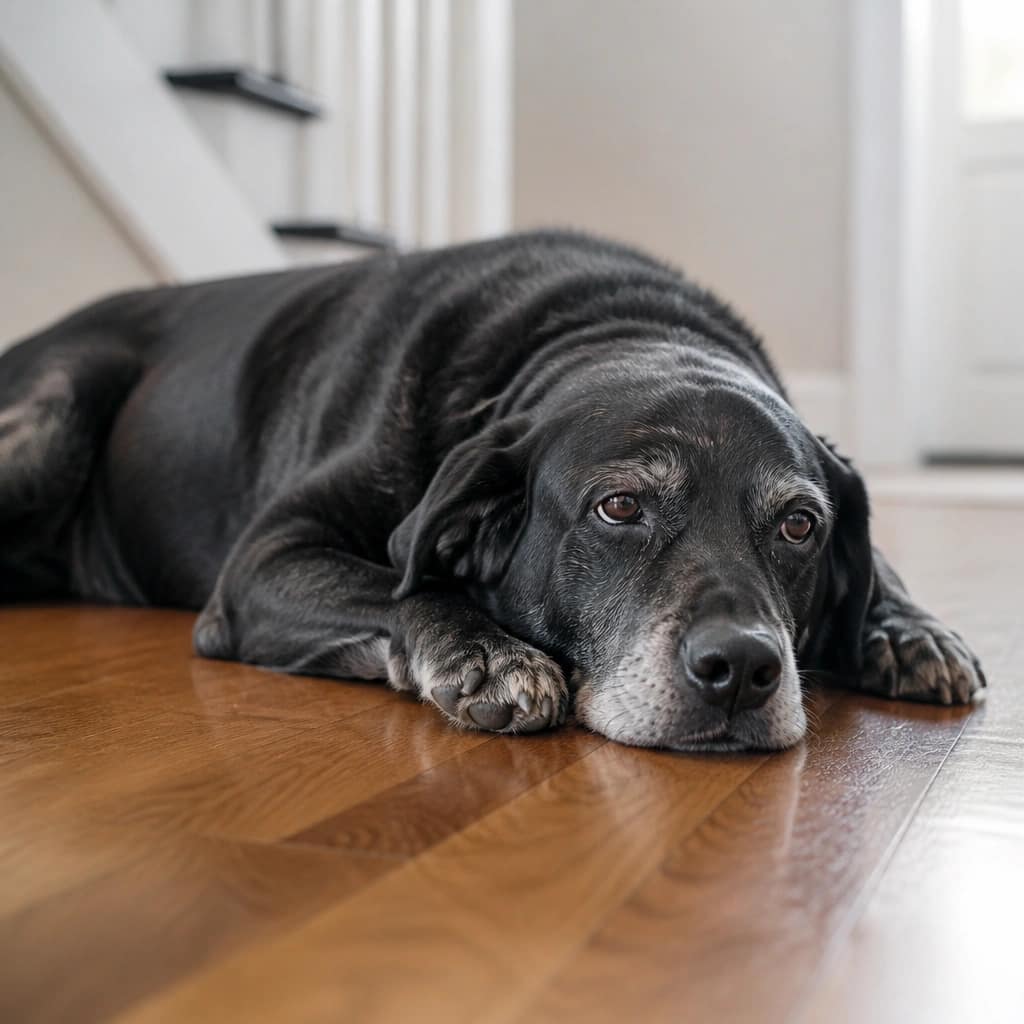
If your dog has always avoided soft beds, you probably have a cool-natured, firm-surface sleeper. But if your senior dog suddenly stops using their bed, pay attention. Joint pain can make a high-sided, plush bed difficult to get into.
A hard floor provides the easiest exit and entry.
Look for other signs: limping, stiffness when standing up, hesitation jumping onto the couch, or visible swelling along the joints. If you see those, it’s time to talk to your veterinarian. The veterinary medical guidelines recommend avoiding hard, cold floors for dogs with confirmed arthritis, because those surfaces can worsen joint stiffness.
On the other hand, if your dog is young, active, and just sprawls out on the tile after running around the yard, they’re probably just cooling off. Watch how long they stay there. A dog that sleeps peacefully on the floor all night without shifting or pacing usually isn’t in pain.
A dog that can’t get comfortable and keeps repositioning might be trying to escape discomfort.
Also, check the age factor. Puppies often prefer hard floors because they’re still learning to regulate their own body temperature. A giant, warm bed can feel suffocating to them.
As they grow, their preferences may change.
When the Hard Floor Actually Wins
Even with the best bed on the market, certain situations give the floor a clear advantage.
- Hot rooms: If your bedroom is warm, a foam bed will hold heat all night.
- Heated floors: Radiant heating makes hard surfaces toasty and genuinely comfortable.
- Humidity: In muggy climates, beds can absorb moisture and feel damp.
- Drafty homes: Floor level is cooler than elevated spots, which some dogs seek out.
- Crate comfort: A thick pad might make the crate cramped or trap too much heat.
Floor material matters. Tile and marble are the best conductors of heat, which is why dogs love them. Hardwood is moderate.
Carpet holds warmth and feels softer, so dogs that like the floor rarely choose carpet. Concrete stays cool even in summer, but it’s rough and can cause calluses on elbows.
Compare this to common dog bed materials. Polyester fiberfill and memory foam both insulate. If your dog is already prone to overheating, a thick, high-sided bed will just make the problem worse.
A flat, breathable bed with airflow underneath might get more use than a luxury cushion.
Dog Personalities and Sleeping Positions That Matter
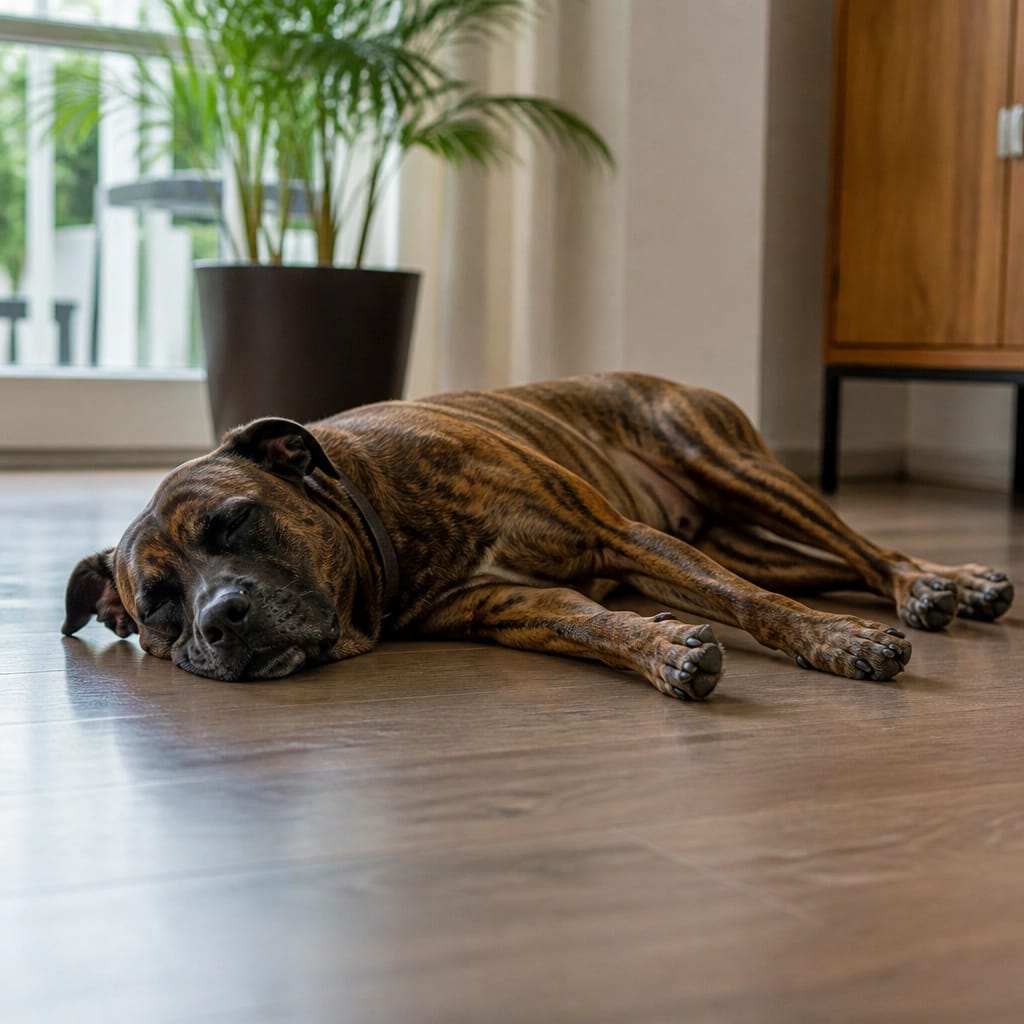
Your dog’s preferred sleeping position says a lot about their floor habit.
- Stretched-out sleepers want maximum surface contact for cooling. They’ll slide off a bed to get their belly on the floor.
- Curled-up sleepers are often trying to conserve warmth. They’re more likely to use a soft, cozy bed.
- “Splooters” (back legs kicked out behind them) press their belly and hips into the cool surface.
- Burrowers prefer enclosed, warm spaces. They’ll rarely choose a hard floor unless they’re overheated.
Breed plays a role too. Brachycephalic breeds like French Bulldogs and Pugs have a harder time regulating body temperature, so they seek out cool surfaces more often. If you’re not sure what kind of bed suits that body type, we have guidance on choosing the right bed for a Frenchie.
Age also shifts preferences. Puppies often switch between the floor and their bed hour by hour. Senior dogs may choose the floor because it’s easier to get up from than a deep, plush bed.
That’s a clue that a flatter, firmer bed might be the better investment.
Dogs with anxiety or noise phobias sometimes avoid beds because they feel too enclosed or too exposed. A safe, open space on the floor feels more manageable to them. You can read more about how anxiety affects bed choices.
What to Look For Before Choosing a New Bed
If your dog keeps rejecting a bed, don’t buy a thicker one. Buy a smarter one. Here are the specific features that make a bed more appealing to a floor-loving dog.
- Breathable fabric: Look for cotton, mesh, or moisture-wicking materials instead of thick fleece or plush.
- Flat or low-profile design: Bolsters and high walls can block airflow and make exit harder.
- Cooling technology: Gel-infused foam, phase-change mats, or simple mesh cots let heat escape.
- Firm support: A medium-firm orthopedic foam is easier to get in and out of than a sink-in soft bed.
- Non-slip base: If the bed slides around, your dog won’t feel secure on it.
Sizing matters more than you’d think. A bed that’s too small forces a dog to curl up, which traps heat. If your dog likes to stretch out, choose a size that gives them a full body extension.
Check our dog bed size chart by weight to get the measurement right.
Don’t ignore the cover material. Some dogs hate the crinkle sound of waterproof liners. Others dislike the clammy feel of synthetic fur.
Watch the fabric your dog sleeps on when they choose to use the bed.
Finally, consider an elevated cot bed. These allow air to circulate underneath, which mimics the cooling effect of a hard floor while still offering support. Many dogs that refuse traditional beds happily accept a mesh cot.


