

How to Remove Mud From a Dog Bed
Scrape off dried mud before washing. Pre-treat stains with a pet-safe stain remover. Wash removable covers in cold water on a gentle cycle.
Air dry foam inserts completely before reassembling. Never use heat on memory foam.
Your dog’s bed took a direct hit from the backyard mud zone. If you’re searching for how to remove mud from a dog bed, you’re not alone. Rainy seasons and spring thaws turn even the best-behaved dogs into dirt magnets.
It’s a messy problem, but it’s one you can fix without replacing the whole bed.
Our research shows that most dog beds are made with polyester covers or cotton blends. Each fabric responds differently to mud, and the foam inside has its own limits. The right approach depends on three things: the bed’s construction, the mud’s moisture level, and whether the cover comes off.
Let’s start with the first step.
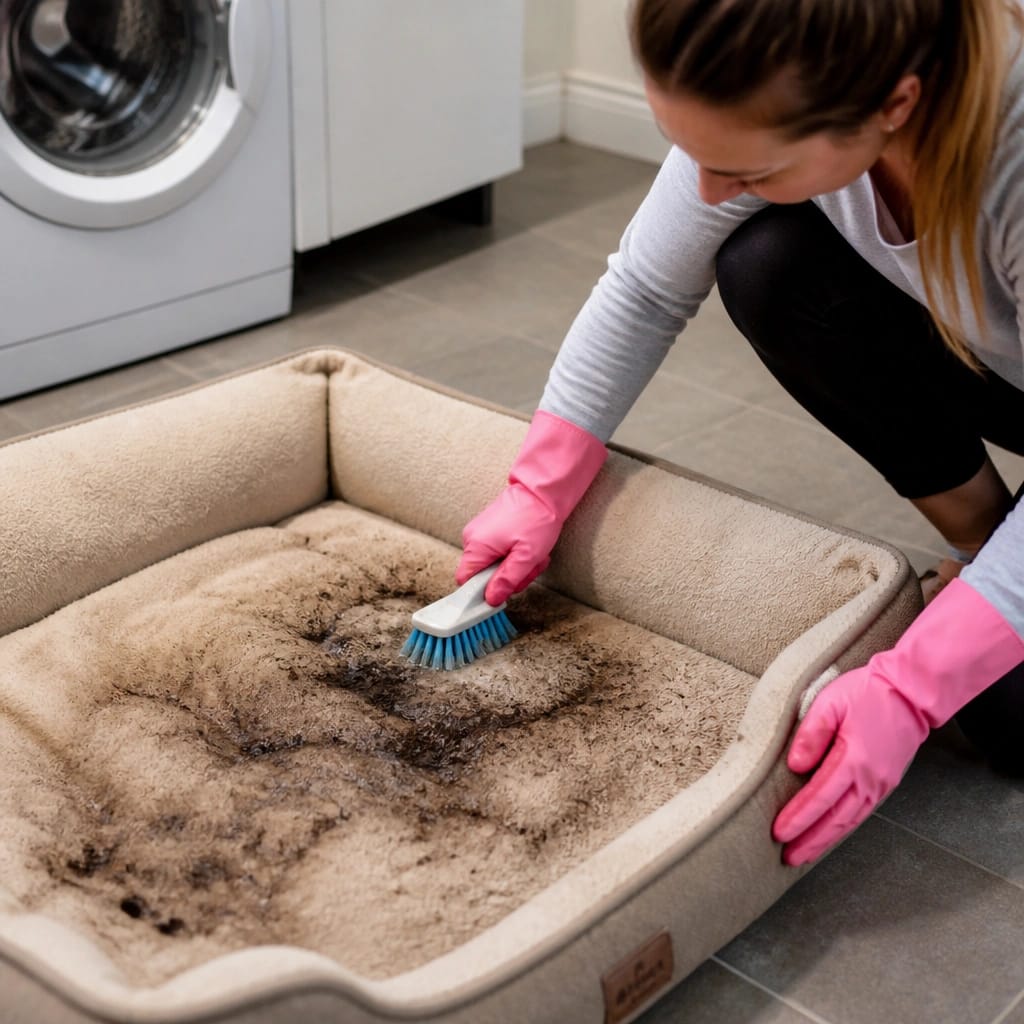
First, Check the Tag
The care tag is your best friend here. It tells you exactly what your bed can handle. Look for symbols that indicate machine washing, water temperature limits, and dryer safety.
Most dog beds with removable covers are machine washable. But some fabrics, like certain cotton blends, may shrink in warm water. Others, like waterproof or chew-resistant materials, have specific cleaning instructions that keep the coating intact.
If the tag says “spot clean only,” you’re dealing with a bed that cannot go in the machine. That changes your entire game plan. Take 30 seconds to read the tag before you do anything else.
It saves you from ruined foam and shrunken covers.
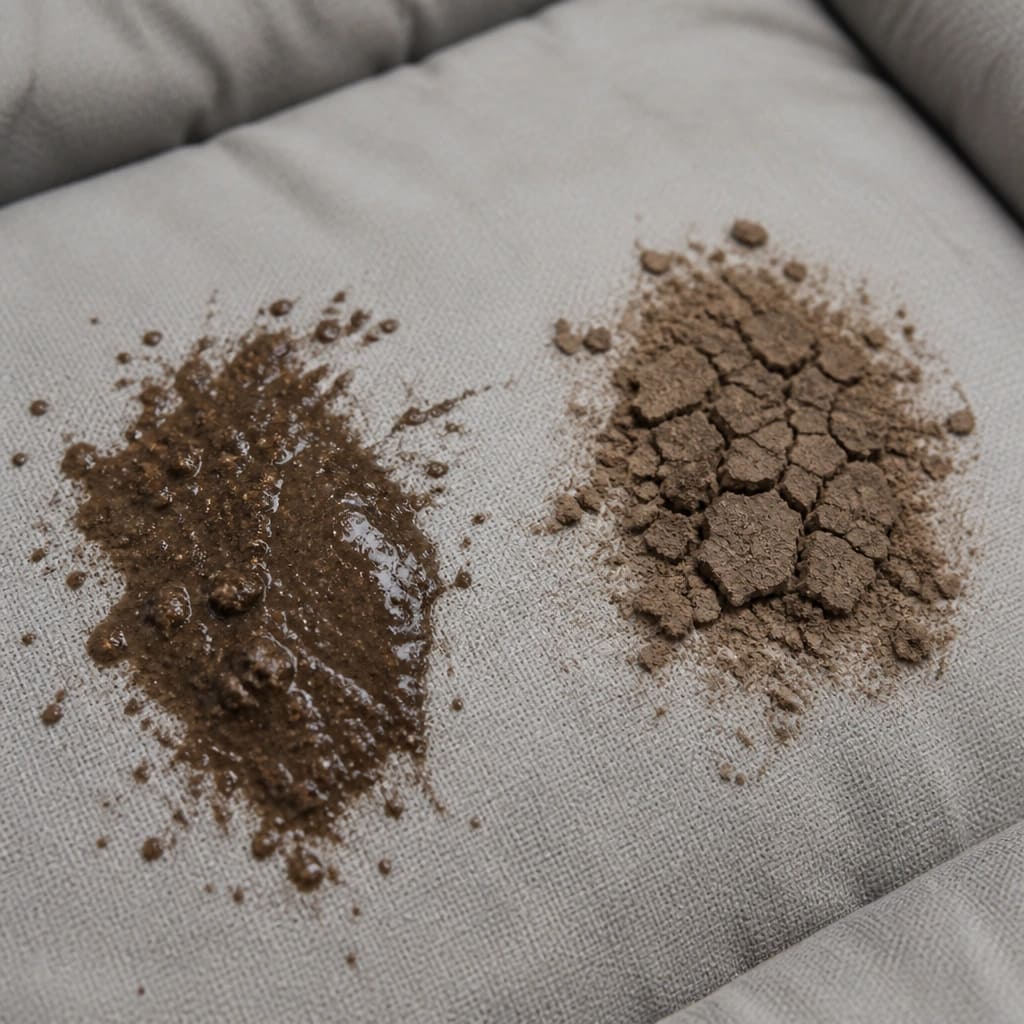
Wet Mud vs. Dried Mud
The mud’s moisture level determines your first move. Treat them differently, and you’ll get better results.
Wet mud. If the mud is still damp, blot it with an old towel. Press down to lift as much as you can. Do not rub or scrub, because that pushes the dirt deeper into the fabric fibers.
Once you’ve blotted most of it, move to the washing step.
Dried mud. Dried mud needs a different approach. Let it fully harden first, then scrape off the chunks with a dull knife or a stiff brush. Take the bed outside and shake it well.
Vacuum the remaining dust with a hose attachment. After that, pre-treat any leftover stains before washing.
Getting the mud off before it bakes into the fabric makes a huge difference. If your dog regularly brings in mud from the yard, it’s worth thinking about where you place their bed indoors to keep messes contained.
If Your Bed Has a Removable Cover
This is the easiest scenario. Unzip the cover and remove the foam insert completely. Set the foam aside somewhere clean and dry.
You don’t want it getting wet in the wash.
Check the cover for any zippers or Velcro that could snag in the machine. Close them fully. Then pre-treat any visible mud stains with a pet-safe stain remover or a small amount of liquid detergent rubbed into the fabric.
Wash the cover in cold water on a gentle cycle. Use a mild detergent. Avoid fabric softeners, which can leave residue and reduce the fabric’s breathability.
Add a second rinse cycle to make sure all the soap is gone.
If the cover is a waterproof or coated fabric, check the tag closely. Some waterproof covers need a specific detergent or a lower spin speed to stay intact.
Once the wash is done, air dry the cover or use low heat in the dryer. High heat can shrink cotton covers and damage waterproof coatings.
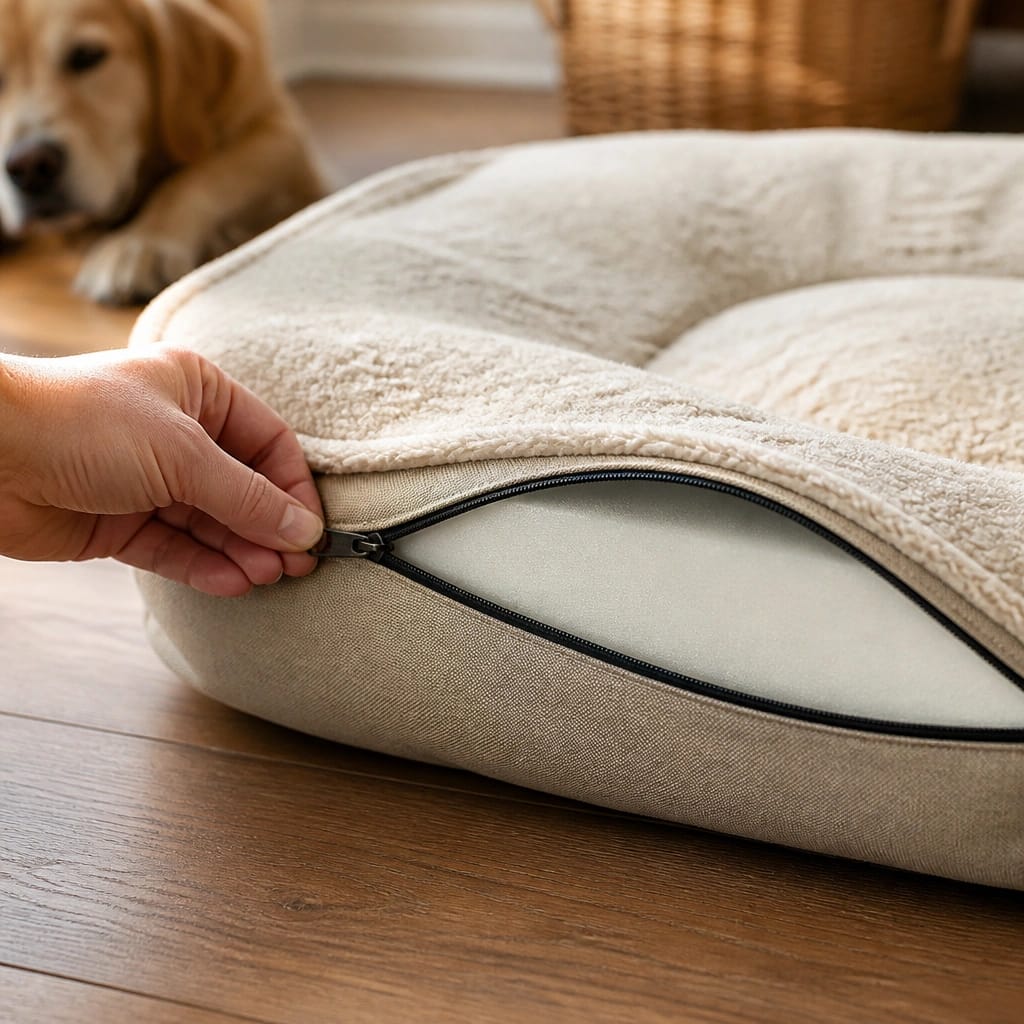
If your bed has a waterproof liner beneath the cover, it’s a good idea to wipe that down with a damp cloth while the cover is off. Mud can sneak through if the stain is heavy enough.
If Your Bed Does Not Have a Removable Cover
This is trickier, but not impossible. You’re dealing with a one-piece bed that can’t be separated. That means the foam or filling will get wet, so you need to be careful.
Start by removing as much mud as possible. Scrape, shake, and vacuum like you would for a removable cover. Then fill a bathtub or large sink with cold water and a small amount of pet-safe detergent.
Submerge the affected area and gently work the soap into the fabric with your hands. Do not wring or twist the bed, because that can damage the filling. Rinse thoroughly with clean water, pressing out the soap as you go.
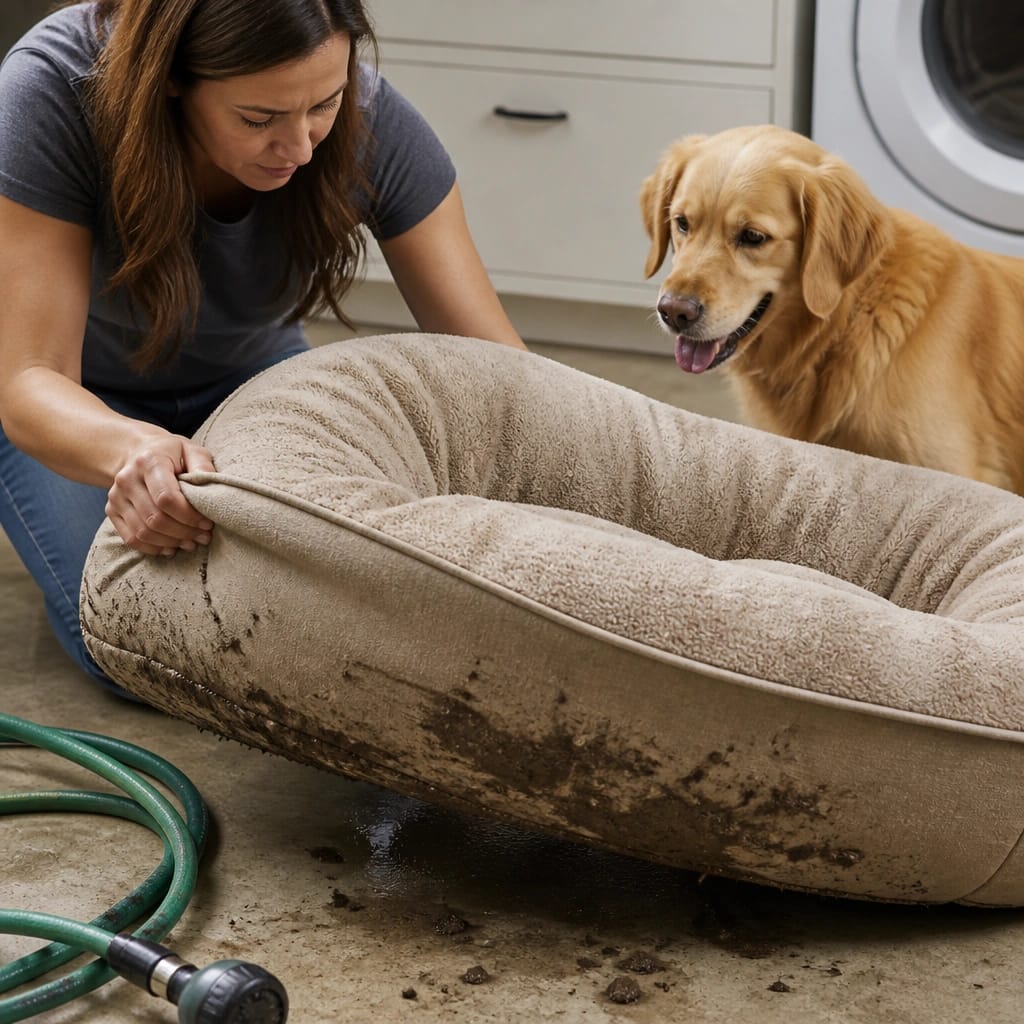
For larger beds that won’t fit in a tub, take them outside and use a hose. Spray the muddy area, work in the detergent, and rinse until the water runs clear. This works best on a warm, dry day so the bed can start air drying immediately.
The biggest challenge is drying. A non-removable bed takes much longer to dry because the foam or filling holds moisture. Squeeze out as much water as you can by pressing with towels.
Then set the bed in a well-ventilated area with a fan running. Flip it every few hours to speed things up.
How to Clean the Foam Insert (If It Got Muddy)
Sometimes mud seeps past the cover and stains the foam itself. This happens most often when the cover is left off or when the mud is extremely wet. Foam is absorbent, and it does not handle machine washing well.
If the foam insert has mud on it, do not put it in the washing machine. The agitation can break down the foam structure. Instead, hand wash it in a bathtub with cold water and a tiny amount of mild detergent.
Gently press the foam to release the mud. Do not scrub or twist. Rinse several times until the water runs clear.
Then press out the excess water with towels.
The most important rule: never put foam in the dryer. Heat destroys memory foam and polyurethane foam. It can also create a fire hazard with some foam types.
Air dry the foam insert in a room with good airflow. A fan helps speed things up. Expect it to take 24 to 48 hours depending on the thickness.
If you’re dealing with a muddy foam insert, you might also want to check how to handle similar issues with other types of bedding. The same drying principles apply to different bed styles.
The Best Way to Dry a Dog Bed After Washing
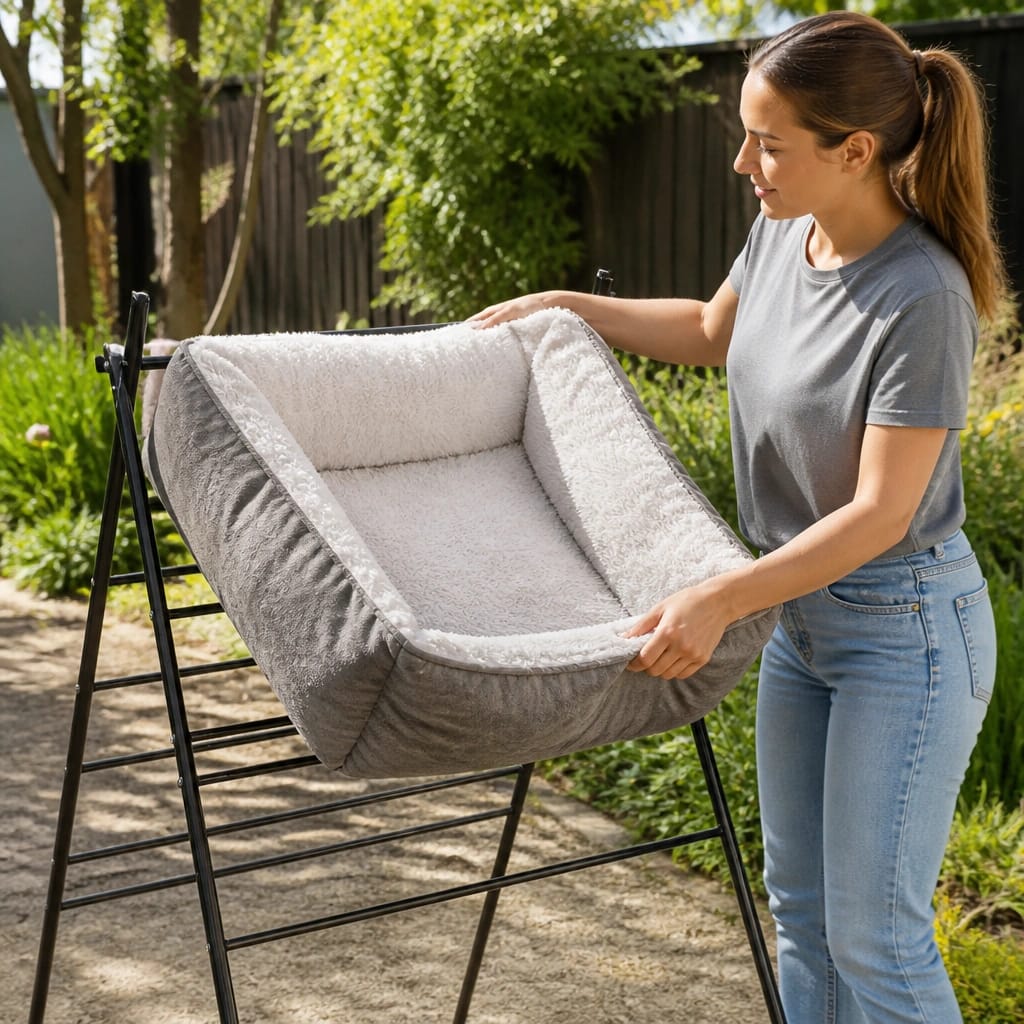
Drying is the most important step. Get it wrong and you risk mold, mildew, or a ruined foam core.
For covers. Air dry them on a line or rack. If you use a dryer, keep the heat low. High heat shrinks cotton and damages waterproof coatings.
Pull the cover out while it’s still slightly damp and let it finish air drying.
For foam inserts. Never put foam in a dryer. The heat destroys the structure and creates a fire risk. Press out excess water with towels.
Then set the foam in a room with a fan running. Flip it every few hours. Expect 24 to 48 hours for thick memory foam.
For non-removable beds. These take the longest. Use towels to absorb as much water as possible. Place the bed near a fan or dehumidifier.
Rotate it regularly so air reaches all sides.
Common Mistakes That Ruin a Dog Bed
Using hot water on mud. Heat sets protein-based stains. Mud contains organic matter that can bond to fibers when heated. Always use cold water.
Scrubbing wet mud. Rubbing pushes dirt deeper into the fabric. Blot instead. Let dry mud flake off naturally.
Overloading the washer. A single large bed can throw a machine off balance. Wash it alone or with a few small towels for balance.
Skipping the extra rinse. Detergent residue attracts more dirt. It can also irritate your dog’s skin. Run a second rinse cycle.
Reassembling too early. Putting a damp cover on a damp foam traps moisture. Mold can develop within 48 hours. Make sure everything is bone dry first.
How Often Should You Wash a Dog Bed?
Our research shows that most manufacturers recommend washing every 2 to 4 weeks. Dogs that spend time outdoors need more frequent washing, especially during rainy seasons.
If your dog has allergies or skin sensitivities, wash the bed weekly. The same goes for puppies who are still learning house training. A clean bed reduces allergens and odors.
Spot clean minor mud spots between washes. This keeps the bed fresh without the hassle of a full wash cycle. For beds that see heavy mud, a waterproof cover makes cleanup much faster.
Frequently Asked Questions About Muddy Dog Beds
Can I use bleach to remove mud stains from a dog bed?
Avoid chlorine bleach. It can damage fabric and irritate your dog’s skin. Oxygen bleach is safer and works well on organic stains like mud.
Check the care tag first.
How do I get mud smell out of a dog bed?
Add half a cup of white vinegar to the rinse cycle. Vinegar neutralizes odors without leaving a strong smell once dry. Baking soda sprinkled on the fabric before washing also helps.
What if my dog’s bed is too big for my washing machine?
Take it to a laundromat with industrial machines. Or wash it by hand in a bathtub using cold water and mild detergent. A hose outside works well for large beds on warm days.
Can I put a muddy dog bed in the dryer?
Only the cover. Never put foam inserts or non-removable beds in a dryer. Heat ruins memory foam and can be a fire hazard.
Air drying is always safer.
How do I prevent my dog from making the bed muddy again?
Wipe your dog’s paws before they come inside. Keep a towel by the door. A waterproof cover on the bed makes cleanup easier and protects the foam underneath.
Final Verdict: The Quickest Path to a Clean Bed
Start by checking the tag. Scrape off dry mud or blot wet mud. If the cover is removable, wash it in cold water on a gentle cycle.
If not, spot clean carefully and dry thoroughly.
The fastest way to a clean bed is knowing your bed type. A removable cover machine washes in under an hour. A non-removable bed takes more effort but still works.
Dry everything fully before reassembly.
A clean bed means a comfortable dog. And that means less mud tracked through your house.


