

Dog Bed Size Chart by Weight (Small to Giant)
Picking the wrong dog bed size is one of the most common mistakes dog owners make, and a dog bed size chart by weight is the fastest way to avoid it. Weight gives you a solid starting point, but it’s only half the picture. Body length, sleeping posture, and breed shape all shift the right size in one direction or another.
Manufacturer specifications indicate most large dog beds measure around 44 by 34 inches, built for dogs between 40 and 70 pounds. As of 2026, sizing charts have gotten more specific, splitting large and giant categories to account for deep-chested breeds. That’s exactly what the chart below breaks down, bracket by bracket.
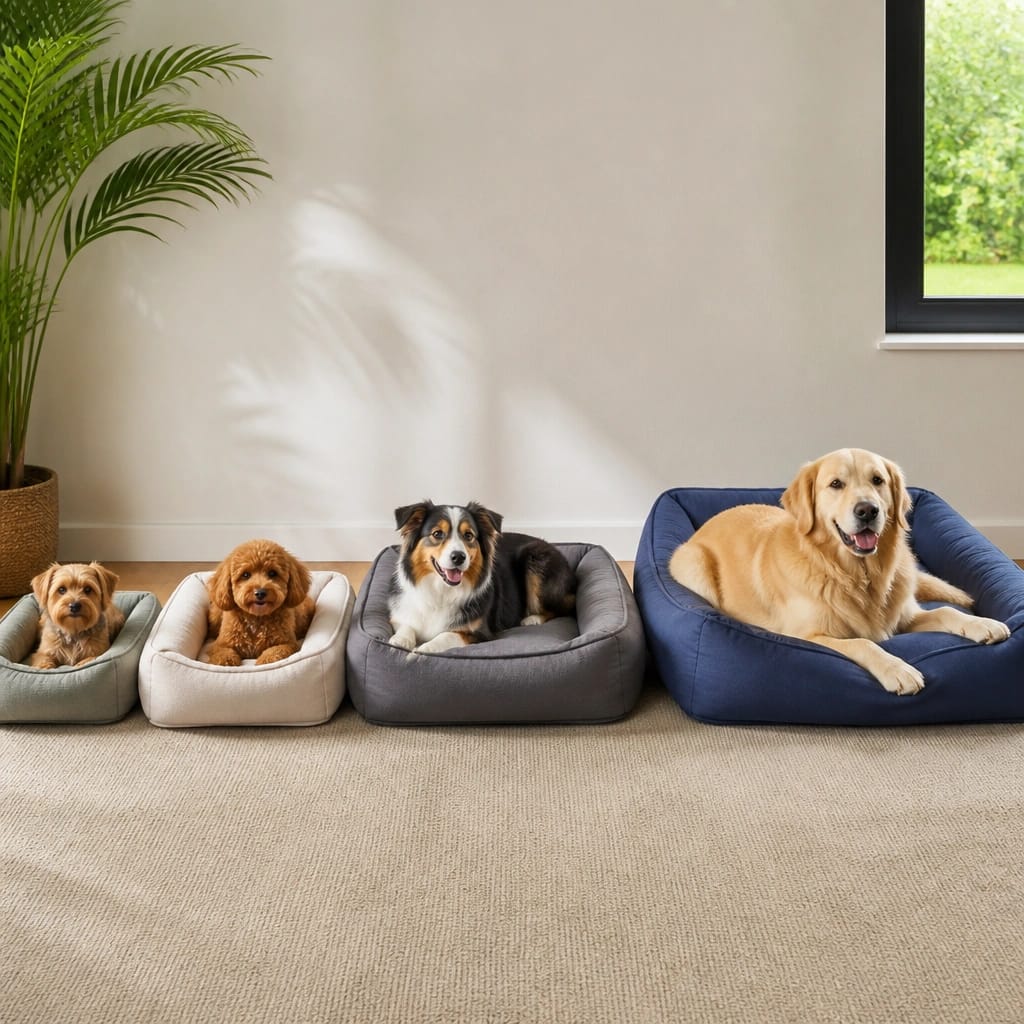
Dog bed size depends on weight, body length, and sleeping style.
Small dogs under 15 pounds need beds around 24 by 18 inches.
Medium dogs from 15 to 40 pounds need roughly 36 by 27 inches.
Large dogs from 40 to 70 pounds need about 44 by 34 inches.
Giant breeds over 100 pounds often need beds 55 inches or longer.
Why Weight Alone Doesn’t Tell the Whole Sizing Story
Two dogs can weigh exactly the same and need completely different beds. A 40 pound Corgi and a 40 pound Whippet are a good example. The Corgi is short and stocky.
The Whippet is long and lean, built to stretch out fully when it sleeps.
Breed conformation matters just as much as the number on the scale. Deep-chested breeds like Boxers or Dobermans carry more of their weight in a compact frame. Long-bodied breeds like Dachshunds or Basset Hounds need extra length even at a lower weight.
The American Kennel Club publishes breed weight and size standards you can cross-check against your dog’s typical build.
That’s why we treat weight brackets as a starting point, not the final word. For a broader look at how bed type and construction factor into the decision, our dog bed buying breakdown covers the fundamentals in more depth.
The Complete Dog Bed Size Chart (Small to Giant Breeds)
Here’s the core dog bed size chart by weight, based on aggregate sizing data across major bed brands. Use it as your starting range, then adjust using the measuring steps below.
| Weight Range | Size Category | Bed Dimensions | Example Breeds |
|---|---|---|---|
| Under 15 lbs | Small | 24 x 18 in | Chihuahua, Pomeranian, Yorkie |
| 15 to 40 lbs | Medium | 36 x 27 in | Beagle, Corgi, French Bulldog |
| 40 to 70 lbs | Large | 44 x 34 in | Labrador, Boxer, Border Collie |
| 70 to 100 lbs | Extra Large | 48 x 36 in | Rottweiler, German Shepherd |
| 100+ lbs | Giant | 55 x 47 in or larger | Great Dane, Mastiff, Newfoundland |
Small Dog Bed Size (Under 15 Pounds)
Small beds suit toy and small breeds that usually curl up tight. Most measure 24 by 18 inches, giving enough room without feeling too open. If you’re just starting out, our broader dog bed overview explains the different bed types worth considering.
Medium Dog Bed Size (15 to 40 Pounds)
Medium beds fit dogs like Beagles and Corgis. At 36 by 27 inches, there’s room for a half-curled or side-sleeping position.
Large Dog Bed Size (40 to 70 Pounds)
Large beds suit Labradors, Boxers, and similar builds. Around 44 by 34 inches gives enough length for dogs that stretch out partway.
Extra Large Dog Bed Size (70 to 100 Pounds)
This bracket covers German Shepherds and Rottweilers. Beds here run about 48 by 36 inches, built for dogs that sprawl fully.
Giant Breed Dog Bed Size (100+ Pounds)
Great Danes, Mastiffs, and Newfoundlands need serious length. Giant beds start around 55 by 47 inches and often run larger.
How to Measure Your Dog for an Accurate Fit
Weight brackets get you close, but a quick measurement gets you exact. Here’s the process we recommend, based on aggregate sizing guidance from major bed manufacturers.

- Weigh your dog on a home scale or at the vet.
- Measure nose to base of tail while your dog is standing.
- Measure your dog curled up, from nose to tail tip.
- Add 4 to 6 inches to the longer measurement for wiggle room.
- Cross-check that number against the weight chart above.
If your dog’s length measurement lands in a bigger bracket than their weight suggests, size up. A lean 35 pound dog with a 30 inch body length needs a medium bed, not a small one.
This same approach works if you’re sizing a bed for the car or a crate. Our portable bed sizing guide walks through space constraints for travel setups specifically.
Sleeping Style: Curled, Sprawled, or Somewhere In Between
How your dog sleeps changes how much usable sleeping surface they actually need. Usable sleeping surface is the flat, padded area inside the bolsters where your dog lies down, not the bed’s total outer size.

Dogs that curl into a tight ball, common in small and toy breeds, can often size down slightly from the chart. Dogs that sprawl flat on their side need the full length listed, sometimes more.
Some dogs switch styles depending on the season. A dog that curls up in winter might stretch out fully in summer to cool off. If that sounds familiar, size up rather than down.
Firmness matters here too. Dogs that sprawl put more sustained weight on their hips and shoulders, so a supportive memory foam base tends to hold up better than loose fiber filling over time.
When Breed Shape Changes the Right Size
Some breeds break the standard chart entirely. If your dog is deep-chested, barrel-bodied, or unusually long, adjust up a size even if the weight fits neatly.
- Dachshunds and Basset Hounds: size up for length, not weight.
- Boxers and Mastiffs: size up for chest depth and shoulder width.
- Greyhounds and Whippets: size up for full-stretch sleeping.
- Corgis and Pugs: standard weight bracket usually works fine.
If your dog’s breed isn’t a clean match to any category, measure body length first and let that drive the decision.
Sizing for Puppies, Adults, and Senior Dogs
Age changes the right bed size more than most owners expect. Puppies grow fast, adults are stable, and seniors often need more room even at the same weight.
For growing puppies, size for their expected adult weight, not their current size. A Labrador puppy at 20 pounds will likely need a large bed within a year, so buying medium now means buying again soon.
Senior dogs often benefit from sizing up one bracket. Stiffer joints mean less curling and more sprawled, side-lying positions, which takes up more surface area. If your senior dog has arthritis or mobility issues, a vet can advise on the right support level beyond just size.
Bolster Height, Bed Thickness, and Usable Sleeping Space

Bolster height and mattress thickness affect usable sleeping space just as much as length and width. A bed with a tall bolster rim eats into the flat sleeping area, even if the outer dimensions look generous.
Thicker mattresses matter more for larger and senior dogs. The National Institute of Standards and Technology publishes general material and foam density testing standards that manufacturers reference when rating support levels.
- Small dogs: 2 to 3 inch thickness is usually enough.
- Large and giant breeds: 4 inches or more supports joints better.
- High bolsters suit dogs that like head support.
- Low or flat rims suit dogs that sprawl fully.
Matching Bed Size to Crate, Room, or Furniture Placement
Bed size only works if it fits where you’re putting it. Crate placement is the most common sizing mistake we see in aggregate reviews.
If the bed is going in a crate, measure the crate’s interior floor space first. Leave 2 to 3 inches of clearance on each side so your dog can enter and turn around.
For open floor placement, a giant bed in a small bedroom can block doorways or furniture. Our portable bed guide covers compact options if space is tight.
Common Sizing Mistakes to Avoid
Most sizing complaints trace back to a handful of repeat mistakes. Here’s what to check before you order.
- Sizing by breed name alone, ignoring your dog’s actual build.
- Using outer bed dimensions instead of usable sleeping surface.
- Buying puppy size for a puppy instead of their adult weight.
- Skipping the curled and stretched measurement check.
- Ignoring crate clearance before ordering a crate bed.
Catch these before checkout, and you’ll avoid the return and re-buy cycle that a lot of dog owners run into.
Decision Guide: Picking the Right Size for Your Dog
If your dog curls up tight, go with the weight chart as is. If they sprawl or have a long body, size up one bracket.
For puppies, buy for adult weight. For seniors, size up for comfort. When in doubt, measure length over weight every time.

Frequently Asked Questions
What size dog bed for a 50 pound dog?
A 50 pound dog typically needs a large bed, around 44 by 34 inches. Check body length too, since lean breeds may need extra room.
Should I size up or down for my dog?
Size up if your dog sprawls, is long-bodied, senior, or still growing. Size down only if they consistently curl into a tight ball.
Do giant breeds need special support?
Yes, giant breeds benefit from thicker foam, often 4 inches or more, for joint support. Standard thin padding wears down faster under heavier weight.
How much bigger should a bed be than my dog?
Add 4 to 6 inches beyond your dog’s stretched length measurement. This gives room to shift positions without hanging off the edge.


