

What Kind of Bed Does a Pitbull Need?
What kind of bed does a Pitbull need? A large, supportive bed that matches how your dog sleeps and whether they chew. Pitbulls are muscular, heavy-bodied dogs that need room to stretch out and enough cushioning to protect their elbows and hips.
The right bed also has to survive the way your dog actually uses it, whether that means nesting, digging, or gnawing at corners.
Most adult Pitbulls weigh somewhere between 30 and 70 pounds. Their body length usually runs about 24 to 30 inches from nose to tail base. As of 2026, dog bed makers have caught on to the breed’s needs.
We’re seeing high-density foam, ripstop covers, and waterproof liners offered as standard features rather than rare upgrades.
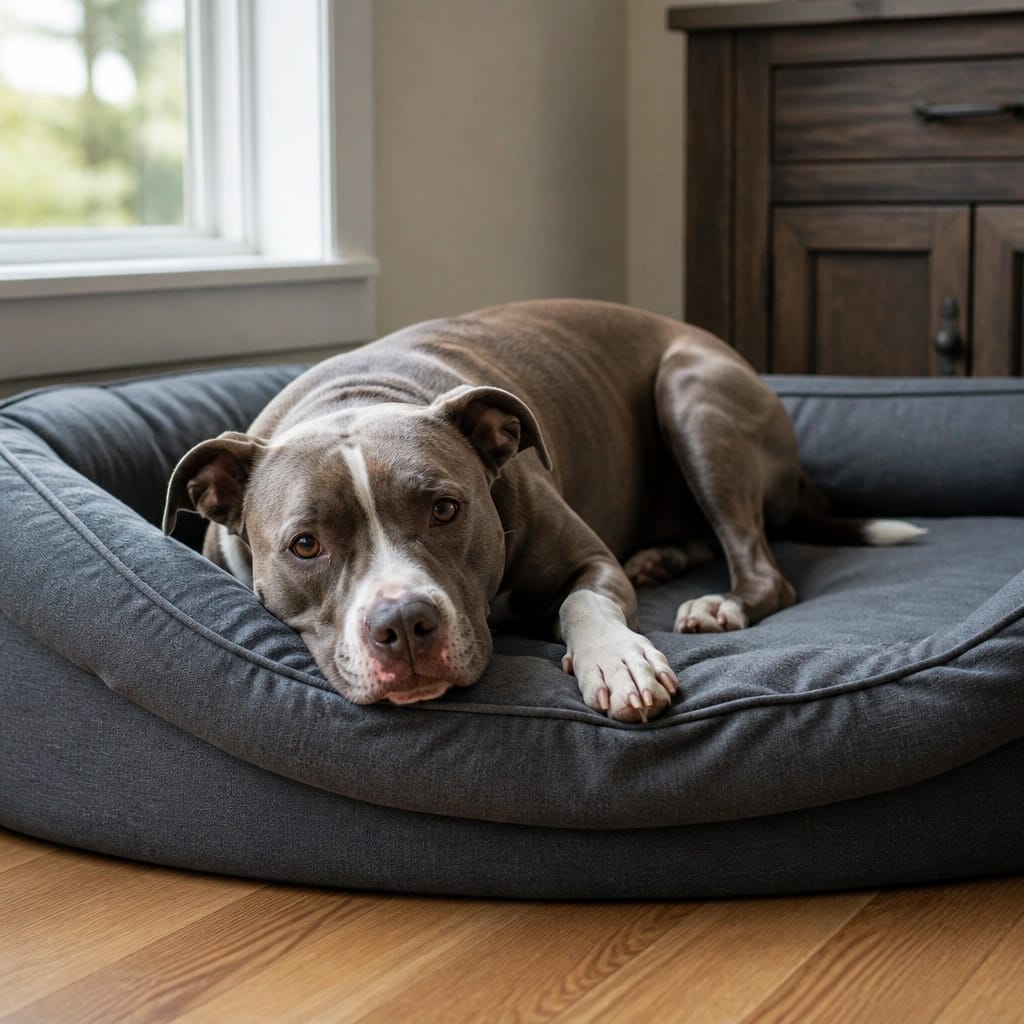
When a Pitbull’s Bed Choice Actually Matters
A bed is more than a soft spot. For a Pitbull, it’s a support system. Their broad chest and muscular frame put concentrated pressure on hard floors.
Without enough padding, that pressure can lead to sore spots, especially on elbows and hips.
Sleeping posture matters just as much. Some Pitbulls curl into a tight ball. Others sprawl out like they’re claiming the whole room.
A bed built for a curler will feel crowded to a sprawler. That’s why checking a reliable size chart by weight is a smart first move.
Then there’s the chewing factor. Many Pitbulls are powerful chewers, especially under two years old. If your dog treats beds like chew toys, a plush orthopedic bed won’t last a week.
The American Veterinary Medical Association reminds owners that large breeds with joint discomfort need proper support, but a bed alone isn’t medical treatment. If your dog shows signs of stiffness or pain, a vet should weigh in.

The Main Bed Types That Suit Pitbulls
No single bed works for every Pitbull. The breed is too varied, and individual habits change things. Here are the main categories you’ll run into, with the dogs each one fits best.
Orthopedic Foam Beds
These beds use thick slabs of foam, usually three to six inches deep. The goal is even weight distribution and joint relief. They suit senior dogs, dogs with arthritis, and any Pitbull that sleeps on hard floors.
Look for high-density foam or true memory foam. Both hold their shape far better than cheap polyfill. A Pitbull’s weight will flatten low-quality filler within weeks.
If you’re leaning this direction, it’s worth understanding how supportive memory foam behaves under a heavy dog before you buy.
Bolster and Nest Beds
Bolster beds have raised edges on three or four sides. This gives dogs a headrest and a feeling of security. They work best for Pitbulls that like to lean against something or curl up with their head on a pillow.
Cave and hooded versions take that instinct further. Many anxious rescue dogs love the enclosed, den-like feeling. But if your Pitbull runs warm, a high-walled bed can trap too much body heat.
You might be better off with a lower bolster-style design.
Flat Mat and Mattress Beds
These are simple, low-profile pads. No walls, no bolsters, no canopy. They suit dogs that stretch all the way out and don’t need extra structure around them.
They’re also the easiest to wash and carry. The trade-off is less joint support. A flat mat is fine for lounging, but I’d hesitate to make it the only overnight bed for a heavy adult Pitbull.
Raised and Elevated Cots
An elevated cot is a fabric panel stretched over a metal frame. Air flows underneath, which helps heavy, warm-bodied dogs stay cool. The design is also difficult for chewers to destroy because there’s no stuffed interior to rip open.
For Pitbull owners, cots work well both indoors and outdoors. They’re easy to clean, keep dogs off cold floors, and hold up well with regular use. Just confirm the frame rating supports your dog’s weight before buying.
Crate Mats and Kennel Pads
If your Pitbull uses a crate, the bed needs to fit the crate floor exactly. A mat that’s too big won’t lie flat. One that’s too small leaves a cold, uncomfortable strip of plastic.
Crate mats run thinner than free-standing beds. That’s acceptable for short rests, but less ideal for overnight comfort. Weigh the crate pad-versus-mat tradeoffs if your dog spends a lot of time in the crate.
Orthopedic vs. Standard Foam: What’s Different?
Standard foam is soft and squishy. It feels nice at first, but it compresses too much under a heavy body. Your dog sinks in, works harder to reposition, and eventually sleeps in a worn-out hollow.
Orthopedic foam is denser. It holds its shape under weight and creates a stable, supportive surface. That matters for the spine, hips, and elbows.
The difference is obvious when a dog stands up without stiffness or hesitation.
If your Pitbull is young, athletic, and pain-free, standard foam might work fine. If they’re five or older, carrying extra weight, or starting to slow down, orthopedic foam is the safer call. It doesn’t cure joint issues, but it reduces pressure while they rest.
Memory Foam, High-Density Foam, or Standard Fill
The filler inside the bed decides how long it lasts and how much support it gives. This is a big deal for a 60-pound dog that jumps in and out all day.
Memory foam molds to the body. It offers the best pressure relief, but it’s soft. Some Pitbulls sink too deep and struggle to shift positions at night.
High-density foam feels firmer. It doesn’t hug the body the way memory foam does, but it gives strong, stable support. That’s often the best choice for heavy adult Pitbulls that need to get up and down easily.
Standard polyfill is the budget filler. It’s cozy for a few nights, then it flattens into a pancake. For any dog over 50 pounds, I’d skip it entirely.
| Fill type | Feel | Best for |
|---|---|---|
| Memory foam | Soft, body-hugging | Dogs with sore joints |
| High-density foam | Firm, stable | Heavy adult Pitbulls |
| Polyfill | Soft, cheap | Puppies, short-term use |
Chew-Resistant Beds: Why Some Pitbulls Need Them
Not every Pitbull chews their bed. But a lot of them, especially young ones, do. The breed has strong jaws and a natural need to chew, which makes regular fabric beds a real risk.
Swallowing foam or stuffing can cause an intestinal blockage. That means a vet visit and possibly surgery. It’s not a small concern, and it’s the main reason so many Pitbull owners give up on nice beds entirely.
Chew-resistant beds use materials like ripstop nylon, canvas, or ballistic-grade fabric. Some designs carry reinforced seams and zippers that sit outside the common chew zone. As of 2026, several manufacturers are also using tight-stitch construction that resists tearing along the edges.
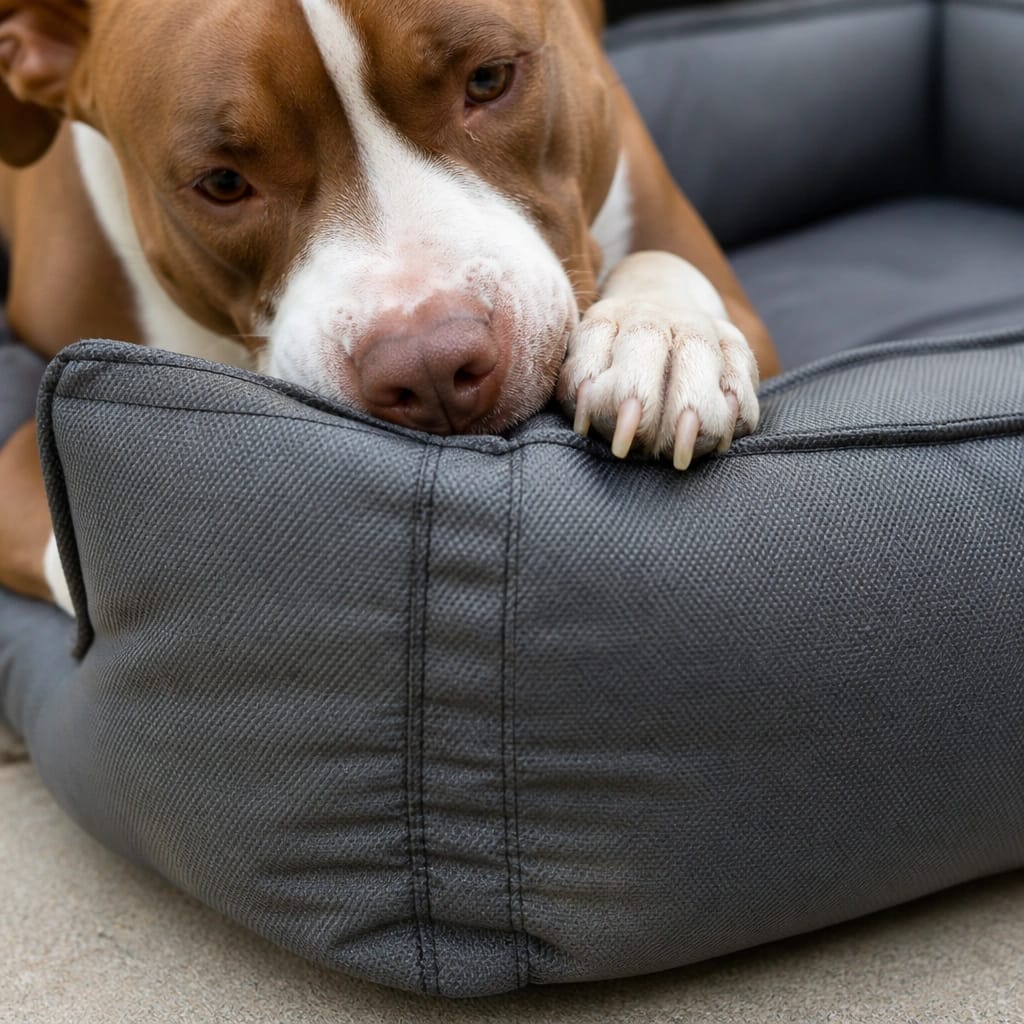
If your dog is already a confirmed chewer, the smart move is to start with a chew-resistant design or skip floor beds altogether and use a raised cot. And if they chew furniture and anything else in reach, stay close during the first few nights. Once a bed survives week one, you’re probably safe.
For extra protection against accidents and drool, you can pair the bed with a waterproof model or add a removable waterproof liner. That way, one mistake doesn’t ruin the whole bed.
Waterproof and Washable Features Worth Looking For
Waterproof liners protect the foam core from accidents, drool, and muddy paws. Look for a fully removable, machine-washable cover. Pitbulls are notorious for dragging dirt in on their paws and chest.
Nothing ruins a bed faster than a smell that won’t wash out.
How to Size a Bed for a Pitbull
Measure your dog from the nose to the base of the tail. That’s the body length you’re shopping for. Add 12 to 18 inches for sprawl room.
That total is the minimum usable sleeping surface you should buy.

If your dog sleeps in a crate, measure the inside floor too. A bed that wedges against the walls won’t lie flat.
Best Bed for Common Pitbull Lifestyles
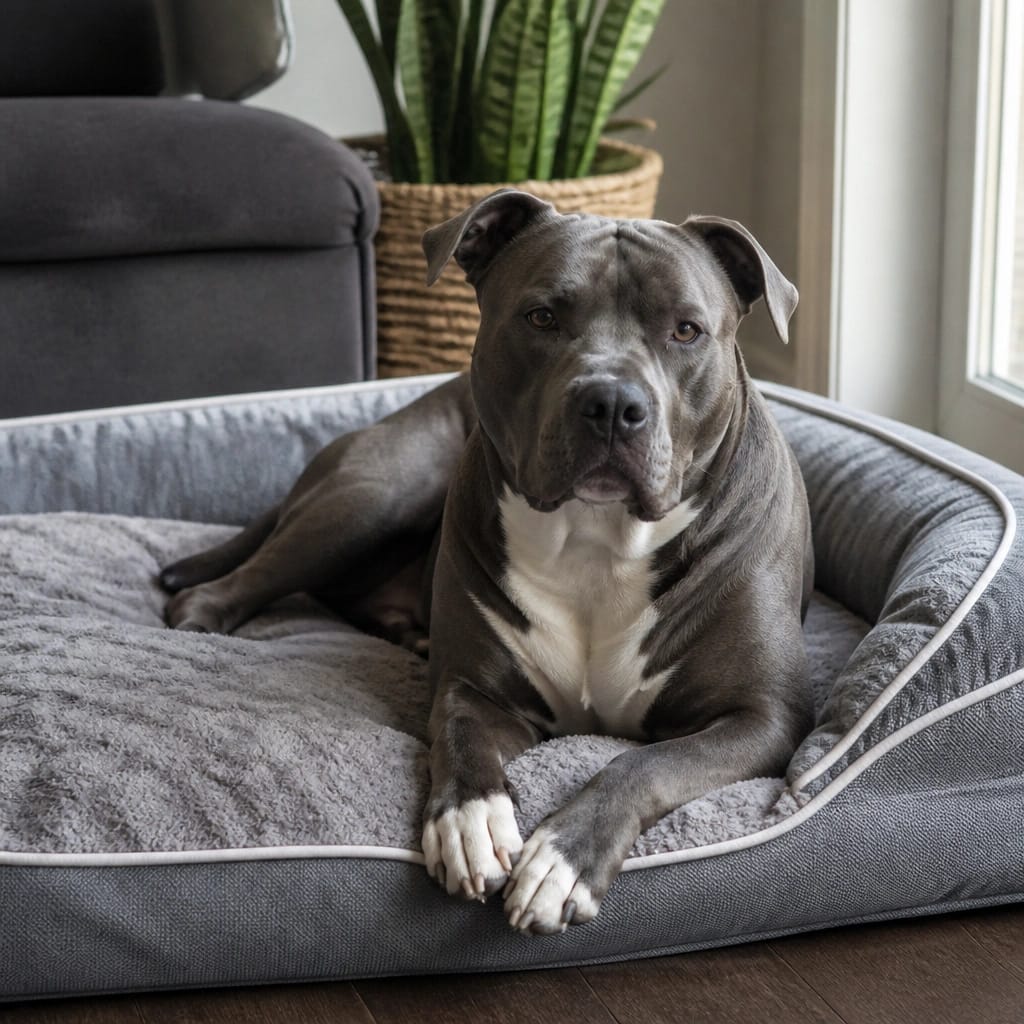
Senior Pitbulls with joint aches need orthopedic or memory foam. Puppies and heavy chewers should start with a chew-resistant mat or a raised cot. Anxious dogs that love to burrow do better with cave-style hooded beds.
Warm-climate dogs sleep coolest on elevated cot options.
Quick Comparison Table: Bed Types at a Glance
| Bed type | Best for | Watch out for |
|---|---|---|
| Orthopedic foam | Seniors, joint support | Chew risk |
| Bolster/nest | Curlers, anxious dogs | Traps heat |
| Flat mat | Sprawlers, chewers | Less support |
| Raised cot | Hot dogs, chewers | Less cozy |
| Crate mat | Crate users | Thin support |
Common Mistakes Pitbull Owners Make When Buying Beds
Buying too small is the most common error. Skimping on support is a close second. Ignoring chew habits leads to shredded foam and a risky vet visit.
And choosing a bed you can’t wash creates odor problems. Fix those four, and you’re most of the way there. Supervise the first few nights if your dog is a known chewer.
Bed Care and Maintenance Tips
Wash the cover on a gentle cycle every few weeks. Replace the foam when it stops bouncing back. Check seams and zippers regularly if your dog chews.
FAQs About Pitbull Beds
How long should a Pitbull bed last?
A quality bed lasts one to three years. Heavy chewers and big seniors may wear through covers faster. Foam that stays dented after pressure means it’s time for a replacement.
Should a Pitbull sleep on a hard floor?
No. Their weight presses hard on elbows and hips. A supportive bed helps prevent sore spots, but it doesn’t replace veterinary care for joint problems.
The Right Bed for Your Pitbull: Final Verdict
Start with your dog’s sleeping style, weight, and chewing habits. Choose a tough outer cover, firm support, and a size that leaves room to sprawl. Comfort and durability together beat a soft, cheap bed that dies in a month.


