

What Is a Cave/Hooded Dog Bed? Which Dogs Need One
What is a cave/hooded dog bed, and which dogs need one? It’s a bed with a raised rim, plush bolsters, and a partial hood that forms a cozy, den-like space. Unlike a flat mat, it wraps around your dog so they feel hidden and secure.
As of 2026, it’s one of the most popular choices for anxious and cold-sensitive breeds.
Manufacturer specs show hood heights typically range from 8 to 16 inches, and the best models use removable, washable covers. In our research, the real value isn’t the looks. It’s how the enclosed design taps into a dog’s natural instinct to burrow.
Let’s break down what actually makes a cave bed different.
What Exactly Is a Cave/Hooded Dog Bed?
A cave bed, sometimes called a hooded dog bed, is a soft sleeping space with an overhanging top or partial cover. The hood sits over part of the sleeping surface, while the bolsters wrap around the sides. The result is a partially enclosed, cave-like area that blocks light and muffles noise.
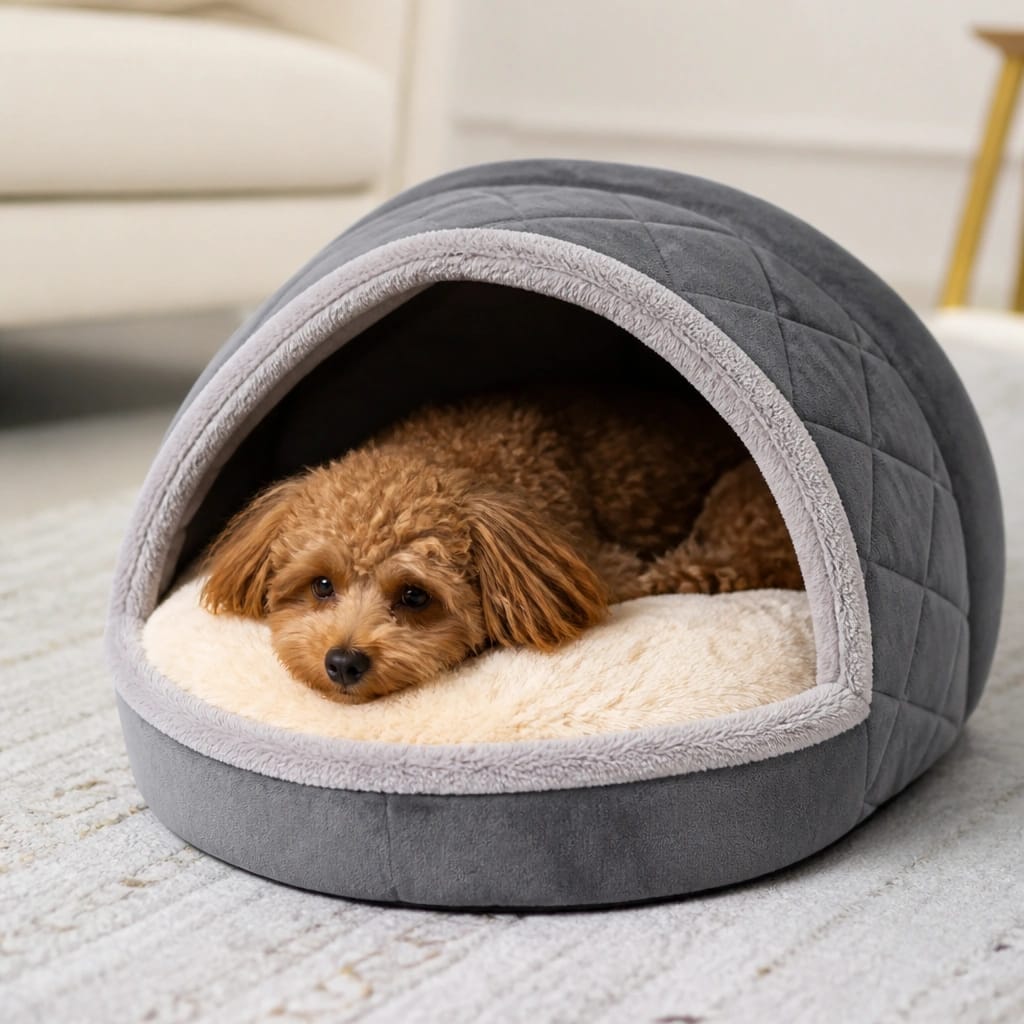
Anatomy of a Cave Bed: Hood, Bolsters, and Sleeping Surface
The hood is the defining feature. It can be a fixed half-moon shape or a fold-over flap that tucks in for extra privacy. Underneath, the bolsters are raised padded walls that support the head and neck.
The center is a cushioned sleeping pad where the dog curls up.
Most cave beds use plush fabrics like sherpa or faux fur. Some add a self-warming lining that reflects body heat. Others use breathable cotton or mesh for warmer climates.
The structure is meant to feel like a den, not just a pillow.
How It Differs from a Standard Dog Bed
A standard dog bed is open and flat, allowing the dog to stretch out in any direction. A cave bed is enclosed on most sides, encouraging the dog to curl up. That difference matters.
Dogs that want security often ignore open beds but settle instantly in a covered one.
Here’s a quick comparison:
| Feature | Standard Bed | Cave/Hooded Bed |
|---|---|---|
| Cover | None | Partial or full hood |
| Bolsters | Optional | Usually three-sided or round |
| Sleeping style | All positions | Curled, burrowing |
| Best for | Stretchers, hot sleepers | Anxious, cold, or den-loving dogs |
Why Some Dogs Naturally Crave a Covered Sleeping Space
Dogs are descended from den animals. Wild canids sleep in dug-out dens to stay warm and safe. That instinct is still alive in many breeds today.
When a dog burrows under blankets or pushes into tight spaces, they’re recreating that protected feeling.
The Denning Instinct and How It Shows Up at Home
You’ll see the denning instinct in everyday behavior. A dog might crawl under the couch, hide behind a chair, or bury their nose in a blanket. These actions calm them because an enclosed space feels safe.
A cave bed gives them that same security in a designated spot.
Burrowing, Nesting, and Curling: Behaviors That Signal the Need
If your dog circles a lot before lying down, scratches at their bed, or curls into a tight ball, they’re nesting. That’s not just a habit. It’s a sign they want more cover than an open bed provides.
Many owners notice this and switch to a cave bed to stop the restless behavior. That’s why we’ve covered the science behind this in our article on why dogs love to burrow.
Which Dogs Benefit Most from a Cave Bed?
Not every dog needs a cave bed. But certain groups genuinely thrive with one. Here’s a quick breakdown.
Small and Cold-Prone Breeds
Small dogs have a harder time retaining body heat. Breeds like Chihuahuas, Yorkies, and Whippets often shiver at night. A cave bed traps warmth better than a flat mat.
It works like a blanket they can’t kick off.
Anxious, Startle-Prone, and Rescue Dogs
Dogs with anxiety or a history of trauma often feel exposed in the open. Loud noises, sudden movements, or bright lights can trigger a startle response. The hood creates a buffer.
It blocks visual triggers and muffles sound. Many owners of rescue dogs report calmer nights after switching to a hooded bed.

Puppies Adjusting to a Crate
Puppies newly introduced to crate training need positive associations. A cave bed gives them a soft, dark space that mimics a den. It can reduce the whining that happens when a crate feels too open.
Place the bed inside the crate and let the puppy discover it on their own.
Senior Dogs That Want Warmth and Support
Older dogs often have joint pain and poor circulation. They move less at night, so they get colder. A cave bed with a supportive foam base offers both warmth and cushioning.
The bolsters also give them a place to rest their head without straining their neck.
Signs Your Dog Actually Needs a Cave Bed
You might not know if your dog wants a cave bed. Look for these signals.
Observing Your Dog’s Sleeping Positions
Dogs that sleep curled in a tight ball are conserving heat and protecting their organs. This posture is a classic sign they’d appreciate a covered bed. Dogs that sleep stretched out rarely need a hood.
They like open space and airflow, so a cave bed could feel too confined.
Stress Indicators That a Hood Could Help
Watch for pacing, lip licking, or frequent waking at night. These can be signs of environmental stress. If your dog only relaxes when they’re under a table or behind a sofa, a cave bed is a good fit.
It gives them that same safe spot without hiding.
How to Choose the Right Cave Bed Size
Getting the size right is the most common mistake. A bed that looks big onscreen can still be too small on the inside. The hood takes up space, so the actual sleeping area is smaller than the overall footprint.
Measuring Your Dog: Nose-to-Tail vs. Stretched-Out Length
Measure your dog from the tip of the nose to the base of the tail in a relaxed curl. That’s the length they’ll likely sleep in a cave bed. Add a few inches for head movement.
If your dog likes to stretch out, a cave bed probably isn’t the right style, or you’ll need to size up significantly.
Crate Fit: Matching the Bed to the Enclosure
If the bed goes inside a crate, measure the crate floor, not just the dog. The crate should allow the bed to sit flat without folding up the sides. A bed that’s too big will block the crate door or push the dog against the walls.
As a rule, add 2 to 4 inches of space around the dog’s curled length.
Size Chart by Weight and Curled Length
Use this as a starting point:
| Bed Size | Dog Weight | Curled Length |
|---|---|---|
| Small | Up to 15 lbs | Under 18″ |
| Medium | 15–30 lbs | 18″–24″ |
| Large | 30–60 lbs | 24″–30″ |
| Extra Large | 60+ lbs | Over 30″ |
These numbers are approximate. Check the manufacturer’s inner dimensions before ordering. And if your dog falls between sizes, always go up, not down.
Cave Bed vs. Bolster Bed vs. Donut Bed
If your dog curls up and loves a headrest, a cave bed wins. If they want neck support without the cover, a three-sided bolster bed is a better fit. A donut bed, which lacks the hood entirely, suits dogs that overheat easily but still crave a raised rim.
- Cave bed: best for burrowers and anxious dogs.
- Bolster bed: open-top, good for dogs who lean against walls.
- Donut bed: low rim, ideal for warm sleepers and small dogs.
You can dig into the differences between the rounded donut style and the open-top bolster version to see which matches your dog’s habits.
The Two Main Cave Bed Styles: Half-Hood vs. Full Tuck-In
Half-hood beds stay open and make entry easy. Full tuck-in beds fold over the top for total darkness and warmth.

Pick a half-hood for senior dogs that struggle with mobility. Pick a tuck-in for puppies or anxious dogs that want extra privacy. The tuck-in version feels like a real nest, so it works best for dogs that hide under blankets on their own.
Climate and Fabric Choices
In cold rooms, choose sherpa or faux fur to trap heat. For warmer climates, look for breathable cotton, linen, or mesh panels. Some brands sell winter and summer versions of the same bed.
For outdoor use, check our cold weather winter guidance before leaving it exposed to the elements.
Common Mistakes to Avoid When Buying a Cave Bed
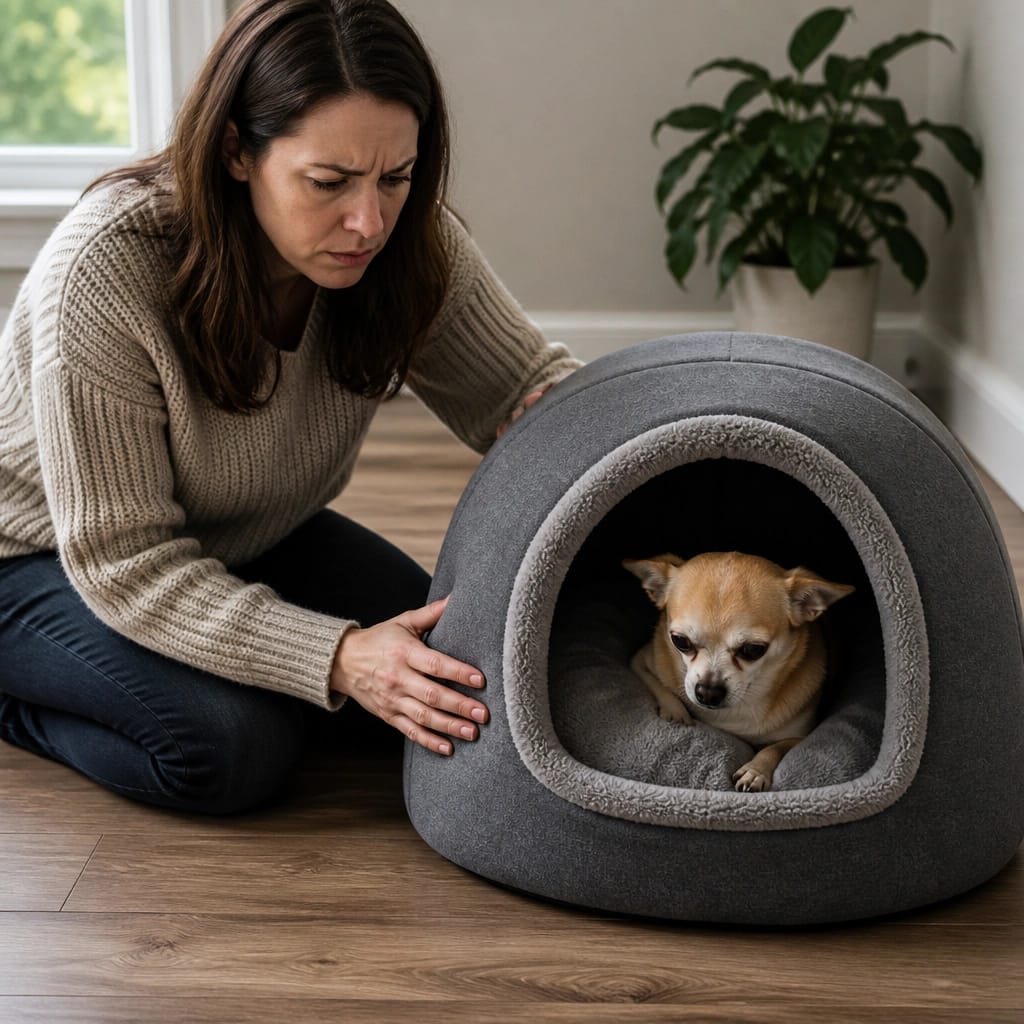
Most people buy based on overall size, not the interior sleeping area. The hood reduces usable space by a few inches. Another mistake is picking a bed with deep bolsters that a small dog can’t climb over.
Watch out for fabrics that pill or snag easily. Washability matters too. Skip beds with non-removable covers if your dog sheds a lot.
And check the base: a nonslip bottom keeps the bed from sliding on hardwood or tile floors.
How to Introduce a Cave Bed to a Nervous Dog
Place the bed in a quiet corner, away from high-traffic areas. Toss a treat inside instead of forcing your dog in. Let them explore at their own pace.
You can also add a worn t-shirt or a familiar blanket to boost the appeal. If your dog avoids it for a few days, try propping the hood open at night so it doesn’t feel like a trap.
Safety, Cleaning, and Durability
Check seams and zippers weekly. Torn covers expose filler, and that’s a choking hazard for chewers. Wash covers cold and air dry to keep the fabric intact.
Replace the bed every 2 to 3 years when the cushion flattens or the hood loses its shape.
When a Cave Bed Is NOT the Right Choice
Skip the hood for stretched-out sleepers and heavy-coated breeds like Huskies. They overheat quickly. Destructive chewers also need something tougher, like an elevated cot or a flat mat.
Frequently Asked Questions
Do All Dogs Like Cave Beds?
No. Some feel trapped or overheated under the hood. If your dog avoids it for two weeks, switch to an open-top style.
Can I Use a Cave Bed Inside a Crate?
Yes, if you size it correctly. Measure the crate floor and add a few inches of clearance around the bed. A snug fit stops the bed from bunching.
Are Cave Beds Safe for Puppies?
Yes, with supervision. The American Kennel Club recommends monitoring puppies with any new bedding. Remove the bed if chewing starts.
Final Decision Guide: What Your Dog Needs
Curler? Hider? Cold at night?
Then yes, try a cave bed. Stretcher, hot sleeper, or chewer? Choose an open mat or a donut style instead.
Our complete dog bed guide covers every alternative.


