

What Kind of Bed Does a Beagle Need?
A beagle needs a medium to large washable bed with either a low bolster edge or a flat, open surface. It should be long enough for your dog to stretch out fully. For chewers, choose a durable, waterproof cover.
For burrowers, a cave or donut style works well. Match the bed to your beagle’s sleeping habits, age, and chewing history.
Beagles are tough on their sleeping spots. They dig, they circle, they curl into tight balls, and then they stretch out like they own the whole house. So what kind of bed does a Beagle need?
The practical answer is a durable, washable bed that gives them room to do all of that without wearing out quickly.
As of 2026, adult beagles typically stand 13 to 16 inches at the shoulder and weigh 20 to 30 pounds. That puts them in the medium-dog range, but their body length and burrowing instincts matter more than weight alone. Keep those traits in mind as you shop, because they change the kind of support and cover the bed needs.

Why Beagles Need the Right Bed
Beagles were bred to hunt in packs, and that history still shapes how they sleep. They like to curl up for warmth and security, but they also sprawl out when they feel safe. A bed that’s too small forces them to reposition constantly.
One that’s too flat leaves a nervous beagle feeling exposed.

The breed’s sensitivity to cold also matters. Beagles have short coats and no body fat to spare. They prefer a bed that traps warmth, but they still need a breathable surface so they don’t overheat.
The right bed balances those two needs.
How Beagles Sleep: Curling, Stretching, Nesting, and What It Means

Most beagles cycle through three sleeping positions. Curling up saves body heat and protects their belly. Stretching out means they feel completely safe and relaxed.
Classic nesting involves scratching and circling before lying down, which is natural instinct, not bad behavior.
That digging habit is the biggest reason your beagle needs a bed built for abuse. If the cover is too flimsy, you’ll be buying a replacement in a month.
Beagle Bed Types: Bolster, Cave, Flat Mat, Crate Mat, and Orthopedic
Bolster Beds
Bolster beds have raised edges on three or four sides. They give your beagle a place to rest their head and a cozy, enclosed feeling. These work best for beagles who like to lean against furniture or curl up tightly.
If your dog loves to nest, look for a bolster dog bed with a removable cover.
Cave Beds
Cave beds are hooded and feel like a den. They’re perfect for beagles that bury themselves under blankets or sleep with their nose tucked. The covered top traps warmth and blocks out light.
Many beagles adore this style, but it’s not ideal for heavy chewers. A cavehooded dog bed with a reinforced opening is your best option here.
Flat Mats
Flat mats are simple, open, and the easiest to wash. They suit beagles that sleep sprawled out or run hot in the evening. They don’t offer head support or that contained feeling, though.
If your dog digs a lot, a flat mat without a raised edge will probably end up bunched in the corner.
Crate Mats
Crate mats are thinner and made to sit inside a crate. They avoid the bunching and space issues that loose beds cause in confined areas. Many are waterproof on the bottom, which is helpful for puppies or older dogs.
Compare a crate pad vs crate mat to see which fits your setup.
Orthopedic Beds
Orthopedic beds use high-density foam to support joints and pressure points. They’re great for senior beagles or adults with hip or elbow concerns. The firm surface keeps bones aligned, while the thicker foam prevents your dog from bottoming out.
A memory foam dog bed is the standard choice here.
Beagle Beds Compared Side by Side
| Bed Type | Best For | Watch Out For |
|---|---|---|
| Bolster | Curlers and head resters | Can trap heat |
| Cave | Burrowers and anxious dogs | Harder to clean |
| Flat Mat | Sprawlers and hot sleepers | No head support |
| Crate Mat | Crate training and travel | Thinner foam |
| Orthopedic | Senior beagles and joint issues | Heavier and pricier |
Best Bed by Age: Puppy, Adult, and Senior Beagles
Puppies chew and have accidents, so durability beats comfort. Start with a waterproof crate mat that fits the crate properly. A waterproof dog bed will survive the house-training phase and save your floors.
Adult beagles usually do best with a medium bolster or cave bed. Your dog has settled into a sleep style by now, so watch them for a few nights. The bed should match that pattern, not your idea of what looks nice.
Senior beagles need orthopedic support and easy access. Choose a low-sided memory foam bed so your older dog can climb in without straining. Add a warm layer if they seem stiff in the morning, like a heated dog bed during colder months.
Best Bed for Beagle Chewers and Diggers
If your beagle chews, skip plush or fleece covers. Look for a bed with a ballistic nylon or canvas cover instead. Reinforced seams and a waterproof liner underneath help it survive the rough years.
A heavy, non-slip base also stops your dog from dragging it across the room.
For diggers, a firm, low-profile bed works best. A flat mat or crate pad is harder to bunch up and tear. It still satisfies that nesting instinct without shredding in a week.
If the behavior is extreme, you may need a tactical-grade dog bed. Many owners find those last years longer than standard bedding.
Crate Beds vs. Open Beds: Which Fits Your Setup?
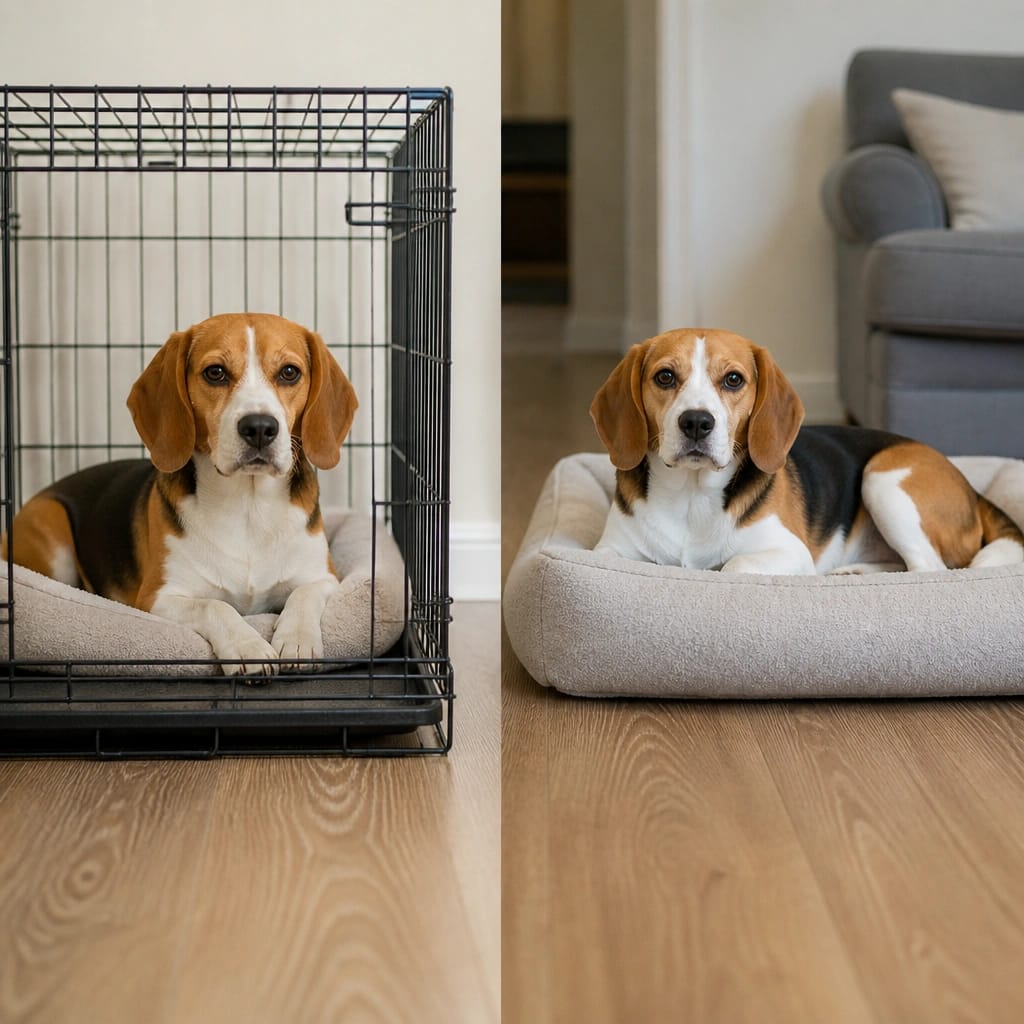
If your beagle sleeps in a crate, choose a crate mat that fits the tray exactly. Loose beds bunch into corners and leave cold spots. A properly sized mat keeps the surface flat and comfortable all night.
If your beagle free-roams the bedroom, an open or bolser bed gives more freedom to stretch. Just make sure it’s not so tall that your dog struggles to climb in. Senior beagles especially prefer lower edges.
How to Measure Your Beagle for the Perfect Bed Size

Measure your beagle from nose to the base of the tail while they sleep stretched out. That length is the bare minimum for the sleeping surface. Add 4 to 6 inches for wiggle room and head support.
Most adult beagles end up needing a 36-inch bed, but always measure your own dog. Use a dog bed size chart by weight to cross-check your numbers.
Common Beagle Bed Mistakes to Avoid
The biggest mistake is buying a bed that’s too small. A beagle that can’t stretch fully will just sleep on the floor instead. The second biggest is ignoring washability.
If the cover isn’t removable, you’ll be scrubbing fabric by hand within a week.
Also avoid beds with loose stuffing and small parts. Puppies and chewers can rip seams and swallow fill. And never skip the waterproof layer, especially during house training.
A wet foam core is impossible to fully clean.
How to Wash and Maintain Your Beagle’s Bed
Wash the cover every one to two weeks, more often if your beagle digs dirt or drools. Use cold or warm water on a gentle cycle, then air dry or tumble on low. Avoid fabric softeners, which break down waterproof membranes.
For the foam base, spot clean with a pet-safe enzyme cleaner. Never put memory foam in the washing machine. Let it air out fully before putting the cover back on.
Regular cleaning also controls the doggy odor that builds up over time.
When to Replace Your Beagle’s Bed
Replace the bed when the foam no longer springs back, the cover has holes, or your beagle avoids it. A flattened bed provides no joint support. Most beagle beds last 1 to 2 years with regular washing.
For breed-specific health and care guidance, the American Kennel Club maintains updated beagle resources.
FAQs: Beagle Bed Questions, Answered
What size bed does a beagle need?
Most adult beagles need a medium 36-inch bed. Measure your dog stretched out and add 4 to 6 inches.
What is the best bed for a beagle that chews?
Choose a ballistic nylon cover with reinforced seams and a waterproof liner. Avoid plush fabrics.
Why does my beagle dig at their bed?
Digging is natural nesting behavior. A firmer, low-profile bed satisfies the instinct without tearing.
Final Verdict: What Kind of Bed Does a Beagle Need?
Your beagle needs a durable, washable medium bed that fits their sleeping style. Match the type to the dog, not the trend. A chewer gets a tough cover, a burrower a cave, and a senior gets orthopedic support.
Measure first, prioritize washability, and replace when worn.


