

What Kind of Bed Does a Greyhound & Sighthounds Need?
Sighthounds need a bed that supports their full body length and relieves pressure on bony points. Choose a high-density orthopedic foam mattress with at least 4 inches of thickness. The bed should be longer than the dog from nose to tail base. Avoid overly thick bolsters for sprawlers. A flat, open surface works best for roaching.
If you’ve just welcomed a greyhound into your home, you’re probably asking yourself what kind of bed does a Greyhound & Sighthounds need. The quick answer is a long, supportive, pressure-relieving bed that fits their unique frame, not just any standard “large” option.
Greyhounds typically measure 30 to 40 inches from nose to tail base and weigh between 50 and 80 pounds. They also carry very low body fat, which means bony points like hips and elbows press hard against floors. Per canine anatomy research, this body type needs more cushioning than the average dog.
That’s why choosing the right sleeping surface matters more than you’d think.

Why Your Sighthound Needs a Bed That “Standard Large” Doesn’t Fit
Most “large” dog beds are built for shorter spines and heavier padding. A sighthound’s frame is different: deep chest, tucked waist, long legs. A standard 36-inch bed often leaves their head or hocks hanging off the edge.
Low body fat is another factor. Greyhounds carry only about 10 to 12 percent body fat, compared to 20 percent in many other breeds. Thin skin over bony hips makes pressure sores and calluses a real risk.
As of 2026, the most common guidance from canine health sources is to prioritize pressure relief over style.
In our research, we found that high-density foam, around 4 pounds per cubic foot or higher, provides the right balance of support and softness. The American Kennel Club also confirms that sighthounds are more sensitive to cold and hard surfaces because of their lean build. It’s not about pampering, it’s about preventing sore spots.
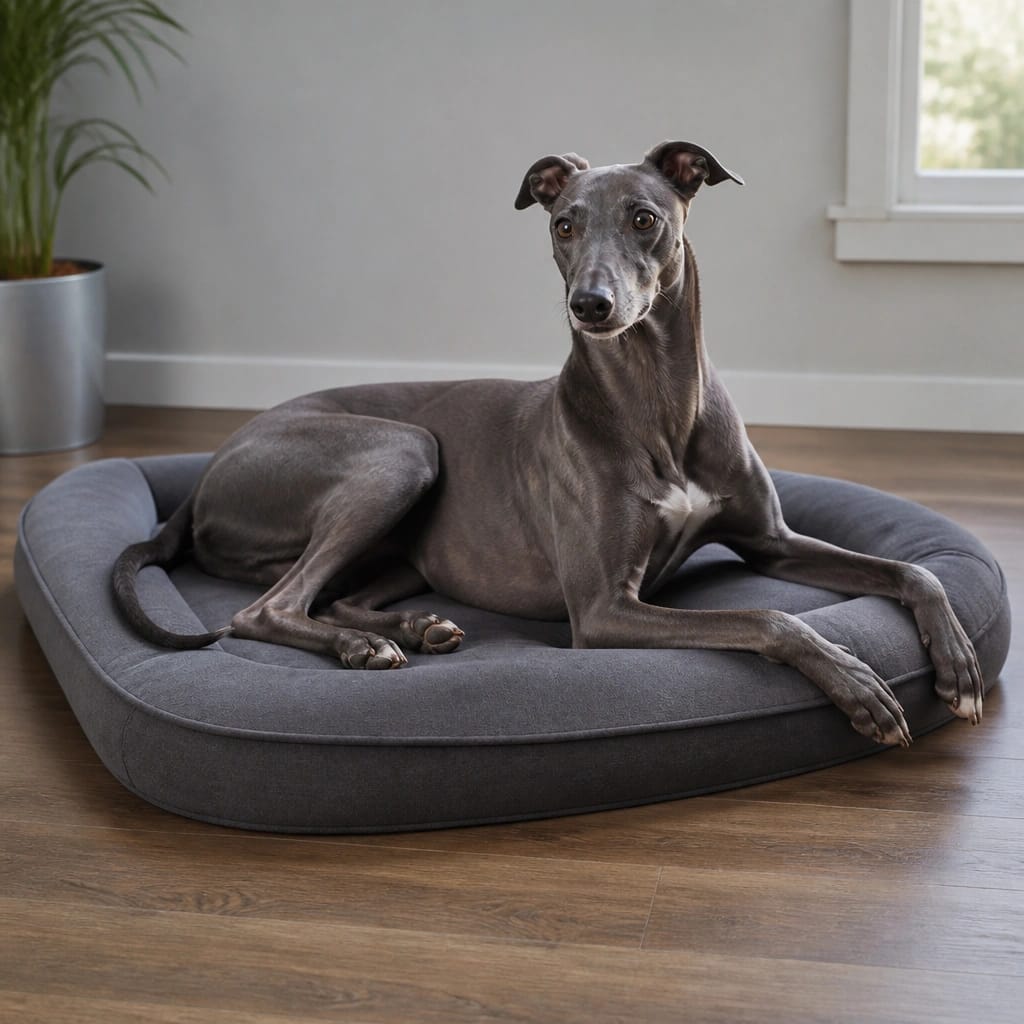
How Greyhounds and Sighthounds Sleep: Roaching, Curling, and Sprawling
Image source: Wikimedia Commons / Levethane (CC BY-SA)
This photo shows a classic sighthound sleep position. Greyhounds are famous for “roaching,” where they sleep on their back with all four legs in the air. That pose demands a completely flat, open surface.
Bulkless mats or thin orthopedic pads work best for this style.
Other sighthounds curl into a tight doughnut, tucking their nose under their tail. These dogs often appreciate a low bolster or a calming donut bed to rest their head against. Then there are the sprawlers, who stretch out completely on one side.
For them, length is non-negotiable, so check a dog bed size chart by weight to avoid coming up short.
The Main Bed Styles Compared

Orthopedic Foam Mattress Beds
These are flat, thick foam mats with no raised edges. They offer the most uniform support and are ideal for roachers and sprawlers. Look for high-density foam with at least a 4-inch profile.
Bolster and Donut Beds
These have raised edges that act as pillows. They suit curlers and nervous dogs who like to tuck their head. But a tall bolster can block a sighthound’s natural stretch.
If you go this route, choose a low-profile bolster bed rather than a deep one.
Cave and Covered Beds
Covered beds feel safe and den-like. Many greyhounds enjoy burrowing, but they need enough inner space to stretch out. Our cave-style beds are a common pick among rescue owners because they offer both warmth and security.
Elevated Cots
These sit off the floor and allow airflow underneath. They’re excellent for warm climates and outdoor lounging. But some older sighthounds prefer solid ground under their joints.
You can weigh the pros and cons in our elevated dog bed cot guide.
Crate Mats and Flat Pads
Simple and low-profile, these fit neatly inside a crate. They don’t offer much cushioning on their own. For a better understanding of the differences, read our comparison of crate pads and crate mats.
Memory Foam vs. Orthopedic Foam vs. Polyester Fill: A Side-by-Side Comparison
| Fill Type | Support | Durability | Best For |
|---|---|---|---|
| Memory foam | Molds to body, pressure relief | Good if high-density | Sprawlers, seniors |
| Orthopedic foam | Firm, even support | Excellent | Bony dogs, joint issues |
| Polyester fill | Soft, but flattens quickly | Low to moderate | Young dogs on a budget |
Memory foam is softer and contours around the dog’s shape, but it can trap heat. Orthopedic foam is firmer and more breathable. Polyester fill feels comfy at first, yet it compresses within months.
That leaves your sighthound sleeping on a flat slab. If you’re leaning toward contouring, see what a memory foam dog bed actually offers.
Bolster Beds vs. Flat Beds: Which Matches Your Dog’s Sleeping Style?
Here’s a simple rule: if your sighthound roaches or sprawls, choose a flat bed. Bolsters get in the way of that full-body stretch. If they curl up with their chin resting on an edge, a low bolster or donut bed is the better fit.
Also consider the bed’s height. Sighthounds have long legs, but their hips sit close to the ground. A thick bed with a high bolster can feel like a mountain to climb.
Watch how your dog gets in and out of bed. That will tell you what they actually need.
Elevated Cots vs. Ground-Level Beds: Cooling, Joints, and Comfort
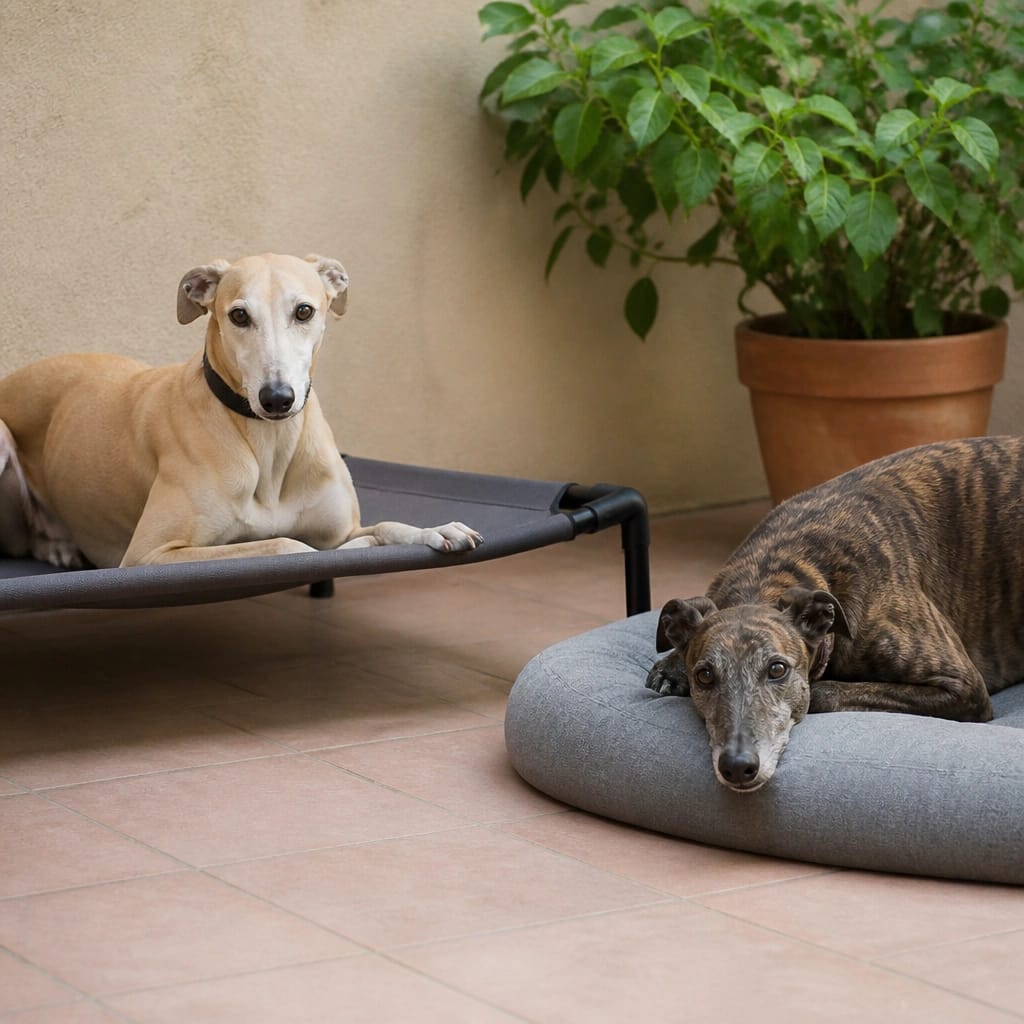
Elevated cots let air flow freely beneath the dog. That helps a lot in warm climates. They also keep the body off cold or damp floors.
But they offer minimal cushioning on their own, and sighthounds are bony.
Ground-level beds give consistent support across the whole frame. Seniors find them easier to climb onto. For hot weather, put a flat orthopedic pad on top of a cot.
You get cooling airflow and joint relief at the same time.
Per the American Kennel Club, sighthounds are more sensitive to hard surfaces because of their lean build. So the base mattress matters more than the style you choose.
Sizing Guide: How to Measure Your Sighthound for a Bed

Measure from the nose tip to the base of the tail while your dog stands normally. Add 8 to 12 inches for stretching room. Most adult greyhounds need at least 40 to 48 inches of usable sleeping length.
Weight also dictates foam firmness. Heavier hounds need denser foam to avoid bottoming out. A 70-pound greyhound typically needs a firmer core than a 55-pound whippet.
For exact numbers, see our sizing table by weight.
Best Bed Types for Retired Racers, Puppies, Seniors, and Dogs with Thin Skin
Retired racers often arrive with no bed experience. They’ll inspect a mattress, then flop on the floor next to it. Give them time and a flat, familiar-smelling mat inside their crate.
Many eventually settle into a hooded cave bed once they feel safe.
Senior sighthounds need lower entry heights and thicker foam for achy joints. Thin-skinned dogs, like whippets and Italian greyhounds, do best with memory foam that molds around bony points. Adding a waterproof liner protects the core from accidents.
Puppies usually start with a washable flat mat while they grow.
Mistakes to Avoid When Buying a Bed for a Sighthound
- Buying a bed that’s too short. Curled sleeping is fine, but constant bunching strains the spine.
- Choosing low-density foam that flattens within weeks.
- Picking a tall bolster bed when your dog roaches or sprawls.
- Skipping removable, washable covers.
Sighthounds aren’t shaped like labs or retrievers. Generic “large” sizing fails them more often than not. Watch your dog sleep for one night, then measure.
That alone prevents most mistakes.
Care and Longevity: Keeping the Bed Supportive and Fresh
Wash the cover every one to two weeks to keep odors away. Use a waterproof liner underneath to shield the foam from moisture. That small step extends the bed’s life considerably.
Rotate the mattress monthly so it wears evenly. Press your hand into the foam; if a dent stays once you lift it, replacement is overdue. Keep the bed away from direct sunlight to slow foam breakdown.
Most high-density mattresses last three to five years with proper care.
Frequently Asked Questions
What size bed does a greyhound need?
At least 40 to 48 inches of usable sleeping length. Measure from nose to tail base, then add 8 to 12 inches for stretching room.
Do greyhounds need orthopedic beds?
Yes. Their bony pressure points need high-density foam at least 4 inches thick. That prevents sores and calluses from forming.
Do greyhounds like bolster beds?
Only if they curl up to sleep. Sprawlers and roachers prefer flat, open surfaces. Watch your dog’s sleeping position before choosing.
Are elevated cots good for greyhounds?
They help in warm climates by allowing airflow. But they lack cushioning for bony joints. Add an orthopedic pad on top for the best of both.
Final Recommendation: Choosing the Right Bed for Your Sighthound
Start with a flat, high-density orthopedic foam mattress sized at least 40 inches long. Add a washable cover and waterproof liner. Watch how your dog sleeps, then choose a low bolster or open surface.
That combination delivers comfort, durability, and joint health.


