

What Is a Waterproof Dog Bed? What ‘Waterproof’ Actually Means?
You’re staring at product pages that all claim “waterproof dog bed,” but the prices range from $30 to $300. The sturdier option isn’t always the better one. What Is a Waterproof Dog Bed?
What ‘Waterproof’ Actually Means confuses more pet owners than you’d think.
In our research across manufacturer specifications and aggregate buyer feedback, one pattern stands out: “waterproof” is a marketing label, not a regulated standard. While outdoor gear uses formal testing like hydrostatic head ratings, dog beds have no universal benchmark. As of 2026, manufacturers self-label with impunity.
That’s exactly why you need to understand what’s inside the bed before you buy.

A waterproof dog bed has a barrier layer that stops liquid from soaking into the foam. That barrier can be on the cover, hidden inside, or wrapped around the cushion. The key is knowing where that layer sits.
A dog bed labeled waterproof isn’t automatically washable, breathable, or durable. Always check the construction details, not just the tag.
The Confusion: Why “Waterproof” Is a Slippery Label
The pet industry treats “waterproof” the way some restaurants treat “artisan.” It sounds good, but it doesn’t guarantee much. Unlike rainwear tested against specific water column pressure, dog beds rarely meet any certified fabric standard.
What does that mean for you? Simple. Two beds can both say “waterproof” on the label, but one has a thin plastic coating while the other has a sealed TPU membrane inside.
Those perform very differently over time.
Here’s a quick breakdown of the terms you’ll see:
| Term | What it actually means | Expectation |
|---|---|---|
| Waterproof | Claims to stop liquid entirely | Verify the layer and seams |
| Water-resistant | Repels light moisture briefly | Will soak through under pressure |
| Water-repellent | Beads water off the surface | Not a barrier for accidents |
The label is just the beginning. The real story is in the construction. If you’re lost on what makes a good bed overall, our dog beds complete guide covers the fundamentals in plain language.
What “Waterproof” Actually Means (The Core Explanation)

In practical terms, a waterproof dog bed does one specific job: it keeps urine, drool, and spills from reaching the foam core inside. That’s the whole point. Foam is like a sponge.
Once liquid seeps in, it’s nearly impossible to fully remove. The smell lingers, the structure breaks down, and you’re shopping for a replacement.
Most waterproof beds achieve this with a thin polymer layer. You’ve probably seen the materials listed as TPU or polyurethane. TPU, or thermoplastic polyurethane, is the premium choice.
It’s flexible, quiet, and resists wear. Cheaper beds use PVC or simple vinyl coatings, which crinkle and crack faster.
Location matters too. Some beds put the waterproof layer on the outside cover. Others hide it inside, between the plush fabric and the foam.
The better designs use an internal liner that’s separate from the outer cover. That way, you can machine wash the soft cover while the waterproof layer stays protected.
The 3 Main Types of Waterproof Dog Beds
Now we’re getting to the practical part. There are three construction styles you’ll actually find when shopping.
1. Fully waterproof covers
The cover fabric itself has a waterproof coating on its underside. Liquid hits the surface and stops. These are common on budget beds and outdoor-focused models.
They’re easy to wipe down, but they can feel plasticky and trap heat.
2. Internal waterproof liners
A soft outer cover sits over a hidden waterproof sleeve. The sleeve holds the cushion. This gives you a comfortable surface without sacrificing protection.
However, if the outer cover gets soaked, liquid can travel around the liner through the seams or zipper opening. Look for beds where the liner seals fully.
3. Foam-core sleeves
This is the classic approach. The foam cushion gets wrapped in a thick, watertight case before the outer cover goes on. It’s simple and effective, though it can feel bulky.
Many premium orthopedic beds use this method alongside a washable top layer.
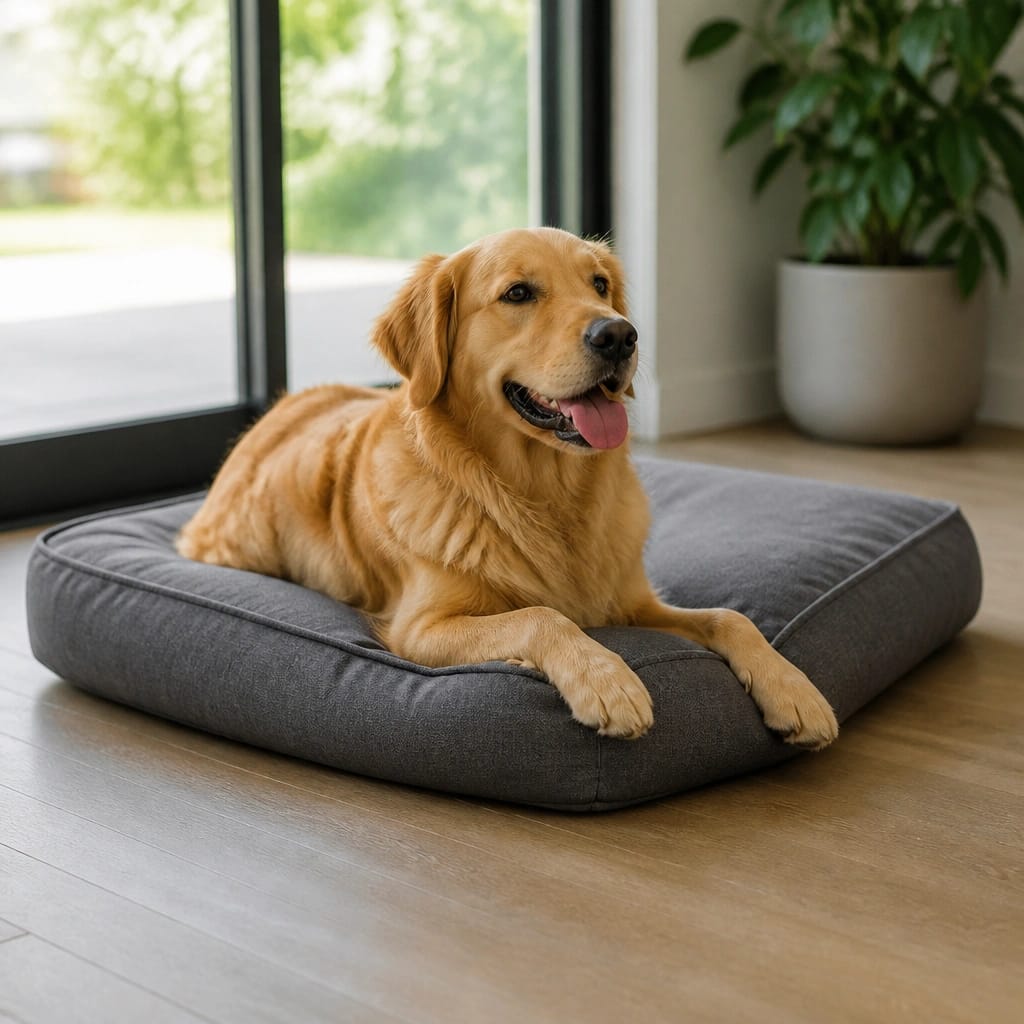
Here’s what each type actually looks like in practice. The image below shows the layering you’re hunting for.

When you’re comparing options, also consider what’s under the waterproof layer. A waterproof bed with low-quality foam is still a bad bed. We’ve covered the differences in our memory foam dog bed article, and the material truly matters for long-term comfort.
The Real Decision Tree: Do You Actually Need One?
Honestly? Not every dog needs a waterproof bed. Whether you do depends on your situation, your dog’s stage of life, and your tolerance for laundry.
Let’s walk through the branches.
Branch 1: Puppies and Potty Training
Puppies are the number one reason people search for waterproof beds. Their bladders are tiny, and accidents happen daily. If you’re in this stage, a waterproof bed isn’t optional.
It’s survival gear.
Branch 2: Senior Dogs and Incontinence
Age brings changes. Many senior dogs develop incontinence or mobility issues that lead to accidents. If your older dog struggles to hold it overnight, a waterproof liner inside the bed will save your sanity and your mattress.
Senior dogs often avoid their beds if they’re cold or uncomfortable, so read up on why that happens in our guide on dogs sleeping on the floor.
Branch 3: Healthy Adult Dogs
If you have a young, healthy dog with no medical issues, you might skip the waterproof layer entirely. A high-quality, machine-washable bed will serve you fine. The extra protection only matters if life gets messy.
Branch 4: Post-Surgery and Medical Recovery
Surgical recovery means bandages, drainage, and medication side effects. Your vet will likely recommend a bed that you can keep clean easily. A waterproof model with a removable cover is ideal here because you can disinfect the barrier without ruining the foam.
Branch 5: Outdoor, Muddy, and Heavy-Drooler Dogs
Some breeds just produce more liquid. Newfoundlands, Saint Bernards, and mastiffs drool constantly. Similarly, dogs who live outdoors or spend hours in the mud will track moisture everywhere.
For those cases, waterproof construction protects the bed from repeated exposure.
When You Should NOT Buy a Waterproof Dog Bed
This is the honest section that most articles skip. Waterproof beds come with trade-offs.
Breathability suffers. That waterproof layer, whether on the cover or inside, blocks airflow. On warm nights, your dog may overheat. That’s especially true for long-haired, heavy-coated breeds.
Our research into indoor vs outdoor dog beds shows that climate matters a lot when choosing materials.
The crinkle factor. Some waterproof fabrics make noise when the dog shifts. A skittish or picky dog might refuse to lie down. If your dog already has anxiety, don’t add a crunchy sleeping surface to the equation.
A calming donut bed with a washable cover might be more appropriate.
The washability myth. Just because a bed is waterproof doesn’t mean it’s easy to clean. Many budget models are “spot clean only.” That means urine can sit on the surface until you manually wipe it up. If you want true convenience, you need a bed with a removable, machine-washable outer cover in addition to the waterproof barrier.
Heat retention in winter. A waterproof layer traps body heat. That sounds helpful for winter, but it actually causes sweating and discomfort indoors. Our guide on cold weather outdoor dog beds explains when insulation matters more than waterproofing.
So before you buy, think about your dog’s needs first. Waterproofing is a feature, not automatically a benefit. Choose it when you have a real reason.
Skip it when you don’t.


