

Ballistic Nylon vs Ripstop Fabric for Dog Beds
Ballistic nylon is heavier and more puncture‑resistant. Ripstop is lighter and stops tears from spreading. For dogs that scratch or dig, ballistic nylon lasts longer.
For dogs that don’t damage beds, ripstop saves weight and cost. Your dog’s behavior decides the winner.
Choosing the right fabric for your dog’s bed might not seem like a big deal, until you’ve gone through three covers in a year. If your dog scratches, digs, or chews, the material makes the difference between a bed that lasts and one that ends up in the trash. Today we’re comparing ballistic nylon vs ripstop fabric for dog beds, so you can pick the one that actually fits your dog’s habits.
According to ASTM D2261 tear-strength testing, ballistic nylon (typically 1000 denier) withstands over 10,000 abrasion cycles, while standard ripstop (70, 210 denier) averages around 4,000. That gap matters when claws hit the surface every night. Let’s break down what each fabric is and which situation calls for which.

Why This Fabric Choice Matters for Your Dog’s Bed
You’ve probably watched your dog circle, paw, and scratch before lying down. That nesting instinct is natural, but it wears out cheap fabric fast. A ripped cover exposes the foam, which then gets chewed or soaked.
Fabric choice also affects washing frequency. Some materials trap hair and odors more than others. And if you’ve dealt with accidents or drool, you know how important easy cleaning is.
The wrong fabric can turn a simple bed change into a headache.
Think about where the bed lives, too. Indoor beds might not need the same toughness as outdoor or crate beds. Matching the material to your dog’s routine saves money and frustration over time.
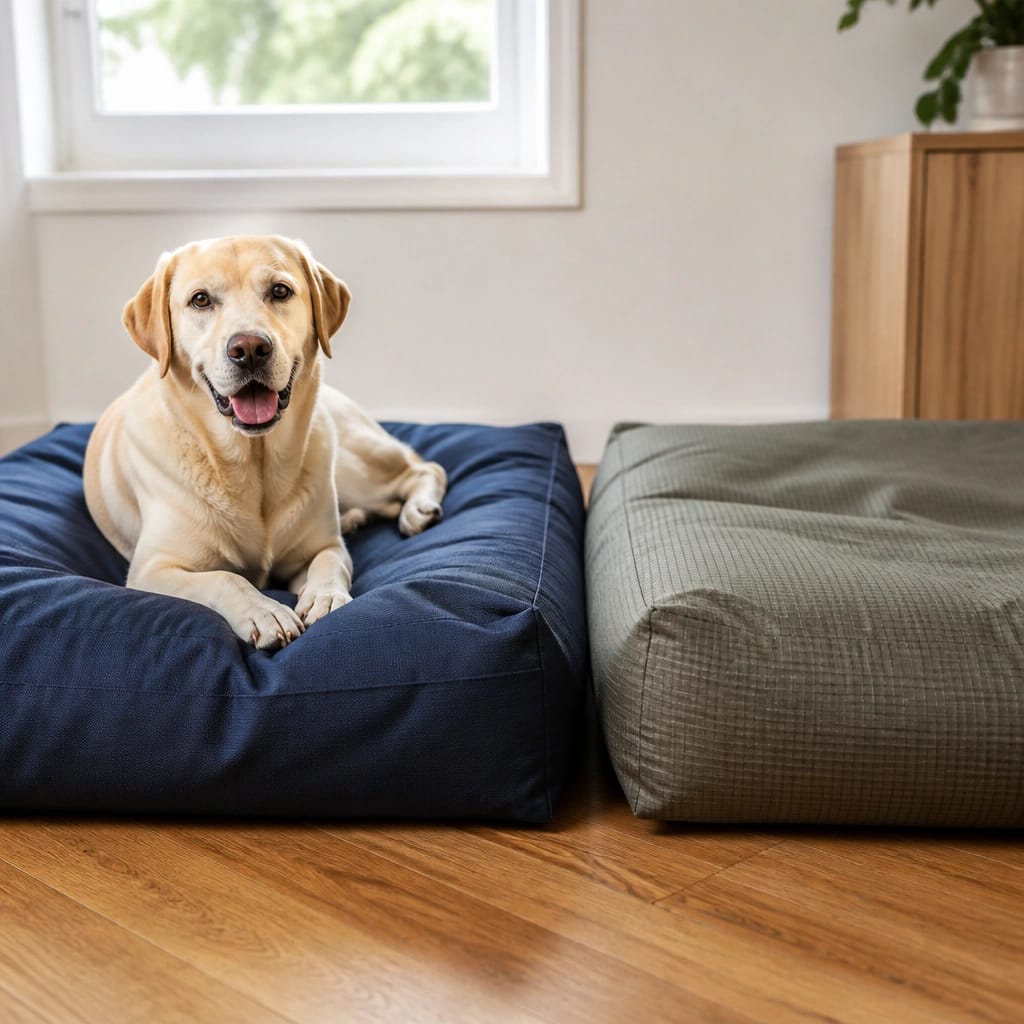
What Is Ballistic Nylon?
Ballistic nylon is a tough, tightly woven fabric originally developed for military flak jackets and later used for luggage. It’s made from heavy‑denier nylon yarns (usually 840D to 1680D) woven in a plain or basket weave. The result is a dense surface that resists punctures and abrasion.
Most dog bed covers use 1000D or 1680D ballistic nylon. At that thickness, the fabric feels stiff and rugged. It won’t breathe as well as lighter fabrics, but it holds up against claws and teeth.
Brand names like Cordura are a type of ballistic nylon, though not all ballistic nylon is Cordura. The key benefit is long‑term durability: a well‑made ballistic nylon cover can outlast three or four ripstop covers in a heavy‑use home.
What Is Ripstop Fabric?
Ripstop fabric uses a reinforcing grid pattern of thicker threads woven at regular intervals. When a tear starts, the grid stops it from running across the whole panel. That’s why it’s popular in outdoor gear, tents, and lightweight bags.
Most ripstop for dog beds is polyester or nylon in the 70D to 210D range. It’s soft to the touch, breathable, and often coated with a water‑repellent finish. The grid pattern is visible as small squares about 1/4 inch apart.
Ripstop is lighter and cheaper than ballistic nylon. But it sacrifices puncture resistance. A sharp claw can push through the thinner weave, especially if the dog digs with force.
It’s ideal for calm dogs or beds that don’t get rough treatment.
Ballistic Nylon vs Ripstop: Side-by-Side Comparison
Here’s how the two stack up on the factors that matter most:
| Factor | Ballistic Nylon | Ripstop Fabric |
|---|---|---|
| Typical denier | 840D – 1680D | 70D – 210D |
| Abrasion resistance (Taber test) | 8,000 – 15,000 cycles | 3,000 – 6,000 cycles |
| Tear propagation | Can run if punctured | Grid stops tears |
| Water resistance | Moderate (needs coating) | Often coated for light water resistance |
| Weight per sq yd | 8–12 oz | 3–6 oz |
| Breathability | Low | High |
| Cost per yard | $10–$20 | $3–$8 |
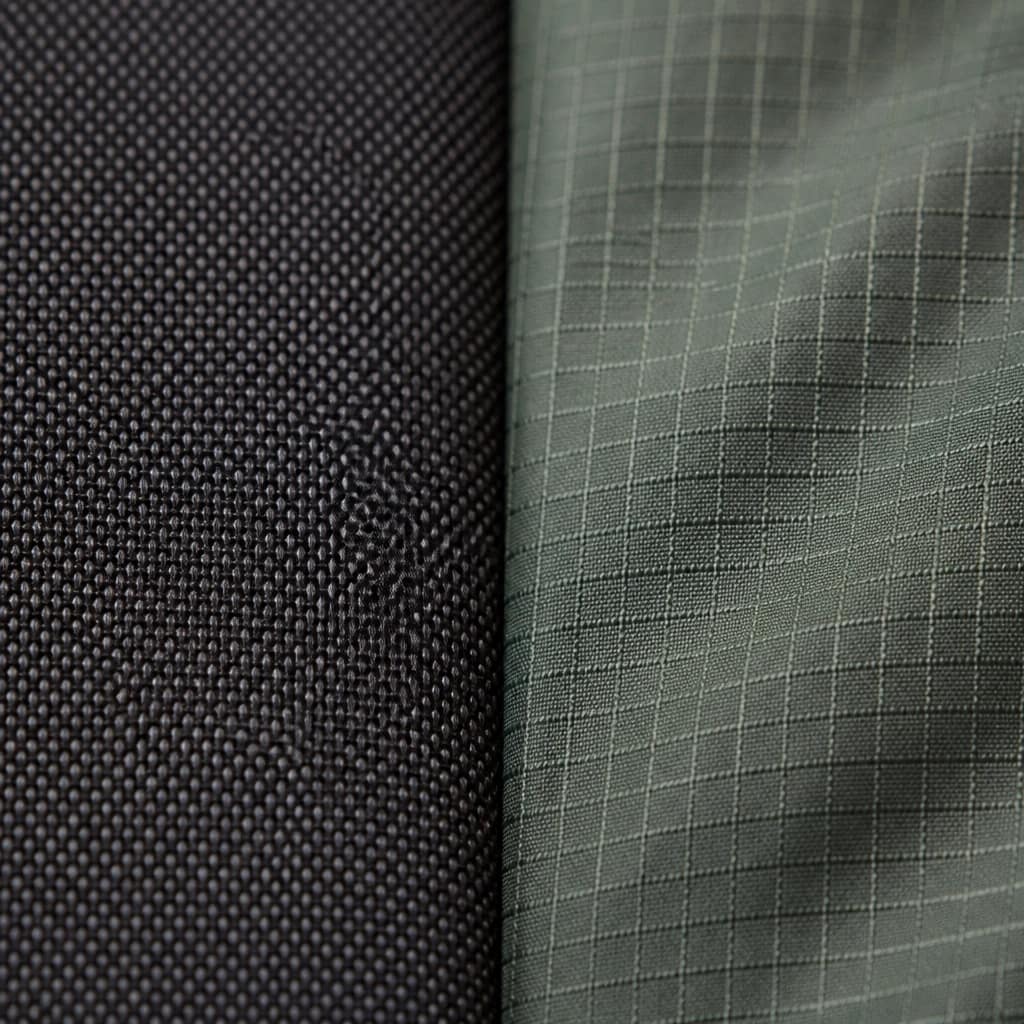
The table makes one thing clear: ballistic nylon wins on toughness, ripstop wins on weight and price. Your choice depends on whether your dog prioritizes durability or comfort.
Best Use Cases for Ballistic Nylon
Ballistic nylon shines when your dog is tough on beds. Think about these scenarios:
- Heavy scratchers and diggers. Breeds like terriers, huskies, and dachshunds often scratch before lying down. The thick weave resists the repeated claw action.
- Chewers. If your dog mouths the bed corners, ballistic nylon is harder to bite through. Pair it with reinforced seams and a zipper flap for extra protection.
- Outdoor or kennel use. Sun, rain, and dirt won’t degrade it as quickly. It’s also easier to hose off.
- Incontinent or senior dogs. The dense fabric holds up to frequent washing and doesn’t trap odors as much as softer materials.
That said, ballistic nylon isn’t for every dog. It runs hot in summer and feels stiffer than ripstop. If your dog sleeps in a warm room or prefers a plush surface, you might want a different cover or a layer of soft bedding on top.
For dogs that scratch a lot, you’ll also want to check our guide on why dogs dig or scratch at their bed before lying down, it helps explain the behavior so you can address the root cause too.
We’ll cover the best use cases for ripstop in the next section.
Best Use Cases for Ripstop Fabric
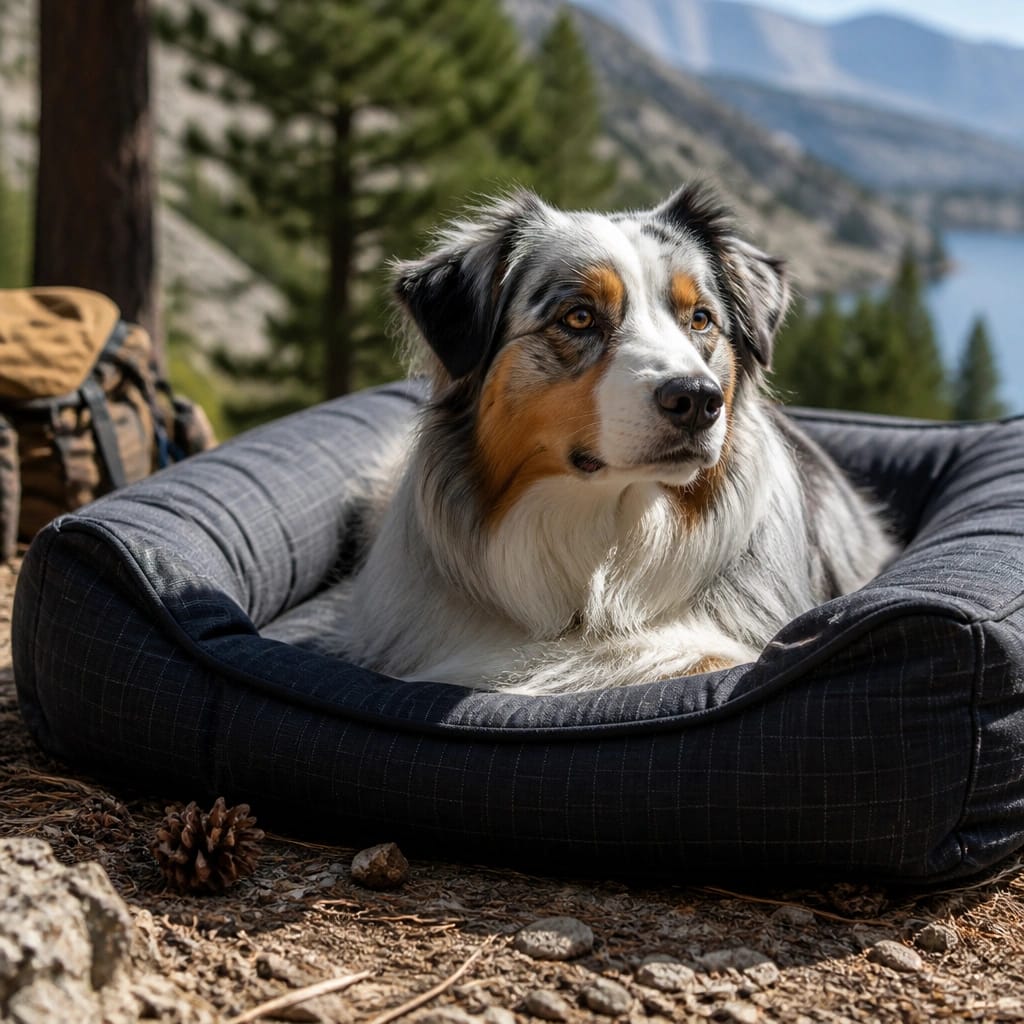
Ripstop makes sense when your dog is gentle on beds. It’s the right choice for dogs that don’t scratch, dig, or chew the cover. Small breeds, senior dogs, and calm personalities rarely stress the fabric the way a terrier or husky does.
If your dog uses the bed mostly for sleeping and curling up, ripstop offers a softer, cooler surface. It breathes better than ballistic nylon, which helps in warm rooms or summer months. It’s also lighter, making it easier to remove and wash.
For travel beds, ripstop wins. It packs down smaller and dries faster after washing. And if budget is a concern, ripstop covers cost about half as much as ballistic ones.
Just remember that a cheaper cover may need replacing sooner if your dog’s behavior changes over time.
If you’re unsure whether your dog’s scratching is normal nesting or a sign of something else, our article on why dogs dig or scratch at their bed before lying down can help you tell the difference.
Common Mistakes When Choosing a Dog Bed Fabric
The biggest mistake is picking a fabric by looks alone. A nice color or pattern doesn’t tell you how the weave holds up. Always check the denier number and the construction of the seams.
Reinforced stitching matters more than the fabric brand.
Another mistake is assuming all ballistic nylon is indestructible. It resists punctures, but a determined chewer can still damage it. If your dog has destroyed multiple beds, a purely ballistic cover won’t solve the problem alone.
You may need a combined approach with a waterproof liner and a chew-proof material underneath.
Don’t forget zipper quality either. A broken zipper ruins a cover faster than fabric wear. Look for YKK metal zippers with a flap guard.
Our guide on chew proof materials covers additional strategies for heavy chewers.
How to Test Which Fabric Your Dog Really Needs
You don’t need a lab to figure this out. Start by watching your dog for a week. Note how often they scratch, dig, or mouth the bed.
If they leave visible marks after a few days, they need higher abrasion resistance.
A simple fabric test: press your fingernail firmly into the weave. If it leaves a dent or fray, the fabric is too soft for your dog. Ballistic nylon should resist that pressure.
Ripstop will show a slight indent but shouldn’t tear.
Check the tag for denier values. For dogs that scratch, aim for at least 840D. For calm sleepers, anything above 70D is fine.
You can also refer to manufacturer specs online. The North Carolina State University College of Textiles offers general educational resources on fabric performance standards.
Maintenance and Longevity: Washing and Care Tips
Both fabrics need regular cleaning, but they behave differently. Ballistic nylon holds dirt on the surface longer because of its tight weave. A quick brush or hose rinse removes most of it.
Machine wash on cold gentle cycle, then air dry.
Ripstop is easier to wash but may need more frequent cleaning. Its lighter weave traps less odor, but dirt can get into the grid pattern. Wash on cold and tumble dry on low.
Avoid fabric softener and bleach. They degrade the water‑repellent coating.
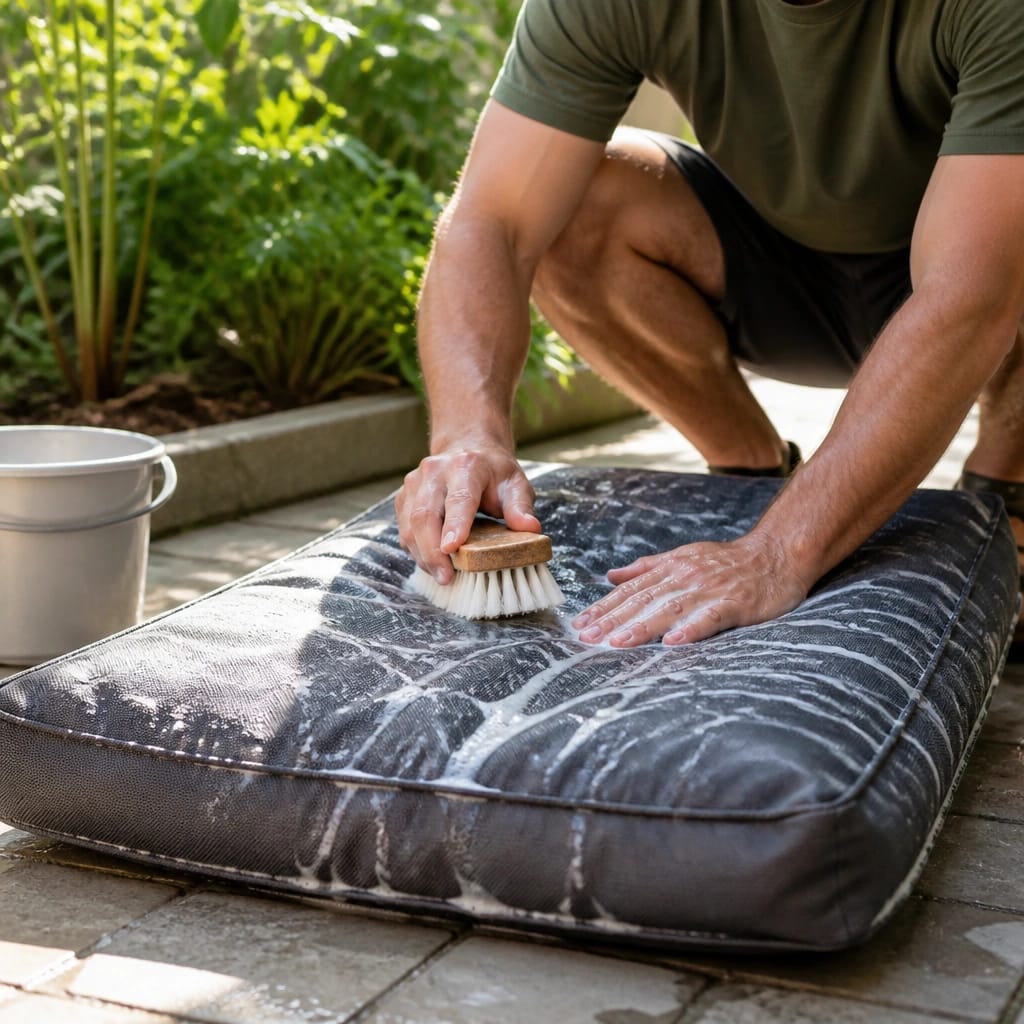
For urine accidents or deep odors, remove the cover and spot clean the foam separately. Our guide on how to get dog urine smell out of a memory foam bed walks through the full process.
Frequently Asked Questions
Is ballistic nylon chew proof?
Ballistic nylon is chew resistant, not chew proof. It can withstand scratching and some biting, but a determined chewer can eventually puncture it. Pair it with a waterproof liner and a reinforcement layer inside the cover for extra protection.
Can ripstop fabric be waterproof?
Most ripstop dog bed covers come with a DWR (durable water repellent) coating. That sheds light moisture but won’t hold up to accidents or heavy spills. Look for a coated ripstop with a hydrostatic head rating of at least 1,000 mm for better waterproofing.
Which fabric is better for puppies?
Ripstop is often easier for puppies because it’s lighter and less stiff. But if your puppy chews or digs intensely, ballistic nylon will last longer. Consider the individual puppy’s behavior.
For teething, a chew‑proof cover over a waterproof liner is ideal.
How many washes can each fabric take?
Ballistic nylon can handle 50 to 100 machine washes before noticeable wear. Ripstop typically lasts 30 to 60 washes. Air drying extends the life of both fabrics.
High heat in a dryer breaks down the coating and weakens the weave over time.
Can I mix fabrics on the same bed?
Yes. Some owners use a ballistic nylon outer cover for durability and a ripstop inner liner for softness. As long as the cover fits securely and the zipper is strong, mixing layers works.
Just make sure both fabrics are machine washable.
Final Verdict: Which Fabric Should You Choose?
For dogs that scratch, dig, or chew with intent, ballistic nylon is the smarter investment. It costs more upfront but often outlasts three ripstop covers. For calm dogs that sleep without damaging the bed, ripstop is lighter, cooler, and easier on the budget.
The real tiebreaker is your dog’s daily behavior. Watch for a week. If you see wear, go ballistic.
If the bed stays pristine, ripstop is fine. Either way, pair your fabric choice with a waterproof liner and reinforced seams for maximum life.


