

Ripstop Fabric for Dog Beds: How It Works
If your dog treats their bed like a wrestling mat, you’ve probably seen the aftermath. A single claw snag or curious chew can turn a perfectly good cover into a ragged mess. That’s where Ripstop Fabric for Dog Beds: How It Works becomes a genuinely useful thing to understand.
Manufacturer specs show that a typical 210-denier ripstop cover withstands over 500 Wyzenbeek abrasion cycles before showing wear. That’s significantly tougher than standard polyester or cotton canvas. Let’s break down what makes this fabric tick and whether it’s the right choice for your pup.
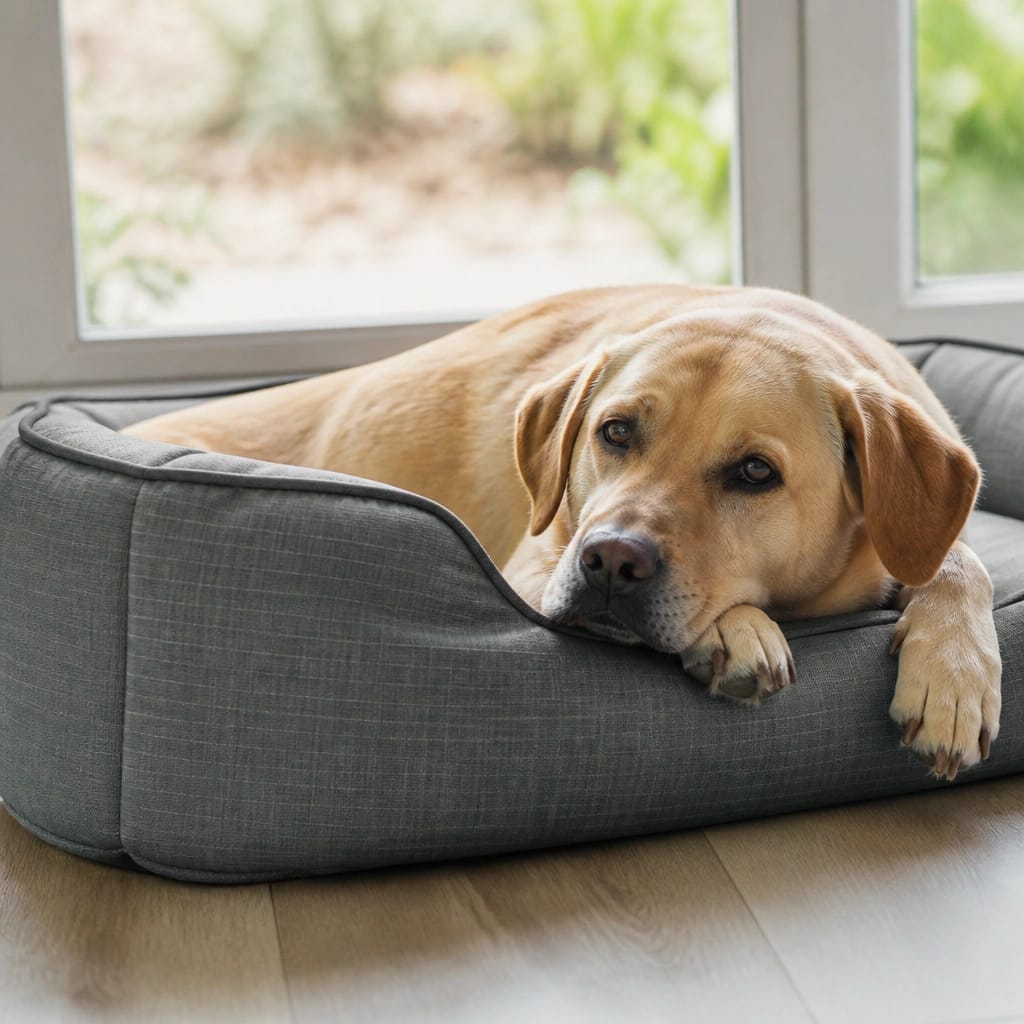
Ripstop fabric stops small tears from growing into big holes. A grid of thicker threads runs through the weave, acting like a stop sign for any rip that starts. This makes dog bed covers last much longer against claws and digging. It’s not chew-proof, but it resists tearing better than most fabrics. The grid is visible as a pattern of small squares.
Why This Matters: The Real Problem with Dog Bed Fabrics
Most dog bed covers fail in a predictable way. A tiny snag from a claw or a focused chew creates a small hole. Then the dog’s movement or further digging pulls the tear wider.
Within days, a bed can be unusable.
Standard woven fabrics like cotton canvas or soft polyester have no built-in defense against tear propagation. Once a thread breaks, the fabric unravels along that line. This is especially frustrating if your dog loves to dig or circle before settling down.
That nesting behavior creates constant stress on the fabric.
The result? Replacing covers every few months or throwing out an entire bed when the foam gets exposed. That’s a waste of money and a potential safety risk if your dog starts pulling out stuffing.

How Ripstop Fabric Actually Works (The Visual Mechanics)
Here’s the clever part. Ripstop fabric has a reinforced grid woven into it. Thicker, stronger threads run both horizontally and vertically at regular intervals.
When a tear hits one of those thicker threads, it stops dead.
Think of it like a chain-link fence. A single broken link won’t let the whole fence fall apart. The cross-threads hold everything together.
The same principle applies here. A small puncture from a claw or tooth doesn’t become a massive split.

The grid spacing varies. A tighter grid (smaller squares) gives better tear resistance but can feel stiffer. Wider grids are softer but stop larger tears.
Most quality ripstop for dog beds uses a grid spacing of about 5 to 8 millimeters.
Coated vs. Uncoated
Two main types exist for dog beds. Uncoated ripstop is breathable and lightweight. It’s great for indoor beds where moisture isn’t a concern.
Coated ripstop has a thin layer of PVC or TPU on the back. That makes it waterproof, which is a lifesaver for puppies, older dogs with incontinence, or outdoor use. But coating reduces breathability and can trap heat.
Key Features That Matter for Dog Beds
Not all ripstop is created equal. Three specs determine how well it holds up to a determined dog.
| Feature | What It Means | Recommended for Dog Beds |
|---|---|---|
| Denier (D) | Thickness of the yarn. Lower = lighter, higher = tougher. | 420D to 600D is a solid balance. 210D is okay for light use. 1000D is overkill for most beds. |
| Grid density | How close the reinforcement threads are. | 5-8mm spacing is common. Tighter = more tear resistance. |
| Coating | Waterproofing layer. | PVC is durable but stiff. TPU is more flexible and eco-friendly. |
Also check the seams. Even the best ripstop cover fails if the stitching unravels. Look for double-stitched or reinforced seams, especially at the zipper.
A zipper that pops is the number one complaint in aggregate reviews of heavy-duty dog beds.
Benefits vs. Drawbacks: When Ripstop Shines (and When It Doesn’t)

Pros:
- Stops small rips from becoming big problems
- Lightweight and easy to wash
- Dries faster than canvas or fleece
- Resists dirt and stains (tight weave)
Cons:
- Not chew-proof. A determined chewer can still damage it
- Coated ripstop can feel hot in summer
- Can be noisier than softer fabrics (some dogs don’t like the sound)
- Higher denier versions are stiff and less cozy
If your dog’s main issue is scratching, digging, or nesting, ripstop is a smart upgrade. If your dog actively chews and destroys beds, you’ll need something like ballistic nylon or check out our guide on chew proof materials for more robust options.
Who Needs a Ripstop Dog Bed Cover?
This fabric suits specific situations best. Here’s who benefits most:
- Dogs that scratch or dig at their bed before lying down, the grid stops those claw snags from widening.
- Puppies with sharp baby teeth, they’ll test everything, but ripstop gives more resistance than standard fleece.
- Outdoor or kennel beds, waterproof coated ripstop holds up to mud, rain, and sun exposure.
- Dogs with incontinence or senior dogs, coated ripstop protects the foam from accidents. A simple wipe-down keeps it fresh.
- Travel beds, lightweight and packable, ripstop covers are easy to toss in a bag.
On the flip side, a dog that never digs and only sleeps calmly doesn’t need the extra toughness. A softer fabric like microfiber or cotton might be more comfortable. It’s about matching the fabric to your dog’s habits.
If you’re unsure where to place the bed to minimise wear, consider reading about where you should place a dog’s bed in the house to avoid high-traffic areas and reduce fabric stress.


