
How Bed Size Affects a Dog’s Sleeping Position
The wrong bed size doesn’t just mean a poor fit. It actively changes how your dog sleeps, sometimes in ways that lead to stiffness, overheating, or restlessness. How Bed Size Affects a Dog’s Sleeping Position is something every owner should consider before buying a bed, because the right dimensions let your dog settle into their natural posture instead of fighting the bed.
Manufacturer specifications for most dog beds list outer dimensions, but the usable sleeping surface is often 4 to 6 inches smaller once you account for seams and bolsters. That hidden gap is why a bed that looks big enough on paper can still force your dog into a cramped curl. Let’s walk through how size really changes the way dogs lie down.
A bed that’s too small forces a dog into positions that restrict airflow and joint alignment. A bed that’s too large can leave a dog feeling exposed or cause them to sleep on the cold floor instead. The sweet spot matches the dog’s body length plus 10 to 12 inches of stretch room. Sleeping position is the best clue for which shape and size your dog actually needs.
Why the Right Bed Size Changes How Your Dog Sleeps
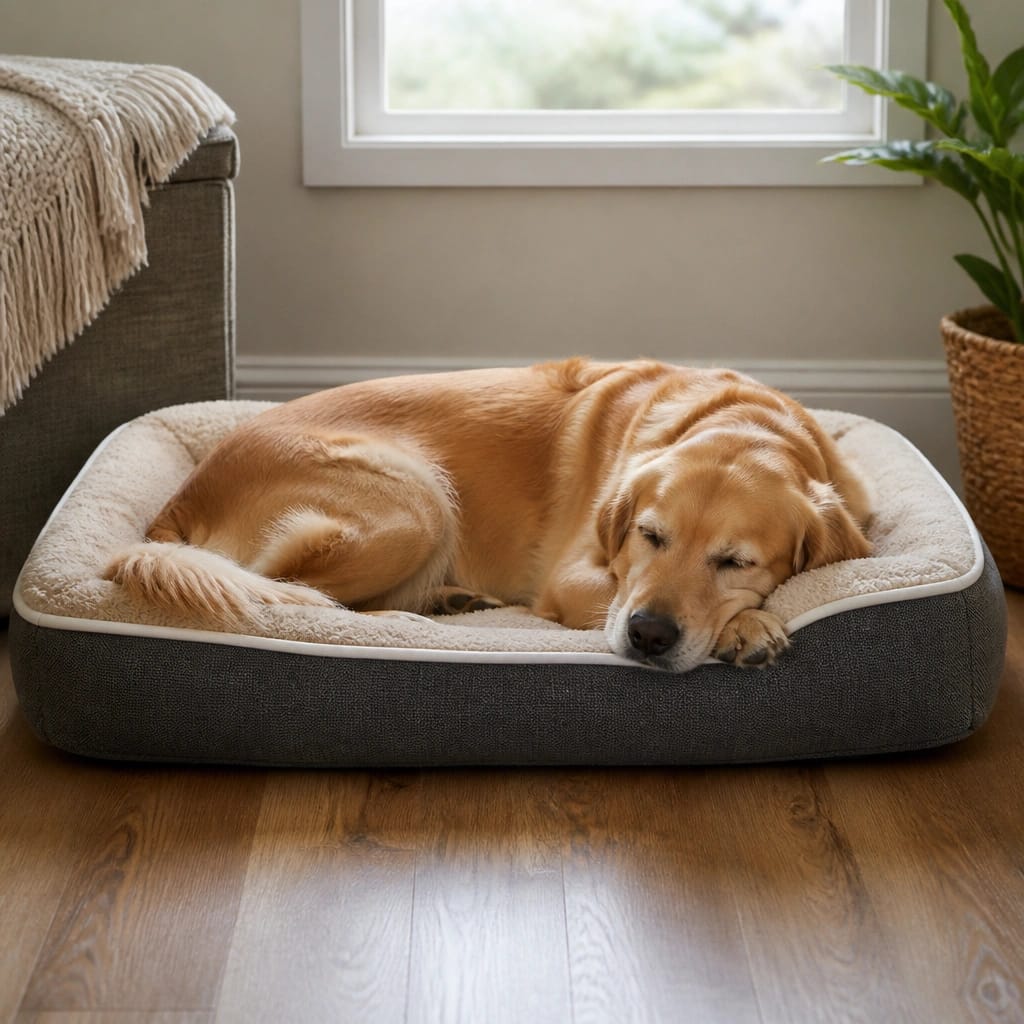
Every dog has a preferred sleeping posture. Some curl into a tight ball, others sprawl flat on their side, and a few stretch out like a flying squirrel. Bed size directly determines whether that posture is comfortable or forced.
When a bed is too small, the dog can’t fully extend. That leads to muscle tension and more tossing during the night. When it’s too large, the dog may not feel secure enough to stretch out at all.
Many large-breed owners report their dog chooses the floor over a bed that’s clearly oversized.
Think of it like this: a Great Dane trying to curl up on a small round bed has to tuck its legs so tightly that hip and shoulder joints bend at awkward angles. Meanwhile, a Chihuahua on an extra-large rectangle bed may never settle because there’s no edge to lean against. The sleeping spots where they feel safe are often the ones that match their natural curl.
The answer isn’t one size for all dogs. It depends on the dog’s length, weight, and most importantly, how they naturally lie down.
How Bed Size Affects Common Sleeping Positions
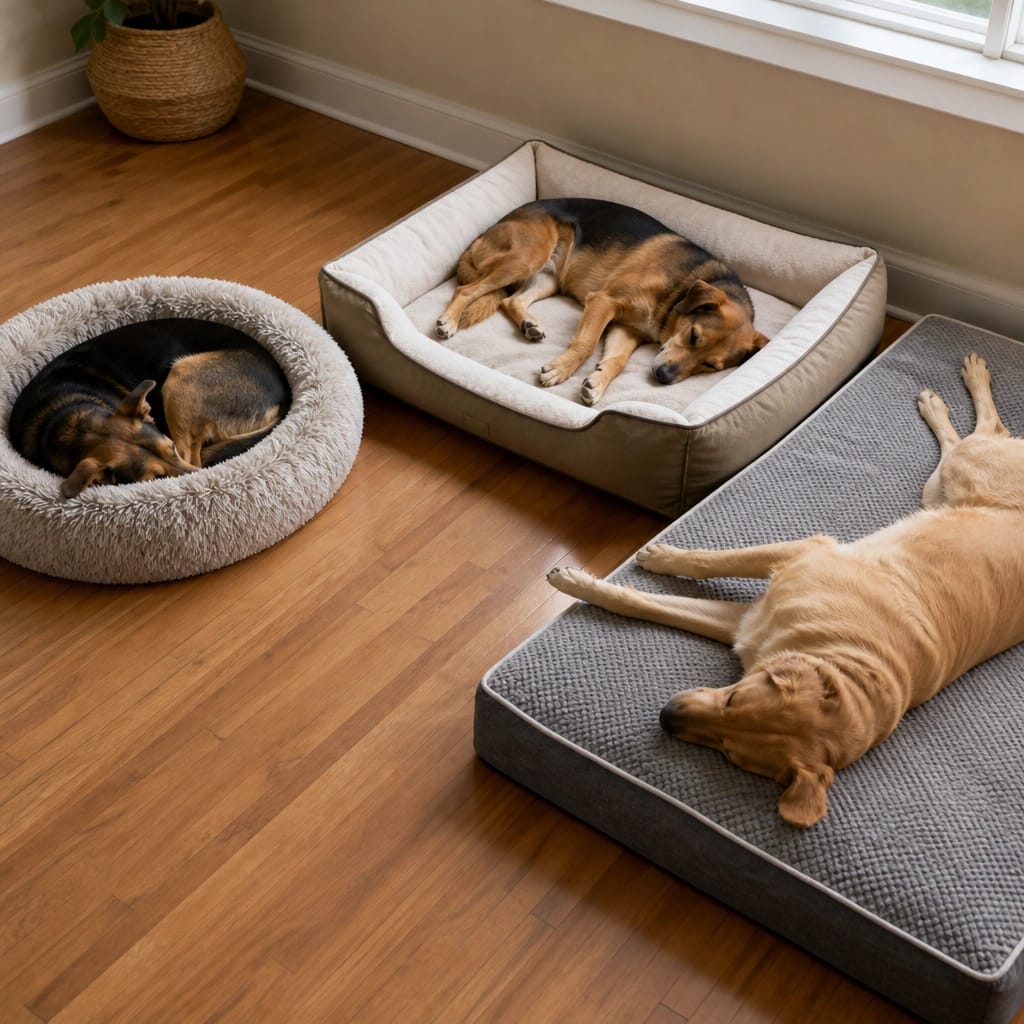
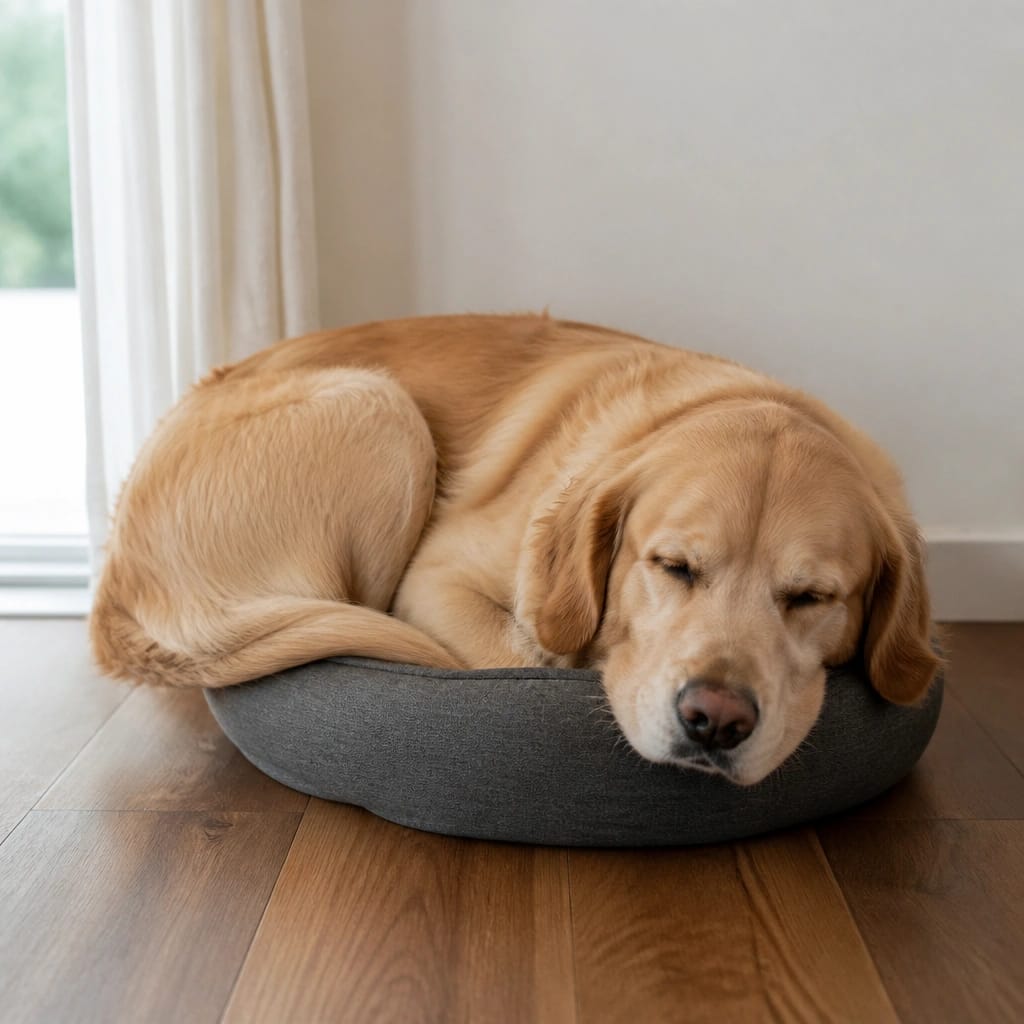
This section is where the visual really matters. The image below shows how different positions line up with different bed dimensions.
The Curled-Up Position – When Small Beds Work Best
Dogs that curl into a tight ball (sometimes called the “donut” or “fetal” position) are conserving heat and feeling secure. These dogs can fit comfortably in a smaller round or donut-shaped bed as long as the diameter is at least 1.5 times the dog’s curled length.
Small beds with raised bolsters work well here. The rim gives them something to push against, which can have a calming effect on anxious dogs. Breeds like Shiba Inus, Huskies, and small terriers often prefer this style.
The Side Sleeper – Why They Need Room to Stretch
Side sleeping is the most common posture for deep REM rest. Dogs that sleep on their side need a bed that’s long enough to allow their legs to extend straight or slightly bent. The bed should be at least as long as the dog’s full body length from nose to tail.
A rectangular bed with a flat surface and a bolster on one side works best. Side sleepers often rest their head on the bolster, so the height of the edge matters. Per Bulldog breed health research (American Kennel Club guidelines), brachycephalic breeds benefit from a lower bolster that doesn’t push their airway.
The Sprawler – Why Flat, Open Space Matters Most
Sprawling refers to dogs that lie flat on their belly with all four legs stretched out, or that flop onto their back with legs in the air. These dogs need maximum usable floor space. A thick pillow bed or a flat orthopedic mat without high bolsters is the best option.
If the bed has bolsters, they should be low enough that the dog can drape legs over without pressure. Many Labrador owners find a flat, oversized cot-style bed works best for this position.
The Superman and Belly-Up Positions – Long Beds Only
The “Superman” position (front legs forward, back legs back) and belly-up both require a long, uninterrupted sleeping surface. A round bed won’t work. Even a rectangular bed that’s too short forces the dog to hang legs off the edge, which can restrict circulation over time.
For these dogs, measure from nose to tail and add at least 12 inches of wiggle room. A crate pad or a large mattress style bed is ideal.
The Leaner – How Bolster Placement Changes With Size
Some dogs don’t lie flat. They lean against the side of the bed, often resting their head on the bolster. For these dogs, the bed needs to be wide enough that leaning doesn’t push their body off the opposite side.
Bolster beds with reinforced edges are a good match, and the couch-style options with three raised sides provide the best support for leaners.
Key Visual Cues That a Bed Is Too Small
You don’t always need a tape measure to know the bed is wrong. Look for these signs:
- Legs hanging off the edge when the dog stretches
- The dog’s back or hips touching the rim when curled
- Paws pushing against the bed frame and scooting
- Frequent readjustment circling before lying down
- The bed looks more like a pillow the dog rests on rather than inside
A bed that’s too small can also lead to digging and scratching behavior as the dog tries to reshape it into a comfortable size. If you see that pattern, size may be the root cause.
Signs a Bed Is Too Big (Yes, That’s a Real Problem)
Going too big is surprisingly common. Owners think bigger is better, but an oversized bed can cause issues:
- The dog sleeps on the floor next to the bed instead of inside it
- The bed gets pushed to one corner and bunches up
- The dog seems restless, circling without ever settling
- The bed looks empty and the dog lies only on one edge
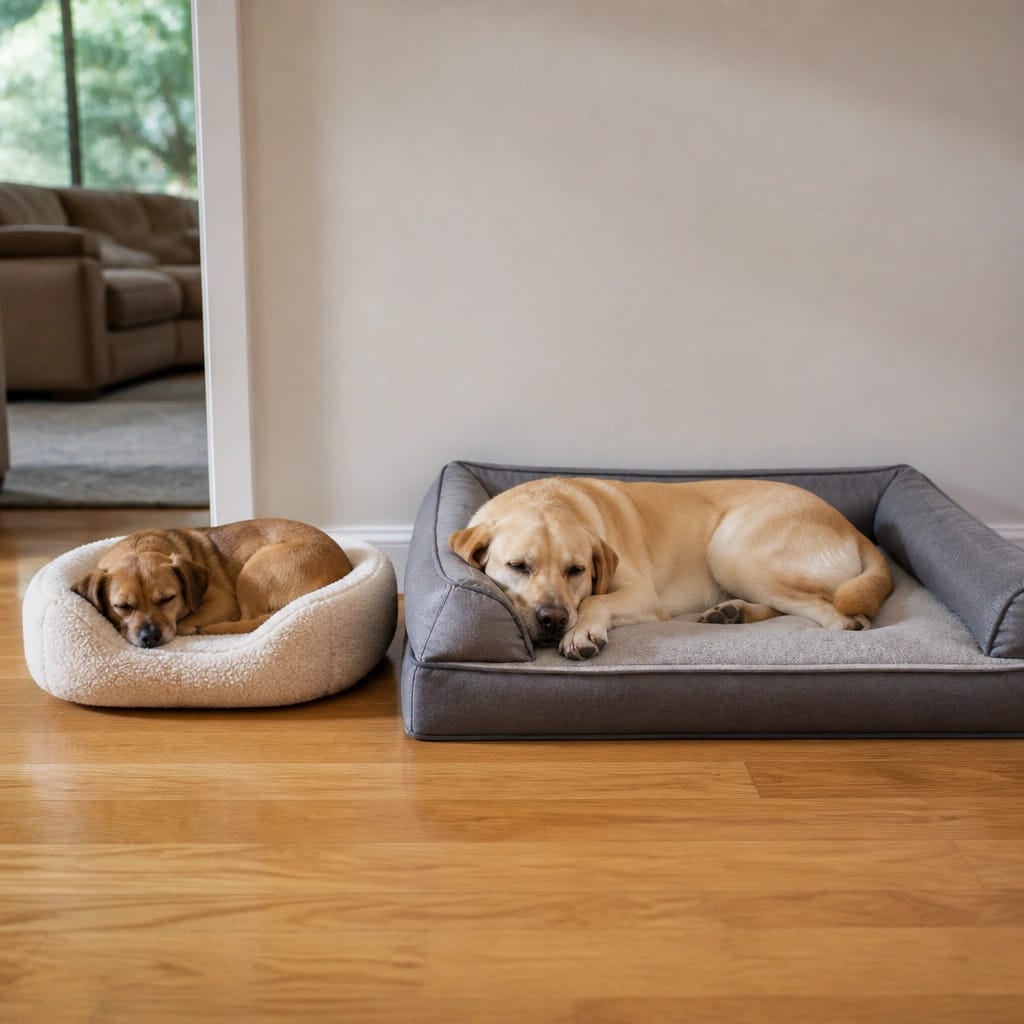
- The dog chooses a smaller dog bed or crate pad over the big one
Oversized beds remove the feeling of security. For dogs that like to curl up or lean, the lack of a defined edge can be stressful. The placement of the bed in the house also matters: a big bed shoved against a wall might feel safer than one floating in the middle of a room.
Bed size affects sleep posture, and sleep posture affects joint health and rest quality. Getting the fit right is one of the simplest ways to improve your dog’s sleep without changing anything else.
How to Match Bed Shape to Your Dog’s Favorite Position
Bed shape matters almost as much as size. A round bed works well for tight curlers. A rectangular bed suits side sleepers and sprawlers.
A donut bed with tall bolsters is ideal for leaners.
If your dog sleeps in multiple positions, go with the longest shape that accommodates their most extended posture. A dog that curls sometimes but sprawls at hot times needs a rectangular bed big enough for the sprawl.
Common Mistakes Owners Make With Bed Size
The most common error is buying a bed based on the dog’s weight instead of body length. Weight charts are rough estimates. A long-legged dog at 50 pounds needs more bed space than a stocky dog at the same weight.
Another mistake is ignoring the bed’s inner dimensions. Outer measurements include bolsters and seams. The actual sleeping area can be 4 to 6 inches smaller than the listed size.
Step-by-Step Guide: Measuring Your Dog for the Perfect Bed Size

First, measure your dog from nose to the base of the tail while they stand straight. Add 10 to 12 inches for stretch room. That number is the minimum bed length you need.
Measure the dog’s height at the shoulder. For bolstered beds, the bolster should not exceed this height. A bolster that’s too tall pushes the dog’s head forward and restricts airflow.
Check the size differences between puppies and adult dogs before buying a bed that needs to last through growth stages.
Exceptions and Special Cases (Puppies, Seniors, Multi-Dog Beds)
Puppies grow fast. A bed that fits at 4 months may be too small at 12 months. Consider a transitional size or a slightly oversized bed they can grow into.
Senior dogs with arthritis benefit from orthopedic beds that are generously sized. Extra room lets them shift positions without joint strain. A heated bed option can also help older dogs sleep more comfortably.
Multi-dog beds need to be large enough for the largest dog to stretch out. If both dogs curl up, a round bed works. If one sprawls, go rectangular.
Frequently Asked Questions
How much extra space should a dog bed have?
At least 10 to 12 inches beyond the dog’s body length from nose to tail base. This allows full extension without hanging off the edge.
Does bed size affect joint health?
Yes. A bed that’s too small forces joints into bent positions for hours. Over time this can worsen stiffness and arthritis in senior dogs.
Should I buy a bigger bed if my dog likes to curl up?
No. Curlers prefer snug beds with raised edges that provide security. A bigger bed removes that comfort and may cause restlessness.
Is a round or rectangular bed better for a side sleeper?
Rectangular. Side sleepers extend their legs, and a round bed cuts off that space. A flat rectangular bed with a single bolster works best.
Final Takeaway: Size Isn’t Just About Fit – It Affects Sleep Quality
Bed size directly controls your dog’s sleeping position. That position affects joint health, temperature, and how deeply they rest. Measure your dog’s body length.
Watch their natural sleeping posture. Choose a size and shape that matches both. Your dog will sleep better, and a properly sized bed will last longer too.


