

Which Dog Bed Fabrics Are Easiest to Clean?
You wake up on a Saturday morning, step into the kitchen, and the first thing you see is last night’s evidence: a muddy paw print trail leading straight to the dog bed. You pull off the cover, toss it in the wash, and pray it doesn’t shrink, pill, or trap the smell forever. If that sounds familiar, you’re asking the same question most dog owners do: Which dog bed fabrics are easiest to clean?
The answer isn’t one-size-fits-all. It depends on your dog’s habits, your washing machine, and how often you’re willing to do laundry. But after digging into fabric specifications, cleaning standards, and real-world feedback from owners who wash beds weekly, a clear pattern emerges.
Some fabrics hold up like champions; others fall apart after a few cycles. As of 2026, the smartest choice balances cleanability with durability, and that’s what we’re here to break down.
Microfiber and vinyl are the easiest dog bed fabrics to clean. Microfiber wipes clean and dries fast. Vinyl can be hosed off or wiped down.
Cotton washes well but shrinks over time. Fleece traps hair and stains. Suede and chenille are high-maintenance.
Choose based on your dog’s mess level.
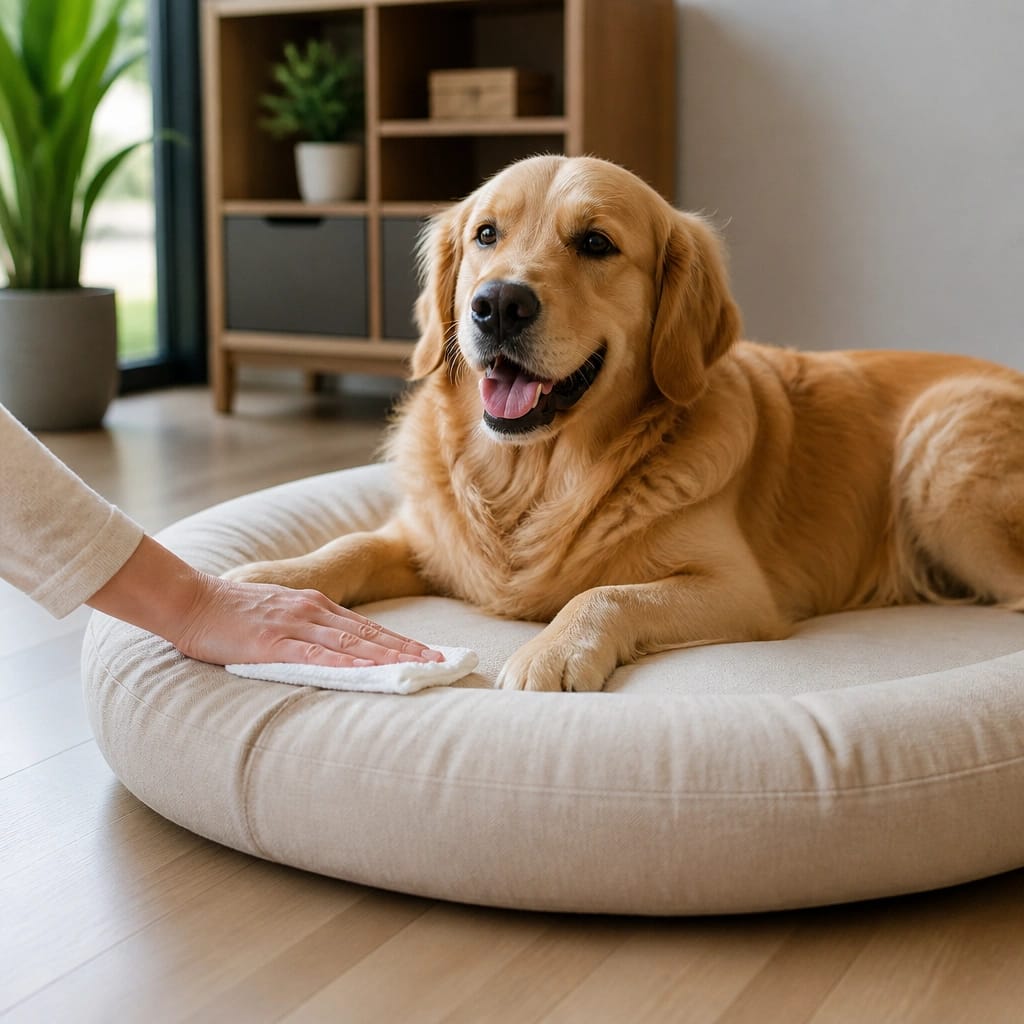
Why Fabric Choice Matters for Cleaning
Not all dog bed fabrics are created equal under a washing machine. The weave, fiber type, and finish determine how dirt, hair, and moisture behave. A fabric that repels liquids and resists staining will save you hours of scrubbing.
A fabric that soaks up everything will hold odors and require multiple washes.
Our research shows that the most common mistake owners make is choosing a bed based on comfort alone, without considering the fabric’s cleanability. A super-soft fleece bed might feel great, but after two weeks of dog hair and drool, it’s a nightmare to wash. Meanwhile, a vinyl or microfiber bed can be spot-cleaned in minutes.
If you’re dealing with a dog that tends to dig or scratch at their bed before lying down, you’ll also want a fabric that resists snags and pilling. That’s where material choice becomes a long-term investment.
Breakdown of Common Dog Bed Fabrics
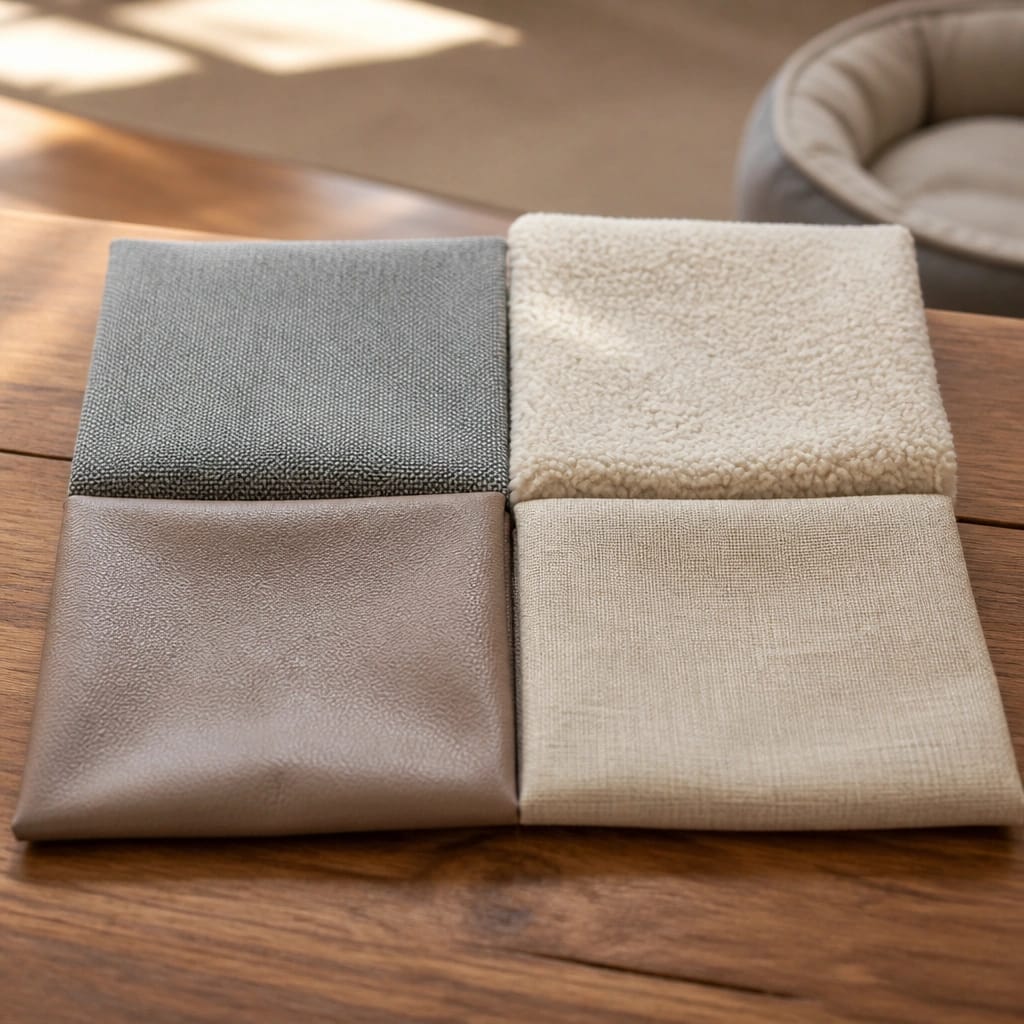
Here’s a quick tour of the most common fabrics you’ll find on dog beds. Each has clear strengths and weaknesses when it comes to cleaning.
Microfiber (polyester), Tightly woven synthetic fibers that resist stains and repel liquids. Dries fast. Doesn’t shrink.
Hair wipes off easily. Best all-around choice for cleanability.
Cotton, Natural, breathable, and soft. Washes well in hot water. But it shrinks noticeably (3 to 5 percent per wash) and can get stiff over time.
Great if you don’t mind the shrink factor.
Fleece, Warm and cozy. But it’s a hair and dust magnet. Oils from dog skin get trapped in the fibers, causing odors.
Takes forever to dry. Not ideal for frequent washing.
Vinyl (phthalate-free), Completely waterproof. Wipe it down or hose it off. No fabric to absorb anything.
Downside: can crack in cold weather and isn’t breathable. Best for outdoor or incontinent dogs.
Canvas / denim, Heavy, durable, and resistant to tears. Cleans up reasonably well, but stains can set in if not treated quickly. Best for heavy chewers who need tough fabric.
Chenille / suede (microfiber suede), Soft and luxurious. But they trap hair and show stains. Suede requires special cleaning products.
Avoid if you want low-maintenance washing.
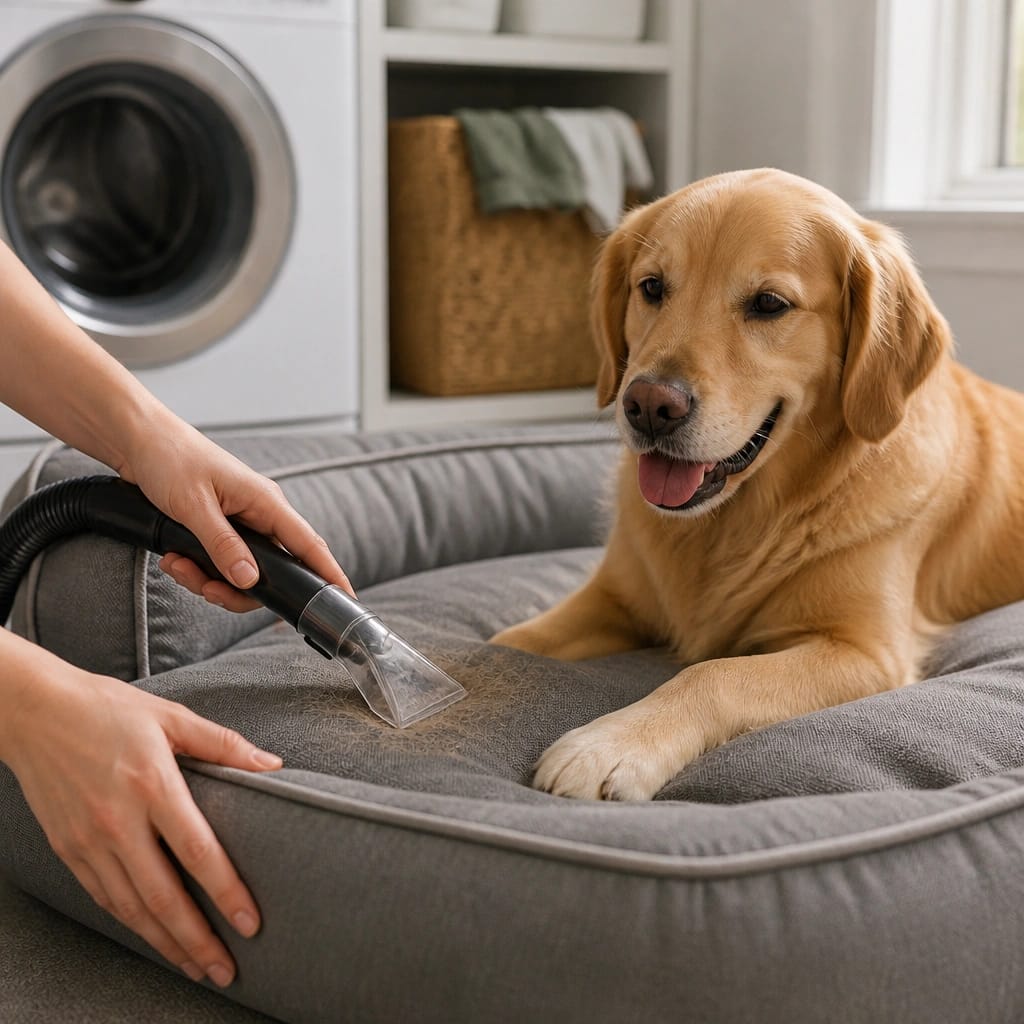
Side-by-Side Comparison: Cleanability, Durability, and Comfort
To make the decision easier, here’s how each fabric stacks up on the three factors that matter most.
| Fabric | Cleanability | Durability | Comfort |
|---|---|---|---|
| Microfiber | Excellent | Great (resists pilling) | Moderate (not plush) |
| Cotton | Good (washable) | Moderate (shrinks, fades) | High (soft) |
| Fleece | Poor (traps hair) | Moderate (pills) | Very high (warm) |
| Vinyl | Excellent (wipe/hose) | Good (cracks over time) | Low (not breathable) |
| Canvas | Good (spot-treat) | Excellent (tough) | Moderate (stiff) |
| Chenille/Suede | Poor (stains) | Moderate (frays) | High (plush) |
Key takeaway: If you wash your dog’s bed weekly, microfiber or a machine-washable cotton blend with a low-shrinkage finish is your best bet. For heavy messes, a fully waterproof dog bed with a removable vinyl cover beats anything else.
Best Fabric for Different Situations
Your dog’s specific needs change the answer. Here’s how to match fabric to the situation:
Heavy shedders, Microfiber or canvas. These fabrics don’t trap hair the way fleece does. A quick vacuum or lint roller handles the rest.
Puppies and incontinent dogs, Vinyl or a waterproof liner under a removable cover. The liner protects the foam core. The cover can be washed without soaking the foam.
For removing set-in stains, our guide on getting dog urine smell out of memory foam has step-by-step help.
Multi-dog households, Durable cotton or microfiber. You’ll be washing often, so choose fabric that can handle hot water and heavy-duty cycles without falling apart.
Outdoor or muddy dogs, Canvas or vinyl. Both can be hosed down. For outdoor use, look for a fabric with UV resistance to prevent fading.
Our comparison of indoor vs. outdoor dog beds offers more details.
What About Waterproof Liners?
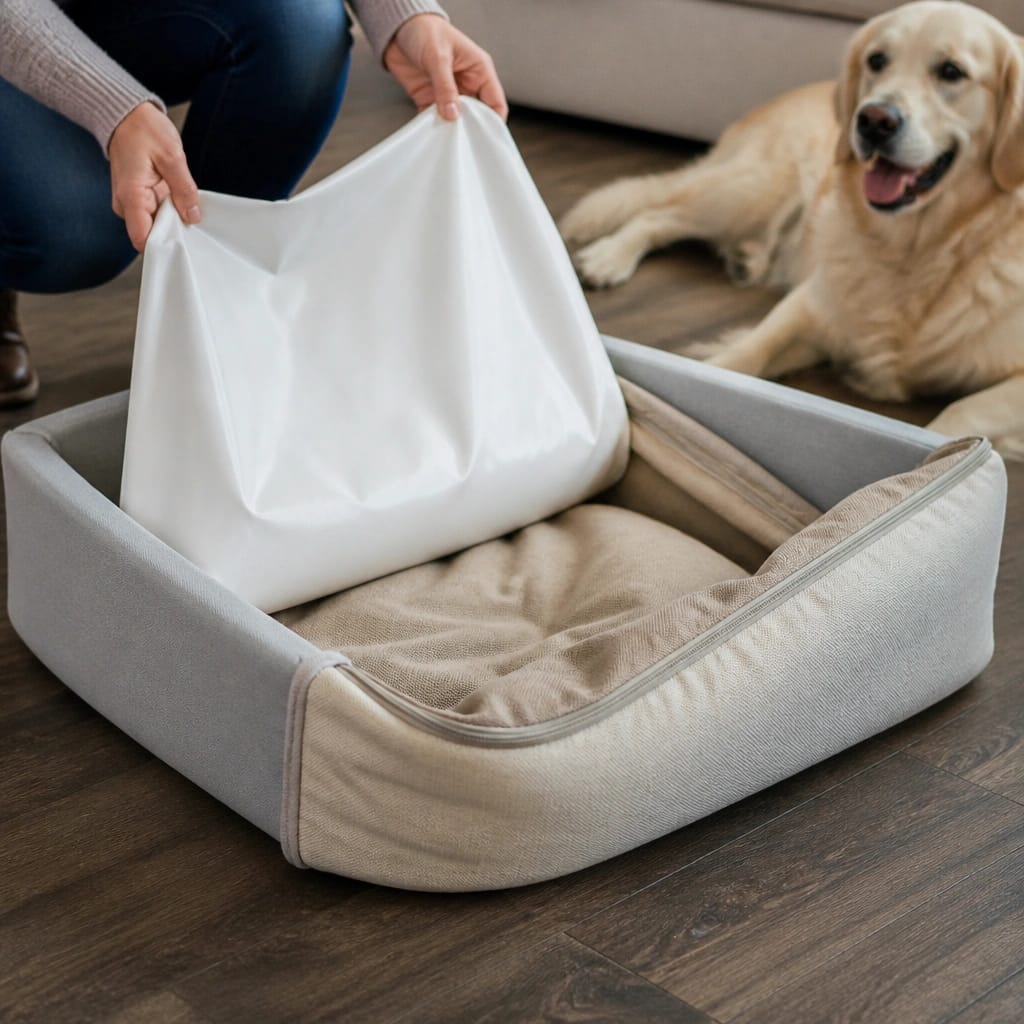
A waterproof liner sits between the fabric cover and the foam core. It’s a separate layer that traps liquid before it reaches the foam. This is a game-changer for cleaning because the foam itself is the hardest part to clean.
You can throw the cover in the wash, wipe down the liner, and the foam stays dry.
Most liners are made from polyurethane laminate (PUL) or a thin vinyl sheet. They’re easy to wipe clean, but they do add a crinkle sound that some dogs dislike. To minimize noise, look for a liner made of fabric-backed PUL, which is quieter and more breathable.
If your dog is a heavy chewer, consider a chew-proof material for the outer cover, with a separate waterproof layer underneath. That way, if the outer cover gets punctured, the liner still protects the foam.
Common Mistakes That Make Cleaning Harder
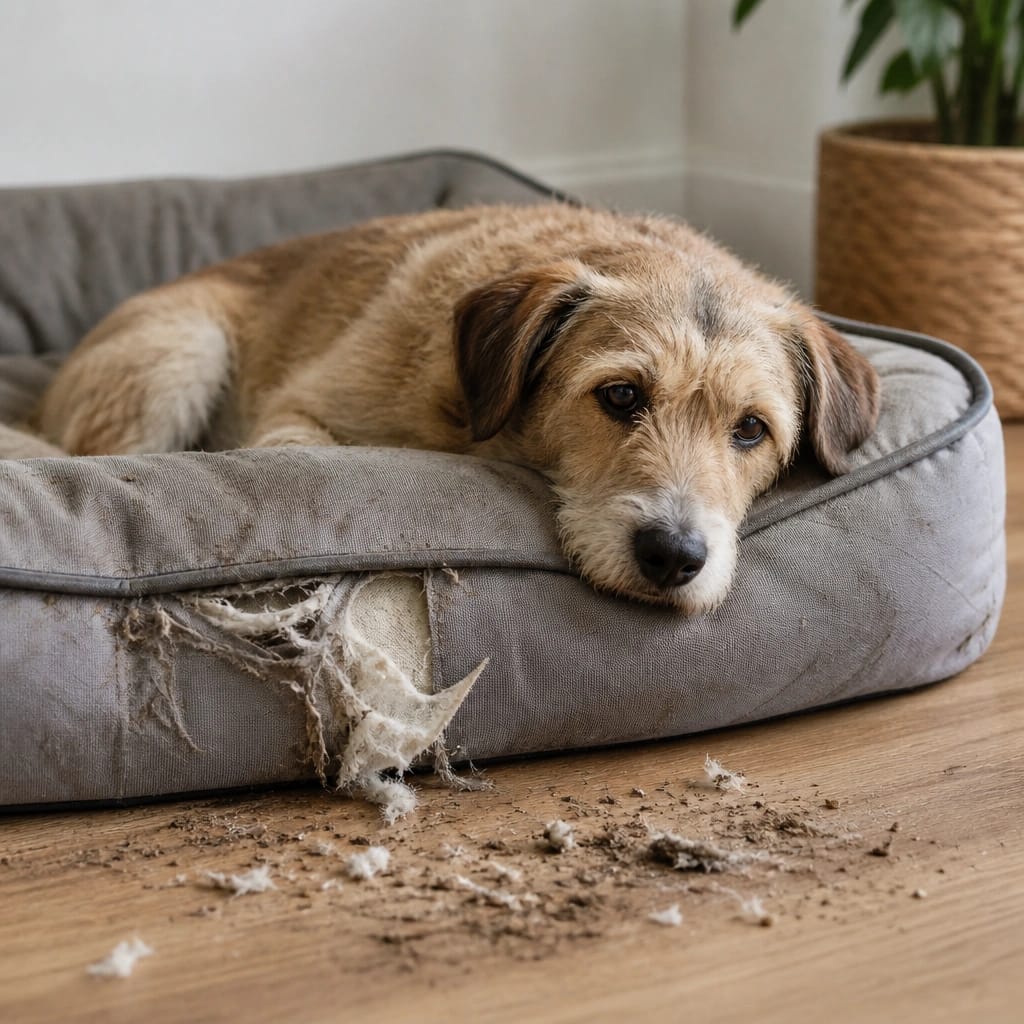
The biggest mistake is buying a bed without checking the zipper. A cover you can’t remove easily will never get washed. Look for a zipper that runs along the full edge, not a tiny hidden one.
Another error is using fabric softener. It coats polyester fibers and reduces water repellency. Your microfiber cover will start soaking up stains instead of beading them off.
Skipping a waterproof liner underneath a removable cover is a third mistake. Once urine or drool reaches the foam core, the whole bed is compromised. A liner costs little and saves the foam.
Our guide on removing deep-set urine smells explains why foam is so hard to clean once saturated.
Pro Tips for Keeping Any Dog Bed Cleaner Longer
Spot clean spills right away. Blot, don’t rub. Rubbing pushes the stain deeper into the weave.
Wash covers in cold or warm water, not hot. Hot water can set protein stains like saliva and urine. Use an enzyme-based detergent to break down organic matter.
Air dry covers when possible. High heat in a dryer can shrink cotton and melt synthetic zippers. If you must use a dryer, run it on low and remove the cover while still slightly damp.
For dogs that scratch and dig before lying down, consider a bolster dog bed with a removable bolster cover. The padding inside bolsters is often separate and washes easier than a solid foam block.
Frequently Asked Questions
Can I put a dog bed cover in the dryer?
Yes, but only on low heat. High heat shrinks cotton and can damage waterproof coatings. Check the care label first.
Many covers recommend air drying.
How often should I wash my dog’s bed?
Every one to two weeks for indoor beds. Wash more often if your dog has allergies, incontinence, or spends time outdoors. Spot clean between washes.
Is fleece a bad choice for dog beds?
Fleece is comfortable but traps hair, dander, and odors. It takes long to dry and pills quickly. Best for dogs that don’t shed much and for owners who don’t mind frequent washing.
What fabric repels dog hair the best?
Microfiber and smooth cotton blend. Hair slides off these surfaces instead of embedding. Fleece and chenille cling to hair like magnets.
Do waterproof liners make the bed crinkle?
Some do. Cheaper vinyl liners crinkle noticeably. Fabric-backed polyurethane laminate (PUL) is quieter and more breathable.
It costs more but feels like regular fabric.
Final Verdict: Choosing the Right Fabric for Your Routine
Start with your dog’s mess level. Heavy soiling means vinyl or a waterproof liner. Moderate shedding means microfiber.
Softness seekers can choose cotton, but expect shrinkage over time.
Match the fabric to your washing habits. If you hate laundry, pick something you can wipe clean. If you don’t mind weekly loads, a cotton blend with a removable cover works fine.
The easiest fabric overall is microfiber. It cleans fast, dries fast, and resists stains. Pair it with a waterproof liner and you’ve got a bed that lasts years with minimal effort.
For a deeper look at how different bed styles handle cleaning, check our crate pad vs. crate mat comparison and our breakdown of brewers and cleaning gear.


