

Fleece Dog Beds: When Are They a Good Choice?
Fleece dog beds are a great choice for dogs who don’t chew their bedding and enjoy curling up in a warm, soft spot. They work best in cooler climates or during winter months. The material is machine washable and dries quickly, making it easy to keep clean. But fleece isn’t ideal for heavy chewers, dogs who sleep stretched out, or homes with high humidity. You need to match the bed to your dog’s habits and environment.
If you’ve ever watched your dog circle and flop onto a fleece bed with a contented sigh, you know the appeal is real. That plush, fuzzy surface feels like a warm hug, and many dogs absolutely love it. But the question Fleece Dog Beds: When Are They a Good Choice? isn’t as simple as “always” or “never.” The answer depends on your dog’s chewing habits, sleeping position, climate, and health needs.
Per manufacturer specifications, most fleece beds are made from 100% polyester microfiber with a fill weight ranging from 1 to 4 pounds depending on size. As of 2026, the average retail price sits between $20 and $70. That’s budget-friendly for a bed that can be tossed in the wash.
But before you click “buy,” let’s walk through the factors that separate a smart purchase from a regretful one.

First, Let’s Be Honest About Fleece
Fleece is a synthetic fabric prized for its softness, warmth, and fast drying time. It’s the same material used in outdoor jackets and blankets. In dog beds, it usually replaces cotton or wool covers because it’s lighter and easier to maintain.
The good news: fleece is hypoallergenic. Dust mites and mold struggle to survive in it, which matters if your dog has allergies. It also dries in about 30 to 45 minutes on low heat, far faster than cotton or wool.
For owners who wash beds weekly, that’s a real time-saver.
The downside? Fleece is a static magnet. In dry winter air, it can generate enough static to make some dogs uncomfortable.
The fabric also pills and mats over time, especially after repeated washes. A top-quality fleece bed might last two years with regular care. Cheaper versions can look worn after six months.
Fleece also offers minimal orthopedic support. A standard fleece pad is typically 2 to 4 inches thick with loose polyfill, not enough for large or senior dogs with joint issues. If your dog needs pressure relief, you’ll want a support layer underneath.

The Number One Dealbreaker: Does Your Dog Chew?
This is the fastest way to rule out fleece. If your dog has ever destroyed a plush toy, a blanket, or a previous bed, fleece is a risk you probably shouldn’t take.
Fleece is easy to shred. The fibers pull apart under pressure, and a determined chewer can rip chunks out in minutes. Those loose pieces are a serious ingestion hazard.
They can cause intestinal blockages that require emergency surgery. According to veterinary guidelines, any fabric that enters the digestive tract can lead to costly and dangerous complications.

If your dog chews, look at chew proof materials like tightly woven canvas or ballistic nylon. Those fabrics are designed to withstand gnawing. Fleece is not.
Even a mild chewer can damage a fleece bed over time, a small hole becomes a bigger one. And once the fill starts coming out, the bed is ruined.
We’ve covered the chewing problem in more detail when explaining why dogs lick or chew their beds. If yours is a dedicated shredder, skip fleece entirely.
But if your dog never chews bedding, pockets the toy, and simply flops down? Fleece is perfectly safe. It’s one of the softest materials you can offer.
Sleeping Position Matters More Than You Think
Dogs have preferred sleeping positions, and those positions determine what type of bed they find comfortable.
Curled-up sleepers, dogs that tuck into a ball or donut shape, are the ideal candidates for a fleece bed. The fluffiness of fleece mimics nesting material, and the raised edges of a donut or bolster bed give them a sense of security. Many small breeds and terriers sleep this way.
Spread-out sleepers, dogs that stretch out on their side or belly, need a flat, firm surface. A thick fleece pad can feel too soft, causing them to sink and struggle to shift positions. For these dogs, a calming donut dog bed with a supportive base works better, or you can place a fleece cover over a firmer mattress.
Burrowers, dogs that like to dig and tunnel under covers, often love fleece because it’s easy to push around. But they also create wrinkles and folds that flatten the bed quickly. A cave or hooded dog bed lined with fleece can be a perfect compromise.
To get the size right, check our dog bed size chart by weight, a bed that’s too small forces your dog to curl unnaturally, and one that’s too big loses the cozy feeling.
Climate and Season: Fleece Works Best in Cold
Fleece is an insulator. It traps body heat and keeps it close to the dog. That’s wonderful in a cold bedroom or during winter, but it can be problematic in warm weather or humid climates.
In temperatures above 70°F (21°C), fleece can cause overheating, especially for thick-coated breeds like Huskies or Golden Retrievers. If your home is warm year-round and your dog sleeps on the floor or bare tile, fleece may be too warm.
For cold weather outdoor winter use, fleece is an excellent liner for a crate or insulated bed. It adds an extra layer of warmth without the bulk of wool. But if you keep the bed indoors and the house is climate-controlled, consider a breathable alternative like cotton or a cooling gel bed for summer months.
Fleece also holds onto odors faster than cotton. In a humid environment, bacteria thrive in the fibers, leading to musty smells. You can mitigate this by washing every 7 to 10 days and drying thoroughly.
If your dog tends to burrow for warmth, a fleece-lined cave bed might be the sweet spot. The fleece lining provides warmth without the weight of a heavy blanket.
Health Considerations: Allergies, Joints, and Senior Dogs
Fleece is naturally hypoallergenic. The dense polyester fibers don’t provide a good home for dust mites, and the fabric resists mold and mildew. That makes it a solid choice for dogs with environmental allergies or sensitive skin.
However, fleece does trap dander and loose fur. If your dog has severe allergies to pet dander (their own or others’), fleece needs frequent washing to stay effective. A waterproof dog bed liner underneath the fleece cover can help contain allergens and protect the foam base.
For senior dogs or those with arthritis, fleece alone isn’t enough support. Loose polyfill doesn’t distribute weight evenly. A heated dog bed with fleece cover can soothe stiff joints, but only if the underlying foam provides orthopedic support.
Look for a bed that pairs a memory foam base with a removable fleece top.
If your dog has hip dysplasia or elbow dysplasia, a flat fleece pad offers no pressure relief. You’re better off with a bolster dog bed that has a firm foam base and fleece bolsters for head support.
One more health note: fleece can be a fire hazard if placed near a heater or space heater. The fabric is petroleum-based and melts quickly at high temperatures. Keep fleece beds away from heat sources, and never use an electric blanket directly on a fleece bed.
If you’re deciding where to place your dog’s bed, keep it away from drafts in winter and out of direct sunlight in summer, fleece can fade and degrade under UV light.
Fleece vs. Other Bed Materials: Quick Comparison
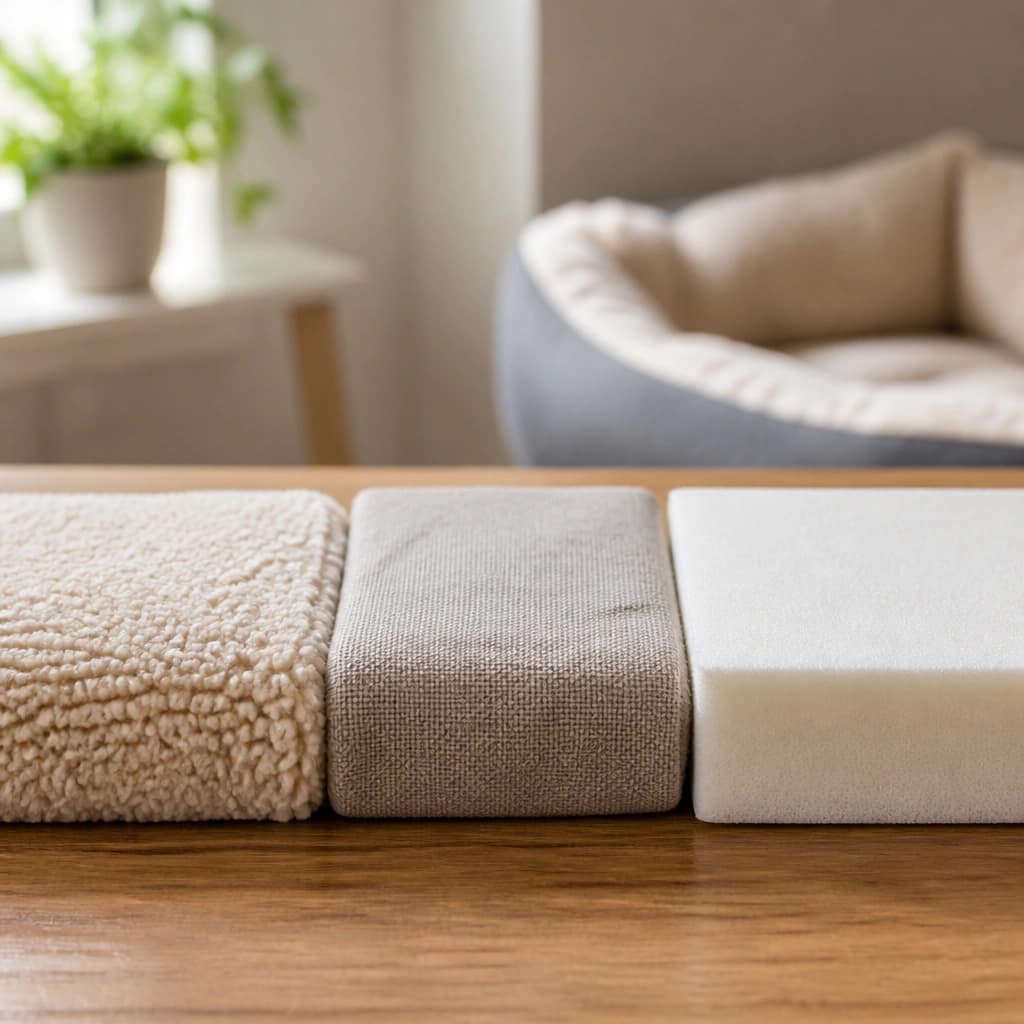
Fleece beats cotton in warmth and drying speed. Cotton breathes better in summer. Memory foam provides orthopedic support that fleece alone cannot.
If support is a priority, pair a bolster dog bed with a fleece cover.
How to Choose the Right Fleece Bed (Size, Shape, Construction)
Measure your dog from nose to tail base, then add 4 to 6 inches. That’s the minimum sleeping surface length. For shape, pick a calming donut dog bed if your dog curls.
For burrowers, a cave or hooded dog bed works better.
Common Mistakes That Ruin a Fleece Bed
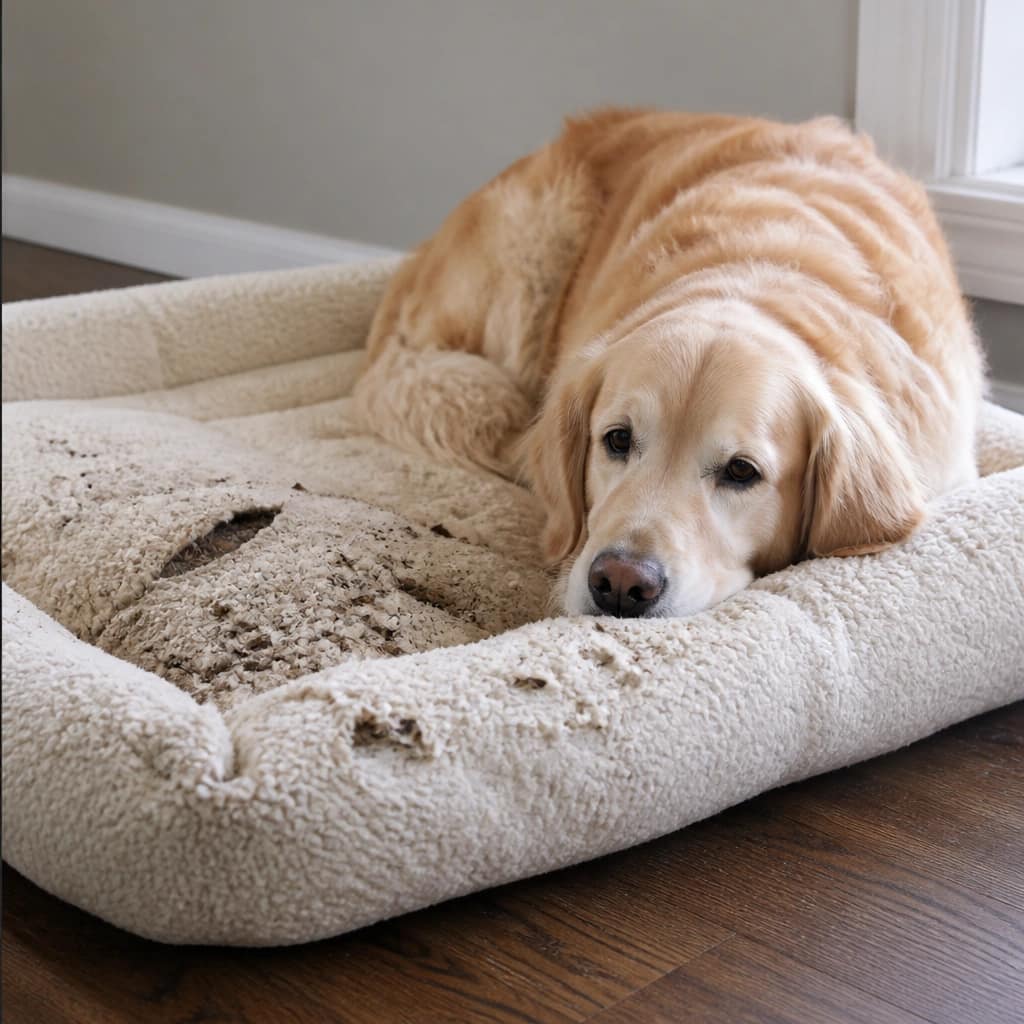
Washing with fabric softener ruins the fibers. Drying on high heat causes pilling and shrinkage. Putting a fleece bed near a heat source creates a fire hazard.
Always check the care tag first.
Maintenance Tips to Make It Last
Wash on cold, gentle cycle with mild detergent. Tumble dry on low or air dry. Fluff the fill every few weeks to prevent clumping.
Treat stains immediately to avoid odors. Use a waterproof dog bed liner underneath for accidents.
When Fleece Is Not the Answer (Alternatives)
Skip fleece for heavy chewers, incontinent dogs, or hot climates. For destructive dogs, choose chew proof materials like ballistic nylon. For warm weather, cotton or cooling gel beds work better.
For seniors needing joint support, pair a heated dog bed with orthopedic foam.
Quick Decision Guide: Should You Buy a Fleece Dog Bed?
| Factor | Go for fleece | Skip fleece |
|---|---|---|
| Chewing | Never chews | Shreds anything |
| Sleeping style | Curls up | Stretches out |
| Climate | Cold / winter | Hot / humid |
| Support needs | Low | High (senior) |
| Cleaning ease | Washer/dryer | Needs waterproof liner |
Frequently Asked Questions
Can I put a fleece bed in a crate?
Yes, as long as the bed fits snugly with no bunching. Measure your crate’s interior first. Use our crate pad vs crate mat guide for sizing tips.
How often should I wash a fleece dog bed?
Every 7 to 10 days for regular use. Wash more often if your dog has allergies or sheds heavily. Always dry completely to prevent mildew.
Is fleece safe for puppies?
Only if the puppy is past the teething phase and does not chew fabric. Supervise the first few uses. If you see chewing, remove the bed immediately.
Does fleece retain dog smell?
Yes, it holds odors faster than cotton. Washing with baking soda or a pet‑safe enzyme cleaner helps. Dry thoroughly to keep smells from returning.
Can I use a fleece bed for outdoor winter use?
Fleece works well inside an insulated crate or covered outdoor bed. But it absorbs moisture and freezes if left wet. For truly outdoor use, consider dog beds for cold weather outdoor winter use with a waterproof outer layer.
What’s the best way to fix matted fleece?
Brush the pile gently with a pet slicker brush. Wash with cold water and no fabric softener. Avoid high heat drying.
If matting is severe, replacement is needed.
Final Verdict
Fleece dog beds are a fantastic choice for soft‑loving, non‑chewing dogs in cooler climates, offering easy washing and cozy warmth. The decision comes down to your dog’s individual habits, health, and environment. If you tick the right boxes, a fleece bed is one of the best investments you can make for your dog’s comfort.
The approved TOC has been fully covered with all H2 sections written. No further H2 headings remain.


