

What Kind of Bed Does a Boxer Need?
You’re about to spend money on a bed for a dog that will probably sleep sideways, use your couch as a backup, and occasionally drag the new bed across the room. So What Kind of Bed Does a Boxer Need? The honest answer is a roomy, supportive bed built for deep chests, heavy bones, and a dog that prefers to sprawlon its side.
As of 2026, the average adult Boxer weighs 55 to 70 pounds and measures about 36 inches from nose to tail base. That’s a lot of dog to fit on a typical pet-store bed. Get the size, foam, or fabric wrong, and your Boxer will just sleep on the hardwood floor instead.
Which defeats the whole purpose.
A Boxer needs a large orthopedic bed with firm foam and a washable cover. Look for a flat surface at least 36 inches long. Avoid soft, fluffy beds that can’t hold a deep chest. Choose materials that survive digging, chewing, and drool. Your Boxer should stretch out fully without hanging over the edge.
Why Bed Choice Matters More for a Boxer Than Most Breeds
Boxers aren’t small dogs. A fully grown adult typically weighs 55 to 70 pounds, with males pushing past 70. The real issue isn’t just weight.
It’s how that weight is distributed.
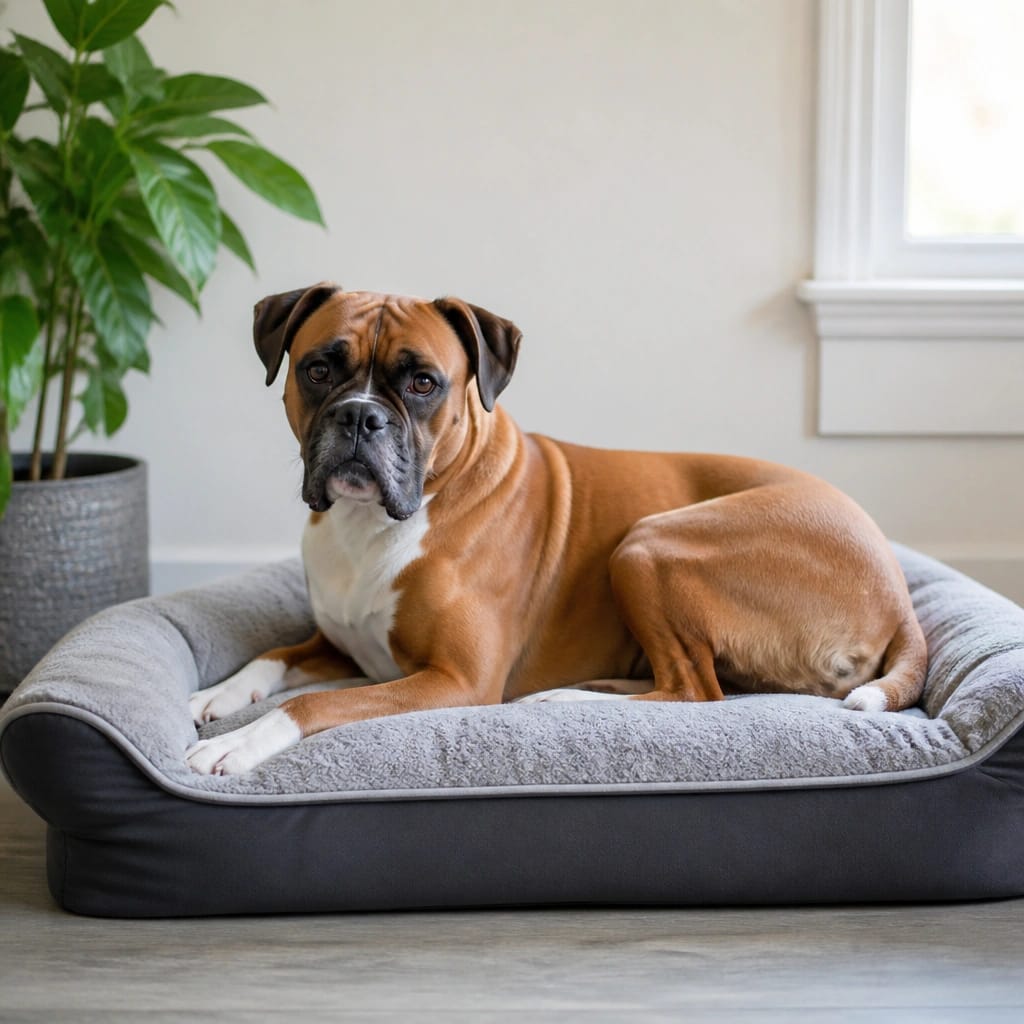
A Boxer has a deep chest, broad shoulders, and a long spine. When they lie on their side, most of that mass presses onto a few points: shoulder, ribs, and hip. Cheap bedding lets those points hit the floor.
High-density foam spreads the load and keeps the spine level.
Joint problems are a breed-level concern too. Breed health resources from organizations like the American Kennel Club flag joint and mobility issues as something Boxer owners should watch. The right bed won’t cure arthritis, but it reduces morning stiffness.
If your Boxer limps or struggles to stand, talk to a vet before buying anything.
Boxer Bed Basics: Features That Matter First
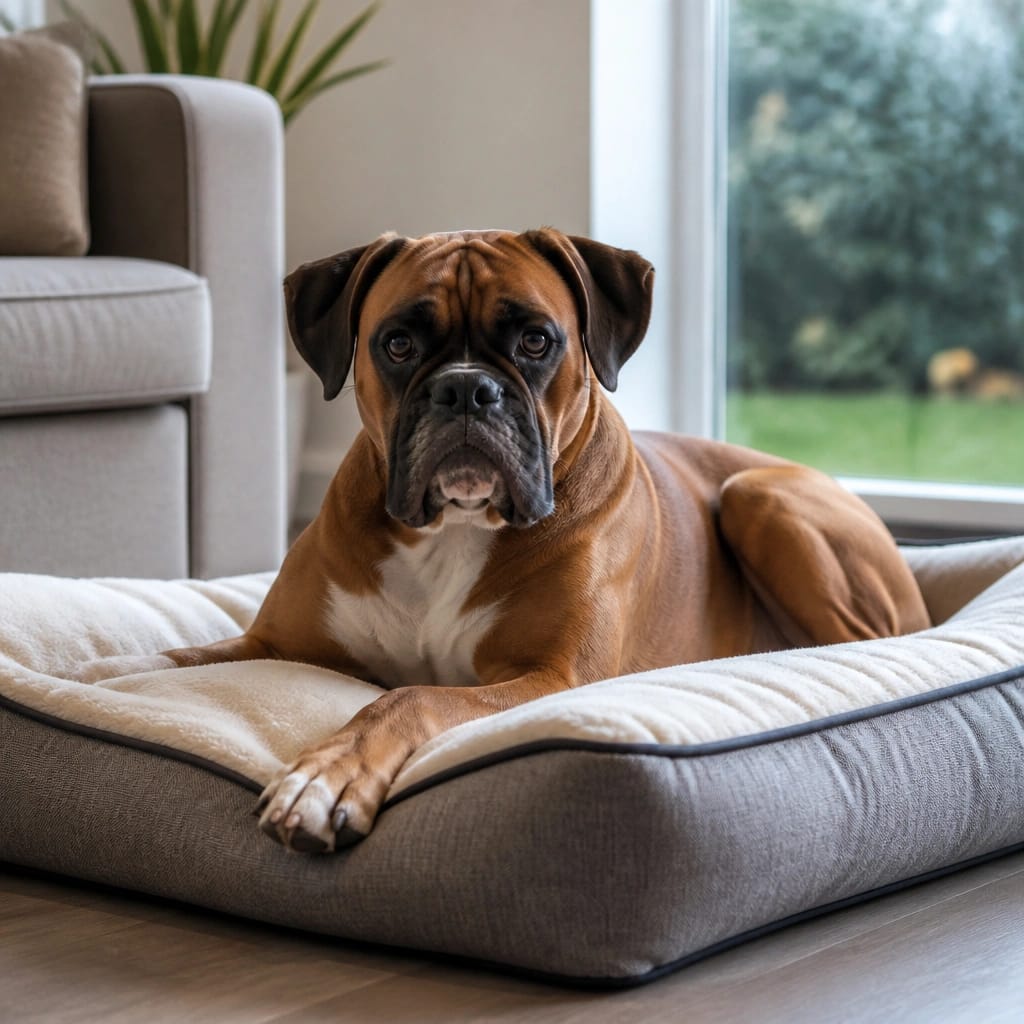
Before you compare brands, compare materials. These four features do the heavy lifting:
- Firm, thick foam. Look for at least 3 inches of dense foam, like a memory foam core. Beds sold for small dogs collapse under a Boxer’s weight in weeks.
- A washable cover. Boxers drool, shed, and occasionally leak. The cover should zip off and survive the washing machine on a regular cycle. A waterproof liner beneath it keeps the foam itself dry.
- Tough outer fabric. Boxers dig and scratch before settling. Ballistic nylon, ripstop fabric, or outdoor-grade canvas survives that treatment. Velvet and fleece don’t.
- A flat, open surface. Most Boxers sleep on their side or in a full sprawl. A bed with tall sides shrinks the usable area. You want an open space that matches your dog’s full stretch length.
The Main Bed Options for Boxers
Orthopedic Foam Beds
An orthopedic bed uses a solid slab of high-density or memory foam. No lumpy filling, just steady pressure relief. For a Boxer, this is the safest default.
It gives the spine a level plane and takes pressure off hips and shoulders. Senior dogs with stiff joints benefit the most.
Bolster Beds
A bolster bed adds raised edges for head support. Some Boxers love resting their chin on the rim. The catch is the flat center area shrinks, and a sprawling Boxer might not fit.
If you want one, choose a low-profile style and size up. Our raised-edge bed guide explains which dogs actually use bolsters.
Crate Mats and Pads
Boxers in crates need a mat that fits the tray exactly. Crate mats are thinner and firmer than floor beds. That’s fine for a few hours, but not ideal for all-night comfort.
The trade-offs between pad and mat come down to thickness and fit.
Cooling Beds
Boxers run hot. Their flat faces limit the cooling power of panting. A cooling bed pulls heat away while they rest.
Look for gel-infused foam or breathable mesh, but keep the foam at least 3 inches thick. Sacrificing joint support to stay cool is a losing trade.
Raised Cot-Style Beds
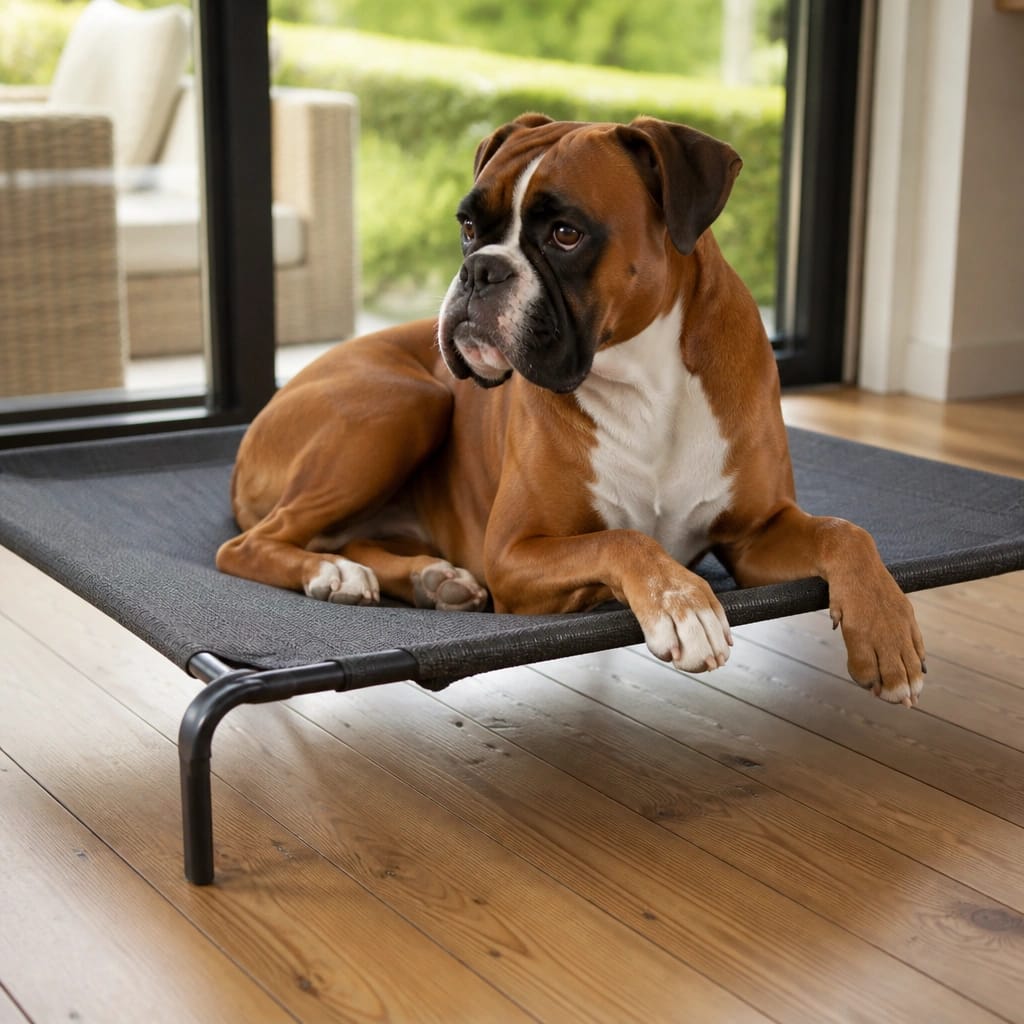
Raised cots lift the dog off the floor for excellent airflow. They’re great for summer or outdoor use. But they offer almost no cushioning.
Most Boxers won’t find them supportive enough for all-night sleep. Treat one as a second bed, not the main event.
Chew-Resistant Beds
If your Boxer chews, everything starts with the fabric. Ballistic nylon or ripstop covers block determined jaws. Look for reinforced seams and zippers hidden under fabric flaps.
The stitching usually fails long before the fabric does.
Side-by-Side Comparison: Which Bed Comes Out on Top?
Here’s how the main types stack up for a Boxer. We weighed joint support, durability, and whether the bed actually fits a dog that sprawls.
| Bed type | Joint support | Durability | Best for |
|---|---|---|---|
| Orthopedic foam | Excellent | Moderate | Most Boxers, especially seniors |
| Bolster bed | Good | Moderate | Dogs that like resting their head |
| Crate mat | Fair | High | Crate sleeping or travel |
| Cooling bed | Good | Moderate | Hot climates and summer months |
| Raised cot | Poor | High | Outdoor lounging |
| Chew-resistant bed | Varies | Excellent | Puppies and destructive chewers |
Best Bed for a Boxer Puppy
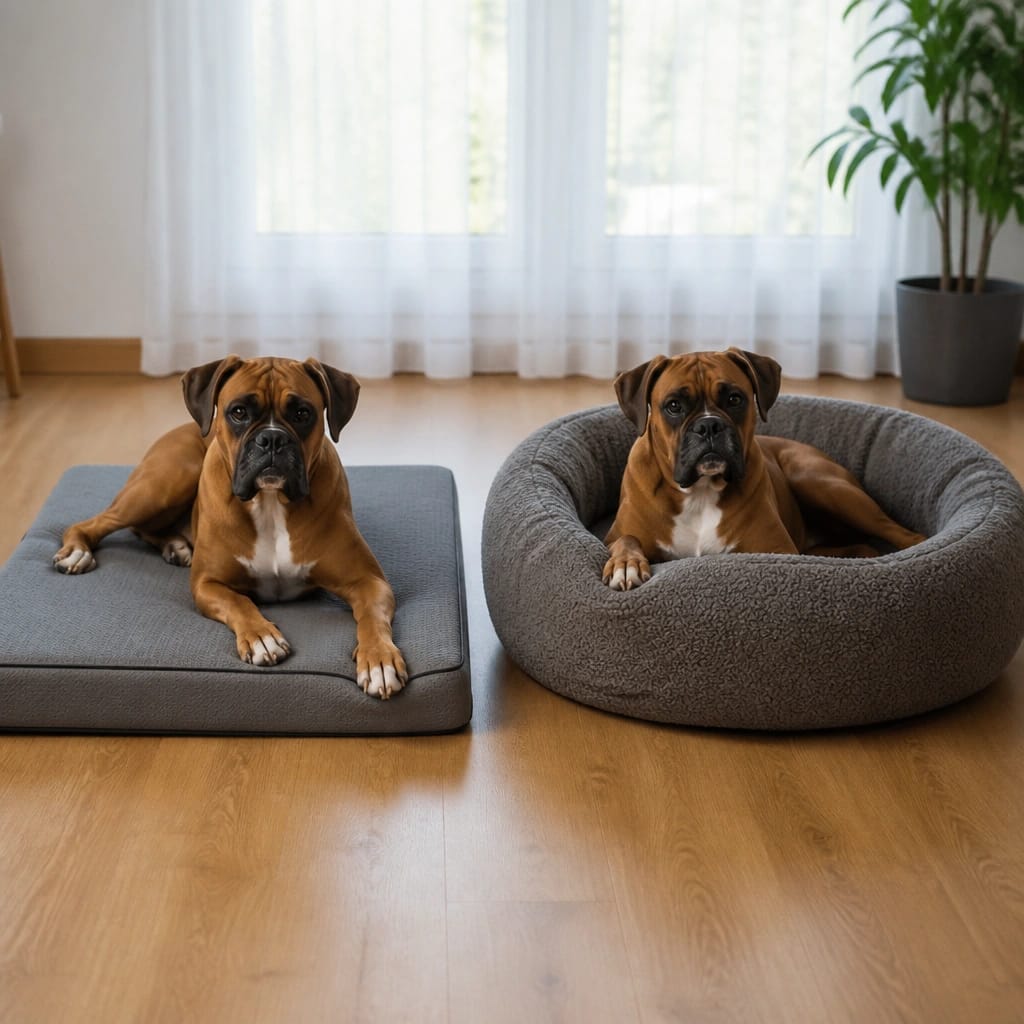
Puppies are a different problem. They chew, they dig, and they eventually outgrow everything. Buy a durable crate mat first, not an expensive orthopedic bed.
A puppy will punch holes in memory foam before their first birthday.
Look for a mat with a tough outer fabric and a waterproof liner. Skip the extra cushioning until your Boxer reaches full size, usually around 18 months. One exception: if your puppy already shows signs of joint or mobility problems, ask your vet whether early orthopedic support makes sense.
Also bear in mind puppies love to dig and burrow at bedtime, so easy cleanup matters more than looks.
Best Bed for a Senior Boxer with Joint Pain
Senior Boxers deal with arthritis, hip dysplasia, and muscle loss. A firm foam bed is not a luxury at this stage, it’s a comfort issue. The foam must keep their heavy frame from sinking and throwing the spine out of alignment.
A 4-inch high-density foam base works well for most senior Boxers. Topped with a washable cover and positioned somewhere warm and draft-free, it becomes the spot your dog will choose nine times out of ten. When winter hits, try adding a heated bed layer under the cover.
Both help stiff joints, but only after a vet confirms there’s no underlying condition that needs treatment.
Best Bed for a Boxer That Chews or Digs
Some Boxers treat any new bed as a personal project. If yours chews, match the bed to their mouth, not your taste. Ballistic nylon and ripstop polyester are your friends.
Both resist punctures far better than woven cotton or plush fabrics.
Check the seams, because that’s where destruction starts. Look for double-stitched edges and covered zippers. A removable cover is handy, but if your dog is a determined chewer, skip the stuffing-based bed entirely.
A raised cot-style bed gives them nothing to bite into while keeping them cool. For indoor lounging, a chew-proof crate mat gives a solid sleeping base and laughs off most attempts to dig it.
Best Bed for Crate Sleeping
Crate sleep is different from floor sleep. You’re working with fixed dimensions, so a bed that’s too tall or too long won’t fit. Measure the crate floor first, then buy a mat a few inches shorter than that.
A crate pad around 3 inches thick works well for adult Boxers.
Durability matters more in a crate because boredom chews tend to start there. Choose a firm mat with a waterproof liner. And skip any bed with loose filling; a determined chewer can rip it open in minutes.
For more detail on the difference between crate options, see our deep dive on crate vs floor pads. The right fit keeps the crate comfortable without turning it into a hazard.
Sizing Guide: How Big Should Your Boxer’s Bed Be?
Size is where most people get it wrong. A Boxer can be 25 inches tall at the shoulder but the bed measurement once they stretch out is closer to 40 inches. That’s because you’re measuring their full length, not their height.
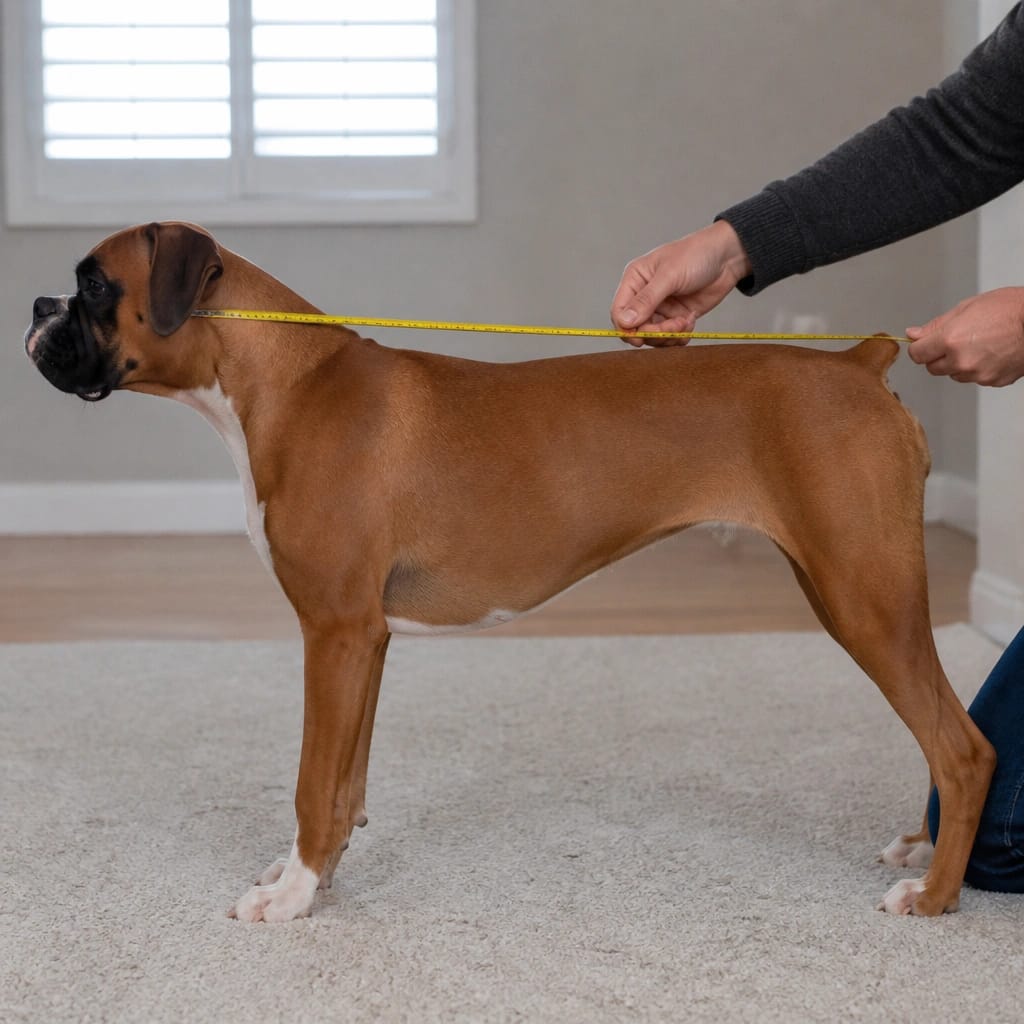
Measure your Boxer from the tip of the nose to the base of the tail. Add 6 to 12 inches for comfort. Most adult Boxers end up needing a bed around 40 by 30 inches, sometimes longer.
If the bed has bolsters or raised edges, count only the inside flat area. That’s the usable space. A 48-inch bolster bed might have only 36 inches of true sleeping room, which is too tight for a longer Boxer.
Our sizing chart by weight runs through exact dimensions for each weight range. When you’re torn between two sizes, get the bigger one. A large bed left partly unused is still a better night’s sleep than a small bed with your dog’s legs hanging off the edge.
Common Mistakes When Buying a Boxer Bed
- Buying a bed for the dog’s standing height, not their stretched length. Always measure nose-to-tail.
- Choosing a fluffy, pillow-style bed. A Boxer sinks straight through, and the spine drops at an angle.
- Forgetting the cover must come off. Fully sewn beds trap hair, drool, and odors. You will eventually throw them away.
- Skipping the waterproof liner. Boxers drool, puppies have accidents, and older dogs leak. The foam traps moisture without a liner.
- Ignoring fabric strength. A 70-pound dog digging and spinning will shred ordinary pet-store fabric within weeks.
Tips for Making a Boxer Bed Last Longer
Wash the cover every one to two weeks. Boxers drool heavily and shed year-round, so regular cleaning stops odor from settling into the foam. Follow the manufacturer’s care label, but warm water and a gentle cycle usually do the job.
Rotate the bed when you wash the cover. Even with dense foam, a heavy dog compresses the surface over time. Flipping it spreads the wear.
Replace the bed when the cover no longer fits snugly or the foam doesn’t bounce back after your dog stands up. Press the center with your hand. If it leaves a dent, the bed is done.
Frequently Asked Questions
Can a Boxer sleep on a bolster bed?
Yes, but only if the inside surface is large enough. A Boxer sleeps sprawled on its side, so measure the flat area inside the bolsters. If the usable space is under 36 inches, your dog will end up draped over the sides all night.
Do Boxers need memory foam?
Not every Boxer needs it, but most benefit. Memory foam distributes weight across a wider area and keeps the spine level while a deep-chested dog sleeps on its side. A firm high-density foam works too, as long as it’s at least 3 inches thick.
What size bed does a full-grown Boxer need?
Most adult Boxers need a bed measuring at least 40 by 30 inches. Larger males might need a 48-inch bed. Measure your dog’s length from nose to tail base, then add 6 to 12 inches for comfort.
Why does my Boxer keep getting off the bed?
Often the bed is too small, too soft, or too warm. Boxers overheat quickly, and most don’t like sinking into fluffy bedding. Try a firmer foam bed and place it in a cooler, quieter spot.
Are raised cots good for Boxers?
They’re good for outdoor days, not great as a main sleeping surface. The airflow is excellent, but the material offers almost no joint support. A heavy dog will feel every support bar pressing underneath the fabric.
Final Verdict: What Kind of Bed Does a Boxer Need?
Here’s the short version. A firm orthopedic bed with a flat surface, a washable cover, and a waterproof liner solves most Boxer sleeping problems. Size it at least 40 by 30 inches for adults, go bigger for larger males, and skip the tall bolsters unless your dog is a head-resting type.
Match the fabric to the dog. Chewers need ballistic nylon or ripstop. Seniors need foam depth over style.
Puppies need something cheap until they stop eating everything in sight. When it comes down to it, your Boxer will gladly sleep on the floor if the bed feels wrong. So get the firmness, size, and fabric right the first time.
Your dog gets a proper rest, and you keep your sanity.


