

What to Look for in a Puppy Bed
Look for a puppy bed that’s chew-resistant, washable, and sized for growth. Match the bed style to your puppy’s sleeping position and energy level. Choose orthopedic support only after your puppy stops chewing.
Prioritize removable, machine-washable covers and waterproof liners. Avoid beds with exposed zippers, loose fill, or non-certified foam.
Bringing a puppy home is equal parts joy and chaos. Somewhere between the crate training and the chewed shoes, you’ll realize that picking a bed isn’t as simple as grabbing the fluffiest option at the store. Knowing what to look for in a puppy bed means understanding how your pup sleeps, grows, and explores the world with their mouth.
Manufacturer specifications suggest that most puppies grow to their full adult size within 10 to 12 months. That means the bed you choose today needs to survive teething, accidents, and a rapid growth spurt. In our research, the most common mistake owners make is buying a bed that fits the puppy now, not the dog they’ll become in six months.

Why the Right Puppy Bed Actually Matters
Sleep drives everything in puppyhood. A well-rested puppy learns faster, handles new experiences better, and causes less household chaos. According to the American Kennel Club, puppies need about 18 to 20 hours of sleep each day for healthy brain and body development.
That’s a lot of time spent on whatever sleeping surface you provide.
The wrong bed can cause more than discomfort. A poorly sized bed can leave your puppy feeling insecure. A bed made of the wrong material can become a choking hazard.
A bed that’s impossible to clean can turn into a bacterial breeding ground as accidents happen.
A good bed also reinforces crate training. When your puppy associates their space with warmth and safety, settling down becomes easier. It’s not just a luxury.
It’s a practical tool for potty training, teething phases, and establishing a calm bedtime routine.
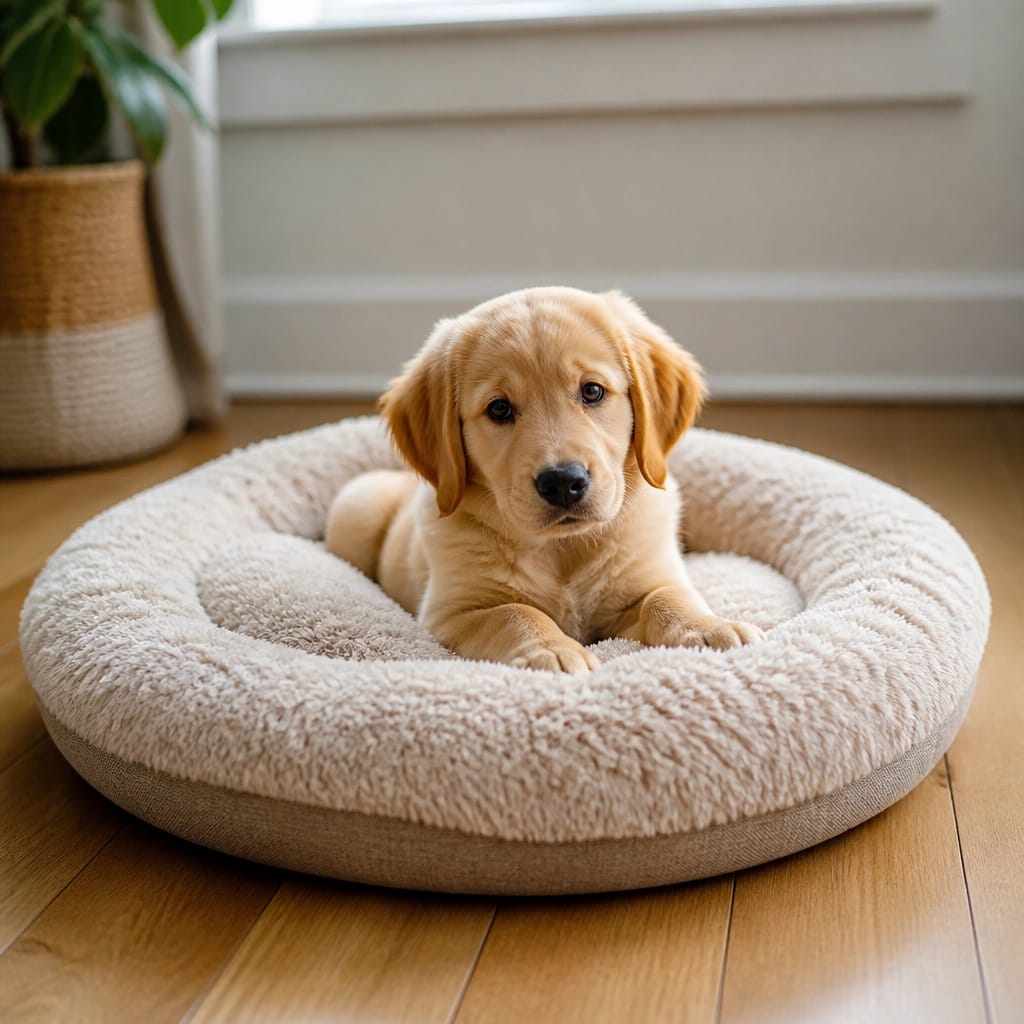
Start With Your Puppy’s Sleeping Style
Before you search for any bed, watch how your puppy actually sleeps. This simple observation will tell you everything about the style they need.
Curled up in a ball: Puppies who tuck their paws under their chin feel secure with raised edges. They’re often burrowers who enjoy the comfort of a donut or bolster bed.
Stretched out flat: Puppies who sprawl on their side or belly need open space. Raised edges just get in the way. A flat mat or a wide orthopedic pad works far better.
Semi-curled: Many puppies combine positions. They start curled then sprawl out once they’re comfortable. For these dogs, a bolster bed with a large, open center offers the best of both worlds.
Restless movers: Puppies who shuffle around during sleep need a clear, flat surface. They’ll struggle against high walls and end up half-off the bed. A low-profile mattress or crate pad suits them better.
For deeper insight into why dogs love tucking themselves into cozy spaces, our guide explains the burrowing instinct in more detail.
Puppy Bed Styles: What Are Your Options?
Every bed on the market falls into a few basic categories. Each one exists for a specific reason.
Orthopedic Beds: These use high-density or memory foam to support joints. They’re excellent for large-breed puppies who are prone to hip and elbow issues. However, puppies often chew foam, so this style works best once teething calms down.
Bolster and Donut Beds: Raised edges give your puppy a headrest and a sense of security. Breeds like Greyhounds and Whippets love this style. The downside?
Some puppies see the raised edge as a toy. If your pup is a determined chewer, wait until they’re older.
Flat Open Beds: Simple, durable, and hard to destroy. These work great for sprawlers and for crate training. They’re also the easiest to wash and replace when accidents happen.
Crate Pads and Elevated Cots: Crate pads fit snugly inside a kennel. They protect the plastic floor and give your puppy a soft spot to settle. Elevated cots keep air flowing underneath, which helps in hot climates.
Cave and Hooded Beds: These covered beds tap into your puppy’s natural den instinct. They’re excellent for anxious puppies who want a dark, private space to retreat to.
| Bed Style | Best For | Watch Out For |
|---|---|---|
| Orthopedic | Large breeds, joint support | Chewing damage |
| Bolster/Donut | Curlers, anxious pups | Stubborn chewers |
| Flat Open | Sprawlers, crate training | Minimal support |
| Crate Pad | Kennel sleeping | Thin filling |
| Elevated Cot | Hot weather, outdoor use | Less cozy feel |
Sizing: How to Measure Your Puppy for a Bed
Getting the size right takes about thirty seconds. Place your puppy on a flat surface. Measure from the tip of the nose to the base of the tail.
That number is your baseline.
Add 8 to 12 inches to that measurement for the bed size. This extra space lets your puppy stretch comfortably without hanging over the edge. For crate beds, measure the crate’s interior dimensions instead, then choose a pad that covers the floor without bunching up the sides.
Remember that puppies grow quickly. A Chihuahua might add just a few inches. A Labrador will double or triple in size within months.
Check our detailed dog bed size chart by weight to plan ahead.
Some owners buy a larger bed right away to save money. That’s a reasonable approach, but it comes with trade-offs. A tiny puppy in a huge bed may feel insecure and refuse to settle.
If you choose a bigger bed, add a rolled-up blanket or extra padding to make the space feel cozier while they grow.

Fabric and Filling: Comfort, Durability, and Support
The fabric is your first line of defense against teeth, claws, and urine. Cotton is soft but soaks up moisture. Fleece feels wonderful but traps odors.
For puppies, think about durability first and luxury second.
Canvas and Ripstop Nylon: These tough fabrics resist scratching and chewing far better than soft knits. They’re also easier to wipe clean. For determined chewers, look for beds constructed with bite-resistant stitching and reinforced seams.
Waterproof Liners: A waterproof inner liner protects the foam core from accidents. Without one, urine seeps straight into the filling, and no amount of surface washing will remove the smell. This is one feature you shouldn’t skip.
We go into more detail about keeping things dry in our guide to waterproof dog beds.
Removable Covers: A bed cover you can unzip and throw in the washing machine is a lifesaver. Check that the zipper is sturdy and not exposed to your puppy’s teeth. Zippers are one of the most common choking hazards in dog beds.
Foam Quality: If you choose an orthopedic bed, look for CertiPUR-US certified foam. This certification confirms the foam is free of heavy metals and harmful flame retardants. Certified foam also holds its shape longer, so the bed doesn’t flatten into a pancake within months.
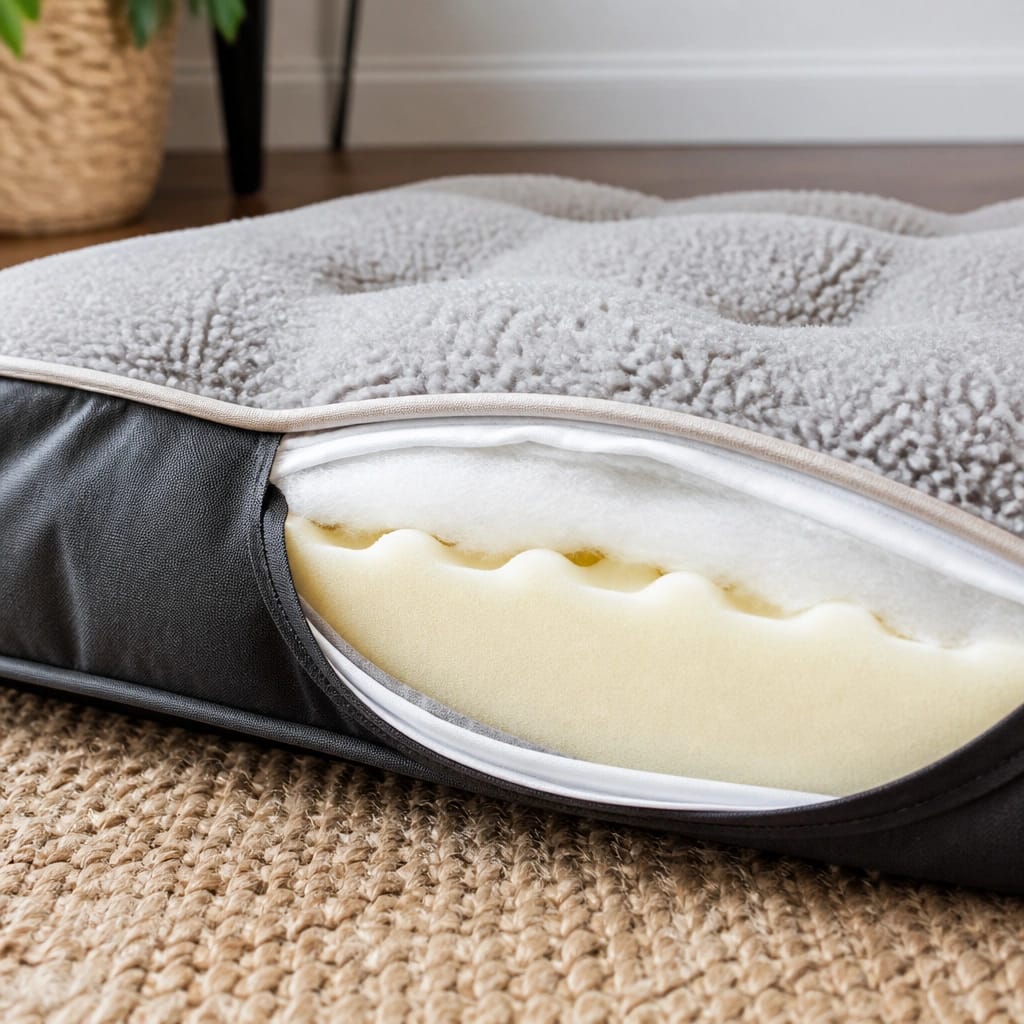
Washability and Waterproofing: Plan for Accidents
Potty training means accidents. When urine reaches the foam core, the bed is effectively ruined. Baking soda and spray deodorizers can’t fix the smell once it’s deep inside.
A waterproof liner between the cover and the filling is essential. Look for a bed that mentions a true waterproof layer, not just a water-resistant coating. Even better, choose a bed with a removable, machine-washable cover.
Check the zipper, too. Exposed metal zippers are a chewing hazard, while reinforced, covered zippers last longer.
Aggregate reviews show that owners who wash their puppy’s bed weekly have far fewer odor problems. Toss the cover in with a pet-safe detergent and air dry. That simple routine keeps the bed fresh and extends its life.
Chew-Resistance: Surviving Teething and Digging
Puppies explore with their mouths. That means your bed is a target. A teething puppy can shred a plush cover in minutes, so durability needs to come before softness.
Look for ripstop nylon, canvas, or ballistic-grade fabrics. Check the seams for double stitching and reinforced corners. Some beds advertise “chew-resistant” rather than “chew-proof.” That’s a realistic label, because no fabric survives a determined chewer forever.
If your puppy is a destructive chewer, skip the orthopedic foam bed until they’re past the worst phase. That’s a financial decision too. A heavy-duty crate pad is cheaper to replace.
Let your puppy earn the nicer bed once their adult teeth settle in.
Crate Beds vs Open-Area Beds: Match the Bed to the Space

Crate beds need to fit the kennel floor like a glove. Oversized pads bunch up in the corners, which gives your puppy an unfair padding disadvantage and creates a mess. Measure the crate’s interior width and length, then subtract a couple of inches so the bed lies flat.
Open-area beds give your puppy more freedom. They work in the living room or at the foot of your bed. If you’re torn between the two, remember that a crate pad can be moved outside the kennel too.
The reverse isn’t always true, since a huge open bed may not fit the crate. Our detailed comparison of crate pads versus crate mats breaks down the differences.
For most owners, the practical answer is both. One simple bed for the crate and a separate bed for the living area. That way your puppy always has a familiar spot to settle.
Puppy Bed Comparison Table
| Bed Type | Best For | Durability | Washability | Price Range |
|---|---|---|---|---|
| Crate Pad | Kennel sleeping, easy cleanups | Medium-High | Usually machine-washable | Low-Medium |
| Orthopedic Foam | Joint support, large breeds | Low-Medium (chewing risk) | Cover often removable | High |
| Bolster/Donut | Curling, security, anxiety | Medium | Cover removable | Medium-High |
| Flat Open Mat | Sprawlers, crate training | High | Usually machine-washable | Low-Medium |
| Elevated Cot | Hot weather, outdoor use | High | Wipe-clean | Medium |
| Cave/Hooded | Burrowing, anxious pups | Medium | Cover removable | Medium-High |
Best Bed for Each Puppy Situation
Crate training: a flat, washable crate pad with a waterproof liner. Simple, sturdy, and easy to replace.
Heavy chewer: a flat mat made of ripstop nylon. Avoid foam and stuffing until the puppy matures.
Curling sleeper: a donut or bolster bed with raised edges. Just keep an eye on chewing.
Hot climate: an elevated cot allows airflow underneath and keeps your pup cool.
Multiple puppies: a large flat mattress gives everyone room to sprawl without fighting over bolsters.
If your puppy prefers to burrow under blankets, a cave-style bed taps into that natural instinct. For everyone else, a simple approach works best. You can always upgrade to a more luxe bed once the teething phase passes.
Common Buying Mistakes to Avoid
Don’t buy a bed purely for cuteness. Fluffy fabrics won’t survive a teething puppy.
Don’t skip the waterproof liner. The first accident will ruin the foam core.
Don’t size for the puppy now. Plan for their adult size to avoid a second purchase. A bed that’s too small gets replaced in months.
Safety Red Flags: Zippers, Foam, and Filling
Exposed zippers are a choking hazard. Look for covered, reinforced zippers instead.
Uncertified foam may contain heavy metals or flame retardants. Choose CertiPUR-US certified options.
Loose fill inside a damaged cover is an ingestion risk. Inspect the bed regularly for tears and worn seams.
Frequently Asked Questions
Should I buy a bigger bed so my puppy grows into it?
Sometimes, but a tiny puppy may feel insecure in a huge bed. Add extra blankets to make the space cozy while they grow.
How many beds does a puppy need?
Two is practical. One for the crate and one for the living area.
When should I switch to a memory foam bed?
After teething ends, usually around 10 to 12 months. Puppies can destroy foam quickly.
How often should I wash the puppy bed?
Weekly washing prevents odors and bacteria. Always follow the manufacturer’s care label.
Final Recommendation: Choose a Bed That Grows With Your Puppy
Start with a durable, washable crate pad with a waterproof liner. That covers your puppy’s needs for the first few months. Upgrade to a supportive bed once teething settles.
Keep it simple now, and invest in comfort later.


