

What Kind of Bed Does a Great Dane Need?
A Great Dane needs a bed with a usable sleeping surface of at least 48 inches long and a weight capacity above 200 pounds. Orthopedic foam beds suit most Danes because they support heavy hips and elbows. Elevated cots are a good alternative for dogs that overheat or chew. Avoid thin or flimsy beds that flatten quickly. Match the bed to your dog’s sleep style and health needs.
Your Great Dane might squeeze into a tiny spot on the couch, but that doesn’t mean a small dog bed will work for him. What kind of bed does a Great Dane need? It needs to be huge, supportive, and built for a dog that weighs as much as a grown adult.
The short answer is an extra-large orthopedic or similarly durable bed with at least 48 inches of flat sleeping space.
Great Danes are one of the heaviest dog breeds in the world. Adult males typically weigh 140 to 175 pounds, and many females land between 110 and 140 pounds. As of 2026, more manufacturers are designing true XXL beds for giant breeds, because a standard large bed just disappears under a Dane.
Let’s look at what actually matters.
Why the Right Bed Matters for a Great Dane
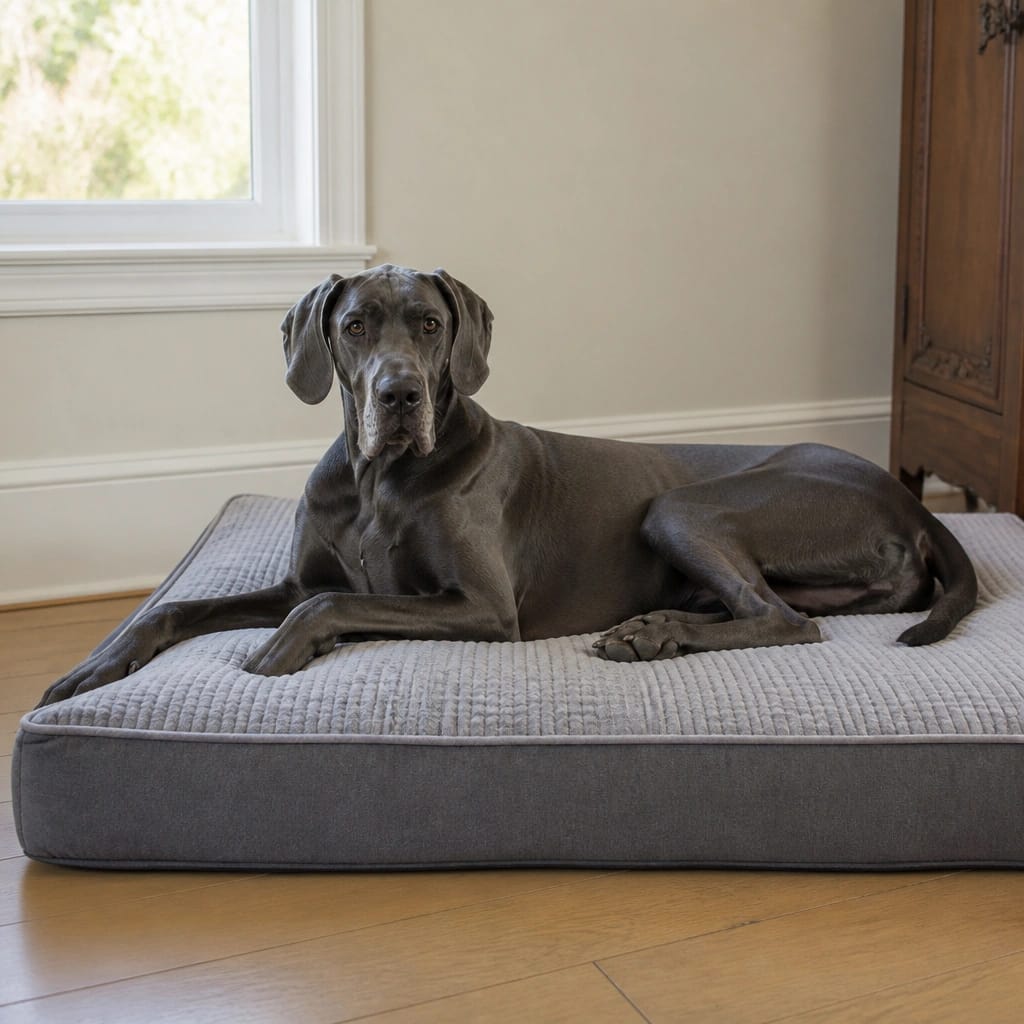
A Great Dane puts a lot of pressure on one small sleeping surface. Most of his weight lands on his elbows, hips, and shoulders. A hard floor, or a bed with thin padding, presses back against those bony spots.
Over time that leads to elbow calluses, sore joints, and restless nights.
Danes also carry a genetic risk for hip dysplasia and arthritis. Supportive sleep won’t prevent those conditions, but it can make a dog noticeably more comfortable. The Orthopedic Foundation for Animals tracks joint health in large breeds, and veterinarians routinely recommend orthopedic support for Danes that already show stiffness.
A good bed gives those joints a chance to rest without constant pressure.
Size matters just as much as support. A bed that is too short forces a Dane into a curved shape all night. That can strain muscles and make an older dog stiff in the morning.
How to Measure Your Great Dane for the Correct Bed Size
Most people buy the biggest bed they can find and hope it fits. That’s a mistake. You need to match the bed’s usable sleeping surface to your dog’s actual body length.
Here’s the simple way to measure:
- Stand your Dane up straight.
- Run a soft tape measure from the tip of his nose to the base of his tail.
- Write that number down.
- Add 6 to 12 inches.
That final number is the minimum bed length. Most adult Danes measure between 36 and 40 inches nose to tail base, so you’re looking for a bed around 48 inches long. Some sprawling sleepers need 52 inches or more.
When in doubt, go big.

Don’t measure the bed’s outer edges. A bed with thick bolsters can look massive but have a surprisingly small flat center. Always check the actual sleeping area listed in the product specs.
Our full size chart for big dogs explains how weight and body length map to bed sizes.
The Main Types of Dog Beds for Great Danes
Four types of beds actually work for giant breeds. Each one handles a different sleeping style, climate, and level of wear.
Orthopedic Foam Beds
Orthopedic beds use high-density foam, usually 4 to 6 inches thick, to support heavy joints. They’re the best all-around choice for Danes, especially seniors and dogs with arthritis. The foam stays firm under pressure instead of collapsing into a hammock shape.
Look for memory foam or high-resilience foam with a removable cover. Our memory foam bed guide covers the details that matter for giant breeds. Check for CertiPUR-US certification so you know the foam is safe and low-emission.
Elevated Dog Cots
Elevated cots are metal or plastic frames with a mesh or canvas sleeping surface stretched between the legs. They let air flow underneath, which helps dogs that overheat. They also keep your Dane off cold floors and out of drafts.
The tradeoff is that the sleeping surface is thinner than a foam mattress. A cot suits younger, joint-healthy Danes, but older dogs usually need more padding on top.
Bolster Beds
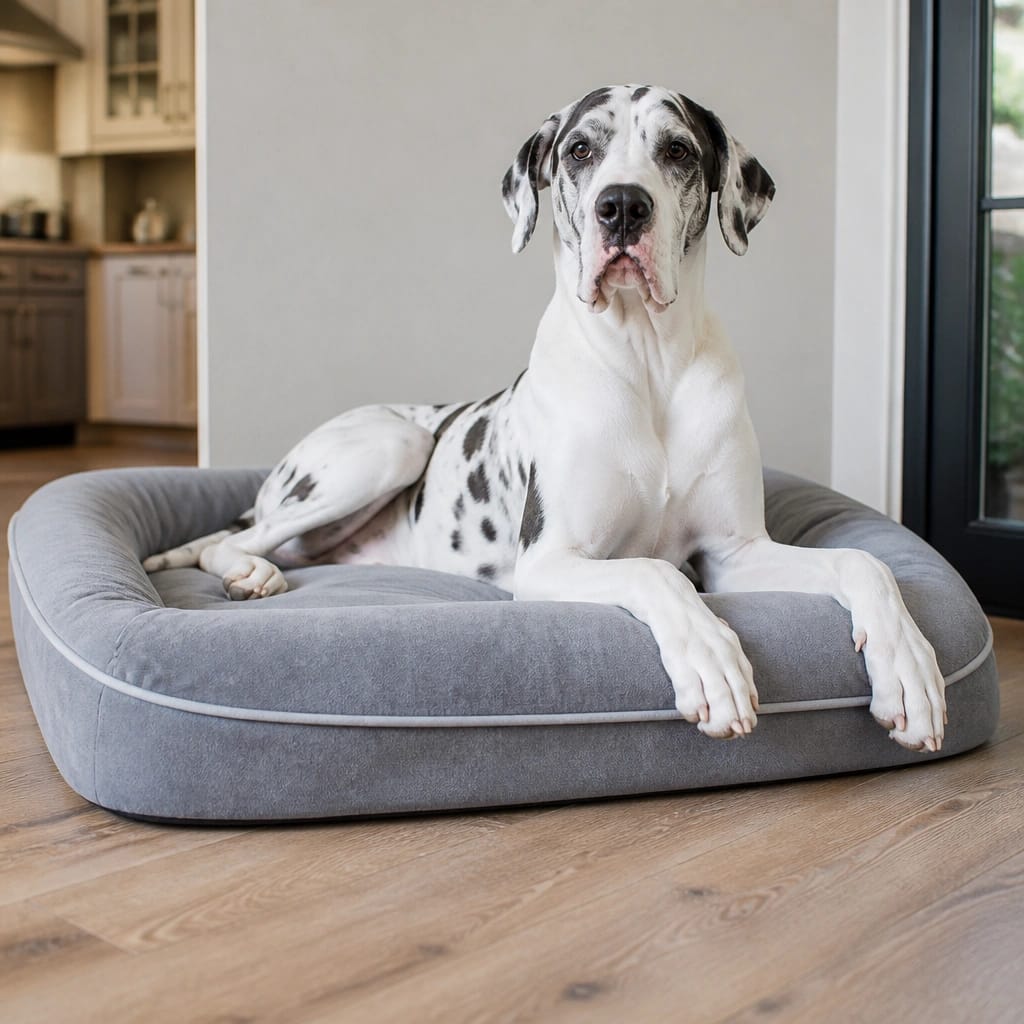
Bolster beds are like sofas for dogs. They have raised edges around the sleeping surface, so a Dane can rest his head on the rim. That gives a sense of security and a natural spot for a large head.
Bolsters work well for Danes that like to rest their chin on something. The downside is a smaller flat center, so check the inner dimensions carefully. Our angled-edge bed guide walks through which sizes genuinely fit giant dogs.
Flat Mattresses and Crate Mats
Flat mattresses and crate mats are exactly what they sound like: a rectangle of foam with no raised edges. They give a Dane the maximum flat space, which is perfect for dogs that stretch out like a starfish. They’re also the only practical choice for a crate, since bolsters can get in the way.
If your Dane sleeps in a crate, a flat mat is usually better than anything with tall sides. Read our crate padding options before you buy.
Orthopedic Foam Beds vs. Elevated Cots: Side-by-Side Comparison
Both of these are popular for Great Danes, but they solve different problems. The table below breaks it down.
| Feature | Orthopedic Foam Bed | Elevated Dog Cot |
|---|---|---|
| Support | High-density foam cushions hips and elbows | Thin mesh or fabric stretches, less cushioning |
| Heat | Foam traps body heat | Good airflow keeps the dog cool |
| Chewing | Easy to destroy if your Dane chews | Frame and fabric are harder to chew through |
| Floor warmth | Keeps the dog off cold floors | Also off the floor, but open underneath |
| Best for | Seniors, arthritis, pressure sores | Young dogs, hot weather, outdoor use |
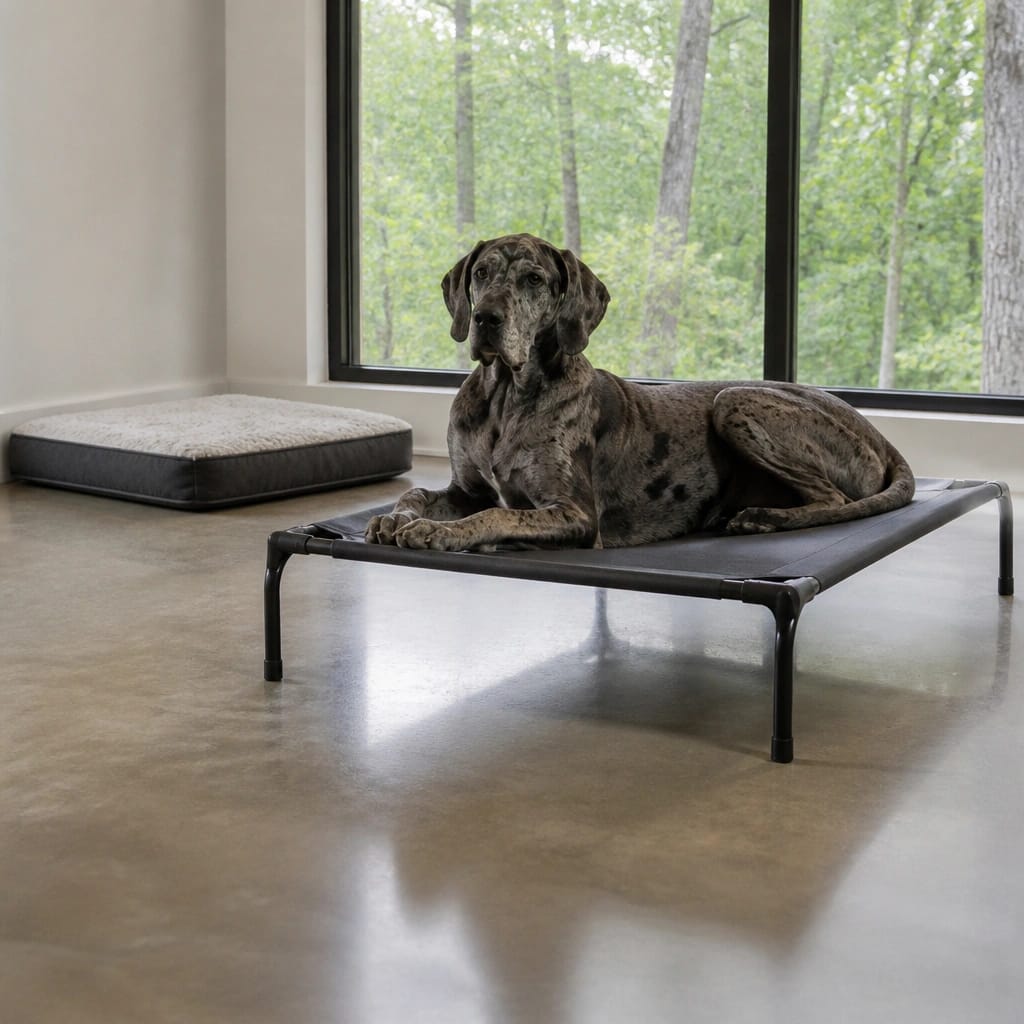
If your Dane is under two and healthy, a raised cot frame can be a smart choice. It keeps him cool in summer and makes cleanup simple. For a senior Dane, or one with hip dysplasia, an orthopedic foam bed is usually the better call.
The thick foam supports joints in a way a cot simply can’t. Some owners use a cot in summer and a foam bed in winter.
Bolster Beds vs. Flat Mattresses: Which Suits Your Dane’s Sleeping Style?
Your Dane’s sleeping position tells you which bed style he needs. Watch him sleep tonight. Does he stretch out flat?
Does he curl into a tight ball? Does he rest his head on furniture or the arm of your sofa?
Sprawlers belong on flat mattresses. A Dane that sleeps on his side or belly wants maximum surface. A bolster bed’s raised edges shrink the usable space and force him closer to the middle.
Curlers and head-resters belong on bolster beds. If your Dane tucks his nose under his tail or props his head on anything nearby, those raised edges become a pillow and a security wall. It makes him feel enclosed without being squeezed.
Seniors often need bolsters, even if they sprawl. Older Danes lose muscle tone, and a raised edge gives them something to push against when they shift position. That extra support helps them stand up more easily.
One common problem is a Dane that sleeps on the hard floor all night despite owning a bed. That often means the bed is too warm, too small, or too unfamiliar. We explain why a dog chooses the floor over a new bed in a separate guide.
Best Bed Type for Puppies, Seniors, Sprawlers, and Curlers
Pick a bed based on life stage first, then sleep position. Puppies need a firm flat mattress because they grow fast and chew often. Seniors with stiff joints need thick orthopedic foam or a bolster bed for extra support.
Sprawlers need wide flat surfaces, while curlers and head-resters do best with a raised bolster edge.
Cooling, Waterproofing, and Chew-Resistance: What Actually Matters
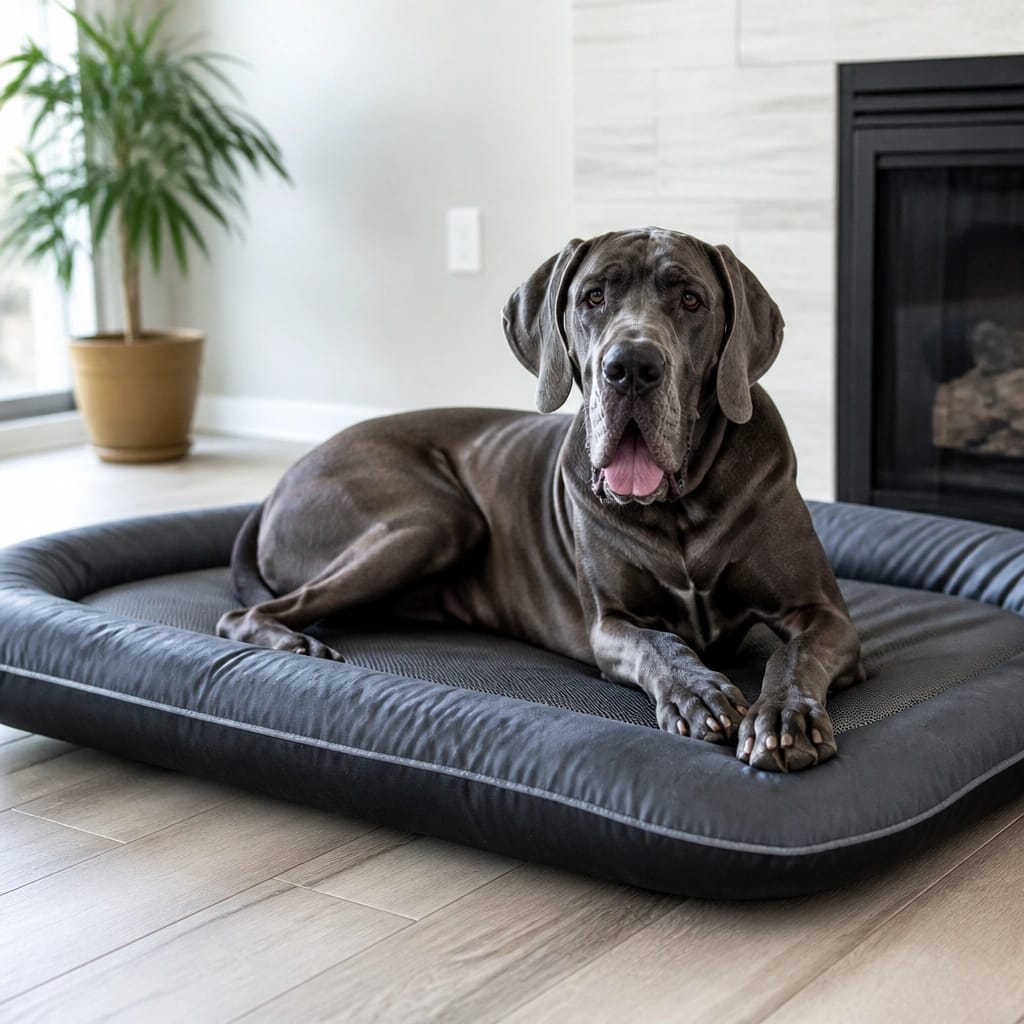
Cooling matters more than most owners expect. A thick foam bed traps heat, and Danes overheat easily. Look for breathable covers or a cot with air flowing underneath.
Waterproof liners matter for seniors and puppies. Chew-resistant canvas or raised cots help if your Dane digs or mouths his bedding. Replacing a destroyed bed gets expensive fast, so match the fabric to your dog’s habits before you spend.
Common Mistakes to Avoid When Buying a Great Dane Bed
The biggest mistake is buying by the outer dimensions instead of the flat sleeping area. Bolsters eat up the center space. Another common mistake is choosing lightweight poly-fill mattresses.
They flatten within weeks under a heavy Dane. Ignoring weight capacity is also a problem. Always confirm the bed supports over 200 pounds.
How Long Should a Great Dane Bed Last? Quality and Price Expectations
Aggregate buyer feedback shows most quality giant-breed beds last two to five years. Expect to pay more for higher-density foam. A solid orthopedic mattress typically runs between $150 and $300.
A heavy-duty elevated cot usually lands in a similar range. Cheap beds below $80 often sag within three months, so they end up costing more in the long run.
Maintenance: Keeping a Giant Bed Clean and Supportive
Wash the cover every one to two weeks, especially with drooly Danes. Look for a removable cover with a real zipper. Spot-clean the foam and let it air out.
Rotate flippable mattresses monthly to keep wear even. Replace the bed when the foam no longer springs back or shows a permanent sag. A tired bed provides almost no joint support.
Frequently Asked Questions
How big should a Great Dane’s bed be?
At least 48 inches long. Measure your dog from nose to tail base, then add 6 to 12 inches. A sprawling adult Dane often needs 52 inches or more.
Are elevated beds good for Great Danes?
Yes, for young or healthy dogs that overheat easily. Older Danes need orthopedic foam instead. A cot’s thin surface doesn’t cushion sore joints the way thick foam does.
Why does my Great Dane sleep on the floor instead of his bed?
He likely finds the floor cooler, or the bed is too small and cramped. Watch his sleeping position and match the bed to it. Our guide on floor sleeping explains this in depth.
Final Recommendation: Which Bed Should You Choose?
Measure your Dane first, then match the bed to his age and sleep style. A healthy dog under two does well on a sturdy elevated cot. A senior, or a dog with arthritis, needs an orthopedic foam bed with at least 4 inches of support.
Sprawlers need a wide flat mattress. Curlers feel safer with bolsters. Buy the largest quality bed you can fit, and your Great Dane will thank you for years.


