

How to Choose a Bed for a Senior Dog with Arthritis
Choosing a bed for a senior dog with arthritis comes down to four factors. Pick high-density memory foam of at least 4 lb. density. Choose a low-entry style if your dog struggles to climb in. Ensure the bed is long enough for your dog to stretch out. Look for a waterproof, washable cover.
Watching your senior dog struggle to get comfortable is heartbreaking. Learning how to choose a bed for a senior dog with arthritis is a decision that affects their quality of life more than most owners realize. They circle, whimper, and give up, flopping down on the hard floor because their current bed just makes things worse.
The right bed can mean the difference between a restless night and a restful one.
Manufacturer specifications for genuine orthopedic foam typically list density in pounds per cubic foot, with 4 lb. or higher considered truly supportive for aching joints. That number matters more than the word “orthopedic” printed on a tag. So let’s start with why your dog’s sleeping surface matters so much in the first place.
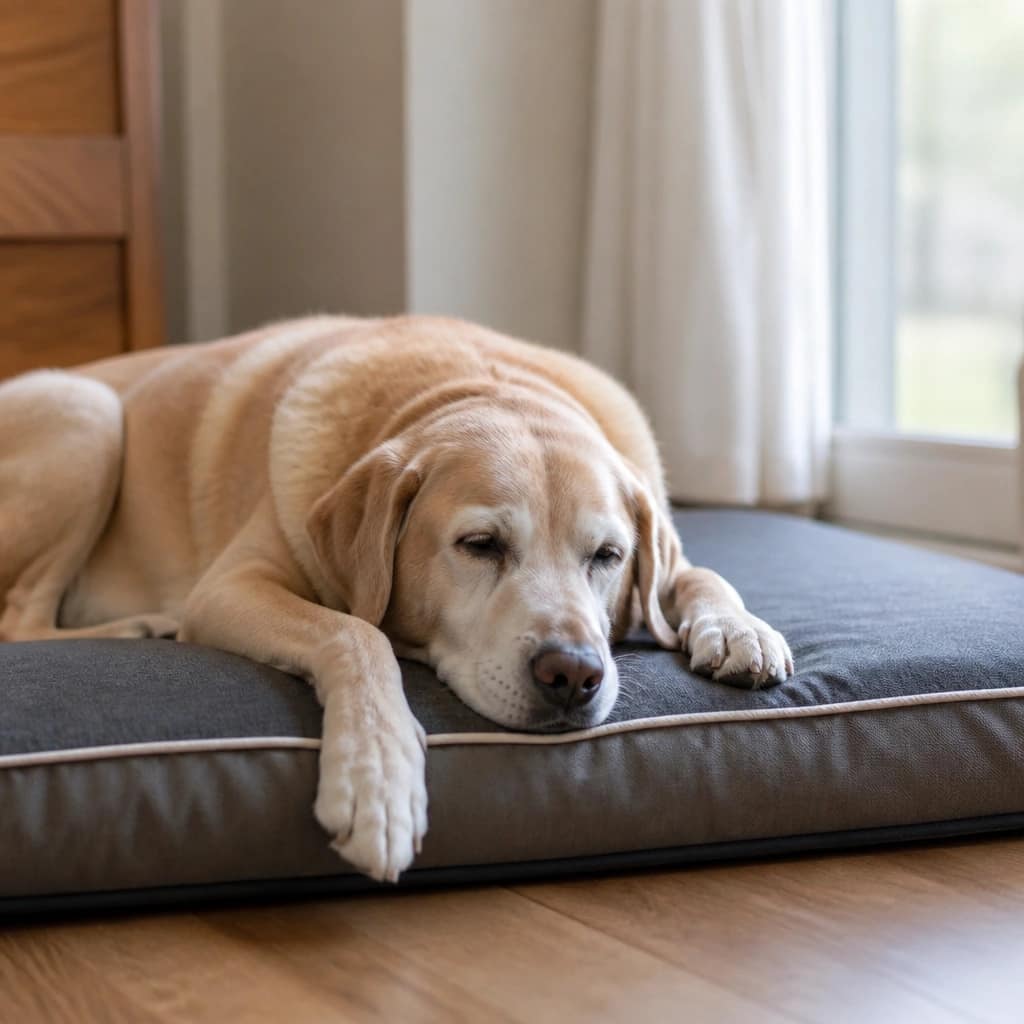
Why the Right Bed Matters for an Arthritic Dog
Arthritic joints have less cartilage, so there’s nothing buffering the bone-to-bone contact. When your dog lies on a hard floor, that pressure builds fast. On a supportive surface, the body sinks just enough to spread weight evenly, letting the muscles relax and the joints rest.
Cold floors make things worse. As of 2026, veterinary guidance consistently recommends keeping arthritic dogs off cold, hard surfaces because the cold increases joint stiffness overnight. A bed acts as insulation, trapping body warmth underneath.
If a dog can’t get comfortable at night, they wake up stiffer and in more pain. That affects their appetite, their energy, and how much they want to move. If you’re new to senior-dog gear, our complete dog bed guide is a good starting point.
This article narrows things down to what arthritis actually demands.
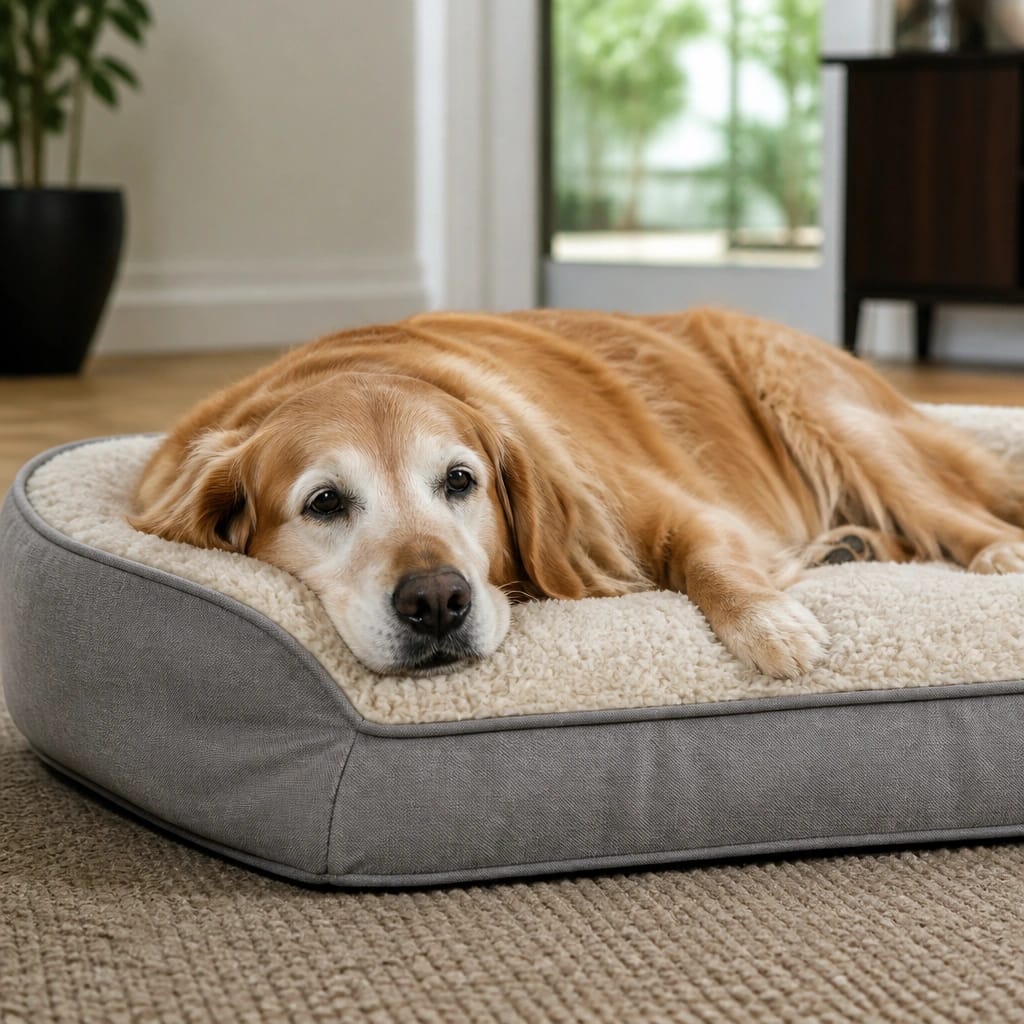
First, Watch How Your Dog Moves, Sleeps, and Gets Up
Before you look at beds, watch your dog for two full days. You’re answering three questions.
How Do They Get Up From the Floor?
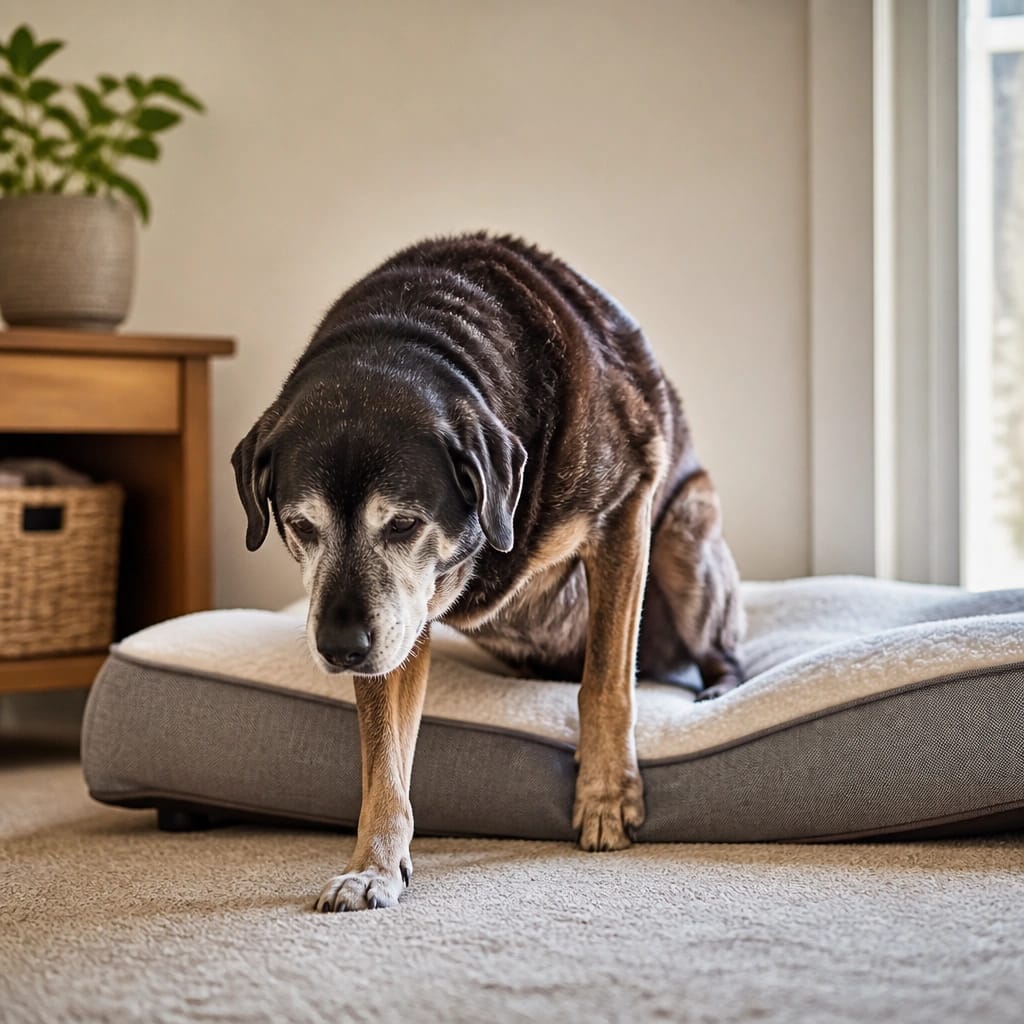
If they rock forward, lift the front end first, and drag the rear, their hips are struggling. That dog needs a low-entry bed they can step into without jumping. Hesitation before standing means the extra step over a raised rim is a genuine problem.
What Sleeping Position Do They Prefer?
Dogs who curl up tight need a nest-shaped bed with raised edges. Dogs who stretch out long or lie flat on their side need a flat, rectangular surface. Forcing a stretcher into a donut bed is one of the most common mismatches.
Where Do They Choose to Lie Now?
If your dog voluntarily sleeps on the floor or a rug instead of their current bed, they’re telling you something. It could be flattened foam, a too-small sleeping surface, or sides that are too hard to climb. Sometimes the reason is subtle, so we break down why dogs ignore their bed and how to read the signs.
The Three Bed Features That Matter Most for Joint Pain
Filter every bed through three criteria. The rest is preference.
| Feature | Why It Matters | What to Look For |
|---|---|---|
| Support | Cushions joints and spreads weight evenly | High-density foam, 4+ lb. density, 3 to 6 in. thick |
| Accessibility | Lets the dog get in and out without extra joint strain | Low profile, no bolsters, or an open front |
| Size | Gives room to change position during sleep | Dog’s full body length plus 6 to 12 in. of extra space |
If a bed fails any of these three, it’s not the right bed, no matter how plush it looks. For a deeper look at what makes foam genuinely supportive, our article covering memory foam construction has the details.
What “Orthopedic” Really Means: Foam, Firmness, and Thickness
The word “orthopedic” isn’t regulated. Any manufacturer can print it on a label. What matters is the foam underneath the cover.
Foam density is measured in pounds per cubic foot. Budget beds often sit around 2.5 to 3 lb. Quality orthopedic beds use 4 to 5 lb. density.
Higher density means more support and less sagging over time.
Thickness matters just as much. At 2 inches, a heavy dog presses straight through to the floor. Most senior dogs need at least 3 inches.
Large breeds over 70 pounds usually need 4 to 6 inches.
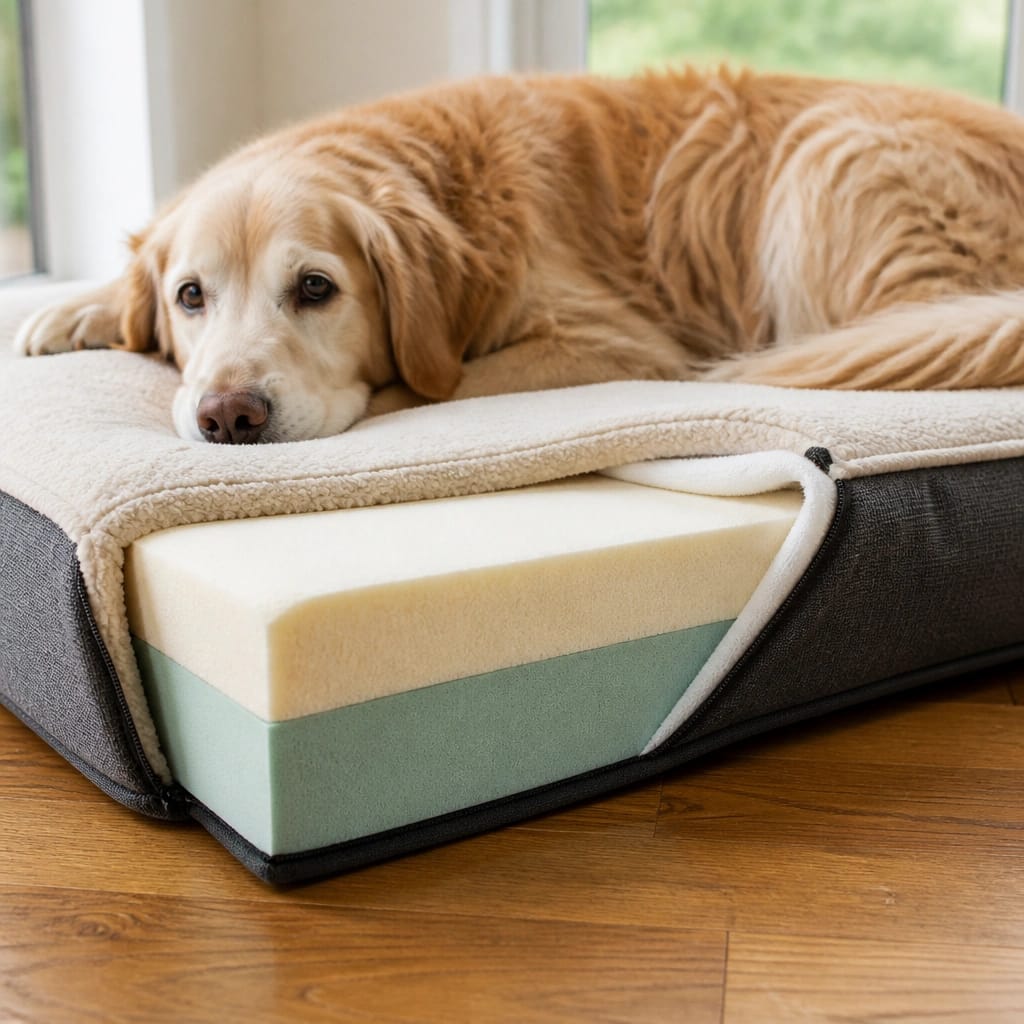
Firmness comes last. Too soft, and the dog sinks to the floor. Too firm, and joints get no pressure relief. The sweet spot lets the hip sink about an inch while the spine stays level.
If you press the foam with your hand and feel the floor through it, it’s too soft. The American Kennel Club and other canine organizations highlight supportive bedding as a practical part of senior dog care.
Low-Entry vs. Bolster Beds: Which One Does Your Dog Need?
Low-entry is the safer default for most arthritic dogs, but a specific exception exists. Some seniors absolutely love a raised edge to rest their head on.
Low-entry beds sit flat and close to the floor. The dog steps on with minimal effort. Bolster beds have raised rims that act as a pillow but also add an obstacle.
An arthritic dog with stiff hips has to lift their leg higher to get over that rim. That movement can hurt.
| Bed Type | Best For | Not Recommended For |
|---|---|---|
| Low-entry | Dogs who hesitate before standing | Dogs needing head/neck elevation |
| Bolster | Dogs who curl up or rest their head | Dogs with severe hip stiffness |
If your dog refuses to step over a raised edge, choose a low-entry bed. If they always sleep with their head propped on something, our look at raised-side bed designs goes deeper. A low-sided sofa-style bed can also give head support without the big step-up.
How to Measure Your Senior Dog for the Correct Bed Size
Measure your dog from the nose to the base of the tail while they stand. Add 6 to 12 inches for stretching room. A dog who sleeps fully stretched needs more.
Size charts that only use weight can mislead, so check the body length against the bed’s actual sleeping surface. It’s easy to miss.
Matching the Bed to the Type of Arthritis: Hips, Spine, or Elbows
Hip pain means the rear needs extra cushioning and a low step-in height. Spine pain demands a firm, flat surface with no hammock effect. Elbow pain needs thicker foam up front since the joint hits the floor with every reposition.
Watch which side your dog favors. Then match the support to that pressure point.
When Accidents Happen: Waterproofing and Easy-to-Clean Covers
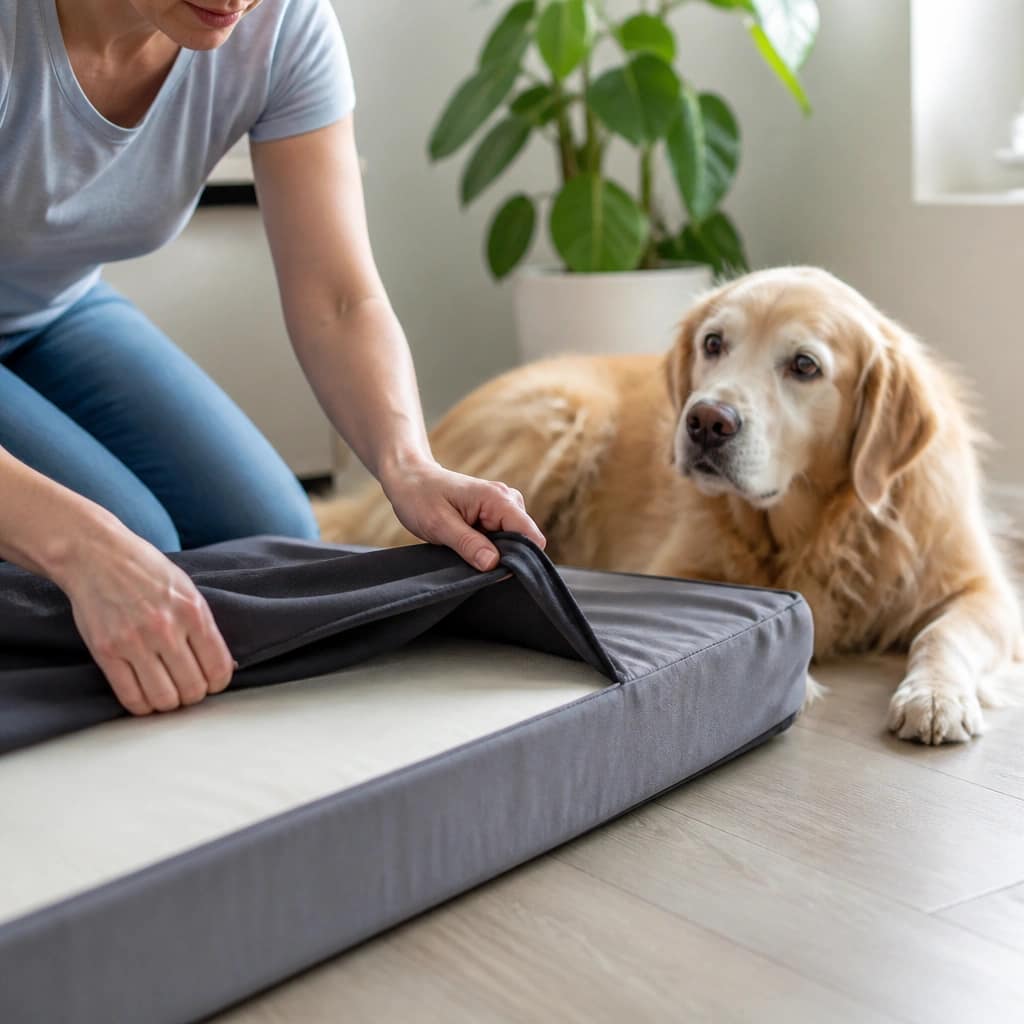
Arthritic dogs often lose bladder control as they age, especially at night. A waterproof liner or fully waterproof cover protects the foam core from soaking. Look for a removable, machine-washable cover with durable zippers.
Your vet can confirm whether it’s age-related or the sign of something else. Better to waterproof now.
Are Heated Beds Safe and Useful for Arthritic Senior Dogs?
Heat can relax stiff joints before sleep. But the dog must be able to crawl away if they get too warm. Choose low-wattage options with chew-resistant cords and never leave heating elements unattended.
The AVMA identifies arthritis as a top aging-dog concern. A heated bed is a comfort aid, not a medical treatment.
Common Bedding Mistakes That Worsen Arthritis Pain
The biggest mistakes are buying too soft, too small, or too tall. A bed that’s past its prime creates a hip-shaped hole that offers zero support. Placing the bed in a cold, drafty corner makes morning stiffness worse.
And forgetting to check for sagging foam every few months lets pain creep back silently. Replace foam when it stops bouncing back.
Making the Bed Last: Maintenance and When to Replace
Wash the cover monthly. Check the foam for sagging every few months. When it stops bouncing back, replace it.
Most quality foam cores last three to five years with regular use.
What to Expect to Pay for a Quality Senior Dog Bed
Quality orthopedic beds run $60 to $250. A 4 lb. density foam core costs more upfront but holds its shape far longer. The cheapest beds flatten in months, so they cost more over time.
A Simple Decision Guide for Choosing the Right Bed
- If your dog hesitates before standing, pick a low-entry bed.
- If your dog curls up, pick a bolster bed.
- If your dog stretches out, pick a flat, rectangular bed.
- If accidents happen at night, make sure it has a waterproof liner.
- If your dog sleeps cold, add a heated bed.
Frequently Asked Questions About Senior Dog Beds and Arthritis
How often should I replace the foam in my senior dog’s bed?
Every three to five years. Replace it when you see a permanent dip in the surface. Your dog’s weight determines how fast the foam wears out.
Is a heated bed safe for my arthritic dog?
Yes, with supervision. Use low-wattage models your dog can easily crawl away from if they feel too warm. Never leave a dog on a heated bed unattended.
Should I get a bolster bed for my arthritic senior dog?
Only if your dog curls up or needs head support. If hip stiffness makes stepping hard, a low-entry bed works better. Watch how your dog settles in before you decide.


