

What Kind of Bed Does a Poodle Need?
What kind of bed does a poodle need? Most owners start with a bed labeled “small dog” and hope it works. Then the poodle sleeps on the floor anyway, and everyone’s frustrated.
Poodles come in three sizes, and each one needs a different sleeping surface. We checked breed standards, manufacturer sizing charts, and verified owner feedback to simplify the decision. The answer comes down to body length, sleeping position, and age.
Weight alone won’t tell you what to buy, and that’s where most guides miss the mark.
Poodles need beds sized to their body length, not their weight. Measure from nose to base of tail, then add 6 to 12 inches for turning room. Curled-up sleepers prefer round or cave beds. Stretched-out sleepers need open rectangular beds. Senior poodles benefit from firm orthopedic foam with low sides. Choose washable, chew-resistant materials for puppies.
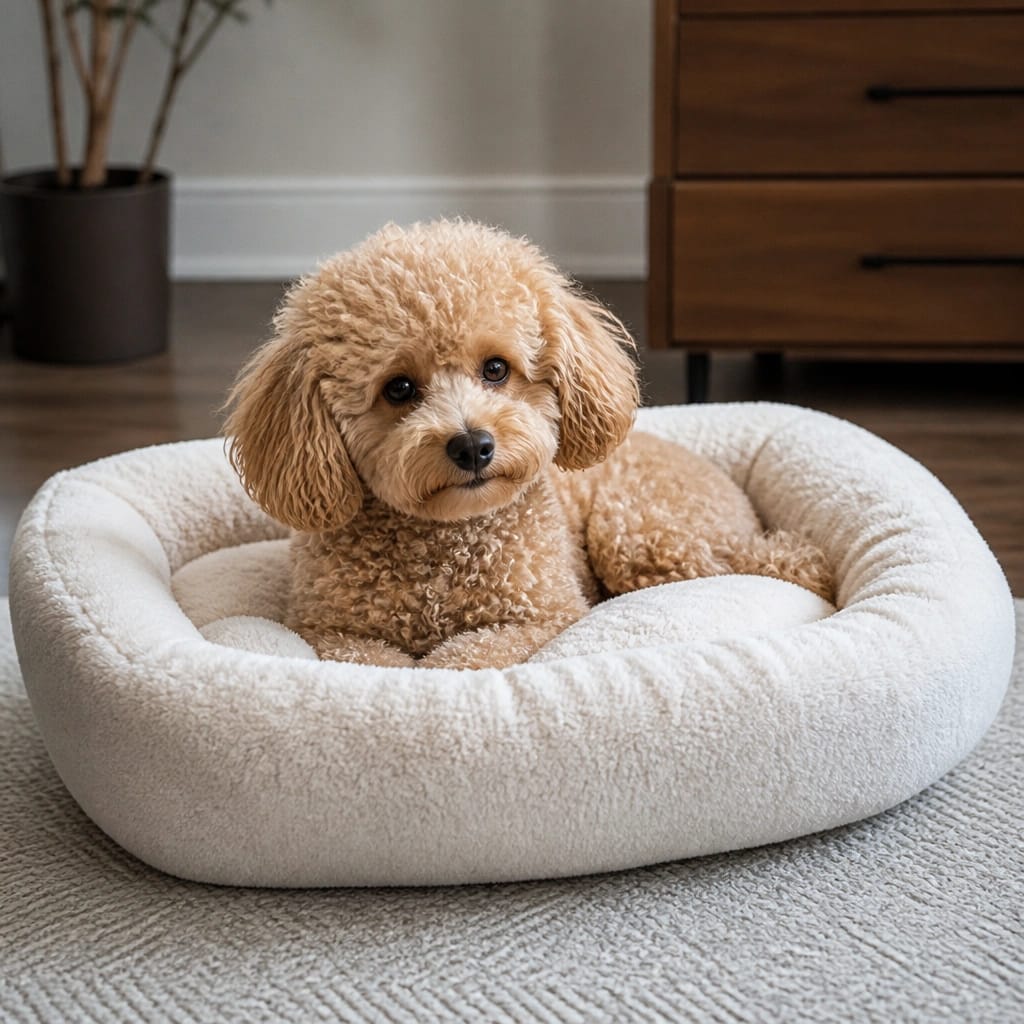
Stop Guessing: Start With Your Poodle’s Body Type
Poodles come in three official sizes, and each one changes the bed equation.
If you have a toy poodle, you need a small, low-entry bed. Toy poodles weigh about 4 to 8 pounds and measure 10 to 12 inches long. Their little legs struggle with tall bolsters.
If you have a miniature poodle, you sit in the middle. They run 10 to 20 pounds and about 14 to 18 inches long. They’ll sleep curled or stretched, so shape matters more than size.
If you have a standard poodle, you need a large, long, firm bed. Standards weigh 45 to 70 pounds and stretch 25 to 30 inches from nose to tail. Deep chests and long legs need real surface area.

The common mistake is shopping by weight. Weight roughly tells you about foam support. Body length tells you how much floor space the bed must cover.
The Size Factor: Why Weight Charts Sometimes Lie
Weight-based bed charts are the biggest trap in the dog bed aisle. As of 2026, most bed brands still label products by weight ranges instead of body length. That’s backwards for poodle owners.
Take two poodles at 20 pounds. One could be a tall miniature with long legs. Another could be a stocky small standard.
Same weight, completely different bed needs.

The rule of thumb: measure from nose to base of tail, then add 6 to 12 inches. That’s the usable sleeping surface you need. Our bed size chart by weight is a starting point, but the tape measure wins every time.
Here’s a rough breakdown based on general breed standards and common manufacturer sizing:
| Poodle Size | Typical Weight | Typical Body Length | Minimum Bed Surface |
|---|---|---|---|
| Toy | 4–8 lbs | 10–13 inches | 18 × 18 inches |
| Miniature | 10–20 lbs | 14–18 inches | 24 × 18 inches |
| Standard | 45–70 lbs | 24–30 inches | 36 × 24 inches |
Body lengths vary by bloodline. Measure your own dog when in doubt.
How to Measure Your Poodle for a Bed in 60 Seconds
Measuring takes less than a minute. You need a flexible tape measure and a cooperative poodle.

- Let your poodle stand on all fours, relaxed.
- Place the tape at the tip of the nose.
- Run it along the spine to the base of the tail.
- Write down that number.
- Add 6 to 12 inches for stretching and turning space.
That final number is the minimum bed length to shop for.
If your poodle sleeps fully stretched on their side, measure them lying down too. Some standards hit 30 inches nose to tail, then add several more when they extend their legs.
For crate use, measure the crate floor, not just the dog. A too-tight bed defeats the purpose. Our complete guide to dog beds covers crate sizing in more detail.
The Big Decision: What Sleep Style Is Your Poodle?
You can’t pick a good bed until you know how your poodle actually sleeps.

Curled-Up Sleepers: Burrow and Cave Beds
If your poodle curls into a tight ball with their nose tucked under their tail, they want a round donut bed or a cave-style hooded bed. These shapes hug the body and trap warmth. Poodles that burrow under blankets often feel safer in an enclosed space.
That instinct runs deep, and our article on why dogs love to burrow explains the reasoning.
Side-and-Belly Sleepers: Open Rectangular Beds
If your poodle flops onto their side with legs extended, they need a flat, open surface. Round beds force a curve that doesn’t match their sleeping position. A rectangular bed with low bolsters lets them stretch naturally.
Legs-Everywhere Sleepers: Big, Flat, Unobstructed Surfaces
Some poodles sleep like they own the room, rolling onto their back with legs kicked out. These dogs need oversized beds with zero obstruction. Look for a large flat mat or low-profile rectangular bed with no raised edges.
Sleep position changes with age. A puppy that curls up may stretch out as they grow. Reassess every six months or so.
Matching Bed Type to Poodle Size and Age
Once you know body length and sleep style, age adds the final filter.
Toy Poodles: Low-Entry, Small, and Safe
Toy poodles need beds they can climb into without jumping. High bolsters strain tiny joints. Choose a low-entry donut bed, flat mat, or small cave bed with a low opening.
Miniature Poodles: The Middle Ground
Miniatures adapt to almost any bed shape. Match the bed to their sleep position first. A bolster dog bed gives a headrest without feeling too enclosed.
A flat mat works for side sleepers.
Standard Poodles: Long, Firm, and Roomy
Standards need length first, firmness second. Deep chests and long legs benefit from thicker foam that doesn’t bottom out. A memory foam dog bed with at least 3 inches of support is a solid choice.
Large breeds also do well with a dog sofa-style bed for extra resting space.
Puppies and Seniors
Puppies chew, so choose a chew-resistant cover and a waterproof dog bed liner for accident-prone months. Seniors need firm orthopedic support and low sides to step into easily. If your older poodle shows stiffness getting up, check with your vet before assuming a bed alone will fix it.


