

What Kind of Bed Does a Rottweiler Need?
A Rottweiler needs a large, orthopedic bed. The bed should be at least 48 inches long. Thick memory foam supports heavy joints. A chew-resistant, washable cover is essential.
You’ve watched your Rottweiler circle, scratch, and flop down on the hard floor. Maybe the bed you bought is too small, too flat, or just plain ignored. So what kind of bed does a Rottweiler need?
The honest answer is a large orthopedic bed with thick foam and a washable cover. But the right choice also depends on your dog’s age, joint health, sleeping position, and chewing habits.
A full-grown Rottweiler is a big animal. Males typically weigh 95 to 135 pounds and stand up to 27 inches at the shoulder. That means many “large” beds on the market are actually too short.
As of 2026, manufacturer specs show that Rottweilers generally need at least 48 inches of usable lying space just to stretch out without hanging off the edge. Keep that number in mind as we break down the options.
Why the Right Bed Matters for a Rottweiler
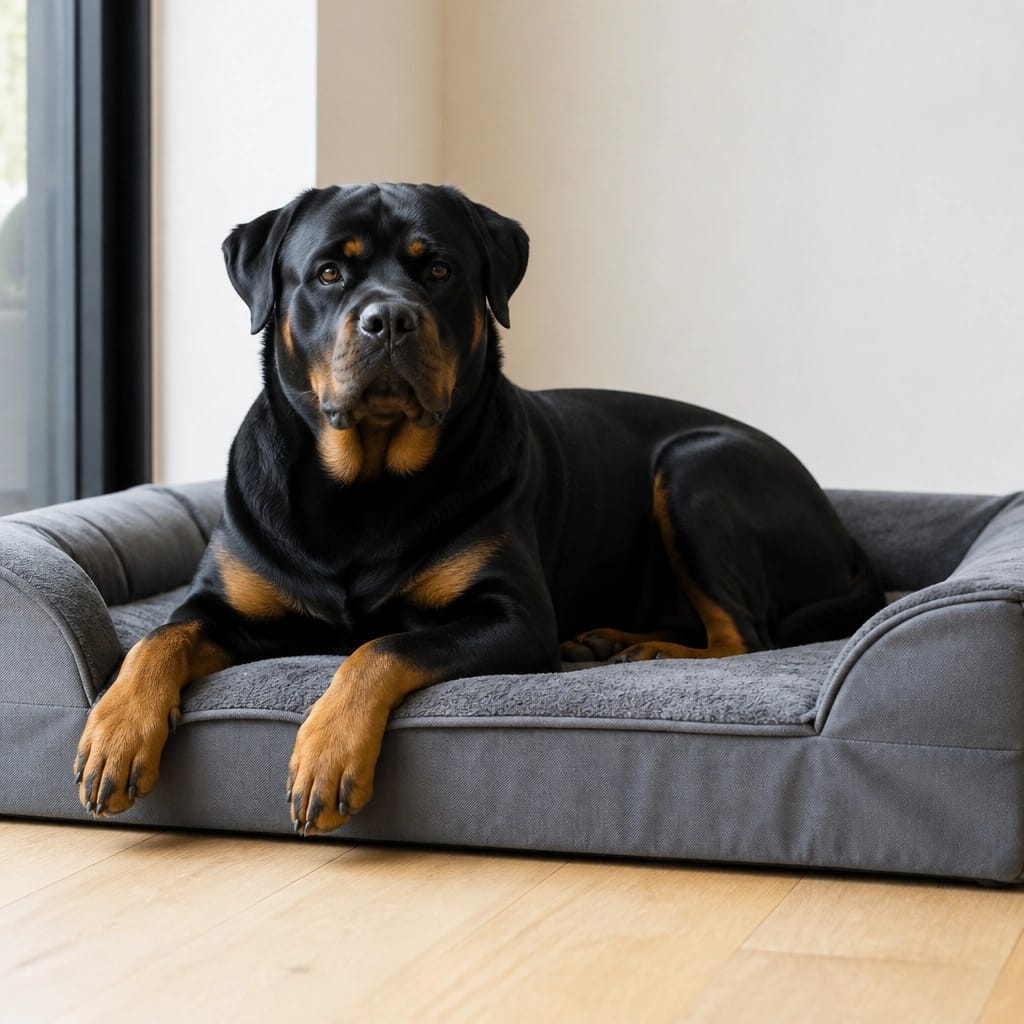
The invisible toll on hips, elbows, and joints
Rottweilers are prone to hip and elbow dysplasia. Hard floors offer zero cushioning, so every rest puts pressure on those joints. Over time, that leads to stiffness and a dog who hesitates to get up.
A proper bed gives a soft landing zone that cradles the body. In our research, the breed standard from the AKC lists joint health as a major concern for this breed.
What sleeping on a hard floor actually does
Think about lying on concrete yourself. After a while, your hips and shoulders ache. For a heavy Rottweiler, that ache is multiplied.
Aggregate reviews from owners report that thicker foam beds visibly reduce morning stiffness. If your dog already has arthritis, this isn’t optional. It’s comfort care that actually matters.
Know Your Rottweiler’s Sleeping Style Before You Shop
The body-stretcher: sleeps flat on the side
Some Rottweilers fully stretch out like a starfish. They need a long flat surface with no bolsters in the way. For these dogs, a wide mat or a low-profile orthopedic bed works best.
If the bed is too short, you’ll find their head or limbs hanging over the edge.
The donut: curls up and tucks the nose
Others curl into a tight ball, especially when they’re tired or anxious. This is a natural instinct that helps preserve body heat. For them, a bolster bed or a hooded bed adds that cozy nest feel.
Our guide on digging and burrowing instincts explains why some dogs love deep, enclosed spaces.
The renovator: digs, scratches, and shreds
Some Rottweilers treat beds as a project. They scratch, knead, and sometimes chew. If yours is a renovator, you need chew-resistant fabric and reinforced stitching.
A flat, tough mat often survives longer than a plush bolster bed. Expect to supervise until the habit fades.
The Main Bed Types That Actually Work for This Breed
These are the five styles that come up most in Rottweiler households:
- Orthopedic memory foam beds: Thick foam that supports joints and doesn’t flatten under 130 pounds. See thick foam designs for details.
- Raised cot beds: Elevated fabric suspended on a frame. Great for airflow and outdoor use, but less joint cushioning.
- Bolster / sofa beds: Have raised sides for head support. Cozy, but they take up more floor space.
- Cave / hooded beds: Enclosed on three sides. Ideal for burrowers and dogs who like to feel hidden.
- Flat crate mats and pads: Simple and washable. Best for crates or for dogs who avoid raised sides.
If you want the full picture, our guide to choosing any dog bed walks through every style and material.
Orthopedic Foam Beds vs. Raised Cots: The Big Trade-Off
This is the most common decision Rottweiler owners face. Orthopedic foam gives pressure relief that’s hard to beat. Raised cots keep your dog cooler in summer and are easier to clean.
The trade-off is support versus airflow.
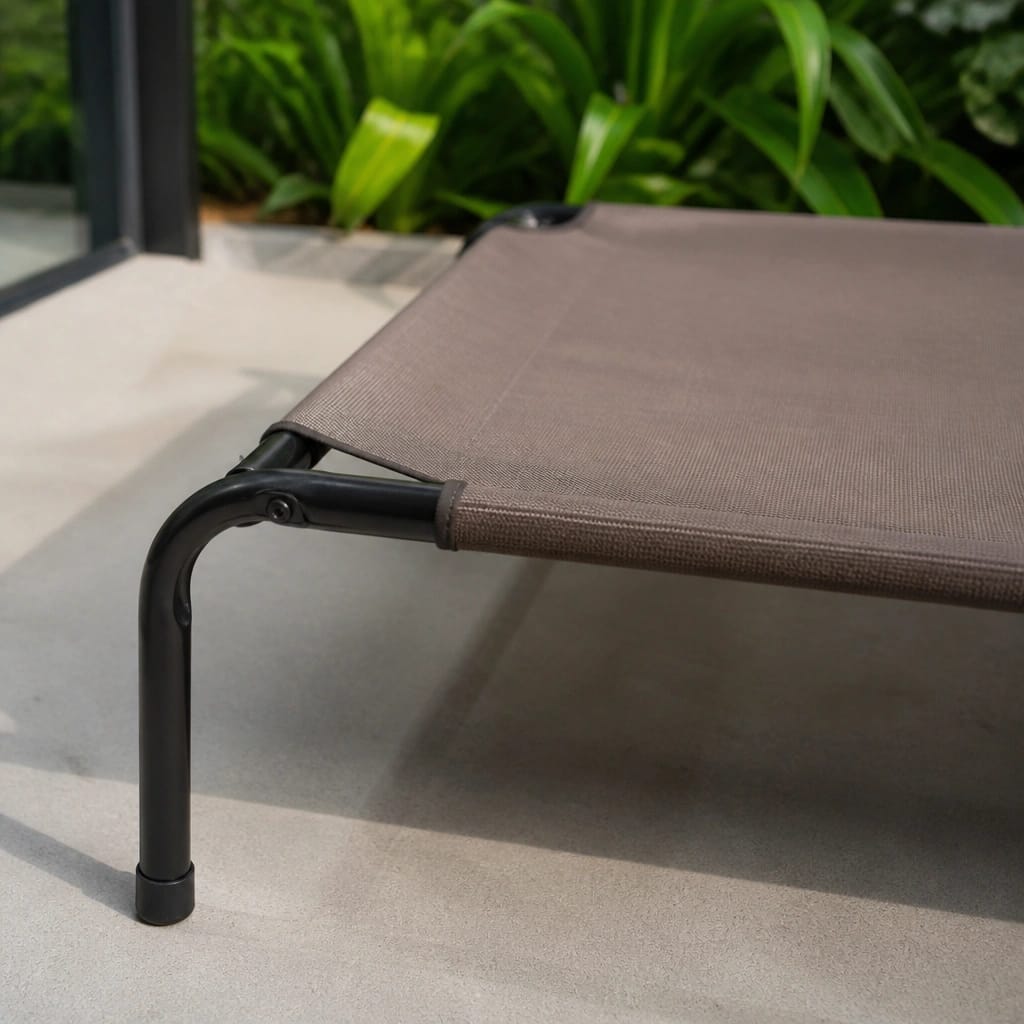
A senior Rottweiler with hip dysplasia usually does better on a foam option. An active young dog in a warm climate often prefers this style of cot. If you want the best of both, some cots allow adding a thin foam pad on top.
Bolster Beds vs. Flat Mats: It Depends on the Dog
Bolster beds give your Rottweiler a place to rest their head. That’s a huge comfort win for many dogs. They also create a sense of security, which can help anxious sleepers.
But some Rottweilers run hot and dislike having padded walls trap heat.
Flat mats are simpler, cooler, and easier to wash. They also take up less room. The right call depends on your dog’s sleeping position.
If they curl up, a cushioned bolster style works well. If they stretch flat, a mat gives them all the room they need.
Crate Mats vs. Standalone Beds: Don’t Mix Them Up
A crate mat is sized to fit inside a wire or plastic crate. A standalone bed is a loose piece of furniture that goes anywhere. They’re not interchangeable.
Crate mats need to be thin enough to fold, but thick enough to cushion. They also need a non-slip base so they don’t bunch up when your dog moves. If you’re unsure, our comparison of crate pads and crate mats breaks down the differences clearly.
Side-by-Side Bed Comparison for Rottweiler Owners
Use this quick table to compare at a glance. Keep your dog’s age, health, and habits in mind.
| Bed Type | Best For | Main Drawback |
|---|---|---|
| Memory Foam | Joint support, seniors | Holds body heat |
| Raised Cot | Summer, outdoor use | Less cushioning |
| Bolster | Curling, head support | Heavy to wash |
| Cave/Hooded | Burrowing, anxiety | Harder to clean |
| Crate Mat | Crates, easy washing | Not as plush |
Best Bed Matches by Use Case
Every Rottweiler is different, but these patterns hold up well in practice.
- Puppy under 18 months: Get a cheap but tough mat. Expect chewing. Don’t invest in premium foam yet.
- Hot climate adult: Go with a raised cot or a cooling gel bed. The American Veterinary Medical Association notes that heavy breeds overheat easily. Keep airflow a priority.
- Senior with arthritis: Choose thick memory foam, at least 5 inches. Look for waterproof protection, too. A waterproof dog bed saves you from accidents and drool.
- Crate-trained dog: Use a crate mat that fits snugly. Leave a little room for the dog to move.
- Outdoor dog: Pick a weatherproof raised cot or an insulated bed. See our picks for insulated outdoor options.
Common Bed Mistakes Rottweiler Owners Make
- Buying a 40-inch bed for a 135-pound dog. That’s too short. Check our size guide before you order.
- Ignoring the chewing stage. Puppies shred cheap beds fast. Address it early.
- Choosing looks over washability. A beautiful bed that can’t go in the washer becomes a problem fast.
- Skipping regular inspections. Check seams and foam flatness monthly.
How to Measure and Choose the Right Size and Setup
Grab a soft tape measure. Have your Rottweiler stand in a neutral position. Measure from the tip of the nose to the base of the tail.
That’s the minimum length you need. Now add 8 to 12 inches for the stretch factor. A dog who likes to lie sideways needs even more width.
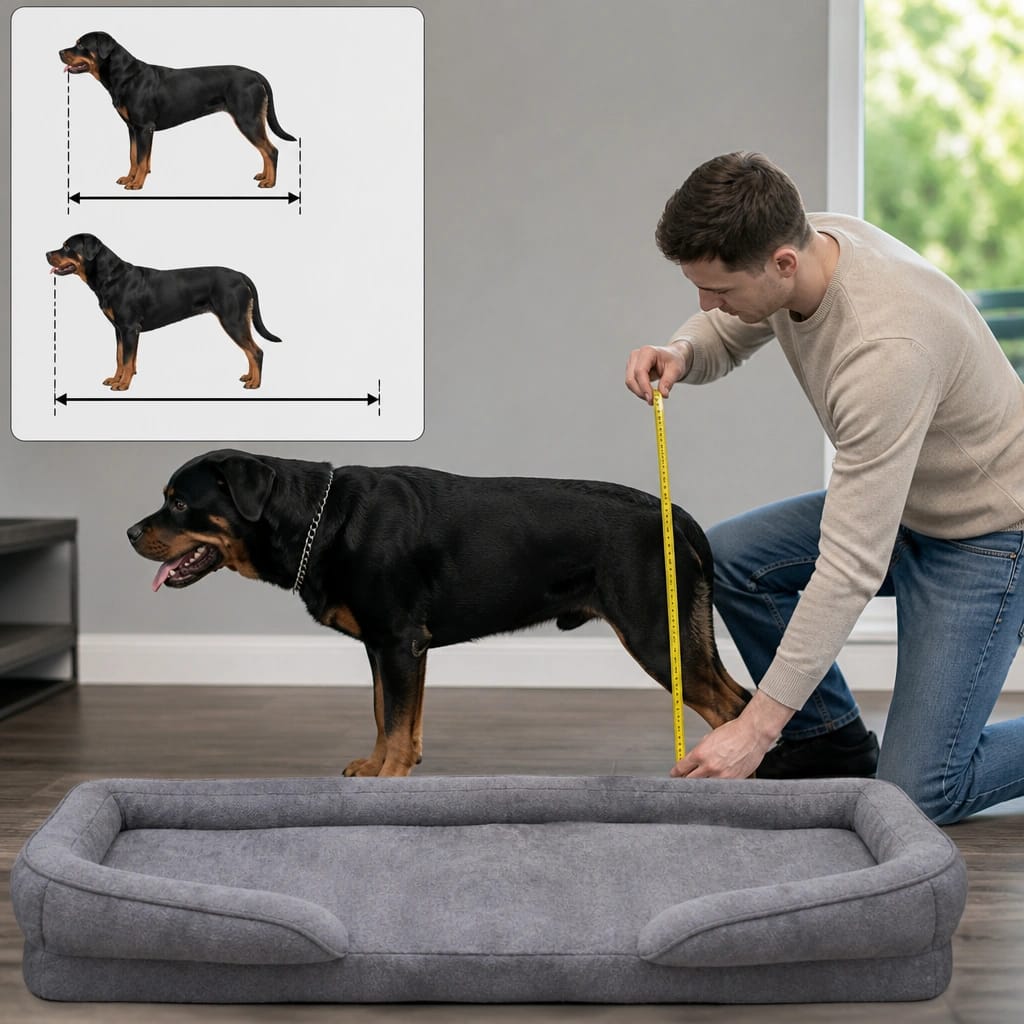
Here’s a simple setup process:
- Measure your dog.
- Pick a bed at least 8 inches longer than that length.
- Check the weight rating on the product.
- Place the bed in a quiet, draft-free spot.
- Watch your dog’s first night reaction.
For a complete walking-through, our full size chart covers dimensions for every breed.
Signs It’s Time to Replace or Upgrade the Bed
- Foam has lost its support: If your dog sinks right to the floor, the foam is done.
- Seams are splitting: That’s a safety risk if your dog likes to dig.
- Your dog avoids the bed: If they choose the floor, the bed no longer feels comfortable.
- Morning stiffness is increasing: This is a red flag. Upgrade to better support or check with your vet.
Frequently Asked Questions
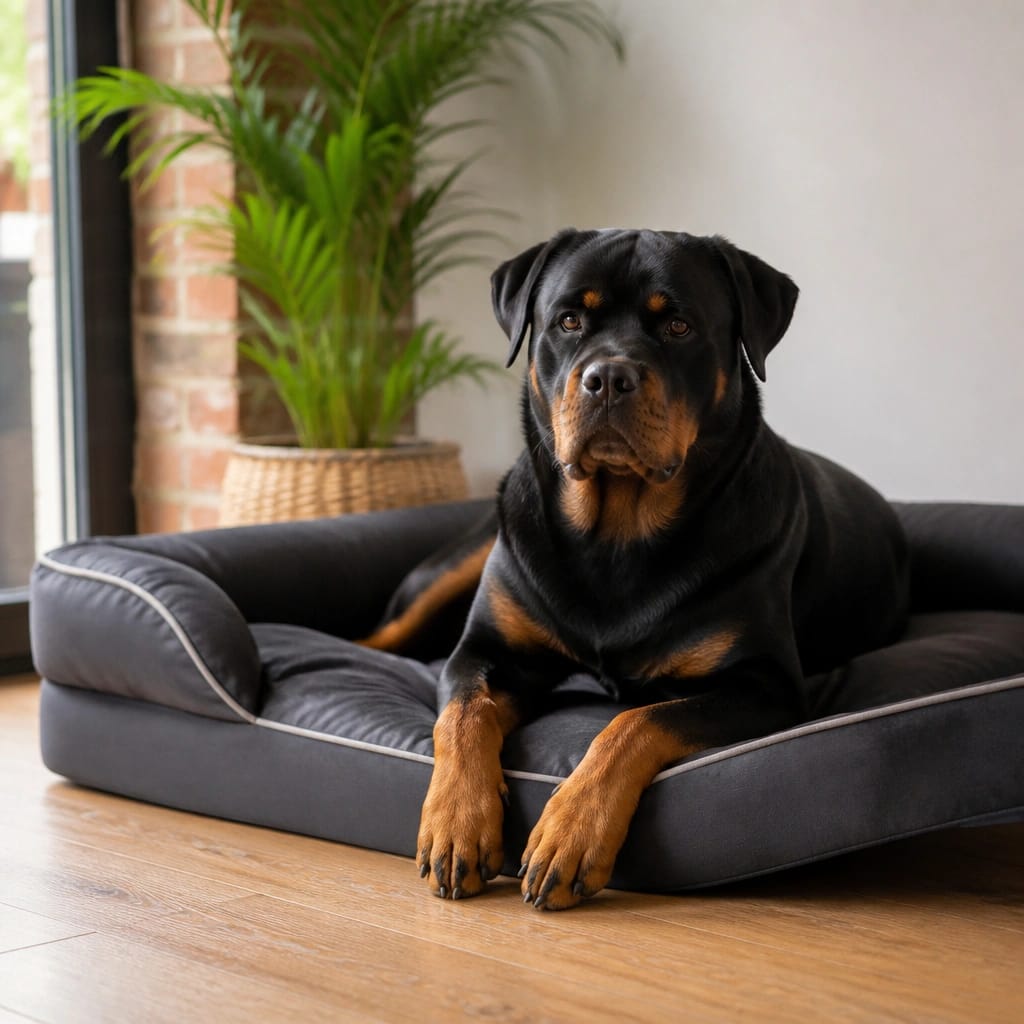
Are orthopedic beds worth it for a Rottweiler?
Yes. A Rottweiler’s body weight puts serious pressure on joints. Orthopedic memory foam spreads that pressure and reduces stiffness.
Most owners notice their dog sleeps longer and wakes up more easily.
Do Rottweilers overheat in memory foam beds?
Sometimes. Memory foam traps body heat. If your dog sleeps hot, look for a foam with cooling gel or choose a raised cot.
A breathable cover also makes a difference.
What size bed does a Rottweiler need?
Most Rottweilers need a bed that’s at least 48 inches long. Measure your dog from nose to tail and add 8 to 12 inches. For extra-large males, you may need a 52-inch or 60-inch bed.
Why does my Rottweiler dig at his bed?
Digging is a natural nesting instinct. It can be soothing and helps the dog arrange the sleeping surface. If digging is excessive, check the bed for lumps or consider a different shape.
Should I get a crate mat or a standalone bed?
It depends on where your dog sleeps. Use a crate mat for inside the crate. Use a standalone bed for open areas.
They serve different purposes, and many owners need both.
Final Verdict: What Should You Actually Buy?
Start with a large, orthopedic foam bed that’s at least 48 inches long. Make sure the cover is removable and washable. If your dog chews, pick a fabric labeled chew-resistant.
If they sleep hot, switch to a raised cot. Measure first, then match the bed to your dog’s age, health, and sleeping style. That’s the safest path to a happy, well-rested Rottweiler.
Crate Mats vs. Standalone Beds: Don’t Mix Them Up
A crate mat is sized to fit inside a crate. A standalone bed sits anywhere in your home. They serve different purposes, and many Rottweiler owners need both.
If your dog sleeps in a crate, a mat that fits snugly prevents bunching and sliding.
Side-by-Side Bed Comparison for Rottweiler Owners
Use this quick reference when comparing options.
| Bed Type | Best For | Main Drawback |
|---|---|---|
| Memory Foam | Joint support, seniors | Holds body heat |
| Raised Cot | Summer, outdoor use | Less cushioning |
| Bolster | Curling, head support | Heavy to wash |
| Cave/Hooded | Burrowing, anxiety | Harder to clean |
| Crate Mat | Crates, easy washing | Not as plush |
Best Bed Matches by Use Case
- Puppy under 18 months: Tough, affordable mat. Expect chewing.
- Hot climate adult: Raised cot or cooling bed for airflow.
- Senior with arthritis: Thick memory foam, at least 5 inches.
- Crate-trained dog: Snug-fitting crate mat with a non-slip base.
- Outdoor dog: Weatherproof raised cot or insulated bed.
Common Bed Mistakes Rottweiler Owners Make
Buying a 40-inch bed for a 135-pound dog is the biggest error. Ignoring the chewing stage is a close second. A stylish bed that can’t go in the washer becomes a hygiene problem.
Check seams and foam flatness monthly to catch wear early.
How to Measure and Choose the Right Size and Setup
Measure from nose to tail, then add 8 to 12 inches. That gives you the minimum bed length. Compare that number to the bed’s usable flat surface, not its total outer dimensions.
Place the bed in a quiet, draft-free spot and watch your dog’s first night reaction.
Signs It’s Time to Replace or Upgrade the Bed
Foam that flattens out is the first clue. If your Rottweiler sinks straight to the floor, the support is gone. Seams that split or zippers that fail are clear warning signs too.
Your dog avoiding the bed is another big one. If they choose the hard floor instead, something feels wrong. Persistent stiffness after rest could mean the bed no longer cushions properly.
FAQ — Rottweiler Beds, Answered
Are orthopedic beds worth it for a Rottweiler?
Yes. Their weight puts heavy pressure on joints. Memory foam spreads that pressure and reduces morning stiffness.
Do Rottweilers overheat in memory foam beds?
Some do. Foam traps heat. If your dog sleeps hot, choose a cooling gel foam or a raised cot instead.
What size bed does a Rottweiler need?
At least 48 inches long. Measure from nose to tail, then add 8 to 12 inches for stretch room.
Why does my Rottweiler dig at his bed?
It’s a natural nesting instinct. He’s arranging the surface. If it’s excessive, check for lumps or a bed that’s too small.
Final Verdict — What Should You Actually Buy?
Start with a large orthopedic foam bed, at least 48 inches long, with a washable cover. Match the style to your dog’s sleeping habits. If they chew, pick a tougher fabric.
If they run hot, go with a raised cot. Measure first, then let your Rottweiler’s reaction be the final guide.


