

Crate Pad vs Crate Mat: What’s the Difference?
“Crate Pad vs Crate Mat: What’s the Difference?” is the question every puppy owner asks around the second week of crate training. The short answer is thickness and purpose. A crate pad is a thin, quilted layer of soft padding.
A crate mat is a denser, thicker foam base built for support.
Manufacturer specifications confirm that most crate pads measure 1 to 2 inches thick, while crate mats typically run 3 to 4 inches. As of 2026, that thickness gap is the easiest way to tell them apart. Choosing wrong means wasted money, extra laundry, and a dog who’d rather sleep anywhere else.
Let’s look at what actually matters.
A crate pad is a thin, quilted cushion for light comfort and easy washing. A crate mat is a thicker, supportive foam bed for joint cushioning and long crate stays. Choose a pad for puppies, chewers, or travel, and a mat for senior dogs or all-day resting.
Why This Comparison Matters for Your Dog’s Sleep
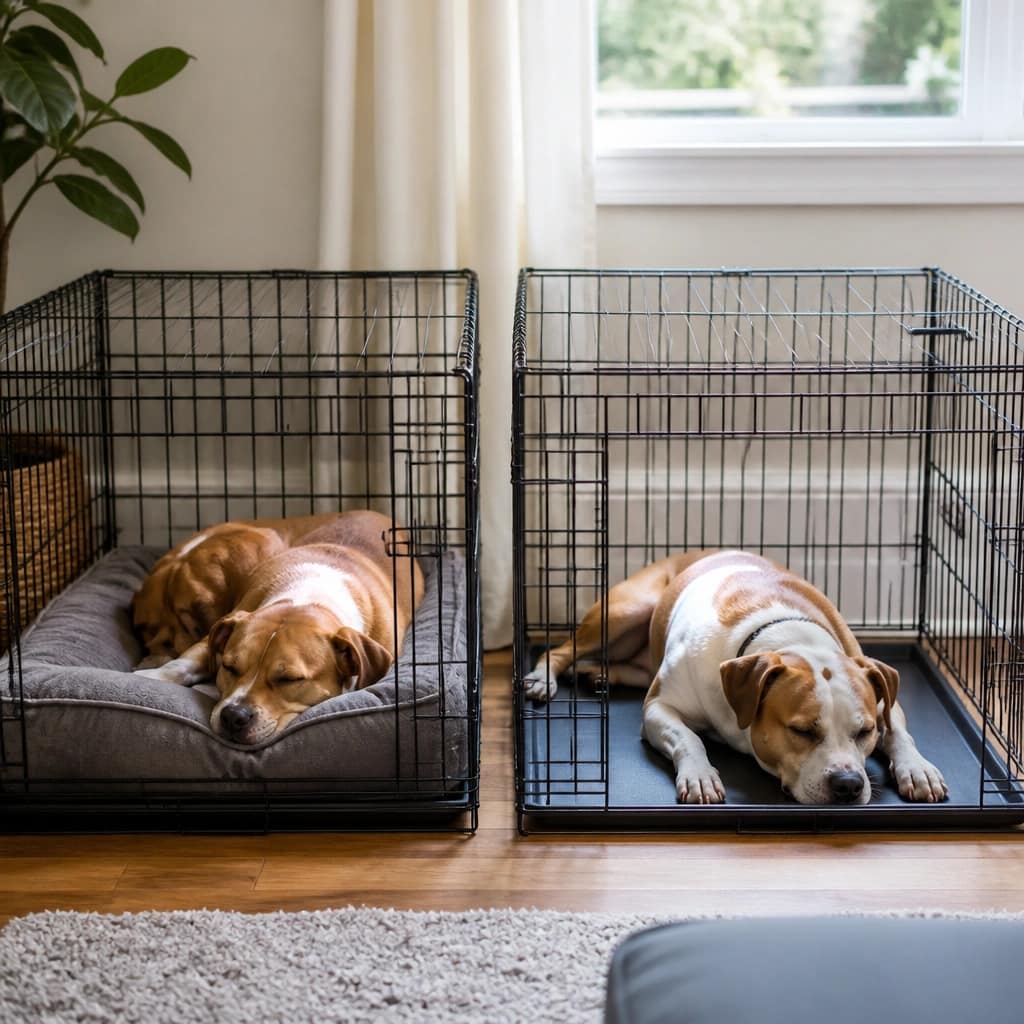
The surface your dog sleeps on shapes behavior, mood, and how willingly they settle into the crate. A hard plastic tray makes most dogs restless, and a bed that’s too soft can turn into a chew toy by morning. Dogs also have a strong natural nesting instinct, which is why some skip their bed entirely when the material doesn’t feel right.
According to the American Kennel Club’s crate training guidance, the crate should feel like a secure den.
The Real Difference in Plain English
Think of a crate pad as a mattress topper and a crate mat as the mattress itself. The differences come down to four things:
- Thickness: pads run 1 to 2 inches, mats run 3 to 4 inches.
- Fill material: pads use quilted polyester, mats use solid foam or memory foam.
- Main purpose: pads provide basic comfort, mats provide joint support.
- Weight and feel: pads are light and floppy, mats hold their shape.
Crate Pad: What It Is and How It Works
A crate pad is a flat, quilted cushion that sits directly on the crate’s plastic tray. Most have a soft fabric shell, a thin layer of polyester fill, and sometimes a water-resistant bottom panel. They’re designed to take the hard edge off a cold floor, not to support heavy joints.
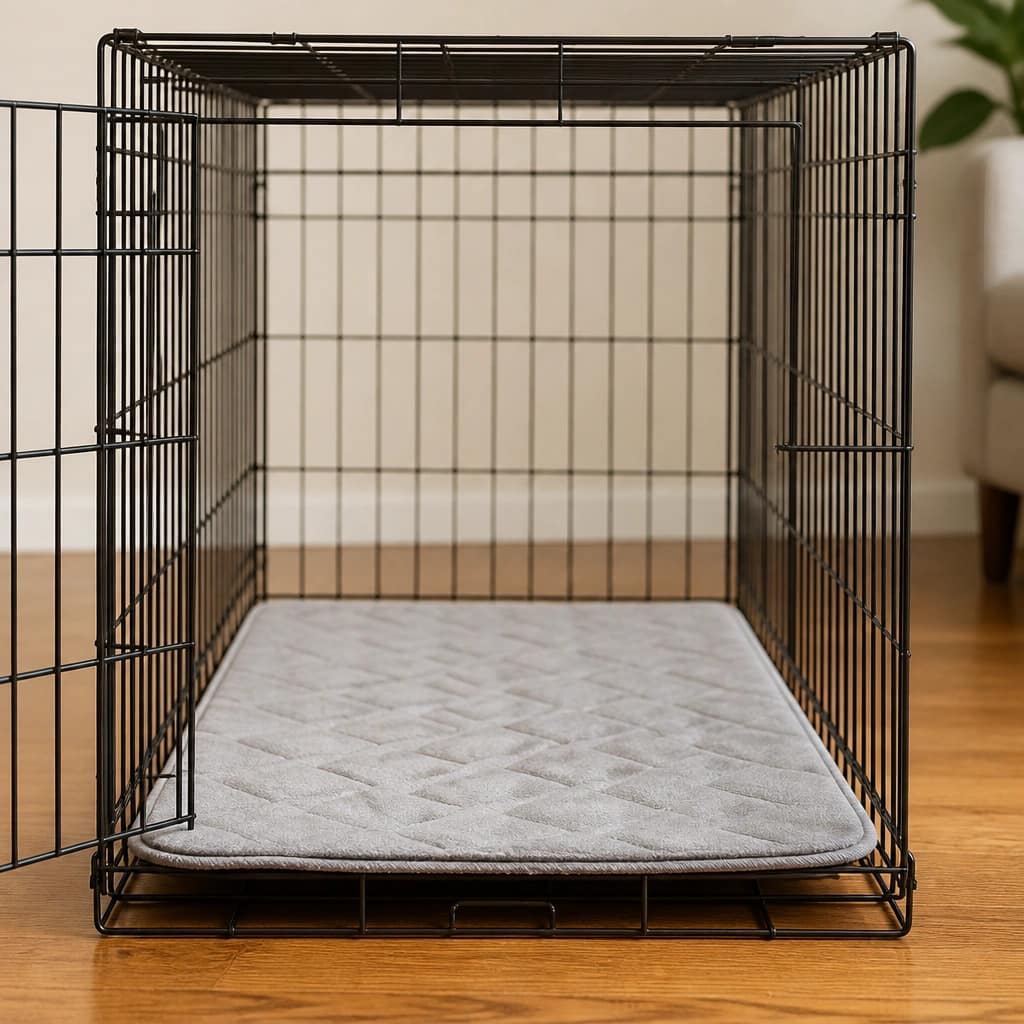
Pads work best for puppies still learning house training. They dry fast, are cheap to replace, and make travel-friendly bedding that doesn’t weigh down your bag. The trade-off is durability.
Thinner fill bunches up in corners, especially with diggers.
Crate Mat: What It Is and How It Works
A crate mat is a thicker, denser surface built around a solid foam core. Many use high-density foam or a supportive memory foam layer that contours to a dog’s body. The cover is tougher than a pad’s, with heavier seams and a non-slip base.
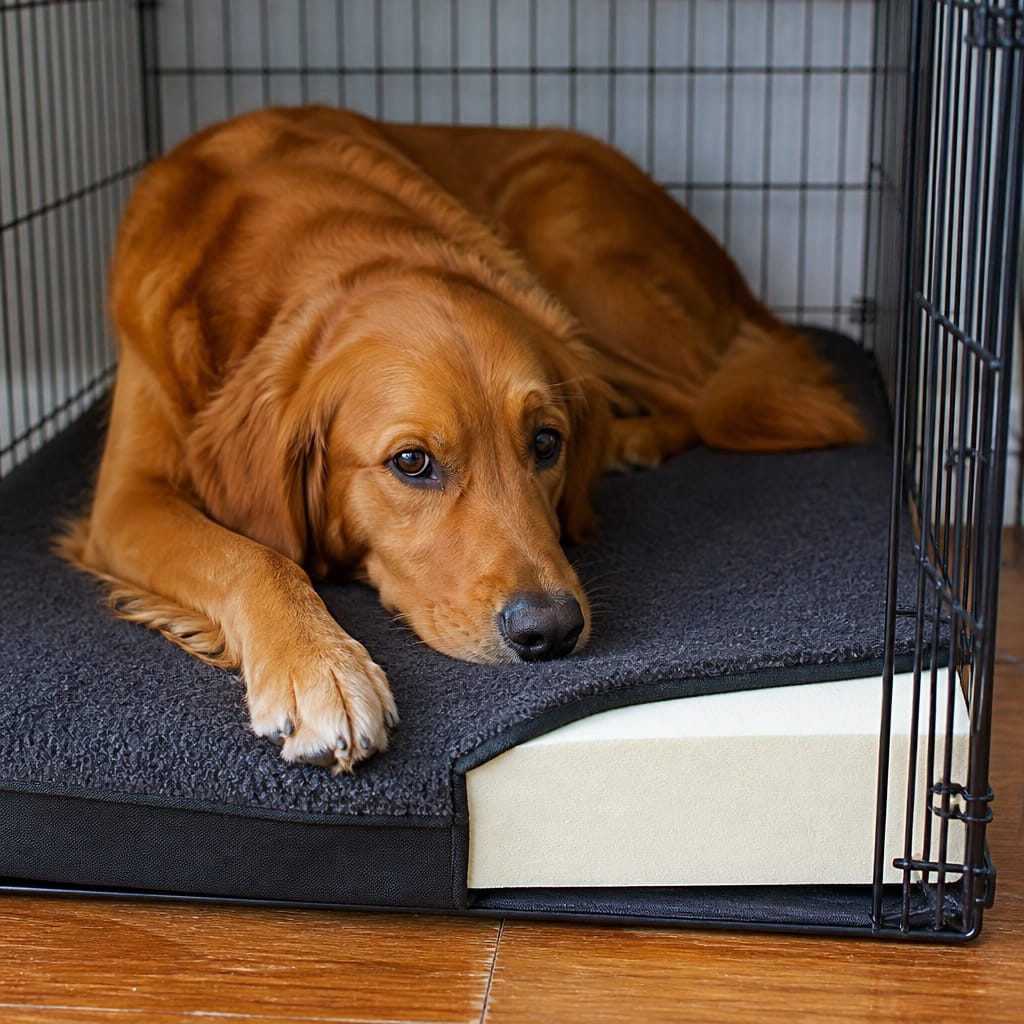
Mats are built for dogs that spend real time in the crate. Senior dogs with achy joints benefit most, since the thickness cushions elbows and hips. The downside is maintenance.
Thick foam takes longer to wash and dry, especially after accidents.
Crate Pad vs. Crate Mat: Side-by-Side Comparison
| Feature | Crate Pad | Crate Mat |
|---|---|---|
| Thickness | 1 to 2 inches | 3 to 4 inches |
| Fill material | Polyester fiberfill | High-density foam or memory foam |
| Main job | Light comfort and warmth | Joint support and pressure relief |
| Best for | Puppies, chewers, travel | Seniors, large breeds, long stays |
| Drying time | Fast | Slow |
| Price range | Budget-friendly | Costs more upfront |
If your dog is under six months or still working on potty training, start with a pad. If your dog is older, heavier, or dealing with joint stiffness, a mat is the better long-term investment. Still unsure?
The full guide to dog beds covers every style in detail.
Best for Puppies and Potty Training
Start with a pad. Puppies under six months are still working on bladder control, and accidents happen. A thin pad costs less and dries fast, so you won’t cry over a ruined bed.
Look for one with a waterproof backing to protect the crate tray.
Thick mats soak through and trap smell. That odor lingers even after washing, which makes potty training harder. If your puppy shreds bedding, go even cheaper and use old towels until the chewing phase passes.
A pad is a placeholder, not a permanent home.
Best for Senior Dogs and Joint Support
For older dogs, a crate mat wins by a mile. The 3-plus inches of foam cushions elbows, hips, and shoulders against a hard plastic tray. Senior dogs often prefer your bed or couch because soft surfaces help stiff joints.
A mat brings that same comfort into the crate.
Choose a mat with high-density or memory foam. Check that the foam isn’t too soft, or your dog will sink and struggle to get up. If you’re on a budget, a 3-inch foam mat from a discount store works fine.
The key is thickness and support.
Best for Chewers, Diggers, and Heavy Use
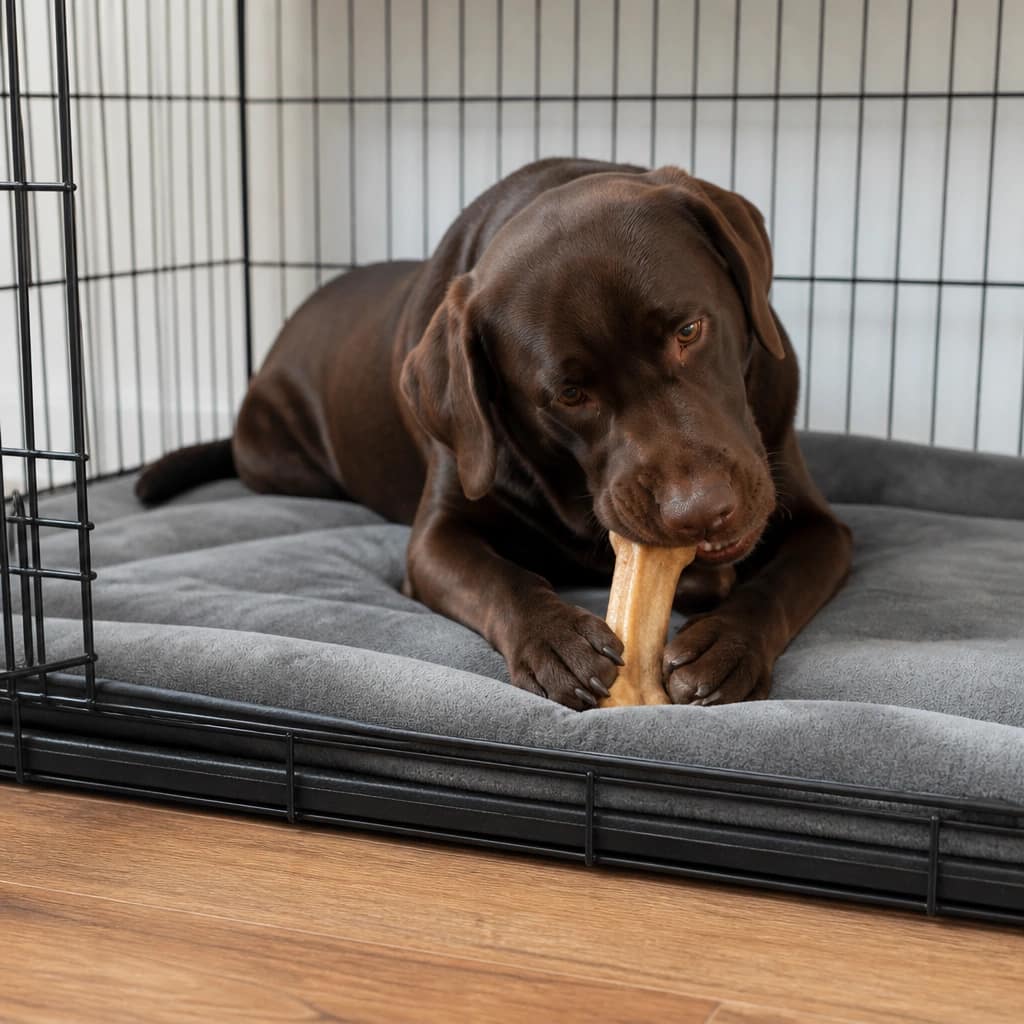
Neither option survives an aggressive chewer untouched. A mat has thicker seams and tougher outer fabric, so it lasts longer. A pad wads up fast when a dog digs at the corners before lying down.
If your dog is a serious destroyer, no soft bedding is safe. You might be better off with an elevated cot that sits off the tray and is harder to grab. For moderate diggers, a pad with reinforced stitching and a non-slip bottom is the cheapest stopgap.
Measuring and Fitting: Getting the Right Size
Measure the crate tray, not the outside of the crate. Run a tape measure across the plastic base from edge to edge. Then subtract one to two inches on each side so the bed fits snugly without bunching.
A too-small bed slides around. A too-big bed curls up in the corners and gets chewed. For a 30-inch crate, that means a 28-inch pad or mat.
Always check the product dimensions before buying. Some mats are thicker than their listing claims, which can keep the crate door from closing properly.
Washing, Drying, and Long-Term Care
Pads go in the washer and dry fast. Mats need a gentler routine. Remove the cover if you can, wash it in cold water, and let the foam core air dry.
Never put foam in the dryer, because the heat crumbles it.
Sun-drying kills bacteria and removes odors faster than any detergent. Rotate the mat every month so it wears evenly. Add to that a waterproof liner underneath if accidents are still happening.
A little extra protection doubles the life of both options.
Common Mistakes That Ruin Crate Bedding Fast
Skip these mistakes and your bedding lasts five times longer:
- Buying one size up. A loose bed bunches, digs, and shreds faster than a snug fit.
- Machine-drying foam. Heat crumbles the core, so the mat flattens within months.
- Ignoring chew damage. A small tear becomes a swallowed stuffing hazard fast.
- Skipping waterproofing. Accidents, drool, and water bowls soak into the core and trap odor.
Replace any bedding with exposed stuffing immediately. A dog digging at their bed often signals nesting instinct, not destruction. Give them an or acceptable outlet.

Frequently Asked Questions
Is a crate pad or crate mat better for a puppy?
A crate pad is better for puppies. It’s thinner, cheaper, and dries fast after accidents. Once potty training is solid and chewing slows down, upgrade to a mat.
Which one lasts longer: a pad or a mat?
A mat lasts longer. Its dense foam core and reinforced seams handle daily wear far better than a quilted pad’s fiberfill filling.
Can a crate mat fit inside a plastic kennel?
Yes, but measure carefully. Thick mats take up vertical space, which can press against the kennel’s sloped roof. Choose a mat one to two inches thinner than the kennel’s interior height.
Do crate mats help with dog arthritis?
They can help with comfort, not cure the condition. The extra foam cushions joints against hard surfaces, which eases pressure. For a vet-approved pain plan, talk to your veterinarian.
How often should I wash crate bedding?
Wash it every one to two weeks normally. Wash immediately after accidents or heavy shedding cycles to keep odors from baking into the fabric.
Final Verdict: Which One Belongs in Your Crate?
If your dog is young, still training, or a heavy chewer, choose a cheap crate pad. If your dog is older, large, or spends hours in the crate, invest in a crate mat. For most dog owners, a 3-inch mat is the better long-term buy once accidents stop.
Still weighing other options? A bolster bed gives that safe-den feeling for dogs that like leaning on something. For outdoor setups, our guide to cold-weather beds covers insulated options that hold up in the elements.
Whichever you pick, measure twice, buy once, and wash on a schedule.


