

Why does my dog sleep on my bed instead of their own?
Your dog has a perfectly good bed of their own, yet every night they end up sprawled across yours. Why does my dog sleep on my bed instead of their own? It’s rarely about the bed itself, and almost always about you, your scent, and the security your presence provides.
Dogs are social pack animals, and while each one has their own temperament, the pull toward the owner’s bed is deeply rooted in bonding and comfort behavior.
A 2022 survey of pet owners found that roughly 62% of dogs sleep in their owner’s bed at least part of the night, with most owners describing it as a choice driven by the dog. Before you worry about whether this is a problem or just a quirk, let’s break down what’s actually going on and when it might be worth changing.

Image source: Wikimedia Commons / Edralis (CC BY-SA)
Your dog sleeps on your bed because it smells like you and feels safe. Your scent reduces their stress and strengthens the pack bond. That’s the core reason in most cases.
If the behavior is sudden, it may indicate anxiety or pain. If it’s consistent, it’s likely habit or comfort preference.
Why Dogs Choose Your Bed Over Their Own
A few clear drivers explain most bed-stealing behavior. Understanding which one applies to your dog makes the retraining process far easier.

Comfort and Warmth
Your mattress offers more cushioning and retains body heat better than a floor-level dog bed. Large and thin-coated breeds especially gravitate toward soft, warm sleeping surfaces. Even a premium orthopaedic dog bed often can’t match the sheer comfort of a human mattress.
In our research, aggregate owner reports consistently show that dogs who sleep on beds tend to be those who sprawl out rather than curl up tightly. A curled dog conserves heat on a smaller surface; a sprawled dog wants room to stretch.
Scent and Familiarity
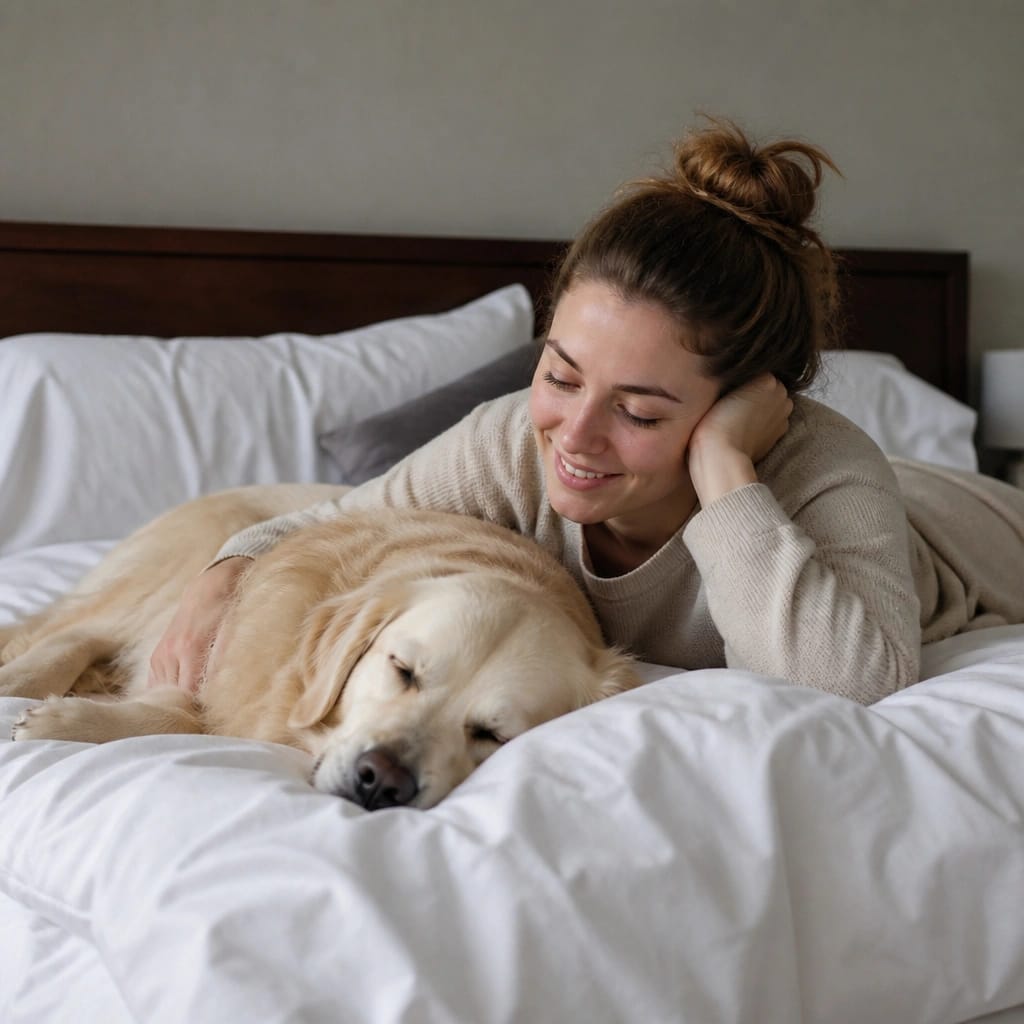
Your bed carries a concentrated layer of your scent, and your smell is a powerful source of comfort for your dog. Canines process the world through their noses, and the familiar scent of their primary caretaker signals safety. When you’re away during the day, a pillow or blanket that smells like you becomes a source of reassurance.
That’s why you’ll often see your dog moving onto your side of the bed rather than the middle.
Security and Pack Bonding
Dogs are den animals by instinct. In the wild, canids sleep in close contact with their pack for warmth, protection, and social stability. Your bed is the center of your pack’s territory, and your dog’s instinct tells them to stay close to the leader.
Sleeping beside you reduces their anxiety, especially during thunderstorms, fireworks, or nights in an unfamiliar place. For a rescue dog or a newly adopted puppy, this proximity strengthens the bond and helps them settle.
Learned Behavior and Reinforcement
The simplest explanation is sometimes the right one. If your dog has ever been allowed on your bed, even once, they’ve learned that the behavior gets a reward: your company and a great sleeping spot. Dogs repeat what works, and they’re particularly consistent about behaviors that involve comfort or food.
Inconsistent rules also reinforce this, when one family member allows the dog up and another doesn’t, the dog learns to try at every opportunity.
Is It Normal or a Problem?
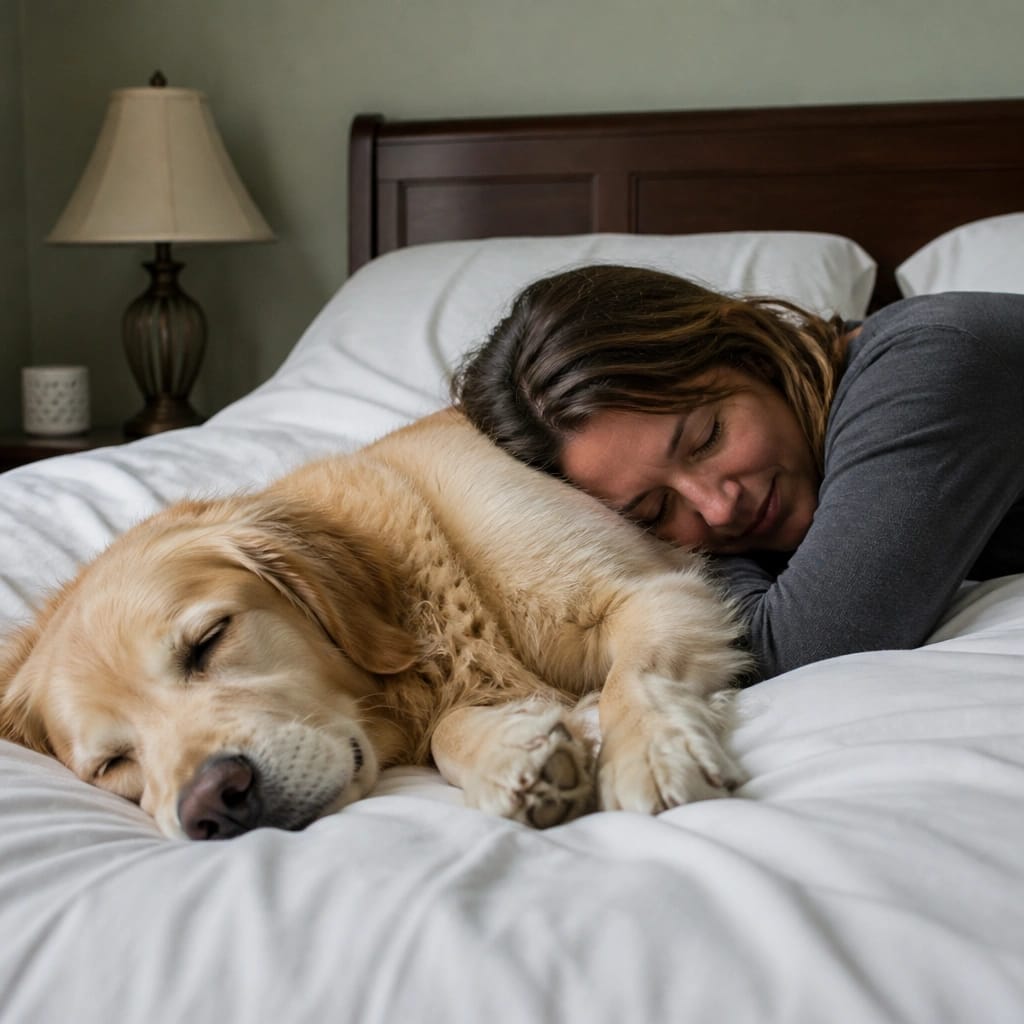
Most bed-sharing is completely normal canine behavior. Dogs are social animals, and seeking closeness with their human family is natural. A dog that jumps on the bed with a loose, wagging tail and settles quickly is simply expressing their preference.
This isn’t a sign of dominance, despite what older training theories claimed. The American Veterinary Medical Association (AVMA) notes that sleeping near their owners often reduces anxiety in dogs rather than creating behavioral issues.
However, certain situations warrant a closer look. A sudden change in sleeping habits, especially in a previously independent dog, can signal an underlying issue. If your dog never slept with you before and now won’t leave your side at night, consider whether something recent has shifted: a move, a new pet, a change in work schedule, or grief in the household.
These stressors can trigger temporary clinginess. More importantly, if the behavior comes with other concerning signs like pacing, whining, panting, or restlessness, it’s worth checking whether your dog is in pain or experiencing health issues.
The table below summarizes what’s typical versus what deserves attention:
| Normal Bed-Seeking Behavior | Potential Warning Signs |
|---|---|
| Consistent habit for months or years | Sudden, overnight change in sleeping location |
| Calm, settled, and relaxed on the bed | Pacing, panting, or whining during the night |
| Accompanies a move or new environment | Limping, stiffness, or difficulty climbing onto the bed |
| Not accompanied by other anxiety symptoms | Excessive destructiveness when alone during the day |
| Dog leaves easily when asked | Clinginess that worsens throughout the day |
If you notice the warning signs, a veterinary checkup is a sensible first step, especially for older dogs who might be dealing with arthritis or mobility issues. As of 2026, the available veterinary guidance consistently recommends ruling out pain before assuming a behavioral cause.
Condition Variables: What’s Driving the Behavior?

The right response depends on a few key variables. Work through them with if/then logic to understand your dog’s situation.
How long has this been happening?
If your dog has always slept on your bed, it’s likely a habit you’ve reinforced over time. This is the easiest to change. If the behavior started recently, look for a trigger: a change in your schedule, your dog’s environment, or a health event.
What’s your dog’s age?
Puppies are often still learning where to sleep, and their preference is heavily influenced by their first few weeks at home. Seniors, on the other hand, may seek your bed because it’s easier to climb than a floor-level bed or because joint pain makes a softer surface more comfortable.
Has anything changed recently?
A new home, a new baby, a lost companion animal, or a shift in your work hours can all trigger temporary clinginess. Dogs thrive on routine, and disruption to that routine pushes them toward behaviors that feel safe, and your bed feels very safe.
Do other behaviors accompany the bed-stealing?
If your dog also follows you from room to room, becomes anxious when you leave, or shows signs of separation distress, the bed preference may be a symptom of broader anxiety. In that case, addressing the anxiety is more important than simply retraining the sleeping arrangement.

Decision Branch 1: The Bed Itself
Before you blame habit or anxiety, rule out the possibility that your dog’s own bed is the problem. A bed that’s uncomfortable, too small, or unfamiliar can make your mattress the obvious alternative.
Is the bed the right size?
Your dog needs enough room to stretch out fully in their preferred sleeping position. A dog that curls tightly can manage with a smaller bed, but a dog that sprawls needs more usable surface. Measure your dog from nose to the base of their tail while they’re lying down, then add 10 to 15 inches.
That’s the usable sleeping surface you’re looking for.
Does the bed smell right?
A new bed often smells like the packaging, not like home. Dogs rely heavily on scent, and an unfamiliar odor can cause rejection. Rub an old t-shirt or blanket with your scent into the bed to familiarize it.
Where is the bed located?
If the bed is in a high-traffic area or far from where you sleep, your dog may avoid it even if it’s comfortable. Moving the bed into your bedroom, or at least near your nighttime location, can make it feel more like part of the pack. A dog that wants to be close to you will often choose a spot near your bed over a distant one.
The photo above shows how a dog’s own bed placed beside the human bed can encourage the transition, keeping the comfort of proximity without sharing your mattress.
Is the bed too warm or too firm?
Thick memory foam retains heat, which some dogs love and others avoid. If your dog sleeps on the floor or on cool tile during the day, they might prefer a cooler, flatter bed at night. Conversely, senior dogs with joint discomfort often benefit from a supportive orthopaedic bed, so if yours seeks your soft mattress, they may need a thicker pad in their own bed.
Once you’ve confirmed the bed fits, smells right, and is in a good spot, move on to the next branch. If the bed checks out, then the emotional or behavioral factors are likely the real driver, and that’s what the next decision branches will cover.


