

Can a Dog Bed Overheat a Dog?
Yes, a dog bed can overheat a dog under the right conditions. The bed’s material, the room temperature, and your dog’s breed all play a role. Some beds trap body heat, making it hard for your dog to cool down. This can lead to heat stress or even heatstroke. The key is to choose a breathable bed and monitor your dog for signs of overheating.
You want your dog to be comfortable and safe. But when the temperature climbs, you start to wonder. Can a dog bed overheat a dog?
It’s a fair question, and the answer isn’t just a flat yes or no. It depends on several specific factors.
A dog’s normal body temperature sits between 101 and 102.5 degrees Fahrenheit. They don’t sweat like we do. They rely on panting and heat dissipation through their paw pads and nose.
A bed that traps heat can interfere with this natural cooling process. Let’s look at the specific risks and how to avoid them.
Why Accuracy Matters on This Topic
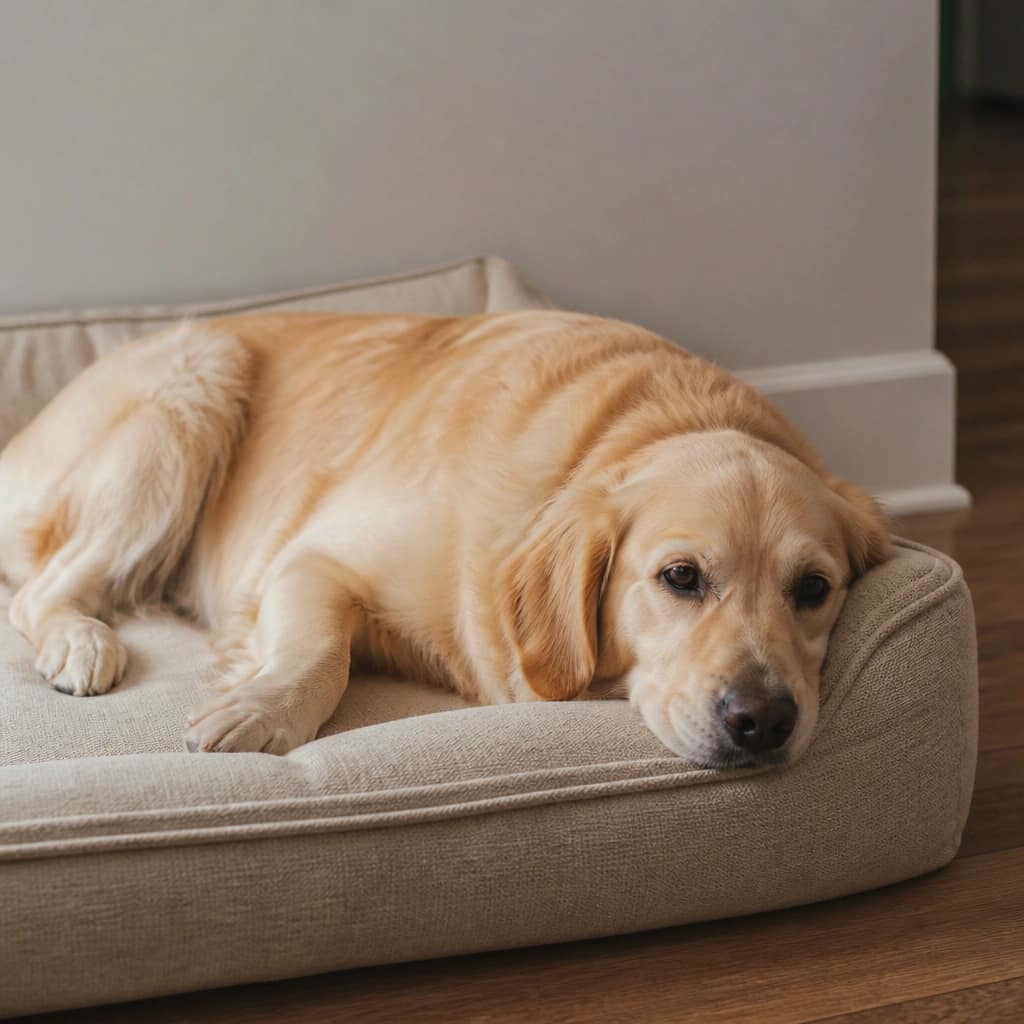
This isn’t a topic for guesswork. Heatstroke in dogs can be fatal, and it can happen fast. According to the American Veterinary Medical Association, heatstroke can occur when a dog’s body temperature exceeds 106 degrees Fahrenheit.
A poorly chosen bed can contribute to that dangerous rise.
Misinformation about dog beds could lead to a real emergency. Some owners think a thick, plush bed is always best. But for a dog in a warm room, that same bed can become a heat trap.
Understanding the facts helps you make a safer choice.
The goal is to keep your dog comfortable without risking their health. As of 2026, more pet owners are aware of cooling bed options. But knowing the basics of heat retention is more important than any product label.
What Overheating Actually Means for a Dog
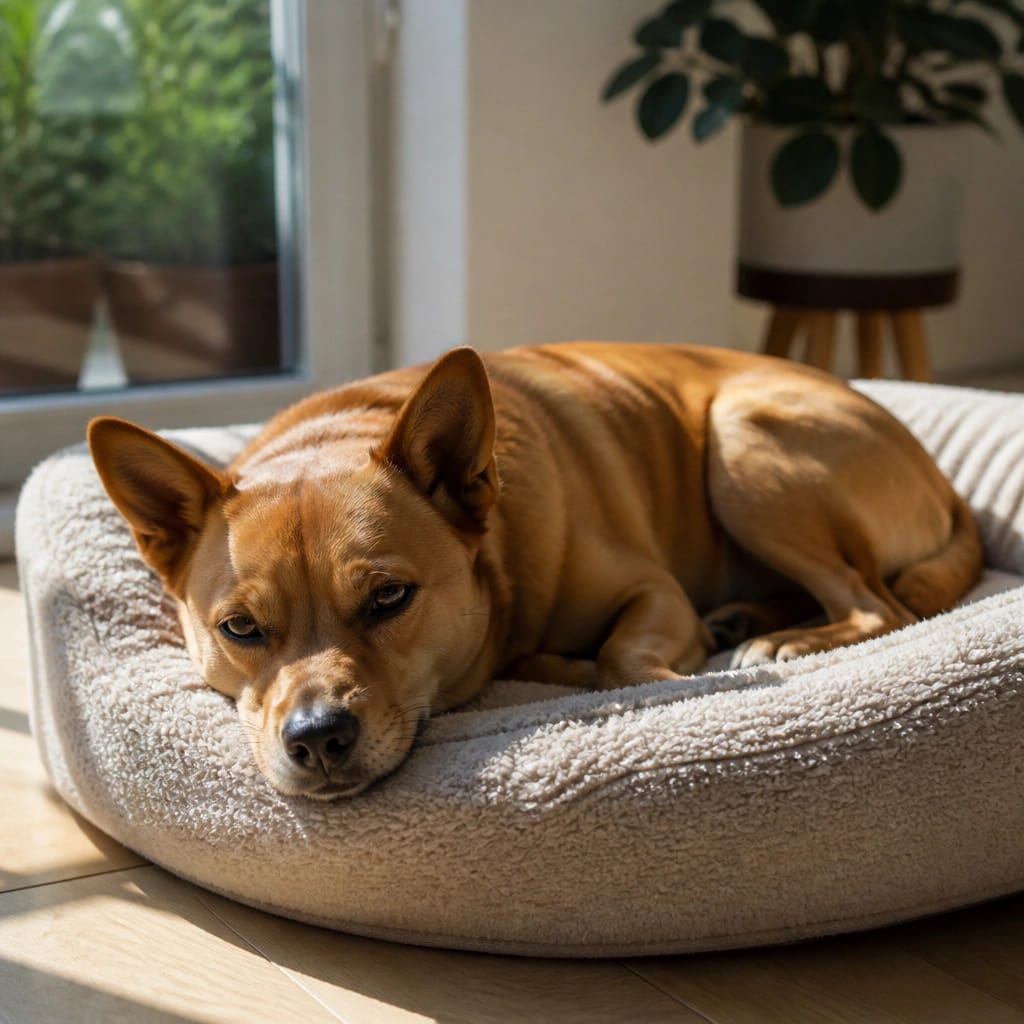
Overheating isn’t just about being uncomfortable. It’s a state where your dog’s body can’t release heat fast enough. They pant, they seek cool surfaces, and they may become restless.
A bed that retains heat makes this process harder.
When a dog lies on a surface that doesn’t breathe, their body heat has nowhere to go. The foam or filling absorbs the warmth and holds it against them. Over time, their core temperature can rise.
This is especially dangerous for dogs with thick coats or flat faces. Their cooling systems are already working harder. Adding a bed that traps heat can push them past their limit.
How a Dog Bed Can Contribute to Heat Buildup
Thick foam insulates. It holds your dog’s body heat against them. A dense memory foam bed without cooling layers can raise the surface temperature significantly.
The same goes for beds with non-breathable waterproof covers.
Here are the main ways a bed can cause overheating:
- Dense memory foam traps heat instead of releasing it.
- Waterproof liners block airflow, especially if the cover is not breathable.
- High bolsters can surround the dog and limit heat escape.
- Thick polyester fill retains warmth like a winter blanket.
- Bed placement near a window or radiator adds external heat.
The bed’s construction matters more than most owners realize. A bed that is too large can also cause issues. Your dog may not have enough body contact to cool through the bed.
But if the bed is too small, their body heat is concentrated in one spot.
Choosing the right size for your dog’s sleeping position can help. If your dog likes to stretch out, a mattress-style bed allows better airflow. If they curl up, a bolster bed might trap heat around their body.
Key Risk Factors That Make a Difference
Not every dog faces the same risk. Some dogs can sleep on a thick bed without issue. Others will overheat quickly.
The factors below determine where your dog falls on that spectrum.
Breed and Coat Type
Flat-faced breeds like bulldogs, pugs, and French bulldogs are at higher risk. They have trouble panting efficiently. Their short airways make cooling down harder.
A thick bed can push them over the edge.
Double-coated breeds like Huskies, Malamutes, and Golden Retrievers also struggle. Their coats are designed to insulate against both cold and heat. A bed that traps heat can make them uncomfortably warm.
If you own one of these breeds, pay close attention to the bed’s material. A cooling gel bed or an elevated cot-style bed is a safer choice.
Dog Age and Health
Puppies and senior dogs have less efficient temperature regulation. Their bodies can’t handle extra heat stress. Dogs with heart conditions, respiratory issues, or obesity are also more vulnerable.
A senior dog with arthritis might need an orthopedic bed. But that same bed can trap heat. Look for orthopedic beds with cooling gel or breathable foam layers.
Bed Material and Construction
Memory foam is the biggest culprit. It conforms to the body and holds heat. Gel-infused foam helps dissipate heat, but it’s not a complete solution.
The cover fabric also matters.
Cotton breathes better than polyester. Mesh panels allow airflow. A bed with a removable, washable cover in a natural fabric is a good choice.
Elevated beds are a different category. They allow air to flow underneath, which cools the dog from below. This is a strong option for hot weather or warm climates.
Room Temperature and Airflow
A bed in a hot, stuffy room is a risk factor. The room’s ambient temperature affects how well the bed breathes. Air conditioning or a fan helps.
The bed’s location should be away from direct sunlight and heat sources.
If your dog’s crate is in a warm corner, move it. If the room has poor ventilation, consider an elevated bed. A simple change in placement can make a big difference.
Signs Your Dog Is Too Hot on Their Bed
Your dog can’t tell you they’re too hot. But they will show you. Watch for these signs, especially after they’ve been lying on their bed for a while.
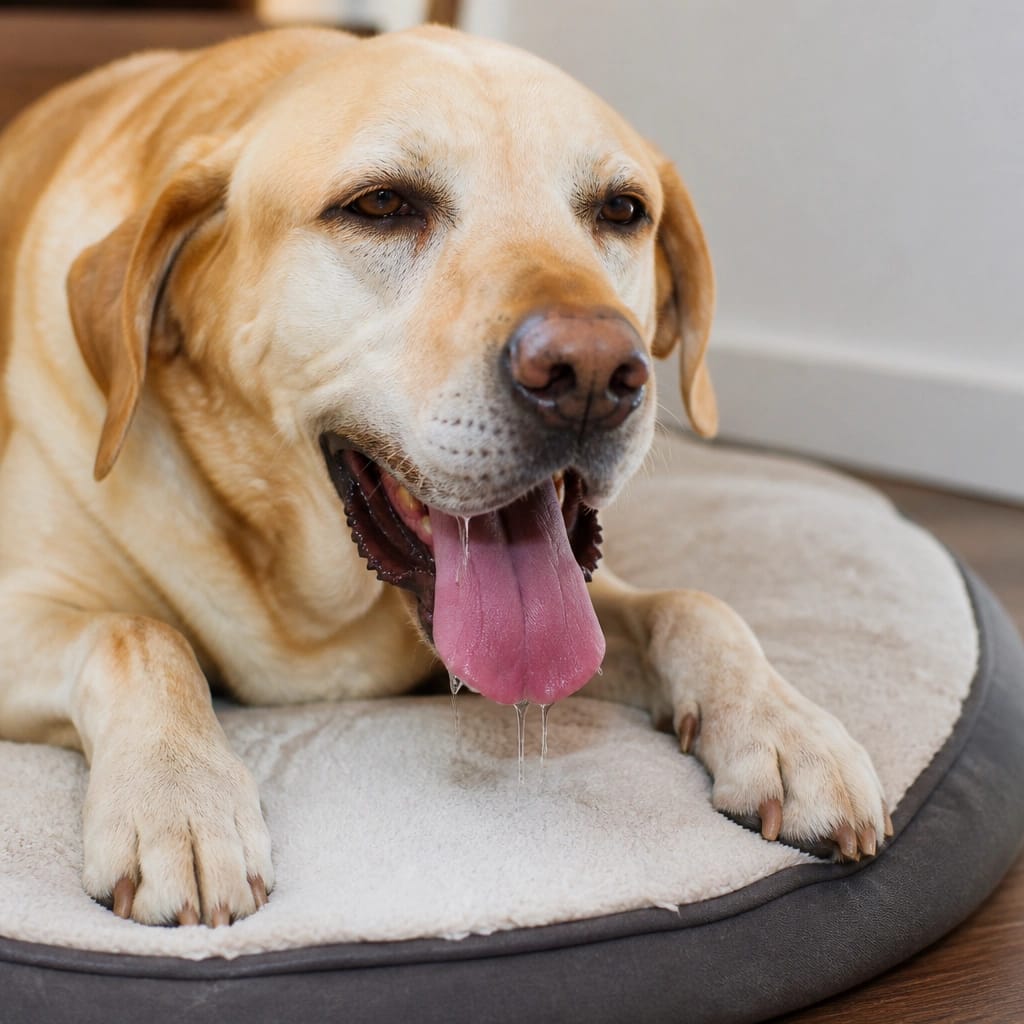
- Excessive panting that doesn’t slow down after a few minutes
- Drooling more than usual
- Restlessness or repeatedly getting on and off the bed
- Seeking cool surfaces like tile floors or bare concrete
- Bright red gums or tongue
- Lethargy or weakness
- Vomiting or diarrhea in severe cases
If your dog leaves their bed to lie on a cool floor, that’s a clear sign. They are telling you the bed is too warm. If they are panting heavily while lying on their bed, remove them from the bed and offer water.
Paying attention to these signs can prevent a serious situation. If you notice any of these symptoms, move your dog to a cooler area immediately. Offer fresh water and monitor them closely.
How to Choose a Bed That Won’t Overheat Your Dog
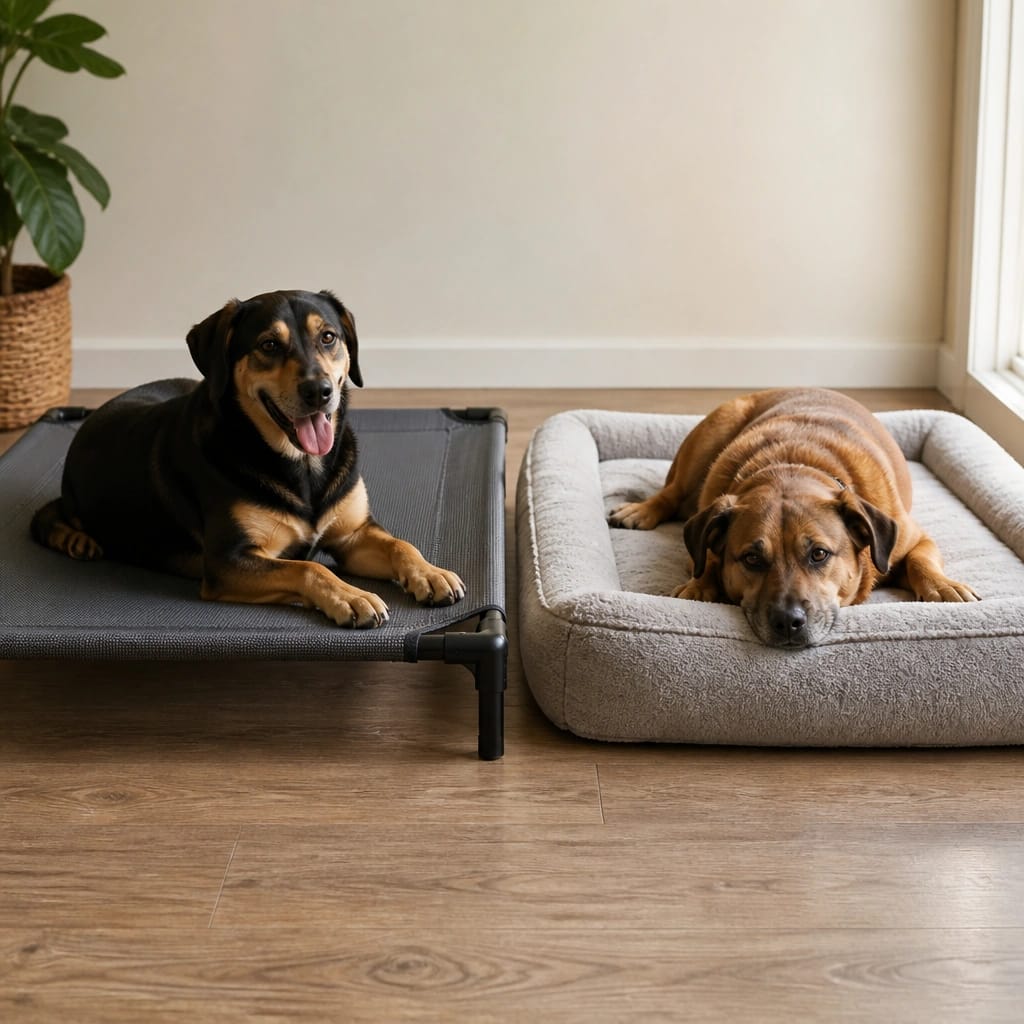
Look for beds designed to release heat, not trap it. Cooling beds use gel-infused foam or breathable mesh fabrics. Elevated beds allow air to flow underneath, which helps regulate temperature.
Here is what to prioritize:
- Cotton or mesh covers over polyester or microfiber
- Gel-infused foam instead of standard memory foam
- Elevated or cot-style beds for hot climates
- Thin crate pads for crates in warm rooms
- Removable, washable covers so you can wash away trapped heat
Avoid beds with thick, non-breathable waterproof liners. They trap heat and moisture. If your dog needs a waterproof bed, look for one with a breathable membrane instead.
Your dog’s sleeping position also matters. Dogs that stretch out benefit from a flat, breathable mattress. Dogs that curl up in a burrowing style might prefer a bed with less insulation.
Check our guide on different sleeping positions to see what your dog needs.
Practical Ways to Keep Your Dog Cool While Sleeping
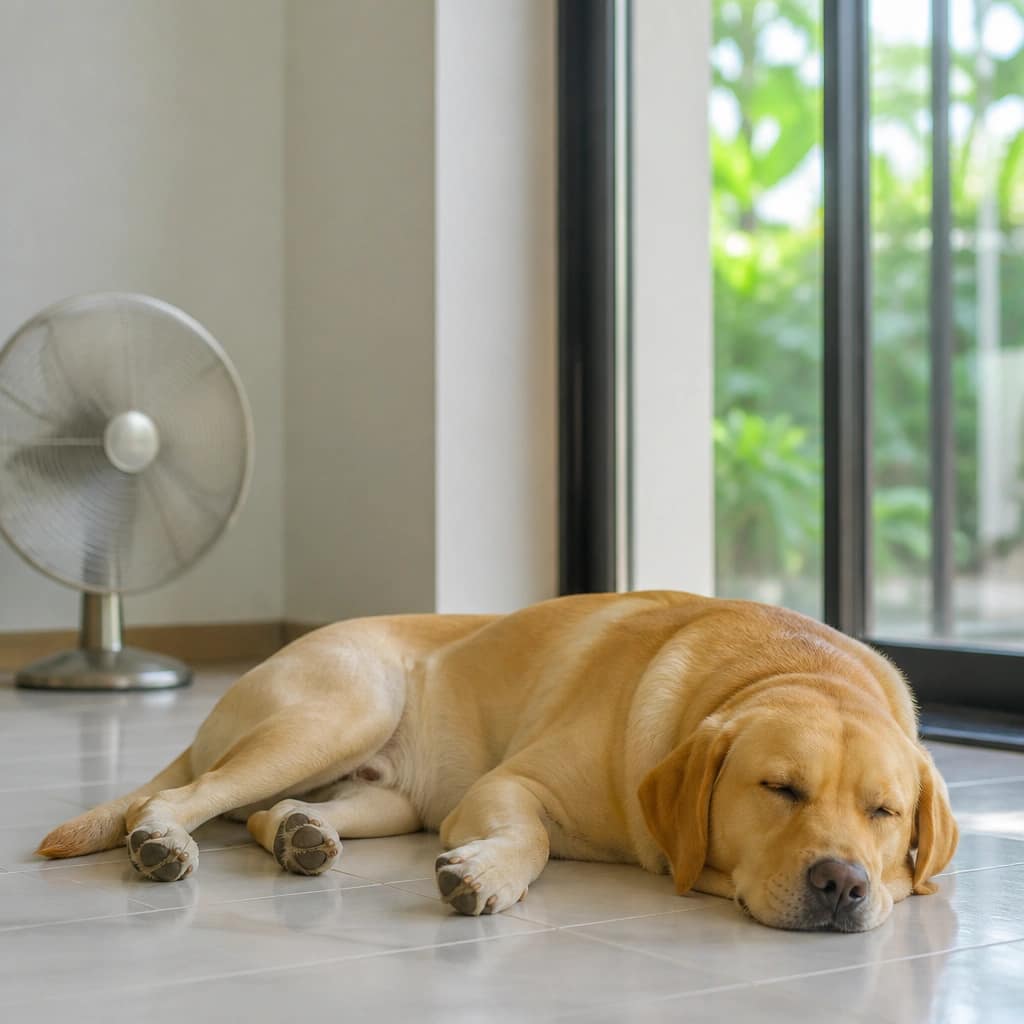
You don’t always need to buy a new bed. Simple changes can make a big difference.
Move the bed to a cooler spot. Avoid direct sunlight, windows, and heat vents. A shaded corner with good airflow works best.
Place a fan near the bed. Air movement helps your dog cool down through panting. It also helps the bed surface stay cooler.
Use a cooling mat or towel underneath the bed cover. These absorb and dissipate body heat. Just make sure the mat is safe for your dog to lie on.
For dogs in crates, ensure proper ventilation. A crate with solid sides traps more heat. A wire crate with good airflow is a safer choice for warm weather.
Common Mistakes Owners Make
One big mistake is assuming all beds are the same. A thick, plush bed might look cozy. But it can be a heat trap for a double-coated breed.
Another mistake is ignoring the bed’s cover. Many owners focus on foam quality but forget the fabric. A polyester cover can hold heat, even if the foam is cooling.
Placing a bed near a sunny window is another error. The sun heats the bed surface even if the room is cool. Check the bed temperature with your hand before your dog lies down.
Some owners also choose a bed that is too large. A big bed means your dog can’t warm it with their body. But in hot weather, a large bed can feel like a warm blanket because the foam holds ambient heat.
When to Call the Vet
Heatstroke is a medical emergency. If your dog shows signs of overheating and doesn’t cool down quickly, call your vet.
Signs that require immediate attention include:
- Heavy panting that doesn’t stop after 10 minutes of rest
- Bright red or blue gums
- Vomiting or diarrhea
- Collapse or weakness
- Seizures
Move your dog to a cool area. Offer small amounts of cool water. Do not use ice water, as it can cause shock.
Wet their paws and ears with cool water. Then get to the vet.
Quick Reference Guide
| Bed Type | Heat Risk | Best For |
|---|---|---|
| Memory foam (standard) | High | Cool climates, short-haired breeds |
| Gel-infused foam | Moderate | Most dogs, warm climates |
| Elevated cot | Low | Hot weather, double-coated breeds |
| Thick bolster bed | Moderate to High | Dogs that need head support |
| Thin crate pad | Low | Crates, travel, warm rooms |
| Heated bed | High (in warm weather) | Cold weather only |
Keep this table in mind when choosing a bed. The right choice depends on your dog’s breed, age, and environment. Our bed size guide can help you find the right fit.
Frequently Asked Questions
What types of dog beds are safest for hot weather?
Elevated cot beds are the safest choice. They allow air to circulate underneath, preventing heat buildup. Gel-infused foam beds with breathable cotton covers are also good.
Avoid thick memory foam or beds with non-breathable waterproof liners.
Can a cooling dog bed really prevent overheating?
Yes, if it works properly. Cooling beds use gel or phase-change materials to absorb body heat. They help keep the surface temperature lower.
But they are not a substitute for a cool room and good airflow.
Should I use a heated dog bed in warm weather?
No. Heated beds are designed for cold weather only. Using one in warm weather increases the risk of heat stress.
Switch to a standard or cooling bed when temperatures rise. Our heated bed guide explains safe seasonal use.
How can I tell if my dog’s bed is too warm?
Place your hand on the bed surface after your dog has been lying on it for 10 minutes. If it feels noticeably warm, it is trapping heat. Watch for your dog panting heavily or moving off the bed to lie on a cool floor.
Is a crate pad safer than a thick bed for overheating?
Yes. Crate pads are thinner and allow more airflow than thick foam beds. They also sit on a wire or plastic base that provides ventilation underneath.
This makes them a better choice for warm environments.


