

Why Does My Dog Rotate Between Different Beds?
Dogs rotate between beds for several normal reasons. They might be seeking a cooler or warmer surface. Scent and familiarity also play a large role.
In most cases, it is harmless behavior. If your dog seems restless or shows signs of pain, a vet check is wise.
It is not unusual for a dog to switch between beds throughout the day. You might see them nap on one bed in the morning, move to another in the afternoon, then finish the night on the floor. Why does my dog rotate between different beds?
The short answer is that most dogs do this for perfectly normal reasons like temperature regulation, scent comfort, or instinct.
Adult dogs sleep around 12 to 14 hours a day. During that time, they naturally change positions and surfaces to stay comfortable. Understanding the reasons behind this behavior helps you decide whether it is simply a preference or something worth checking with your vet.
Is This Normal or a Problem to Worry About
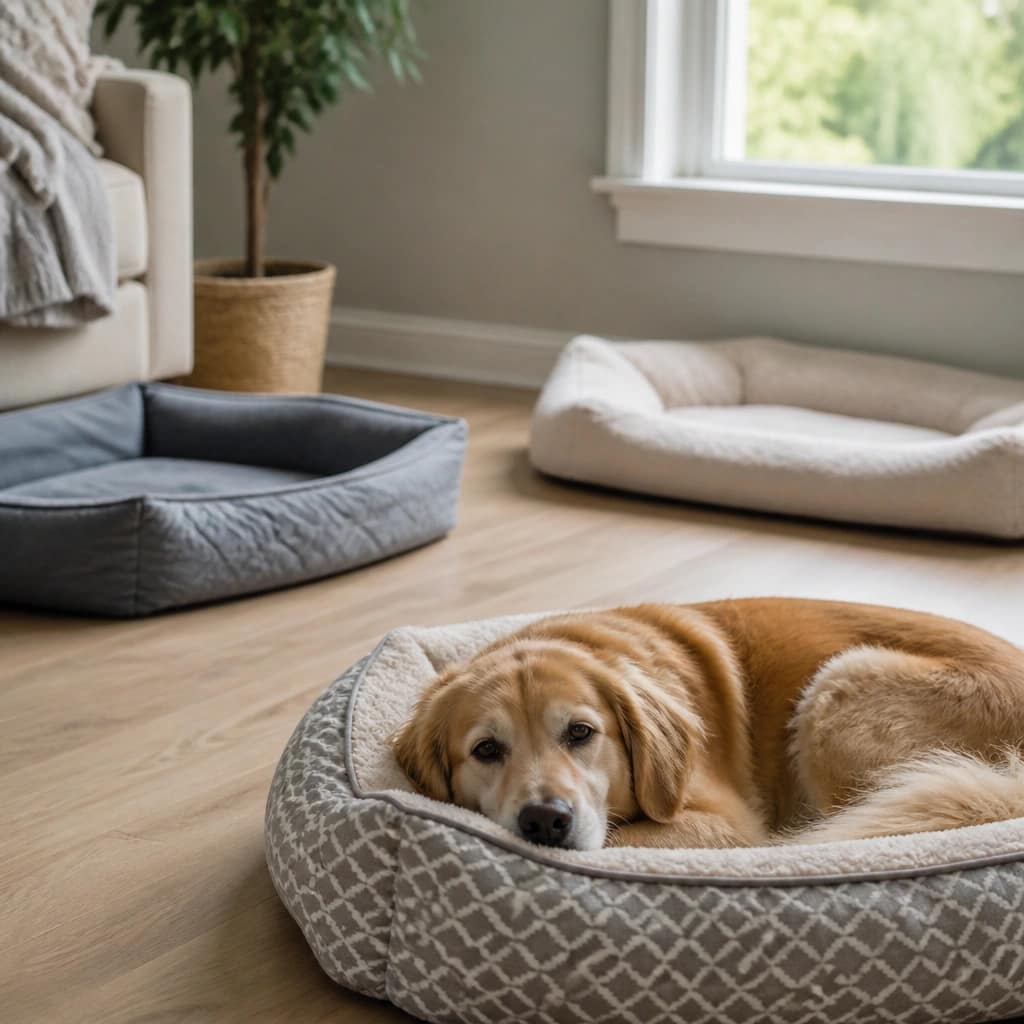
Usually, switching between beds is a healthy sign. Dogs are smart about finding the most comfortable spot at any given moment. A dog that rotates beds throughout the day is likely just responding to its body’s needs.
However, there are times when it could signal a problem. Watch for these red flags:
- The dog seems unable to settle for more than a few minutes
- You notice limping or stiffness after resting
- The dog whines or pants while switching between beds
- Bed rotation happens only at night and disrupts sleep
If any of those sound familiar, the behavior might be related to discomfort rather than preference. We will cover when to involve your vet later.
The Main Reasons Dogs Switch Between Beds
Comfort and Temperature Preferences
Dogs run warmer than humans. Their body temperature sits around 101 to 102.5°F. That means they feel heat and cold differently than we do.
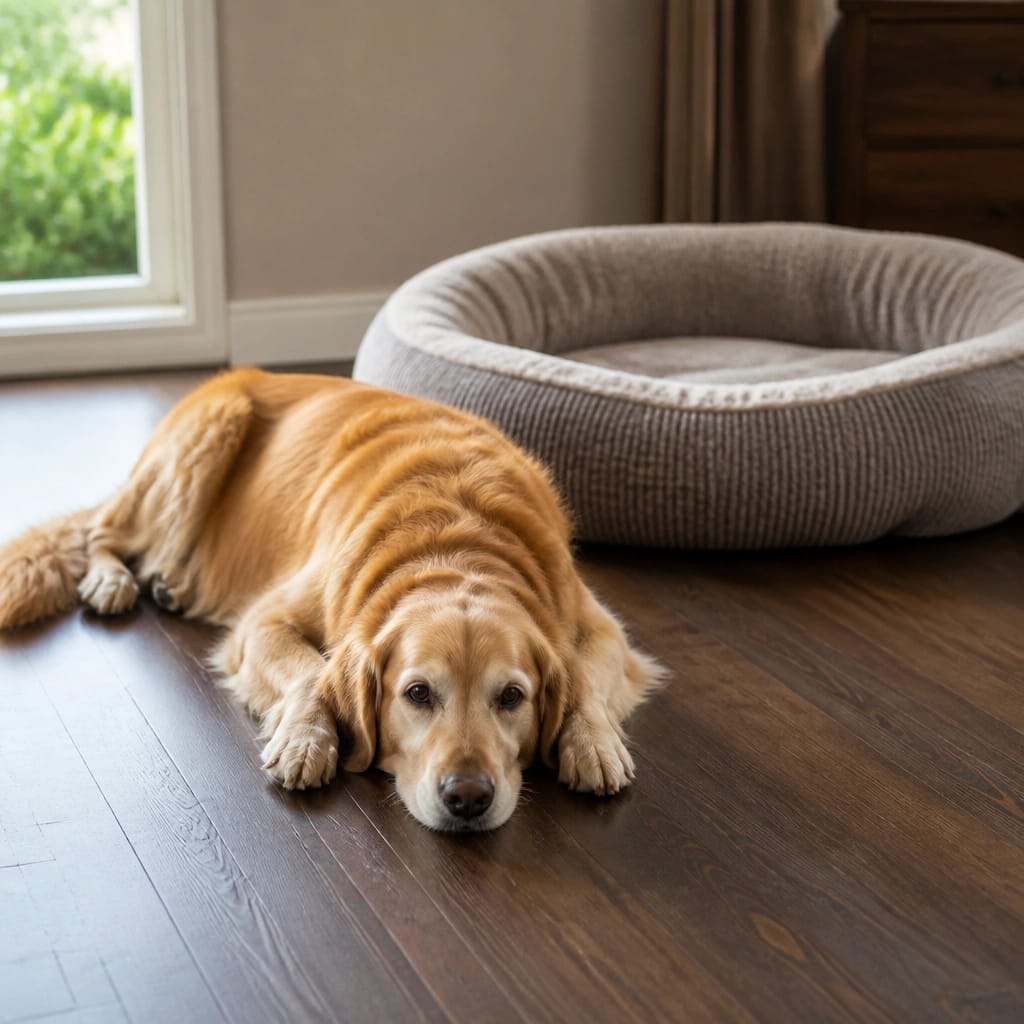
A thick, plush bed that feels cozy in winter can feel suffocating in summer. When your dog moves from a padded bed to a cool tile floor, it is often trying to cool down. When it moves from the floor to a bed with raised bolsters, it may be seeking warmth or a sense of security.
Temperature is probably the most common reason for bed rotation. If your home has different temperatures in different rooms, your dog will naturally gravitate toward the most comfortable spot at that time of day.
Scent and Familiarity
Dogs rely heavily on their sense of smell. A bed that has been slept in for a few days carries the dog’s own scent. That scent is calming.
But after a while, the bed can also pick up odors from the environment, other pets, or even leftover food crumbs.
Rotating between beds lets your dog choose a spot that smells most like “home” at that moment. It is similar to why dogs sometimes sleep on your clothes. Familiar scents lower stress.
If you recently washed a bed, your dog might avoid it temporarily until the scent returns.
Nesting Instincts and Circling
Before lying down, dogs often circle or scratch at their bed. This is a leftover instinct from wild ancestors who patted down grass or leaves. Rotating between beds can be an extension of that nesting behavior.
Some dogs simply enjoy rearranging their sleeping area. They might prefer a different bed for different types of rest, like short naps versus deep sleep. This is especially true for nervous or protective sleepers who change positions frequently to keep watch.
When you understand these natural drives, it is easy to see why bed rotation is usually nothing to worry about. For guidance on where to place beds to support these preferences, check out our guide on a good spot for your dog’s bed.
When Age and Health Play a Role

Puppies and High-Energy Dogs
Puppies rotate between beds more often than adult dogs. They have shorter attention spans and more energy. They might nap hard on one bed, wake up, play, then flop onto a different surface.
Puppy owners often report that their dog uses every available bed and the floor in the same hour. This is normal exploration. As long as the puppy settles for real sleep, it is not a problem.
High-energy adult breeds with a lot of drive, like herding or sporting dogs, also tend to switch beds more. They are more aware of their environment and may prefer a bed with a view or one near their owner.
Senior Dogs and Joint Pain
Older dogs are the group where bed rotation deserves the most attention. Dogs with arthritis or hip dysplasia often shift positions frequently to find relief. A bed that was comfortable an hour ago might now press on a sore joint.
Senior dogs may start the night on an orthopedic bed, move to a cooler floor, then return to the bed. The floor can feel better on inflamed joints because it is hard and cool. But the floor offers no cushioning, which can make stiffness worse in the morning.
If your senior dog is newly rotating beds more often, consider upgrading to a thicker orthopedic bed with more support. The American Veterinary Medical Association recommends paying attention to changes in sleeping behavior as a possible early sign of joint disease. If the behavior comes with limping or reluctance to jump, a vet check is smart.
How Bed Type and Placement Affect Rotation
Bolster Beds vs Flat Beds
The shape of the bed matters. Bolster beds have raised edges that let dogs rest their head or curl into a nest. Flat beds or pads offer open space for stretching out.
Some dogs prefer one style for naps and another for deep sleep. A dog that rotates between a bolster bed and a flat bed may simply be choosing the right shape for that sleep posture.
| Bed Type | Best For | Common Rotation Pattern |
|---|---|---|
| Bolster bed | Curling up, head support, security | Used for short cozy naps |
| Flat bed/pad | Sprawling out, cooling off | Used for long stretches in warmer weather |
| Orthopedic foam | Joint relief, firm support | Preferred by seniors and dogs with arthritis |
Bed Location and Room Temperature
Where you place a bed directly influences whether your dog uses it. A bed in a sunny spot might be perfect for a winter morning but too hot by afternoon. A bed in a drafty hallway could be avoided in winter but loved in summer.
Dogs also rotate according to their owner’s location. Many dogs want to be near you during the day but prefer their own bed at night. This is why you might see the dog use a living room bed all evening, then move to a bedroom bed at bedtime.
Our article on where to put your dog’s bed covers the best spots for different times of day and seasons.
Signs That Rotation Might Signal Discomfort
Even though rotation is usually normal, certain behaviors should prompt a closer look. Watch for:
- Reluctance to lie down at all
- Repeatedly circling a bed without settling
- Whining or crying when changing position
- Licking or chewing at a specific joint after resting
- Only sleeping on hard surfaces, avoiding all beds
If your dog shows any of these signs along with bed rotation, discomfort could be the cause. Sometimes the issue is the bed itself. An old bed with flattened foam offers no support.
A bed that is too small forces the dog into awkward positions.
When you notice these patterns, check your dog’s beds for wear and consider whether they still provide proper support. The right bed for an aging dog or a dog with anxiety differs from what a healthy young dog needs. You can compare options like crate pads versus mats or beds designed for burrowing dogs to find the best fit.
We have covered the first five main sections. The remaining sections will explore how many beds a dog actually needs, common mistakes owners make, when to visit the vet, a quick decision guide, FAQs, and a final takeaway.
How Many Beds Does a Dog Actually Need
One bed is enough, but two is often better. A second bed lets your dog choose based on temperature, location, or mood. If you have a multi-level home or multiple rooms your dog uses, a bed in each main area works well.
The right number depends on your dog’s habits and your home layout. Many dogs appreciate having a bed in the living room and another in the bedroom.
Common Mistakes Owners Make With Multiple Beds
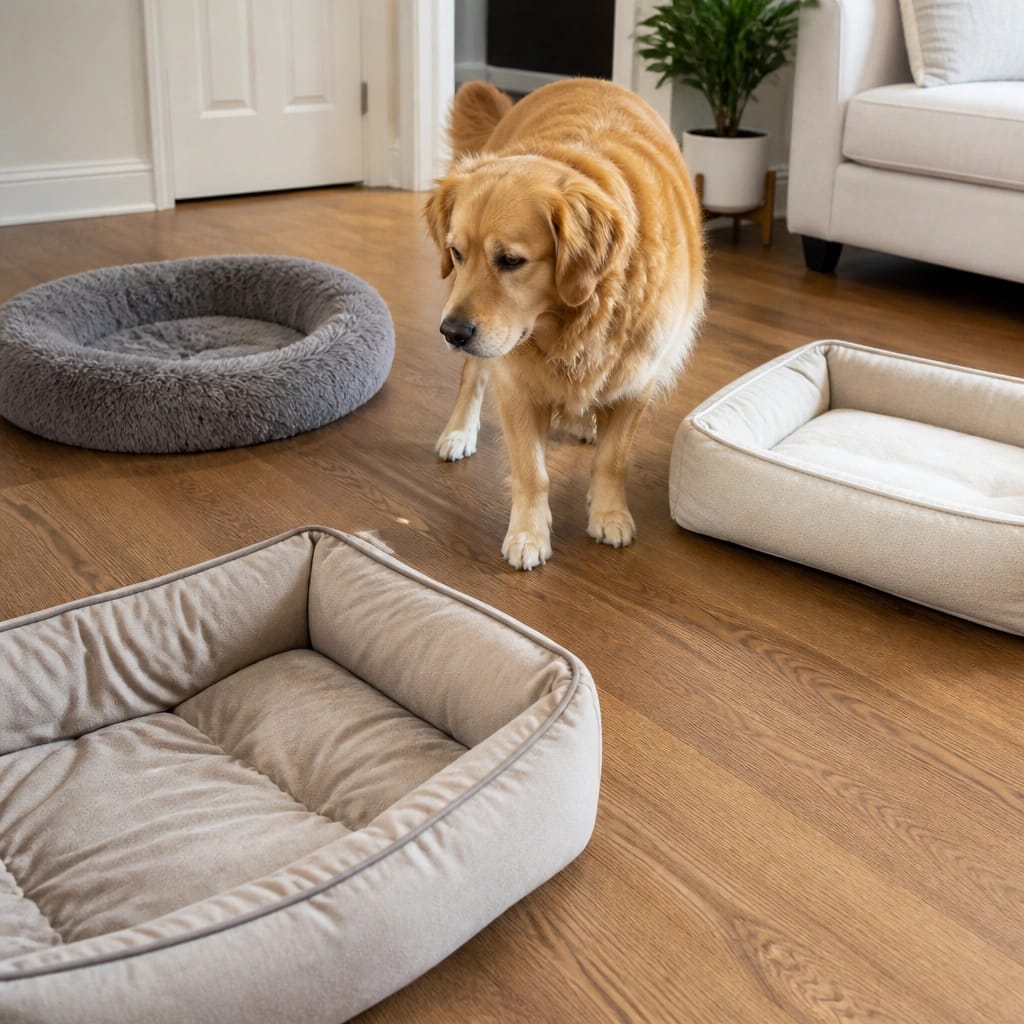
Placing all beds in the same room defeats the purpose. Your dog rotates because different spots offer different benefits. Another mistake is using the same type of bed everywhere.
If all beds are thick and warm, your dog may prefer the floor. Mix bed styles, such as a cooler flat bed in one spot and a cozy bolster bed in another. Also, avoid washing all beds at once.
Keep a familiar scent on at least one bed so your dog has a comforting option.
When to Check With Your Vet
See a vet if bed rotation comes with limping, stiffness, or crying when changing positions. A dog that cannot settle for more than a few minutes may be in pain. Senior dogs or dogs with a history of joint issues should be evaluated when rotation increases suddenly.
The AVMA advises watching for changes in sleeping behavior as a potential early sign of arthritis. Your vet can check for underlying conditions and recommend appropriate support.
Quick Decision Guide for Dog Bed Rotation
| If your dog… | Likely reason | What to try |
|---|---|---|
| Moves to the floor in summer | Too warm | Switch to a cooler bed or elevated cot |
| Rotates beds at night only | Seeking your scent or comfort | Place a worn shirt on the bed |
| Cannot settle for more than a minute | Possible pain or anxiety | Vet check and consider a calming bed |
| Changes beds after washing | Lost familiar scent | Rub an unwashed blanket on the bed |
Frequently Asked Questions
Is it normal for my dog to sleep in a different bed every night?
Yes. Many dogs rotate based on temperature, scent, or mood. It is usually harmless.
Should I stop my dog from switching beds?
No. Let your dog choose unless you see signs of pain or restless behavior.
Does having more beds confuse my dog?
Not typically. Dogs naturally prefer options and will pick what feels best at that moment.
Can bed rotation mean my dog is anxious?
Sometimes. If your dog paces between beds and pants, anxiety or noise phobia could be the cause.
How often should I wash my dog’s bed?
Every two to four weeks. Wash in unscented detergent and let the bed keep some familiar smell.
Final Takeaway
Most dogs rotate between beds for simple reasons like comfort, temperature, and scent. It is usually a sign they are making good choices. Watch for pain signals, keep beds clean and supportive, and let your dog enjoy the variety.
If you notice stiffness or trouble settling, a vet visit is wise. Otherwise, relax and let your dog sleep where it feels best.


