

Can Dog Bed Foam Be Recycled?
Can Dog Bed Foam Be Recycled? The short answer is yes, but only under very specific conditions. Most dog beds use polyurethane foam, and whether you can recycle it depends on its cleanliness, the exact foam type, and whether a facility near you accepts it.
The real challenge is that pet bedding foam often gets contaminated with urine, dander, or odor. According to the Polyurethane Foam Association, less than 10 percent of post-consumer foam gets recycled in the US. Understanding what your local recycler actually takes is the first step to keeping that foam out of a landfill.
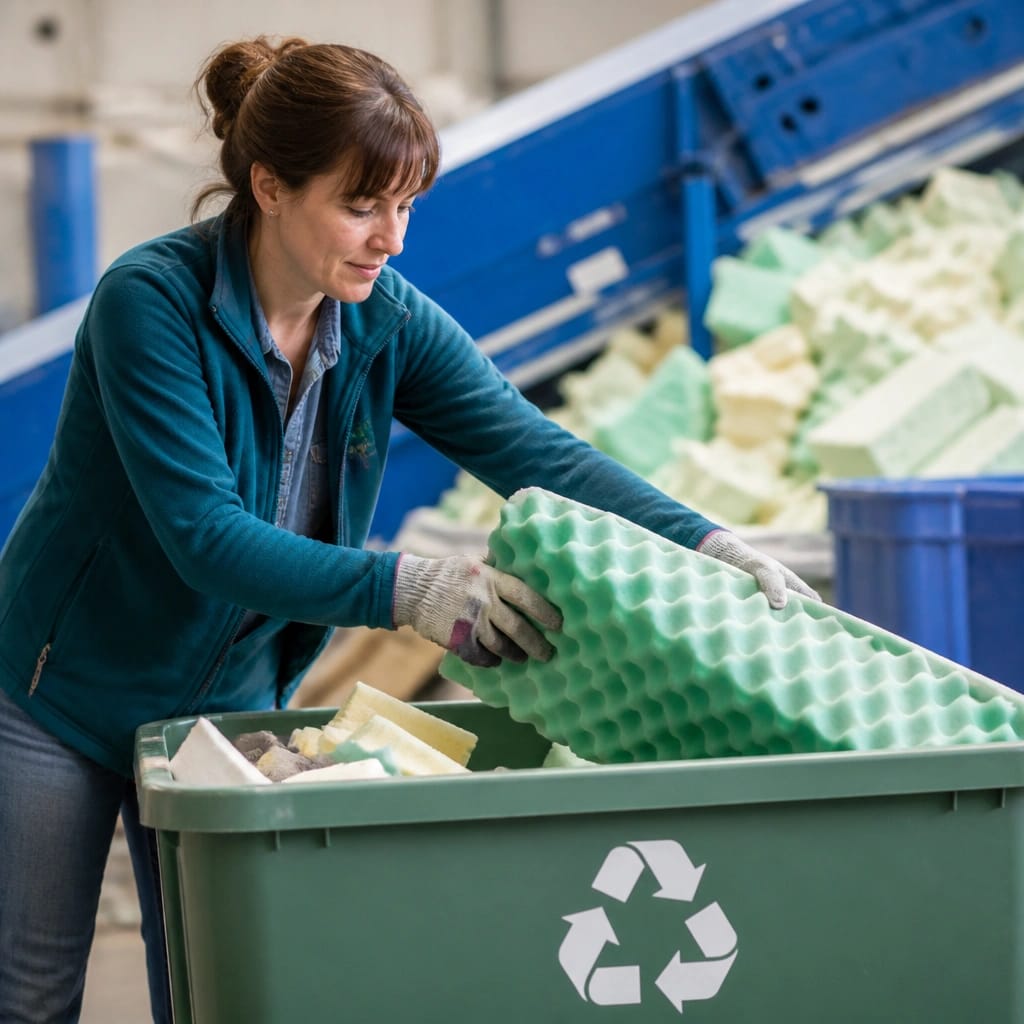
Why Most Dog Bed Foam Can’t Go in Your Recycling Bin
Curbside recycling programs almost never accept foam of any kind. Here’s why:
- Contamination risk. Dog bed foam absorbs moisture, urine, and odors. Recyclers need clean material, and a single contaminated batch can ruin an entire processing run.
- No recycling code. Unlike plastic bottles, polyurethane foam doesn’t have a universal resin identification code. Most sorting facilities have no way to identify it on their line.
- Volume and density. Foam is bulky and lightweight. It takes up huge space in trucks and processing equipment, making it expensive to handle.
- Mixed materials. Many dog beds glue foam to a waterproof liner or attach it with staples. These bonded layers are nearly impossible to separate for recycling.
If your dog bed has visible soiling, heavy odor, or multiple glued layers, the foam is almost certainly headed for the landfill. That’s frustrating, but it’s the reality of current recycling infrastructure.

What Type of Foam Your Dog Bed Actually Uses
Not all foam is the same. Knowing what you have determines whether recycling is even possible.

| Foam Type | Recyclability | Common in Dog Beds |
|---|---|---|
| Polyurethane foam (slab) | Potentially recyclable if clean | Most standard beds, orthopedic pads |
| Memory foam | Limited recyclability | Orthopedic and senior dog beds |
| Shredded foam | Rarely recyclable | Donut beds, bolsters, stuffing |
| Polyester fiberfill | Not recyclable curbside | Cheap beds, insert pillows |
| Rebonded foam | Sometimes accepted | Crate pads, dense support layers |
You can check the bed’s label or manufacturer documentation. Look for a CertiPUR-US certification tag, which confirms the foam’s chemical makeup. If the bed has no label, you may need to cut a small corner to see the foam structure.
That matters when you’re also considering how to get dog urine smell out of a memory foam bed, because the same foam type affects cleaning options.
The Three Conditions That Determine if Foam Is Recyclable
Recycling your dog bed foam comes down to three yes-or-no questions. If you answer no to any of them, recycling is off the table.
Condition 1: Is the foam clean and dry? No urine, no heavy dirt, no mold. Recyclers use the same standard as textile recycling. If it’s soiled, it’s garbage.
Condition 2: Is it standard polyurethane or memory foam? Many specialty foams with fire retardants, antimicrobial coatings, or glued layers are not accepted. Plain slab polyurethane has the best chance.
Condition 3: Does a foam recycler operate near you? This is the biggest roadblock. Most areas have zero foam recycling options. You might need to drive an hour or more to a drop-off center.
If all three conditions are met, you can proceed. If any one fails, you need to look at alternatives like donation or upcycling.
Your Dog Bed Foam Recycling Decision Tree
Follow the conditions in order. This workflow saves you from wasting time on a dead end.
Condition 1: Is the Foam Clean and Free of Contamination?
Look at the foam. Smell it. If there’s any urine stain, heavy dirt, or musty odor, stop.
No recycler will accept it. Dog beds that have been used for a while are often too contaminated, especially if your dog has a habit of digging or scratching at their bed before lying down, which pushes dirt deeper into the foam.
If clean: Move to Condition 2.
If dirty: Skip to the alternatives section below.
Condition 2: What Kind of Foam Are You Dealing With?
Check the label or cut a small slit. The foam should be a uniform slab of polyurethane. If it’s shredded pieces held together by glue, or if it’s bonded to a liner, it’s likely not recyclable.
If standard polyurethane slab: Move to Condition 3.
If shredded, bonded, or fiberfill: Look for upcycling or disposal options.
Condition 3: Does Your Area Have a Foam Recycler?
Use a search engine or your local waste authority website. Look for “polyurethane foam recycling” or “mattress recycling” in your area. Some mattress recyclers also accept dog bed foam.
If yes: Follow the preparation steps below.
If no: Consider donation or upcycling.
How to Find a Foam Recycler Near You
Finding a recycler takes a bit of digging, but it’s worth the effort.
- Check your state’s mattress recycling program. As of 2026, California, Connecticut, Rhode Island, Oregon, and a few others have statewide mattress recycling programs. Many of these accept foam from pet beds alongside mattresses.
- Call local transfer stations. Some waste facilities hold periodic foam collection events. Ask if they know of any drop-off locations.
- Search for “foam densifier” or “carpet pad recycler” in your area. These facilities often handle polyurethane foam.
- Contact the manufacturer. Some dog bed companies offer a take-back program. If you bought a bed from a brand that uses chew proof materials, they might also accept returns for recycling.
If you’re in a rural area, you may have no options within a reasonable drive. In that case, the next best thing is to donate or upcycle the foam.
Step-by-Step: Preparing Your Dog Bed Foam for Recycling
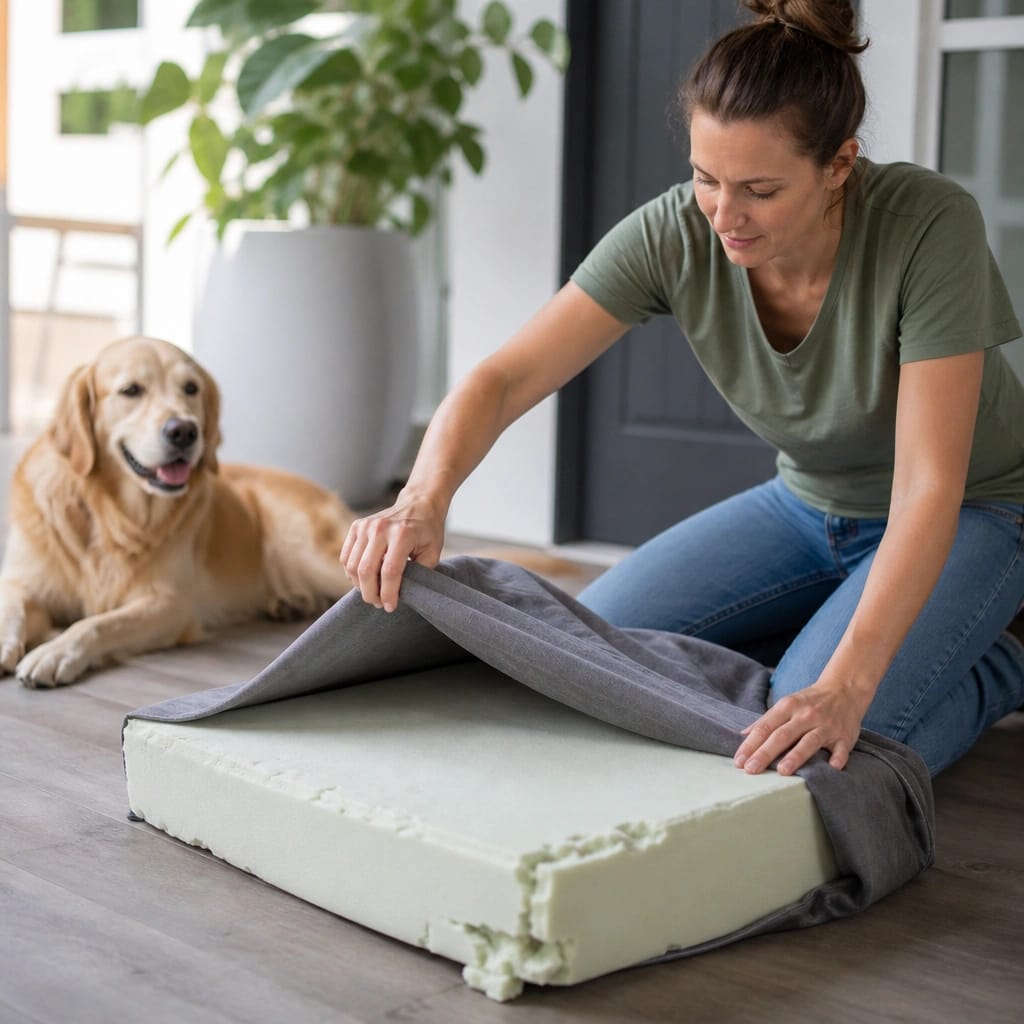
If you’ve confirmed all three conditions, here’s how to prepare the foam properly.
Start by removing the cover completely. Most dog bed covers have a zipper. Cut the cover off if it’s stapled or glued, but avoid damaging the foam.
Wash the cover separately and consider where to place a dog bed in the house when you replace it.
Inspect the foam one more time after removing the cover. Hidden stains or mold might be on the underside. If it’s clean, cut the foam into pieces no larger than 2 feet by 2 feet.
Many recyclers impose size limits to fit their densifying equipment.
Bag the foam in clear contractor bags. Do not use black bags. Clear bags let recyclers confirm the foam is clean without opening them.
Label the bag “clean polyurethane foam” if the facility requests it.
What to Do When Recycling Isn’t an Option
Most dog owners end up here. The foam is dirty, the wrong type, or there’s no recycler nearby. You still have good options.
Donating to Animal Shelters
Many shelters accept clean, gently used dog beds. Call ahead first. Some organizations only take beds with removable, washable covers.
If the foam is still firm and odor-free, this keeps it out of the landfill and helps a dog in need.
Shelters often prefer beds that are the right size for a puppy versus an adult dog. So if your bed is small or large, mention that when you call.
Upcycling Into New Uses
Clean foam has a second life. Cut it into smaller pieces for outdoor pet bedding, garage knee pads, or cushion inserts for a DIY project. Our research shows that owners often use old foam as a liner for winter dog houses or as a pad under a heated dog bed for extra insulation.
You can also use it as a base layer for crates or carriers. Just wrap it in a washable cover.
Safe Disposal When Nothing Else Works
If the foam is soiled or there are no other options, landfill disposal is sometimes the reality. Check your local bulk waste rules. Some areas require you to bag the foam separately.
Never burn polyurethane foam. It releases toxic fumes including hydrogen cyanide and isocyanates.
Common Mistakes That Send Recyclable Foam to the Landfill
A few simple errors can ruin a perfectly good recycling attempt.
Not checking with the recycler first. Some facilities accept only drop-offs, not curbside pickup. Others charge a fee per cubic foot. Call ahead to confirm their rules.
Forgetting to remove the cover. Recyclers want bare foam. Fabric covers, staples, and glued liners contaminate the batch. This is especially important if your dog has a tendency to lick or chew their bed, which can embed fabric fibers into the foam surface.
Assuming memory foam is the same as polyurethane. Memory foam has different chemical properties. Some recyclers reject it outright. Check their specific guidelines.
Bundling foam with other recyclables. Polyurethane foam goes in a separate stream. Never mix it with cardboard, plastic, or metal. It ruins the sorting process.
Frequently Asked Questions About Dog Bed Foam Recycling
Can I put dog bed foam in my curbside recycling bin?
No. Curbside programs almost never accept polyurethane foam. It requires specialized handling at a dedicated foam recycling facility.
Is memory foam from dog beds recyclable?
Sometimes. Memory foam has a different chemical structure than standard polyurethane. Some recyclers accept it, but many do not.
Call ahead to confirm.
How do I know if my dog bed foam is recyclable?
Check the label for CertiPUR-US certification. Look for a uniform slab of polyurethane foam with no glued layers. The foam must be clean and dry with no stains or odor.
What can I do with old dog bed foam if I can’t recycle it?
Donate clean foam to animal shelters. Upcycle it into crate pads, outdoor cushions, or garage knee pads. If it’s soiled, dispose of it in the trash according to local bulk waste rules.
Does the foam type affect how I clean it for recycling?
Yes. Standard polyurethane can be vacuumed and spot cleaned. Memory foam absorbs moisture and is harder to dry.
If the foam has any odor, it’s likely too contaminated for recycling.
What to Do Next Based on Your Situation
Start by taking a hard look at your foam. Is it clean? Is it standard polyurethane?
Does a recycler exist near you? If you answer yes to all three, follow the preparation steps above.
If you’re stuck, try donating or upcycling. Every pound of foam that stays out of the landfill makes a difference. And when you buy a new bed, look for one with a removable cover and a clear foam certification.
That makes the next replacement cycle easier.
The best bed for a dog with anxiety or noise phobia might also be one that’s easier to recycle later. It’s worth considering from the start.


