

Where Should You Place a Dog’s Bed in the House?
Where Should You Place a Dog’s Bed in the House? That question trips up most new owners at least once. The right answer depends on your dog’s age, temperament, and how your household actually moves through the day.
Most dogs just want to stay near their people without sitting in a busy path.
Research on canine sleep patterns shows adult dogs rest 12 to 14 hours daily. As of 2026, veterinary guidance consistently points to three principles: keep the bed out of foot traffic, away from temperature extremes, and within sight of family activity. Everything else is about matching the room to your dog’s needs.
Where should you place a dog’s bed in the house? In a quiet corner near family activity, out of heavy foot traffic. Living rooms work well for most adult dogs. Bedrooms suit puppies, senior dogs, and anxious pets. Test different spots until your dog settles naturally.
Why Your Dog’s Bed Location Actually Matters
Location is part of the bed itself. A great bed in the wrong spot gets ignored. A worn blanket in the right corner gets used every night.
Your dog judges the space first, then the mattress.
Watch where your dog naps on their own. That choice tells you what they value. If they pick a corner against the wall with a view of the room, they want security with visibility.
Match the bed to that natural preference and most placement problems disappear.
Start With Your Dog’s Needs: Age, Temperament, and Routine
Dogs want different things at different life stages. Puppies need safety. Adult dogs want comfort and inclusion.
Senior dogs need warmth and easy access. Anxiety changes everything further.
Puppies: Close to You, Especially at Night
Keep the crate or bed in your bedroom for the first few months. Hearing you nearby calms them. It also makes house training easier because you catch the signals sooner.
Per American Kennel Club house training guidance, young puppies should not sleep alone overnight.
Adult Dogs: Flexible but Opinionated
Most adult dogs settle well into a quiet corner near family activity. They still have preferences. Watch where they lie down on their own.
Dogs that curl up prefer a bed with a raised rim for head support. Dogs that stretch flat need more open space. Check the sizing chart for dog beds by weight before picking a mattress.
Senior Dogs: Comfort, Accessibility, and Warmth
Senior dogs with arthritis need a low-profile bed they can step into without jumping. A memory foam option provides the joint support veterinarians recommend. Place it on the same floor where the family spends daylight hours.
A senior dog should not climb stairs just to rest near you. In winter, a temperature-controlled pet pad helps ease stiff joints.
Anxious or Nervous Dogs: Quiet, Den-Like Spaces
Anxious dogs need a covered retreat. Cave-style beds or crate pads both work because they match the denning instinct. They also block visual stimulation.
Place the bed away from street windows and busy corners. An enclosed den-style bed gives your dog a hiding place without leaving the room.
Read Your Home’s Traffic and Temperature Patterns
Trace your own paths through the house. The gap between couch and TV. The hallway to the bathroom.
The route from kitchen to dining table. Those are high-traffic zones. A bed placed in any of them gets kicked, stepped on, or avoided entirely.
Identifying High-Traffic Walkways and Tripping Hazards
Dogs learn which paths are busy within days. If the bed sits in a busy route, your dog will sleep elsewhere. Choose a corner with at least one wall behind it.
That gives your dog a sense of protection.
Avoiding Drafts, Cold Exterior Walls, and Windows
Drafty spots next to doors and windows make any bed less inviting. Dogs prefer warmth, not cold air on their backs. Place the bed against an interior wall instead.
That blocks airflow and provides a solid backing.
Steering Clear of Heat Sources and Direct Sunlight
Morning sun can overheat a bed within an hour. Memory foam absorbs heat especially fast. Keep beds away from radiators, vents, and direct sunlight.
Burn risk is real, especially for senior dogs.
Bedroom vs. Living Room: The Main Decision
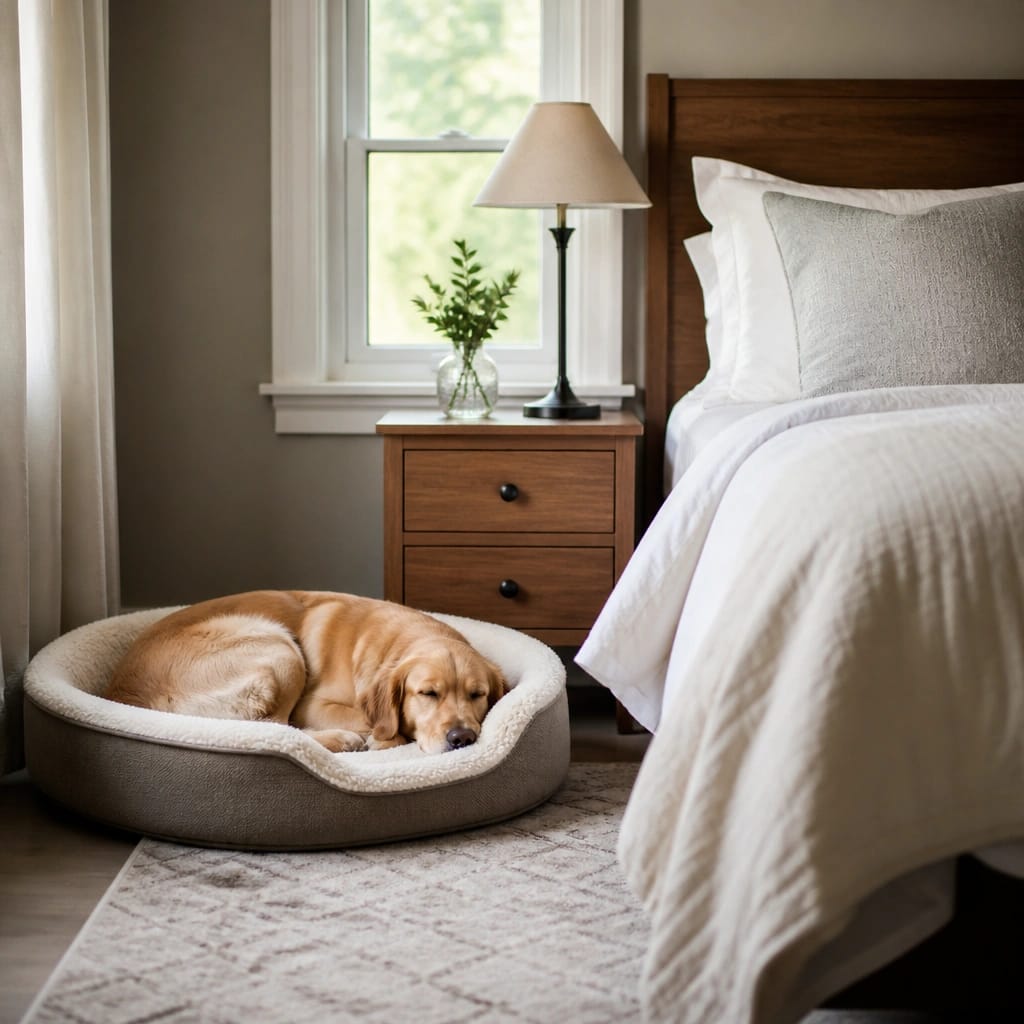
The bedroom works best for puppies, anxious dogs, and strong-bonding breeds. Dogs follow their people. If your dog already sleeps curled against you, moving the bed to the same room is a natural step.
Living rooms suit adult dogs that settle near the couch. They want a view of family movement. A living room bed gives them that inclusion without interrupting your sleep.
The middle ground is a two-bed system. Daytime bed in the living room, nighttime bed in the bedroom. The Humane Society supports alternating sleep spaces because it respects both your routine and your dog’s natural sleep cycle.
If your dog prefers resting against a soft backrest, a raised-edge couch bed fits that tendency well.
How to Test a New Bed Location
Give every new location three to five nights. That is enough time for a dog to adjust. Watch closely during that window.
Observe Your Dog’s Natural Sleeping Habits
Before moving anything, note where your dog naps without the bed. Room, corner, surface. Temperature and visibility drive those choices.
If your dog consistently avoids their bed, review the most common reasons dogs sleep on the floor.
Try a Spot for Several Nights
Test one location at a time. Do not switch rooms every night. If your dog sleeps through the night without getting up, you found the right spot.
If they keep abandoning the bed, move it.
Watch for Signs of Comfort or Avoidance
Comfort looks like stretching, curling up, and staying asleep through household noise. Avoidance looks like circling, pawing, and walking away within minutes. Never punish your dog for avoiding their bed.
Punishment creates anxiety and makes the problem worse.
If your dog circles, paws, and walks away within minutes, the bed is in the wrong spot or the wrong material. Warmth matters too. A waterproof pet bed handles accidents and spills cleanly, while a cooling cot for summer avoids overheating on hot days.
Room-by-Room Placement Guide
Not every room works for a permanent bed. Some spaces create more problems than they solve. Here is what to expect from each common location.
Kitchen and Dining Areas: Skip Them
Kitchens have hard floors, hot surfaces, and constant foot movement. Someone always carries something heavy or sharp. A bed here becomes a tripping hazard plus a cleaning problem.
Use a temporary mat instead if your dog wants to supervise meal prep.
Hallways and Entryways: Avoid
Hallways are narrow by definition. Every trip through the house disturbs a sleeping dog. Entryways get worse with doors opening and closing.
Neither location gives your dog the feeling of a safe retreat.
Home Office: Excellent Choice
Dogs want to be near their people. If you work from home, place a bed within sight of your desk. This keeps your dog calm and reduces attention-seeking behavior during calls.
Just keep it out of the direct path between your chair and the door.
Stairs and Landings: Dangerous
A bed at the top of the stairs gives your dog a great vantage point. It also creates a serious fall risk for you and your dog. In the dark, half-asleep humans trip easily.
Keep beds completely off stair landings.
Laundry Room and Utility Spaces: Rarely Ideal
Some dogs like the warmth and quiet of a laundry room. But appliance noise stresses many dogs. Also, these rooms often store cleaning chemicals and get very hot or very cold depending on the season.
Only use this space if no other option works for your home.
Common Mistakes When Choosing a Bed Spot
Most placement problems come down to a few repeat errors. Here is what owners get wrong and how to fix it.
| Mistake | Why It Fails | Better Approach |
|---|---|---|
| Bed in a busy hallway | Dog gets stepped on and never feels safe | Move to a protected corner |
| Bed next to a drafty window | Dog avoids the cold spot | Place against an interior wall |
| Bed in direct morning sun | Memory foam overheats | Choose a shaded area |
| Bed in a completely isolated room | Dog feels separated from the family | Keep within sight of household activity |
| Bed on a stair landing | Falls and tripping hazards | Find a flat floor location |
What to Do If Your Dog Simply Refuses Their Bed
You placed the bed perfectly in every way. Your dog still sleeps on the floor. That happens more often than people admit.
Rule Out a Bed Problem First
Some dogs dislike certain bed textures. Others need a different shape. Bolster-style pet beds give dogs a padded headrest they can lean against.
Donut-shaped calming beds suit dogs that curl into a tight ball. If you bought a flat pad and your dog always curled up before, they might need a raised edge for security.
Check for Underlying Anxiety or Pain
A sudden refusal to use a bed can signal pain, especially in senior dogs. Stiffness, limping, or reluctance to climb into the bed warrants a veterinary check. Sometimes anxiety drives the behavior.
If your dog follows you everywhere at home but avoids their own bed at night, address the underlying worry first. For more insight, review the reasons your dog may prefer your bed before assuming it is a placement problem.
Try a Different Room or a Second Bed
If your dog sleeps perfectly on your bed but ignores their own bed nearby, try moving theirs to a different corner or room entirely. Some dogs simply want proximity to you at ground level rather than a separate resting spot.
Frequently Asked Questions
Should the dog bed be in the bedroom or the living room?
Keep it in the bedroom for puppies, anxious dogs, and seniors with mobility issues. Put it in the living room for adult dogs that want to stay near family activity during the day. Many owners use two beds to cover both needs.
Why does my dog sleep on the floor instead of their bed?
The bed may be too warm, too thin, or placed in an uncomfortable spot. Dirt and hair can also accumulate in the fabric. Wash the bed cover regularly and check for lumps or collapsed foam that make it less inviting.
Where should a puppy’s bed be placed at night?
Puppies should sleep in the bedroom for the first few months. Being near you reduces nighttime anxiety and makes house training possible. Keep the crate or bed within earshot so you can respond when they stir.
Is it okay to put a dog bed in the laundry room?
It works for some dogs, but most prefer not to be isolated. Laundry rooms also have appliance noise and stored chemicals. Only use this space if no other room provides a quiet, safe spot.
Should the bed go against a wall or in the middle of the room?
Against a wall is almost always better. Walls provide security and reduce the feeling of being exposed. A bed in the middle of the room leaves your dog vulnerable from all sides.
How many beds does a dog need?
One bed works for dogs that stay in a single room. Two beds help in multi-story homes or when your dog splits time between day and night areas. Larger households often benefit from a bed in the main living space plus one in the bedroom.
When choosing the right space, match the bed to your dog’s habits. Watch where they nap. Notice whether they prefer busy rooms or quiet corners.
Then adjust the placement accordingly. Small changes, like moving the bed away from a draft or into a calmer corner, often solve the problem quickly.
The Bottom Line
The best spot for your dog’s bed balances three things: visibility, safety, and comfort. Your dog wants to see household activity without sitting in the middle of it. They want warmth, but not heat exposure.
They want a quiet corner, but not complete isolation.
Start with a protected corner in your main living area. Watch your dog for a few days. If they use the bed happily, you are done.
If not, move it and try again. Your dog’s behavior tells you exactly where they need to be.
Trust that instinct. Your dog isn’t being difficult when they reject a spot. They’re telling you something about the room, the temperature, or the level of activity.
Listen to that signal and adjust accordingly.
A well-placed bed strengthens your dog’s sense of security, improves their sleep, and reduces anxiety. It also keeps them off your furniture and out of your way. The effort you put into finding the right location pays off in calmer days and quieter nights, for both of you.
A Simple Decision Guide for the Perfect Spot
Run through these questions in order. Your answers land on the right placement.
| Question | If Yes | If No |
|---|---|---|
| Is your dog a puppy under 6 months? | Bedroom, near your bed | Move to next question |
| Does your dog have arthritis or mobility issues? | Same floor as family activity, low entry | Move to next question |
| Does your dog show anxiety when left alone? | Quiet corner with a view of the room | Move to next question |
| Does your dog nap near the couch during the day? | Living room corner against a wall | Bedroom placement |
Start with the protected corner in your main living area. Watch your dog for three to five nights. If they settle and sleep through, you are done.
If not, move the bed and test again.
FAQ: Quick Answers to Common Placement Questions
Should the dog bed be in the bedroom or the living room?
Keep it in the bedroom for puppies, anxious dogs, and seniors with mobility issues. Put it in the living room for adult dogs that want to stay near family activity during the day. Many owners use two beds to cover both needs.
Why does my dog sleep on the floor instead of their bed?
The bed may be too warm, too thin, or placed in an uncomfortable spot. Dirt and hair can also accumulate in the fabric. Wash the bed cover regularly and check for lumps or collapsed foam that make it less inviting.
Where should a puppy’s bed be placed at night?
Puppies should sleep in the bedroom for the first few months. Being near you reduces nighttime anxiety and makes house training possible. Keep the crate or bed within earshot so you can respond when they stir.
Is it okay to put a dog bed in the laundry room?
It works for some dogs, but most prefer not to be isolated. Laundry rooms also have appliance noise and stored chemicals. Only use this space if no other room provides a quiet, safe spot.
Should the bed go against a wall or in the middle of the room?
Against a wall is almost always better. Walls provide security and reduce the feeling of being exposed. A bed in the middle of the room leaves your dog vulnerable from all sides.
How many beds does a dog need?
One bed works for dogs that stay in a single room. Two beds help in multi-story homes or when your dog splits time between day and night areas. Larger households often benefit from a bed in the main living space plus one in the bedroom.
Final Recommendation: Where to Start First
Begin with a protected corner in your main living area. This covers most adult dogs and keeps them near family activity without sitting in a walkway. If your dog is a puppy, a senior, or shows anxiety, start with the bedroom instead.
Watch your dog for three to five nights. If they sleep through without getting up, you found the right spot. If they keep leaving the bed, move it and try again.
Your dog’s behavior tells you exactly where they need to be. Trust that signal and adjust accordingly.
A bed that sits unused after a week is not a failed purchase. It is a signal that something about the location, the bed type, or your dog’s routine needs adjusting. Try one change at a time.
Move the bed first. If that does not work, switch the bed style. Then re-evaluate your dog’s health and anxiety levels before assuming they simply do not like their bed.
The right placement makes a visible difference. Your dog will settle faster, stay asleep longer, and stop seeking out the couch or your bed. That is the clearest sign you have found the right spot.
Trust that quiet behavior, and leave the bed where it is. If your dog starts avoiding the bed again later, revisit the factors above and adjust from there.
Small shifts in light, temperature, or household routine can change how your dog feels about a spot. Revisit the placement anytime you rearrange furniture, change your work schedule, or bring home a new pet. A bed that worked for months can suddenly feel wrong after a minor change.
Keep the process simple. Watch your dog, trust their behavior, and adjust one thing at a time. That approach never fails.
The perfect spot is not a fixed location. It is the place where your dog settles fastest, sleeps longest, and looks most at ease. When you see that, you have found it.
That calm, settled posture says everything. When your dog stops scanning the room, stops readjusting the bed, and just sleeps, you have nailed it. Leave the bed alone and let them enjoy it.
One last tip: check the bed itself every few months. Foam breaks down, covers wear thin, and lumps appear. A worn bed will make your dog avoid even the perfect spot.
Replace the bed when it loses its shape, and your dog will keep using it happily for years.
The answer is always in your dog’s behavior. Watch where they choose to nap on their own. Follow that signal.
Start there, adjust based on what you see, and let your dog guide you to the right spot every time.
Common Mistakes That Make a Dog Avoid Their Bed
Placing the bed in a doorway or busy path is the biggest error. Your dog never feels secure there.
Another mistake is choosing a spot that’s too hot or too cold. Drafts and radiators both make the bed unappealing.
When Your Dog Refuses to Use Their Bed
Check the location first. Then check the bed itself for worn foam or slipping.
If both seem fine, watch for health signs like limping or stiffness. That warrants a vet visit.
Special Cases: Puppies, Senior Dogs, and Anxious Pets
Puppies need the bedroom at night for house training. Seniors need low-entry beds on the same floor as family activity.
Anxious dogs do best in a quiet corner with a clear view of the room. Avoid completely isolated spaces.
A Simple Decision Guide for the Perfect Spot
Puppy under 6 months? Start in the bedroom. Senior with mobility issues?
Same floor as the family. Anxious dog? Quiet corner with a view.
Otherwise, try the living room first.
FAQ: Quick Answers to Common Placement Questions
Should the bed go against a wall?
Yes. Walls provide security and reduce exposure.
How many beds does a dog need?
One bed for single-room dogs. Two beds for multi-story homes or split day and night areas.
Is it okay to keep my dog’s bed in my bedroom?
Yes. It works well for puppies, anxious dogs, and seniors that need nighttime reassurance. Just make sure you both get quality sleep.
Should I put my dog’s bed in a crate?
If your dog already uses a crate happily, yes. The bed makes the crate more comfortable. Just skip it during puppy house training, since accidents are harder to clean.
Why does my dog sleep on the floor instead of their bed?
The bed may be too warm, too firm, or in a spot your dog doesn’t like. Wash the cover and check for worn foam. If nothing changes, move the bed.
Is it better to place the bed near a window?
Not usually. Direct sunlight can overheat your dog, and window drafts get cold. If you do use a window spot, skip it during peak sun and cold months.
Can I move my dog’s bed if they don’t use it?
Absolutely. Try a new spot for a few nights. Watch your dog’s behavior and keep moving it until they settle.
Final Recommendation: Where to Start First
Start with a protected corner in your main living area. If your dog is a puppy, a senior, or anxious, begin with the bedroom instead. Watch for three to five nights.
Your dog’s behavior will tell you if you got it right.
If your dog settles quickly, sleeps through the night, and stays on the bed, you have found the right spot. If not, adjust one thing at a time and try again. The perfect placement comes from watching your dog and trusting what they show you.
Get that right, and the bed becomes their favorite place in the house.
A calm dog that sleeps through the night is the clearest signal you have done it right. Trust that quiet behavior and leave the bed in place. If your dog starts avoiding the bed later, revisit the location, check the bed’s condition, and adjust from there.
Small changes in seasons, household routines, or your dog’s health can all shift what feels comfortable, so stay observant and keep it simple.
That is the whole process. No complicated rules, no guesswork. Just watch your dog, listen to what their behavior tells you, and adjust when needed.
The right spot is the one your dog actually uses and sleeps well in.
Trust that, and you will both sleep better.


