

Dog Bed vs Couch: Which Sleeping Surface Is Better for Dogs?
You’ve probably watched your dog stretch out on the couch and wondered if that’s really okay. The question Dog Bed vs Couch: Which Sleeping Surface Is Better for Dogs? doesn’t have a one-size-fits-all answer. It depends on your dog’s age, health, and your household rules.
Your couch is soft and smells like you. A dog bed is built for canine support. Knowing which one to choose takes a little thought.
Most adult dogs spend 12 to 14 hours a day sleeping or resting, according to the American Kennel Club. That’s a lot of time on whatever surface you pick. A sagging cushion or an unsupportive floor can make those hours uncomfortable.
Let’s look at what each option really offers.

Why This Question Isn’t as Simple as It Sounds
Many people assume the couch is fine because it’s familiar and soft. For some dogs, it is. Others wake up stiff, struggle to get comfortable, or eventually claim the entire sofa as their own.
The real problem is that couches aren’t designed for canine anatomy. They’re built for human bodies, which are longer and distribute weight differently. Dogs tend to settle into the same spots, pressing on their elbows and hips.
Over time, that repetitive pressure can strain joints.
A dedicated dog bed is engineered with a different goal. Support, cleanliness, and safety. But not every dog will use one, and some beds are worse than a couch.
The right answer sits somewhere in between.
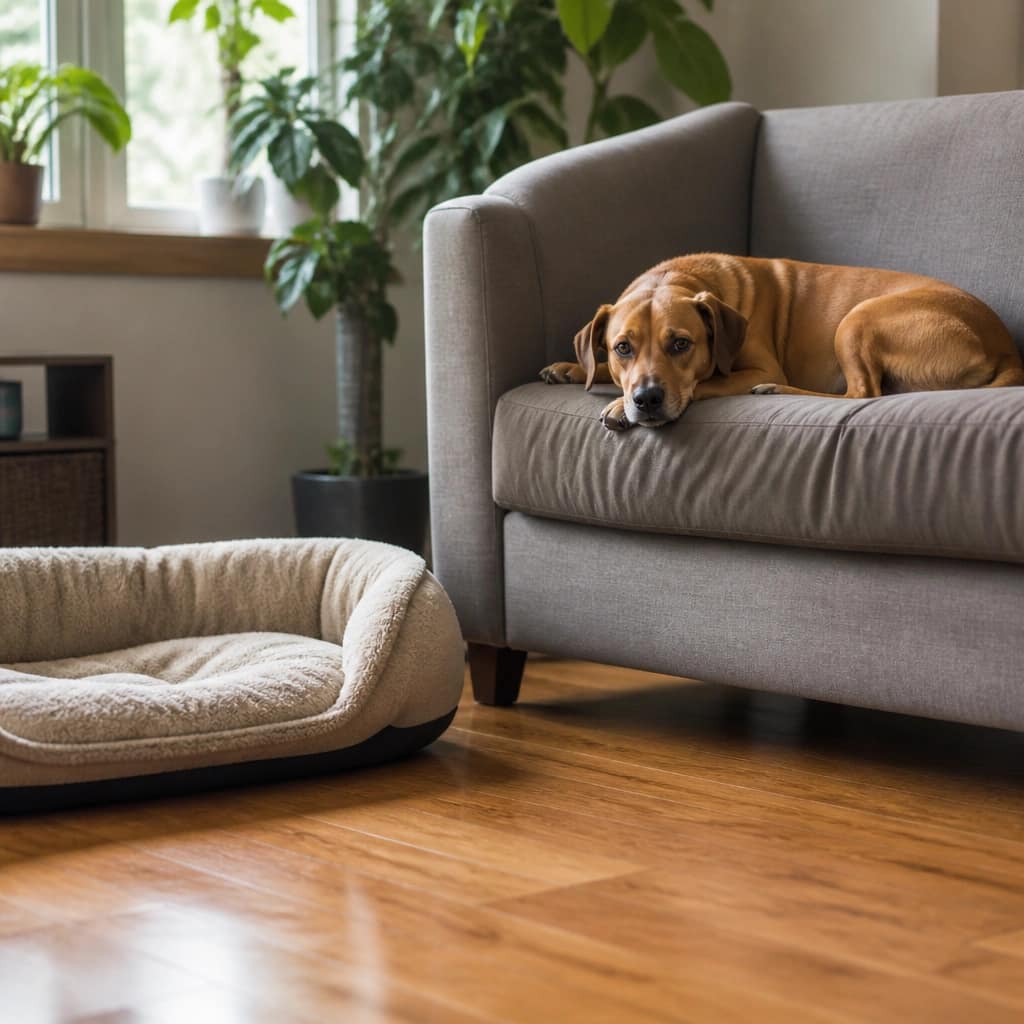
What the Couch Actually Gives Your Dog (and What It Doesn’t)
Let’s start with the good. A couch offers a few genuine benefits dogs love. It’s warm, soft, and full of the scent of the people they trust.
Sharing the sofa while you watch TV gives them a sense of closeness. That emotional comfort matters.
But there are real downsides. Most couch cushions lack the structure needed for proper joint support. They compress over time, leaving your dog on a saggy, uneven surface.
For older dogs, this can worsen stiffness and make getting up harder.
There’s also the fall risk. Small dogs and deep sleepers can roll off the edge, leading to injuries. And hair, dirt, and accidents become a permanent part of your sofa’s fabric.

The scent-seeking behavior that pulls them to the couch also pulls them onto your bed. If you’ve noticed that pattern, you’re not alone.
What a Good Dog Bed Does Differently
A good dog bed isn’t just a piece of pet furniture. It’s a support system. The foam, padding, and cover all serve a purpose.
Orthopedic beds use dense memory foam to distribute weight evenly and ease pressure on hips and elbows. That’s especially important for dogs with arthritis or joint pain.
High-quality beds also create a defined space. Instead of sprawling across the couch, your dog has a spot that’s unmistakably theirs. That sense of ownership helps with training and reduces anxiety.
And there’s the cleaning factor. A couch needs deep cleaning to stay fresh. A good bed usually has a removable, washable cover, so you can keep it clean without renting a steam cleaner.

As of 2026, most orthopedic beds on the market offer similar foam densities. You don’t need a luxury brand to get the benefit. Some owners even find their dog prefers a bed shaped like a sofa, which provides the same cozy feeling with better support.
The Real Decision Factors: Age, Health, and Household Rules
No single answer works for every dog. The right choice depends on three things: your dog’s life stage, any health issues, and your own house rules. Let’s go through each one.
Also, think about where you place their bed in your home. A quiet corner provides better sleep than a busy hallway.
Senior Dogs and Joint Support
Arthritis and joint stiffness are common in older dogs. A hard or sagging surface makes it worse. Veterinary guidance from the AVMA highlights how important joint support is for aging pets.
A firm orthopedic bed provides steady support. It also makes it easier to get up and down. If your senior dog struggles after sleeping on the couch, a dedicated bed is worth trying.
Adding proper neck and head support can make a real difference too.
Puppies and House Training
Puppies need boundaries. If they sleep on the couch, they may think the whole house is fair game. A designated bed or crate teaches them where they belong.
That makes house training simpler. You also need a bed that can handle accidents. Choosing the right size is important because puppies grow quickly.
Active Adult Dogs and Sleep Habits
Healthy adult dogs have more flexibility. A young dog without joint issues can handle couch naps. The bigger concern is consistency.
If they rotate between couch, floor, and bed, they never get a truly restful sleep. A dedicated bed gives them a steady, supportive spot. And if your dog likes to chew, a durable bed is a wise investment.
When Letting Your Dog Sleep on the Couch Is Fine
Here’s the practical answer. There are situations where the couch is perfectly fine. If your dog is young, healthy, and has no mobility issues, occasional couch time isn’t a problem.
Some dogs even prefer the firmer feel of a cushion over a plush bed.
The couch also works if you protect it. A washable couch cover keeps hair and dirt off the fabric. That lets your dog enjoy the social comfort of being near you without ruining your furniture.
Just pay attention to their behavior. If they constantly shift positions or get off to lie on the floor, they’re telling you something. In that case, a proper bed is the better choice.
When You Should Push for a Dog Bed Instead
If your dog is a senior, has arthritis, or wakes up stiff, the couch isn’t doing them any favors. Same goes for puppies who need clear boundaries and a safe space. And if you’re tired of vacuuming the sofa daily, a dedicated bed solves that too.
Veterinary guidance from the American Veterinary Medical Association consistently points to supportive rest surfaces for aging pets. A bed with dense foam helps distribute weight evenly, so joints aren’t pressing into a sagging cushion. If your dog already chooses the floor over the couch, they’re probably telling you the sofa doesn’t feel good anymore.
A structured bed is the safer bet.
Side-by-Side: Couch vs. Dog Bed at a Glance
Here’s the breakdown without all the fluff.
| Feature | Couch | Dog Bed |
|---|---|---|
| Joint support | Low, cushions compress | High, foam distributes weight |
| Cleanliness | Hard to deep clean | Removable washable covers |
| Fall risk | Edge and height | Ground level |
| Owner scent | Strong | Moderate |
| Durability | Sofa wear and tear | Bed wears instead |
The couch wins for cozy social naps. The dog bed wins for restful, supportive sleep. For most dogs, a mix works.
Just make sure the bed is sized correctly for your dog’s weight and length.
How to Transition a Couch-Hugging Dog to Their Own Bed

Start by placing the bed right next to the couch. Dogs are creatures of habit, so proximity matters. Toss a worn t-shirt or their favorite blanket onto the bed.
Your scent will make it feel like home.
When they settle on the bed, reward them with treats and quiet praise. Then gradually move the bed a few feet away each day until it reaches its permanent spot. If your dog keeps jumping back on the couch, block access temporarily.
Many owners find the right placement makes all the difference.
Common Mistakes Owners Make with Both Sleeping Surfaces
One big mistake is letting puppies chew on couch foam. That’s a choking hazard and a ruined cushion. Another is ignoring bed size.
A bed that’s too small leaves your dog half on the floor.
Skipping regular washing is another. Couch covers and bed covers trap hair, dander, and odors. Wash them often.
And don’t force the transition overnight. Dogs do better with gradual change. If your dog digs or scratches at their new bed, that’s normal nesting behavior, not rejection.
A Simple Decision Guide Based on Your Dog’s Situation
- Puppy → dog bed or crate pad, especially for house training.
- Senior or stiff dog → orthopedic dog bed, no question.
- Healthy adult, couch protected → couch naps are fine.
- Dog refuses their bed → try a different style, like a calming donut or bolster bed.
If your dog is young and healthy, you don’t need to panic about couch time. Just pay attention to how they sleep and move after. The right answer is the one that keeps them comfortable, safe, and happy.
FAQs About Dog Beds and Couch Sleeping
Can a dog get arthritis from sleeping on the couch?
Not directly, but a sagging couch can worsen joint stiffness over time. A supportive bed is safer for dogs with existing joint problems.
Should I let my puppy sleep on the couch?
It’s better to give your puppy a crate or a bed right away. That supports house training and prevents furniture chewing.
How do I stop my dog from preferring the couch?
Place their bed next to the couch and reward them when they lie on it. Move it gradually to its permanent spot.
What kind of bed is best for a senior dog?
A thick orthopedic foam bed with a washable cover works best. It supports joints and makes getting up easier.
What to Do Next
Watch how your dog sleeps and moves. If they seem comfortable on the couch, occasional naps are fine. If they wake up stiff or restless, get a supportive bed.
Place it near the couch, add your scent, and reward them for using it. Your dog will show you what they need.


