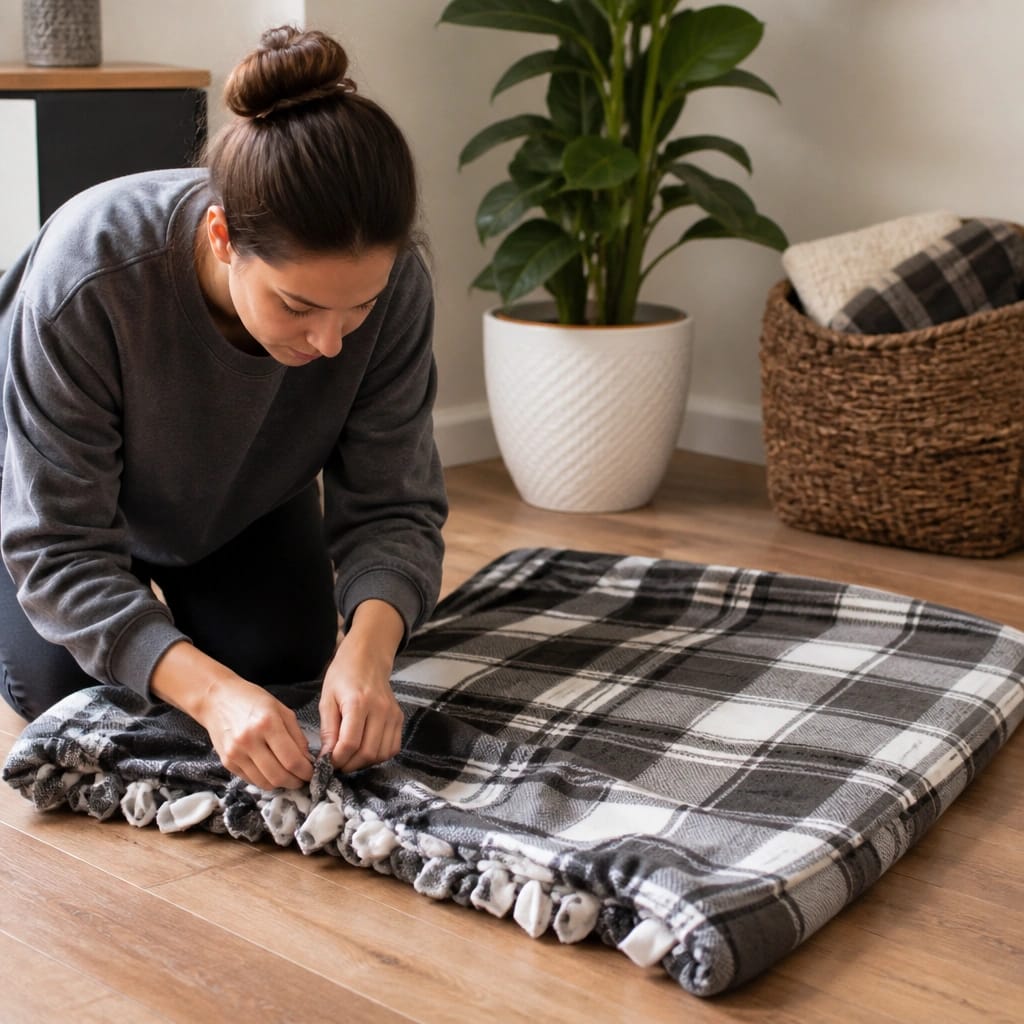
How to Make a Dog Bed From an Old Mattress
How to Make a Dog Bed From an Old Mattress is a straightforward way to give your dog a spacious, comfortable sleeping area without spending much money. If you’ve got a spare mattress collecting dust in the garage or guest room, you can turn it into a bed that rivals most commercial options.
A twin-size mattress gives you about 2,925 square inches of sleeping surface, which is larger than most extra-large dog beds. As of 2026, the typical DIY cost runs under $40, compared to $200 or more for a comparable store-bought bed. That’s a big difference for a project that takes a couple of hours.
Let’s look at why an old mattress works so well for this purpose.
Why an Old Mattress Makes a Surprisingly Good Dog Bed
The biggest advantage is cost. A new large dog bed with quality foam can cost anywhere from $150 to $300. An old mattress costs you nothing if you already own one.
Even if you pick one up secondhand, you’re out maybe $20 or $30.
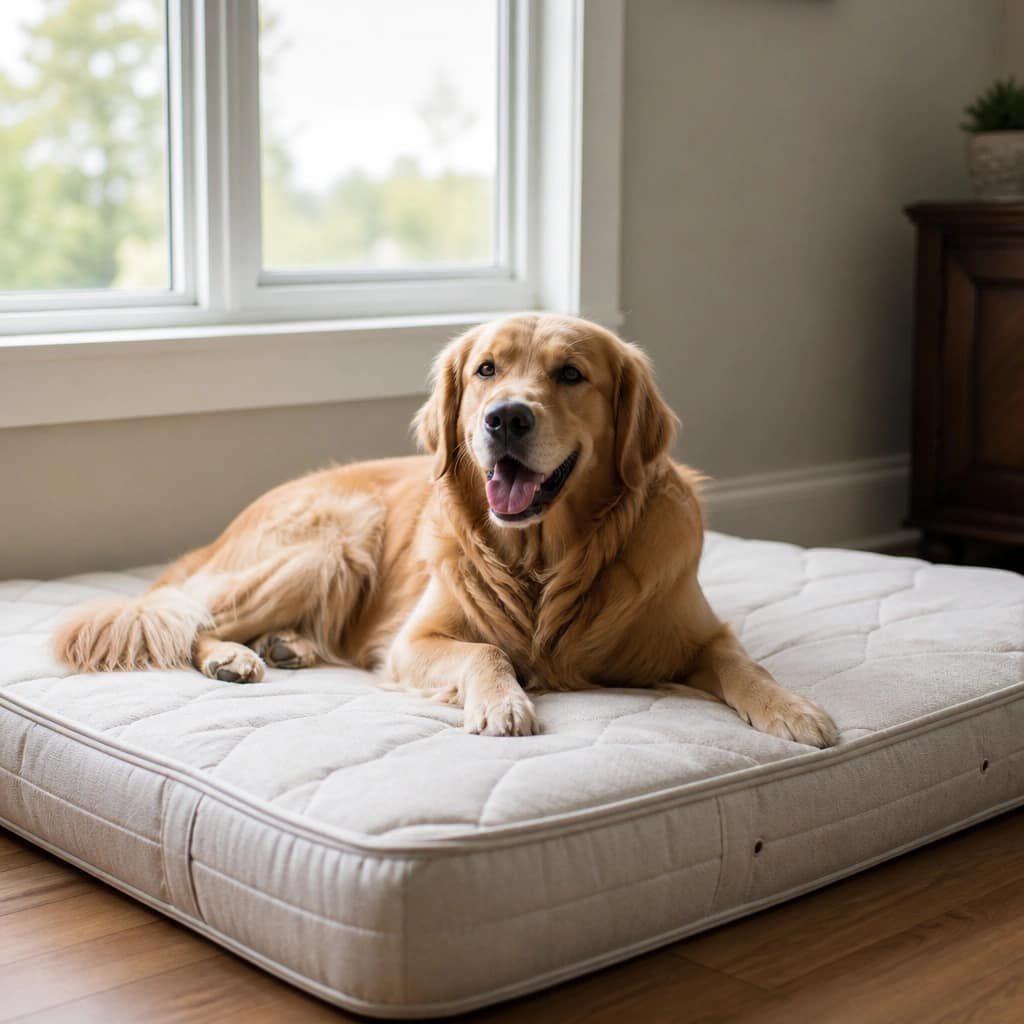
But it’s not just about the price. An old mattress, especially a foam one, provides better support than many dog beds on the market. Many commercial beds use polyester fiberfill that flattens within a few months.
A foam mattress holds its shape and offers consistent support for your dog’s joints. This matters a lot for older dogs or those with conditions like arthritis. If you’re unsure about sizing for your breed, check our dog bed size chart by weight to see how a mattress compares.
There’s also the environmental angle. Millions of mattresses end up in landfills every year. Repurposing one keeps a bulky item out of the waste stream.
The Environmental Protection Agency highlights mattress recycling as a way to reduce landfill burden. This project aligns with that idea.
| Why Use an Old Mattress | Benefit |
|---|---|
| Cost | Free or under $30 |
| Support | Solid foam, no flattening |
| Size | Twin is larger than XL dog bed |
| Eco-friendly | Keeps mattress out of landfill |
What Kind of Mattress Works Best for This Project
Not every mattress is a good candidate. You need to pick the right type and condition to make this project work well.
Foam vs. Innerspring: Which One to Use
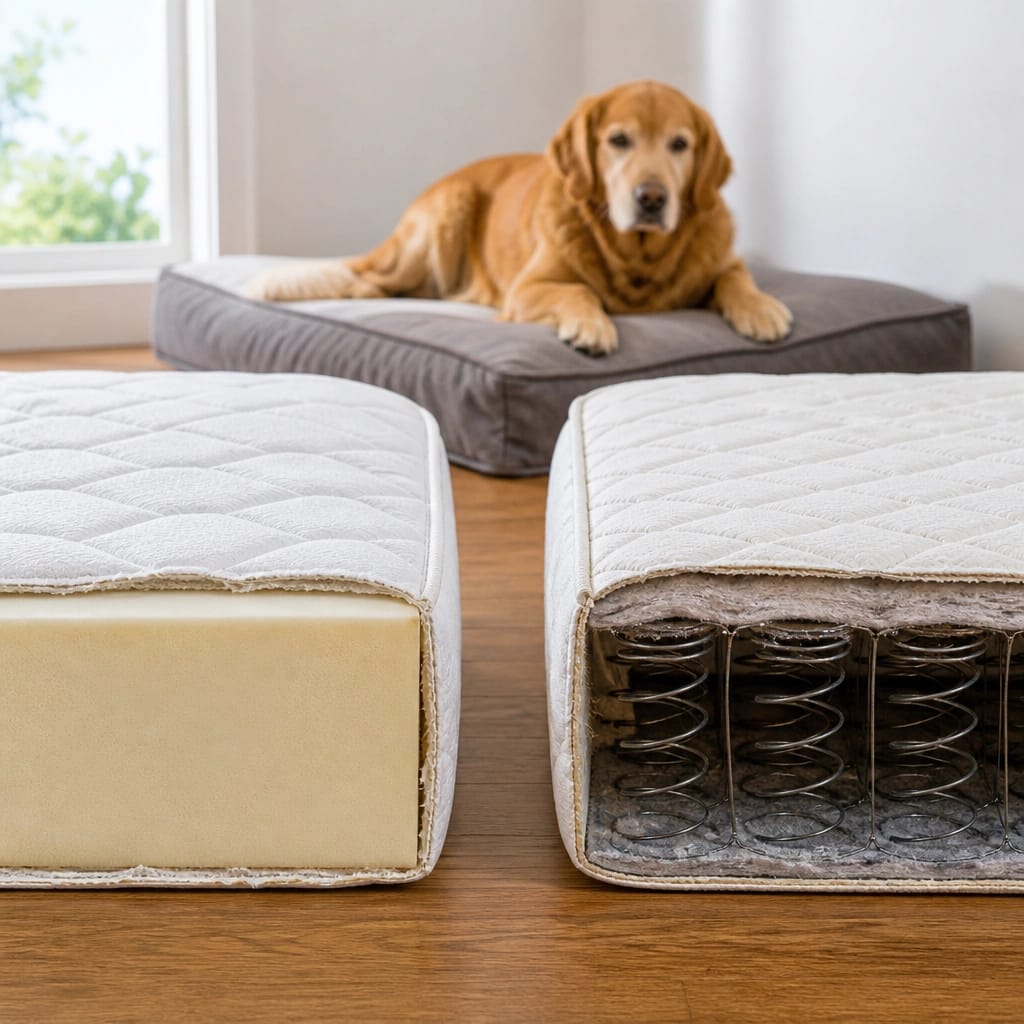
Foam mattresses are the clear winner here. They consist of a solid block of foam that you can cut cleanly with a utility knife. Innerspring mattresses have metal coils that are hard to cut and can eventually poke through the fabric.
If you have an innerspring mattress, your best bet is to use only the foam topper layer. That can still make a decent bed, but it will be thinner.
Manufacturer specifications indicate that foam with a density of 1.5 to 2.0 pounds per cubic foot provides the best balance of support and durability. Memory foam works too, but it tends to retain heat. For dogs that run warm, a conventional polyurethane foam is more comfortable.
Mattress Sizes and What They Mean for Your Dog
A twin mattress (39 by 75 inches) creates a bed that fits most medium to large breeds. A full mattress (54 by 75 inches) works well for multiple dogs or very large breeds like Great Danes. A queen mattress (60 by 80 inches) is essentially a floor bed.
Think about where you plan to place the bed. The location matters for comfort and convenience, so where should you place a dog bed in the house is worth considering before you commit to a size.
What You’ll Need to Get Started
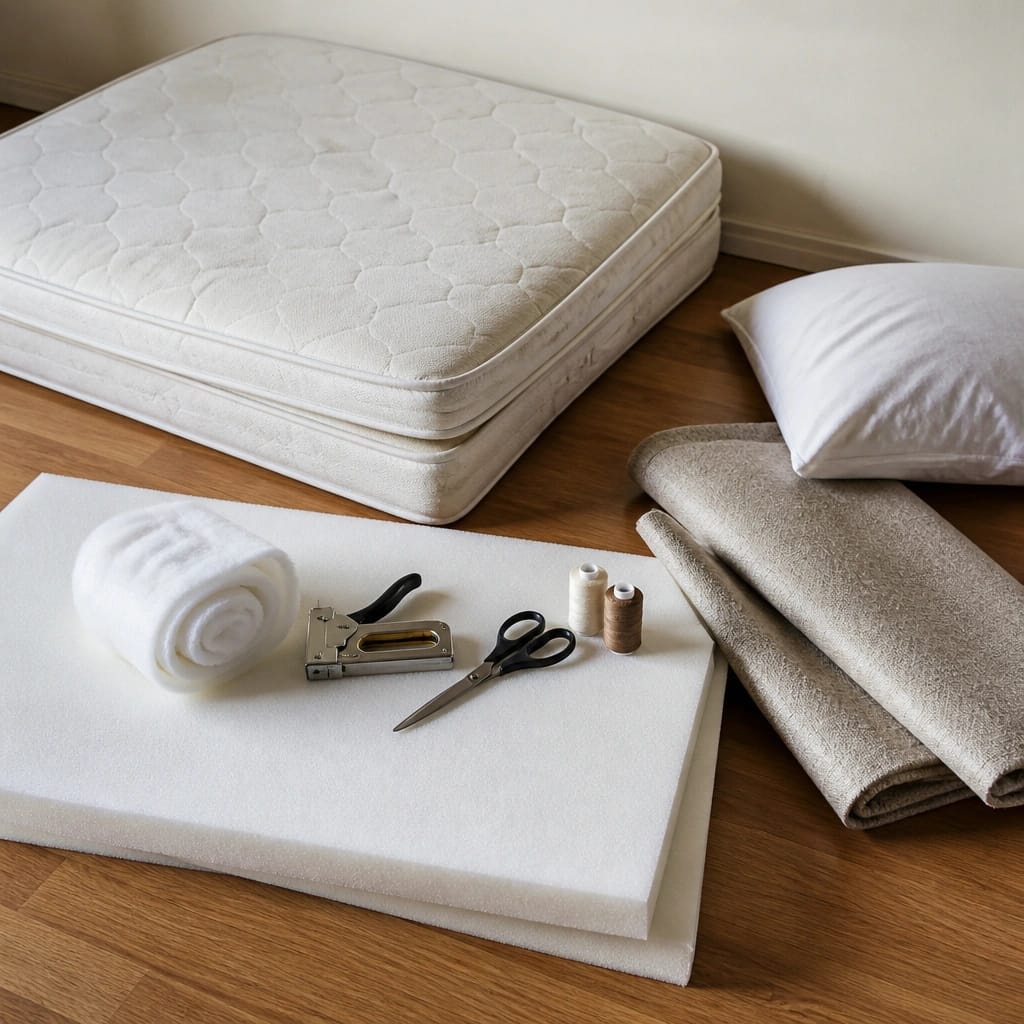
The materials list is short and most items are easy to find. Here’s what you need.
| Item | Purpose |
|---|---|
| Old foam mattress | Main sleeping surface |
| Upholstery fabric (cotton twill or canvas) | Cover |
| Waterproof mattress protector | Barrier against moisture |
| Staple gun and 1/4-inch staples | Attaching fabric |
| Utility knife or box cutter | Cutting foam |
| Measuring tape | Measuring fabric and foam |
| Scissors or fabric shears | Cutting fabric |
| Sewing machine (optional) | Zippered cover |
| Zipper (optional) | Removable cover |
| Non-slip fabric or rug pad | Bottom grip |
If you want a cover you can toss in the wash, a zippered option is best. That requires a sewing machine. If you don’t sew, you can staple the fabric directly to the mattress.
Just know that stapled covers are harder to remove. Adding a waterproofing layer underneath the cover will protect the foam from accidents and odors. We cover this in detail in our guide on waterproof dog beds.
Step-by-Step: How to Turn an Old Mattress Into a Dog Bed
Follow these steps in order. Each one builds on the last.
Step 1: Inspect and Prepare the Mattress
Check the mattress for mold, mildew, stains, or damage. Look for exposed springs if it’s an innerspring model. If you see any of these issues, do not use the mattress.
Clean the surface with a vacuum and a mild disinfectant. Let it air out for a day in a dry area.
Step 2: Cut the Mattress to Size (If Needed)
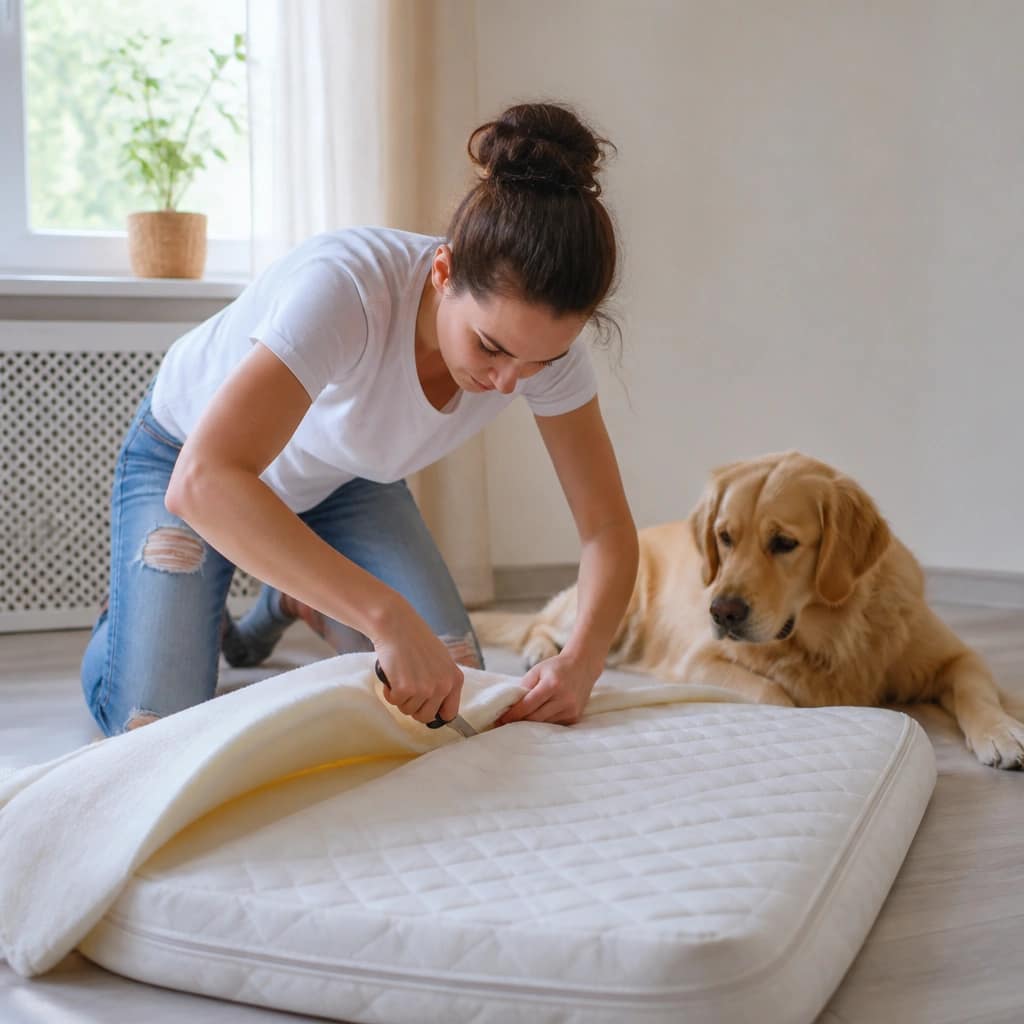
If the mattress is too large for your space, cut it down. Measure the desired length and width. Use a straight edge as a guide.
Cut through the foam with a utility knife using long, smooth strokes. A serrated bread knife also works well for this.
Step 3: Add a Waterproof Barrier
Wrap the foam in a waterproof mattress protector or a heavy-duty plastic sheet. Tuck the edges neatly and secure them with tape or a few staples. This layer prevents urine, drool, and spills from soaking into the foam.
It also makes cleaning much easier.
Step 4: Build a Removable Cover
Lay your fabric flat and place the mattress on top. Cut the fabric with enough extra to wrap around the sides and overlap by about 6 inches on each side. If you’re using a zipper, sew the cover like a large pillowcase.
If you’re stapling, pull the fabric tight and staple it to the underside of the mattress. Secure the corners neatly to avoid bunching.
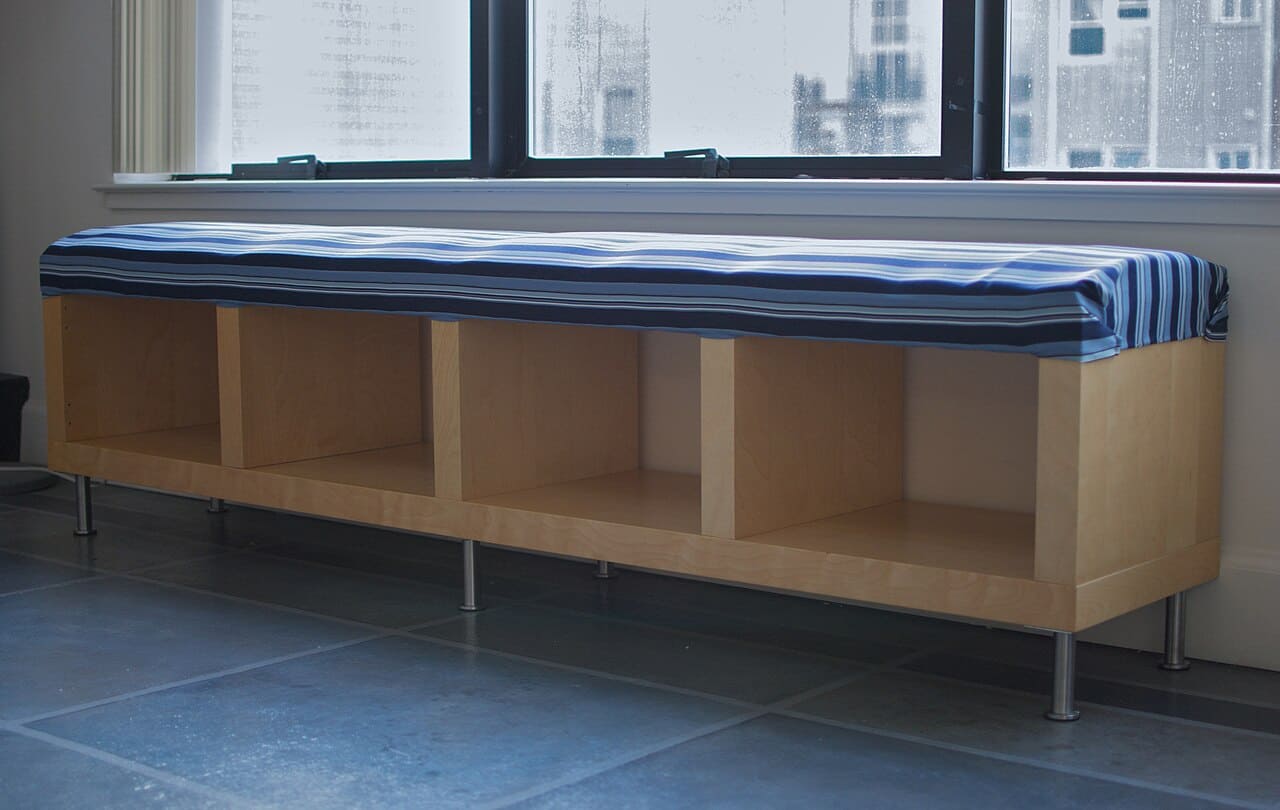
Image source: Wikimedia Commons / laurenbosak (CC BY-SA)
Step 5: Add a Non-Slip Bottom
Attach a piece of non-slip fabric or a rug pad to the bottom of the bed. You can staple it in place or use fabric glue. This keeps the bed from sliding around on hardwood or tile floors.
Step 6: Optional – Create Bolsters for Extra Support
If your dog likes to rest its head on something, use leftover foam to make bolsters. Cut strips of foam and wrap them in fabric. Staple or sew them to the edges of the bed.
This gives the bed a more finished look and adds support. Our article on bolster dog beds explains why some dogs prefer this style.
Common Mistakes to Avoid
A few errors can turn a great project into a frustrating one. Here’s what to watch out for.
- Using an innerspring mattress. The coils poke through and make the bed unsafe.
- Skipping the waterproof layer. One accident ruins the foam, and odors become impossible to remove.
- Making the cover non-removable. If you staple the fabric directly, you can’t wash it easily. Consider a zippered option.
- Choosing thin fabric. Cotton sheets tear quickly. Upholstery-grade fabric lasts much longer, especially if your dog is a digger. For dogs that chew, we have recommendations on chew proof materials.
- Cutting the mattress too small. Measure twice. You can always cut more, but you can’t add foam back.
- Ignoring the off-gassing smell. Old foam can release odors. Let the mattress air out for a day or two before your dog uses it.