

Are Shredded Foam Dog Beds Safe for Chewers?
Are shredded foam dog beds safe for chewers? That’s the question that’s probably keeping you up at night, right alongside your dog. The truth is, these beds can be a gamble, and the stakes are higher than a ruined cushion.
Manufacturer specs on shredded foam beds often list fill weights between 4 and 8 pounds of foam per bed. But those numbers tell you nothing about how the bed holds up against a determined chewer. As of 2026, no universal safety standard exists for pet bed construction.
Let’s look at what actually matters when your dog decides to test the limits.
Shredded foam dog beds are not safe for moderate to heavy chewers. The foam pieces can be pulled out and swallowed. Ingestion can cause intestinal blockages.
Blockages often require emergency surgery. Light chewers may be fine with reinforced construction. Always match the bed to your dog’s specific chewing level.
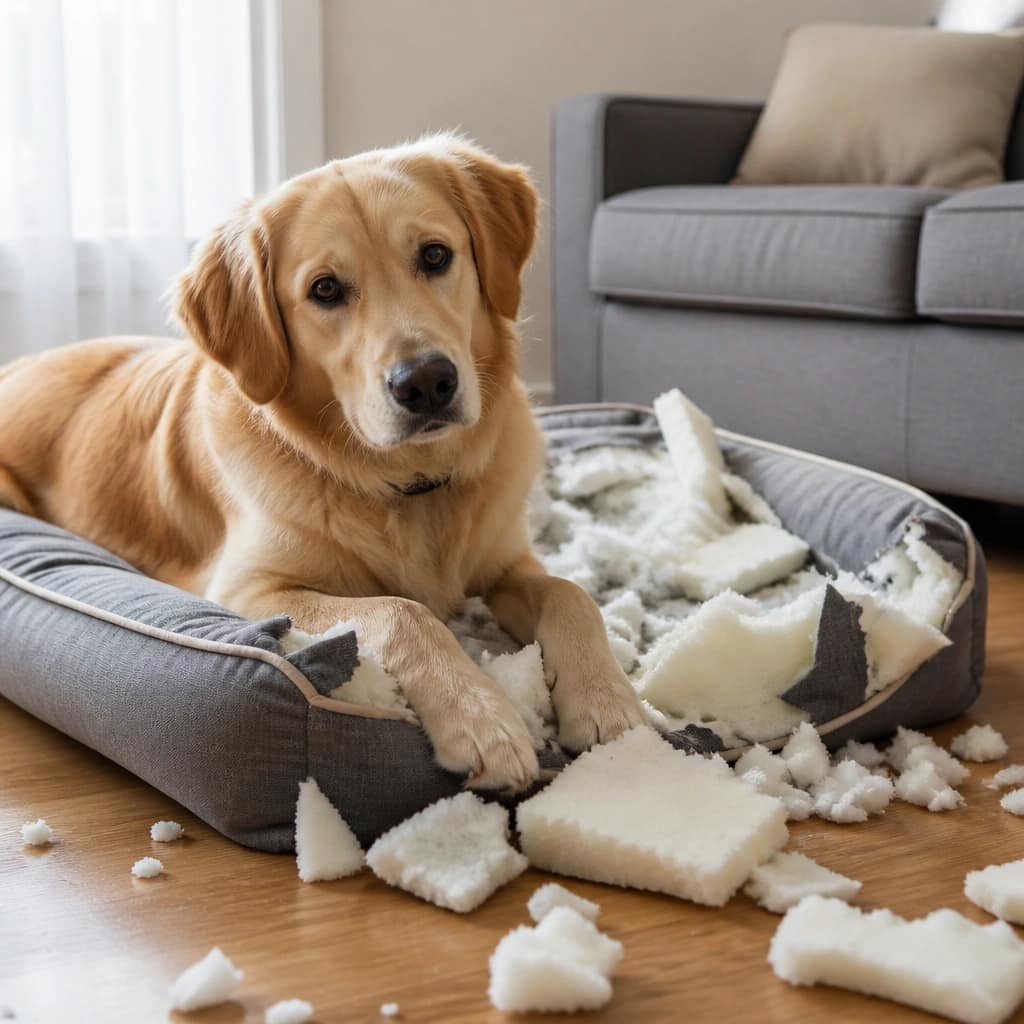
The Real Problem – Why You’re Asking This Question
You’ve probably seen shredded foam beds marketed as comfortable and supportive. They are. Dogs love the way you can mold the filling, burrow into it, and nestle in.
But comfort and safety are two different things when your dog has a history of destructive chewing habits.
The real issue isn’t the foam itself. It’s what happens when a determined dog gets through the outer cover. Once that fabric tears, shredded foam pieces become loose, accessible, and tempting to chew and swallow.
If your dog has already shown interest in tearing up their bed, you’re right to be cautious. That kind of chewing behavior often signals more than just boredom. It can be linked to anxiety, teething in puppies, or a strong nesting instinct.
Understanding the root cause helps you choose the right solution.
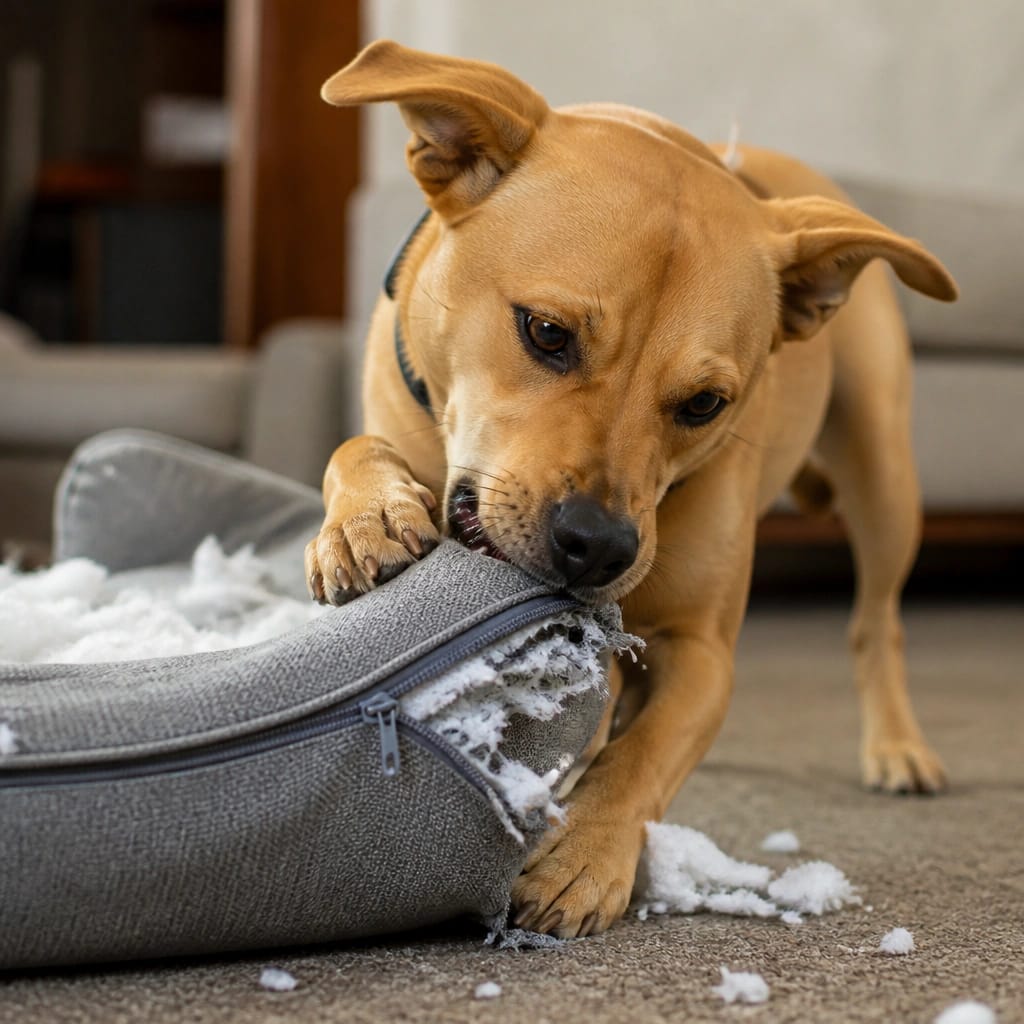
How Shredded Foam Beds Actually Work (and Where They Fail)
Shredded foam beds are basically a fabric shell stuffed with small chunks of memory foam. Unlike solid orthopedic foam, these pieces can move around. That’s what makes them moldable and nestable for dogs that love to burrow.
The construction matters a lot. Most shredded foam beds use a single outer cover with a zipper closure. Inside, there’s usually no second barrier between the foam and the fabric.
That’s the weak point.
Here’s where they fail:
- The zipper is a target. Dogs learn to work zippers open with their teeth.
- Seams are vulnerable. Single stitching pops under persistent chewing pressure.
- No internal barrier. Once the outer cover tears, every piece of foam is accessible.
A dog that digs or scratches at their bed before lying down is already testing those seams every night. That pre-sleep ritual can turn into a full demolition project if the bed isn’t built to handle it.
What Makes a Shredded Foam Bed Safer for Chewers
Not all shredded foam beds are built the same. Some manufacturers add reinforcement specifically for dogs that chew. You need to know what to look for and what’s just marketing.
Fabric and Denier Ratings
The outer fabric is your first line of defense. Denier (D) measures the thickness of the individual fibers. Higher numbers mean tougher material.
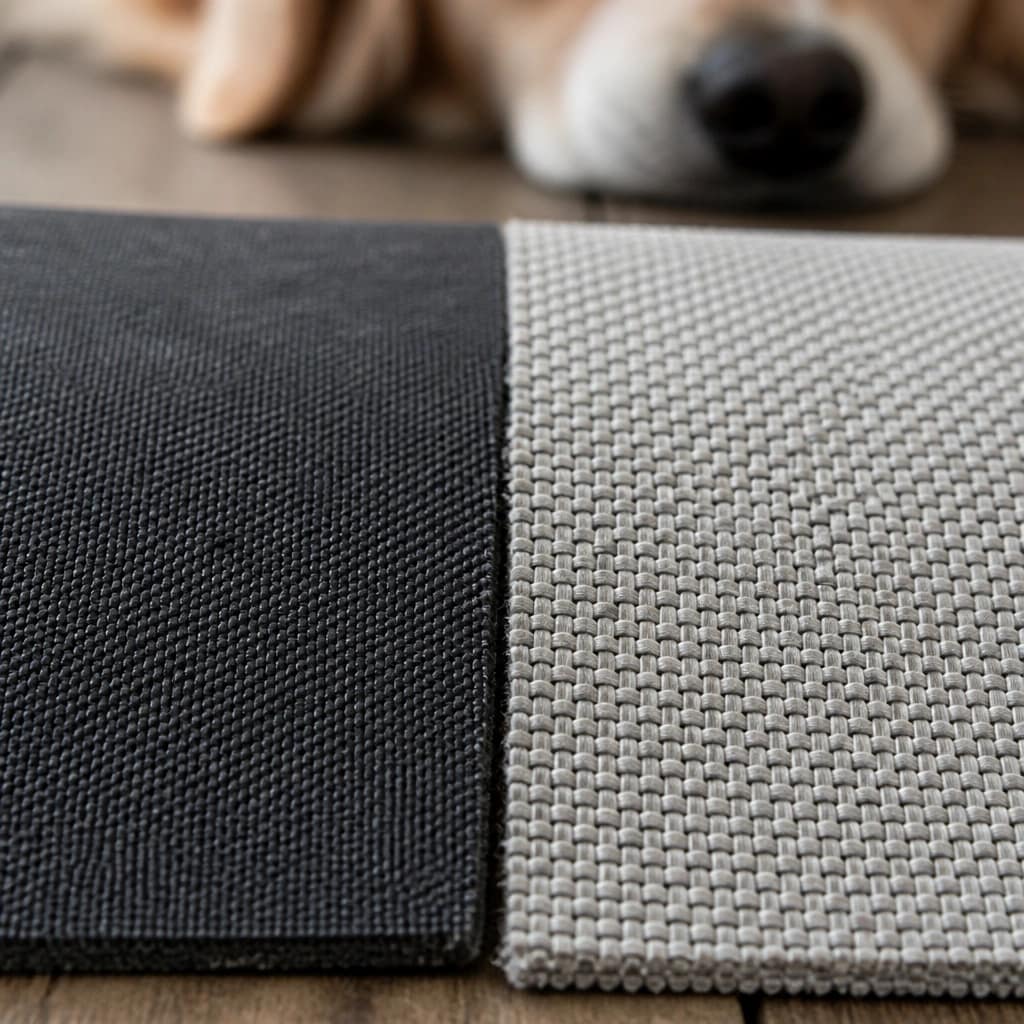
Here’s a quick breakdown of what different denier ratings mean:
| Denier Rating | Durability Level | Best For |
|---|---|---|
| 300D – 600D | Light to moderate | Non-chewers, puppies in training |
| 600D – 900D | Moderate to heavy | Light chewers, supervised use |
| 900D – 1200D+ | Heavy duty | Moderate chewers with caution |
| 1200D+ with reinforcement | Extreme | Still risky for power chewers |
Fabric alone isn’t enough. A 1200D cover can still fail if the seams or zipper give way first. Look for beds that pair heavy fabric with double stitching and zipper guards.
Zipper and Seam Construction
The zipper is often the first thing to fail. Dogs figure out how to grip the metal or plastic pull tab with their teeth. Once the zipper opens, the foam is exposed.
Safer designs include:
- Zipper flaps that cover the zipper track so it’s not accessible
- Locking zippers that require two hands to open
- Reversed zippers placed on the underside of the bed
Seams matter just as much. Single stitching with a straight seam is easy to pop. Double stitching or French seams add real strength.
Some beds use taped seams similar to waterproof gear, which resists both chewing and moisture.
Internal Baffles and Liners
The best defense is a second layer inside the bed. Internal baffles are fabric dividers that keep the foam in separate compartments. If a dog breaches the outer cover, the baffles limit access to just one section.
A waterproof inner liner adds another layer of protection. It’s harder for a dog to bite through two layers of fabric than one. Some beds use a separate inner sack that holds all the foam, with the outer cover acting as a replaceable shield.
This design is smart because you can replace the outer cover without tossing the whole bed. It also means the foam stays contained even if the cover gets damaged.
The Ingestion Risk – What Happens When a Dog Eats Shredded Foam
This is where the conversation gets serious. Swallowing shredded foam is not the same as swallowing a piece of kibble. Memory foam doesn’t break down in the stomach.
It stays intact and can cause a blockage.
The American Veterinary Medical Association (AVMA) classifies foreign body ingestion as a medical emergency. The symptoms can be subtle at first. Your dog might vomit once, seem fine, then decline rapidly over the next 24 hours.
Common signs of foam ingestion include:
- Vomiting, especially after eating or drinking
- Lethargy and loss of interest in play
- Straining to poop or producing small amounts of stool
- Abdominal pain, which may show as a hunched posture
- Loss of appetite
If you see any of these signs and know your dog chewed a bed, call your vet immediately. Do not wait to see if it passes. Foam blockages often require surgery.
The cost of that surgery can range from 2,000 to 5,000 dollars or more. Compare that to the price of a bed, and the math becomes clear. Prevention is far cheaper than treatment.
Step-by-Step – How to Assess Your Dog’s Chewing Level
Not every dog is a power chewer. You need to be honest about where your dog falls on the spectrum. Here’s a simple way to assess it.
Step 1: Watch them with a new toy. Give them a stuffed toy or a plush chew. If they systematically destroy it within minutes, they are a heavy chewer. If they only nibble at seams, they are a light chewer.
Step 2: Check their history with beds. Have they destroyed a bed before? If yes, what material was it? Polyester fill beds are easier to destroy than foam.
Past behavior is the best predictor.
Step 3: Evaluate their age and teething stage. Puppies under 18 months are still exploring the world with their mouths. A puppy that chews everything may grow out of it, but they need management in the meantime.
Step 4: Consider their environment. Dogs that are left alone for long hours are more likely to chew out of boredom or anxiety. A dog that is supervised and exercised regularly has less opportunity to destroy a bed.
Step 5: Match the bed to the assessment. Use this simple guide:
| Chewing Level | Shredded Foam Safe? | Better Alternative |
|---|---|---|
| Light chewer (nibbles, no destruction) | Yes, with reinforced cover | Any bed works |
| Moderate chewer (occasional tears) | With caution, heavy fabrics only | Consider solid foam or chew-proof materials |
| Heavy chewer (destroys toys in minutes) | No | Look into chew proof materials or raised cot beds |
| Power chewer (destroys everything) | Absolutely not | Hard plastic crate tray or metal cot |
If your dog falls into the heavy or power chewer category, do not buy a shredded foam bed. No amount of reinforcement is worth the risk of intestinal blockage.
Shredded Foam vs. Solid Foam vs. Alternatives – Which Is Safer?
Solid foam beds are a different story. They use a single slab of memory foam or polyurethane foam. There are no loose pieces for a dog to pull out.
A dog can chew the edge of a solid foam bed, but they can’t extract individual chunks the way they can with shredded filling.
That makes solid foam the safer choice for moderate chewers who still need orthopedic support.
Here’s how the main options compare:
| Bed Type | Ingestion Risk | Best For |
|---|---|---|
| Shredded foam | High if cover is breached | Light chewers, burrowing dogs |
| Solid foam | Low | Moderate chewers, joint support |
| Raised cot | None | Heavy chewers, hot climates |
| Crate mat | Low to none | Crates, supervised use |
| Hard plastic tray | None | Power chewers, confinement |
Raised cot beds eliminate the chewing problem entirely. There’s no filling to pull out. The fabric is a tight mesh that’s hard to grip.
Many power chewers give up on them quickly.
If you need something with more cushion, a crate pad with a solid foam core and a heavy-duty cover is a good middle ground. Just know that no bed is truly indestructible.
Who Should Avoid Shredded Foam Beds Altogether
Some dogs should never have a shredded foam bed. Period.
- Dogs with pica. This condition causes dogs to eat non-food items. Foam is especially dangerous for them.
- Dogs that have had foreign body surgery. One blockage is enough. Don’t risk a second.
- Puppies in the teething phase. They chew everything. Wait until they’re past this stage.
- Dogs with separation anxiety. When left alone, anxious dogs often turn to destructive chewing.
If your dog fits any of these categories, skip the shredded foam. Look into a raised cot or a solid foam bed with a chew-proof cover instead.
Common Mistakes Dog Owners Make with Chewers and Foam Beds
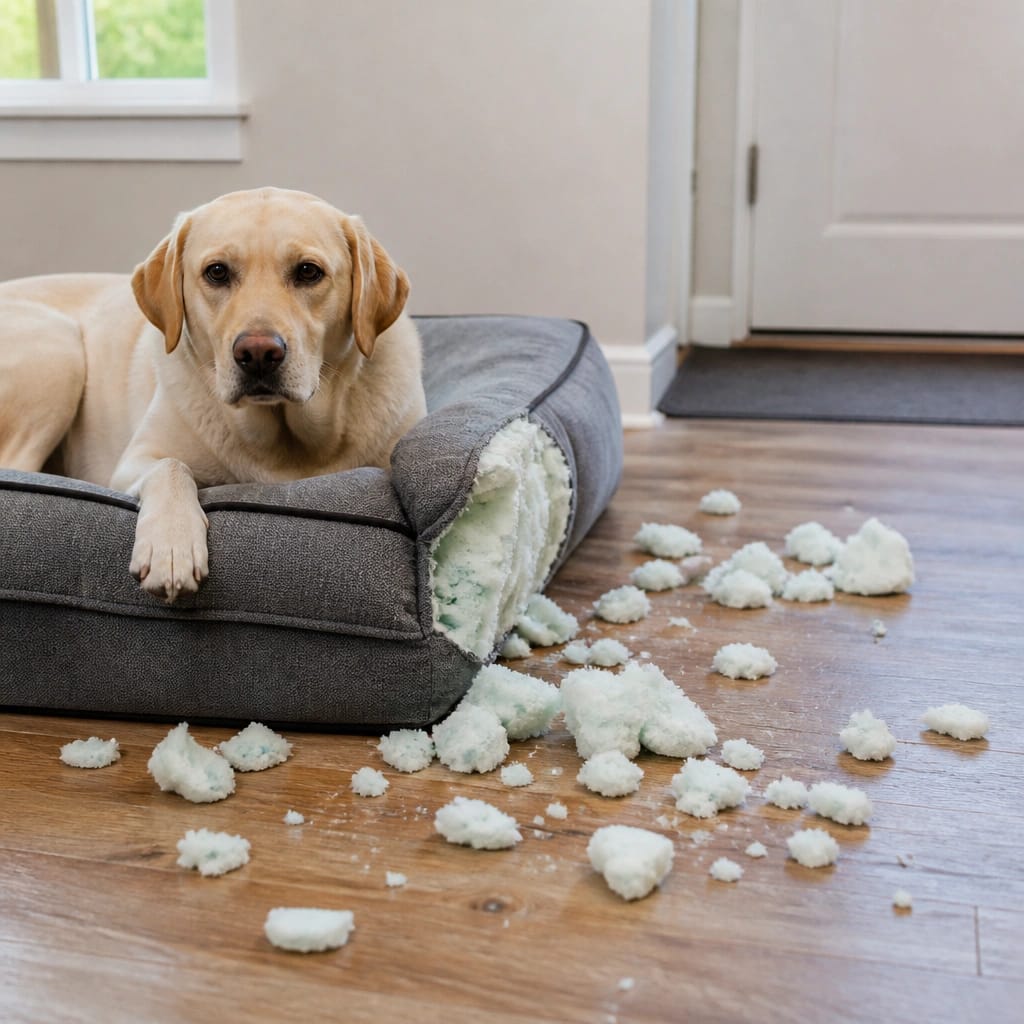
The biggest mistake is assuming a bed is safe because it’s labeled “chew resistant.” That term is not regulated. Any manufacturer can put it on the tag.
Other mistakes we see often:
- Ignoring the zipper. You check the fabric but forget the zipper. That’s where the bed fails.
- Buying based on comfort alone. A shredded foam bed feels amazing, but comfort doesn’t matter if the bed ends up in the trash.
- Leaving a chewer unsupervised with a new bed. Even a light chewer can do damage when you’re not watching.
- Not washing the cover before first use. Dogs are more likely to chew a bed that smells like the factory. Wash it first.
Take it slow. Introduce any new bed under supervision. Watch for signs of interest in the seams or zipper.
When to Say No – Signs Your Dog Needs a Different Bed Type
You know your dog better than anyone. Trust your gut. If you see any of these signs, it’s time to move to a safer option.
- Your dog has destroyed a bed before, even a cheap one.
- You find foam crumbs on the floor or in your dog’s mouth.
- Your dog fixates on the zipper or seams.
- Your dog chews on furniture, baseboards, or other non-toy items.
These behaviors tell you that a shredded foam bed is not a good fit. A dog that chews on furniture has the same determination that will destroy a bed.
The safest choice is a bed with no filling at all. Raised cots, hard plastic trays, and heavy-duty crate pads are the most reliable options for aggressive chewers.
What to Do If Your Dog Ingests Foam – Emergency Protocol
If you see your dog swallow foam, don’t panic. But do act fast.
Step 1: Remove the bed. Take away any remaining foam pieces. Keep your dog away from the area.
Step 2: Call your vet. Explain what happened. Tell them how much foam you think was swallowed and when.
Step 3: Watch for symptoms. Vomiting, lethargy, and straining to poop are red flags. Even if your dog seems fine, monitor them closely for 24 to 48 hours.
Step 4: Do not induce vomiting unless your vet says so. Some foam types can cause more damage coming back up. Follow professional guidance.
Step 5: Bring the bed to the vet. If they need to identify the material, having the actual foam helps.
The AVMA recommends seeking immediate veterinary care for any suspected foreign body ingestion. Time matters. A blockage that is caught early can sometimes be treated without surgery.
Real Costs – Bed Price vs. Potential Vet Bills
Let’s talk numbers. A good shredded foam bed costs between 60 and 180 dollars. A reinforced version with a heavy-duty cover might run 150 to 250 dollars.
Compare that to emergency vet costs.
| Expense | Estimated Cost |
|---|---|
| Shredded foam bed | $60 – $250 |
| Vet exam and X-rays | $200 – $600 |
| Foreign body removal surgery | $2,000 – $5,000 |
| Post-surgery care and medication | $300 – $800 |
The numbers don’t lie. Spending a bit more on a safer bed type is cheap insurance. For a heavy chewer, a 100-dollar raised cot is a smarter investment than a 150-dollar shredded foam bed that might end up in the emergency room.
Frequently Asked Questions About Shredded Foam and Chewers
Can a shredded foam bed be used in a crate?
Only if your dog is a confirmed light chewer and you supervise the first few uses. In a crate, a dog has nowhere to go and more time to focus on the bed. The risk is higher.
Is memory foam toxic if swallowed?
Memory foam is not classified as toxic, but it does not break down in the digestive system. It can cause a physical blockage that requires surgical removal.
What is the safest bed for a power chewer?
A raised cot bed or a hard plastic crate tray. These have no filling for the dog to access. They are the only truly safe options for dogs that destroy everything.
Can I repair a shredded foam bed if my dog chews a small hole?
Small holes can be patched temporarily, but any breach means the bed is no longer safe. Replace the cover or the entire bed. A patch job will not hold up to continued chewing.
How do I know if my dog is a light chewer or a heavy chewer?
Watch how they interact with a new toy. If they destroy a stuffed toy in under 10 minutes, they are a heavy chewer. If they only nibble at the edges, they are a light chewer.
Does the fill material matter for safety?
Yes. Shredded memory foam is the most dangerous because of the loose pieces. Solid foam is safer.
Polyester fiber fill is less dangerous than foam but still a risk if swallowed.
Final Decision Guide – Is a Shredded Foam Bed Right for Your Dog?
Here’s the bottom line. Shredded foam beds are comfortable and supportive. They are great for dogs that don’t chew.
But they are not safe for moderate to heavy chewers.
If your dog is a light chewer, look for a bed with a 900D or higher fabric, double stitching, and a zipper flap. That combination gives you the best chance of success.
If your dog is a moderate or heavy chewer, skip the shredded foam. Choose a solid foam bed with a heavy-duty cover, or go with a raised cot. Your dog’s safety is worth more than any bed.
And if you’re still unsure, talk to your vet. They know your dog’s history and can give you personalized advice. Your dog’s health is the priority.
The right bed is the one that keeps them safe.


