

How to Turn an Old Pillow Into Dog Bedding
Yes, you can turn an old pillow into dog bedding, and it’s a smart way to save money and keep something out of the landfill. But it isn’t as simple as tossing a pillow on the floor. You need to make sure it’s safe for your dog and that it will hold up to regular use.
A little planning goes a long way.
As of 2026, the average household has at least one old pillow destined for the trash. A standard bed pillow measures about 20 by 26 inches, which is a common size for a small dog crate pad. With the right cover, you can turn that pillow into a comfortable bed.
Before you start cutting fabric, though, you need to check whether that pillow is actually safe for your dog.
You can turn an old pillow into dog bedding by checking the fill, choosing a durable cover, and selecting a sewing or no-sew method. The key is to ensure the pillow is safe, clean, and the right size for your dog. A simple cover can transform a pillow into a comfortable crate pad or bed. Always supervise your dog with a new DIY bed.
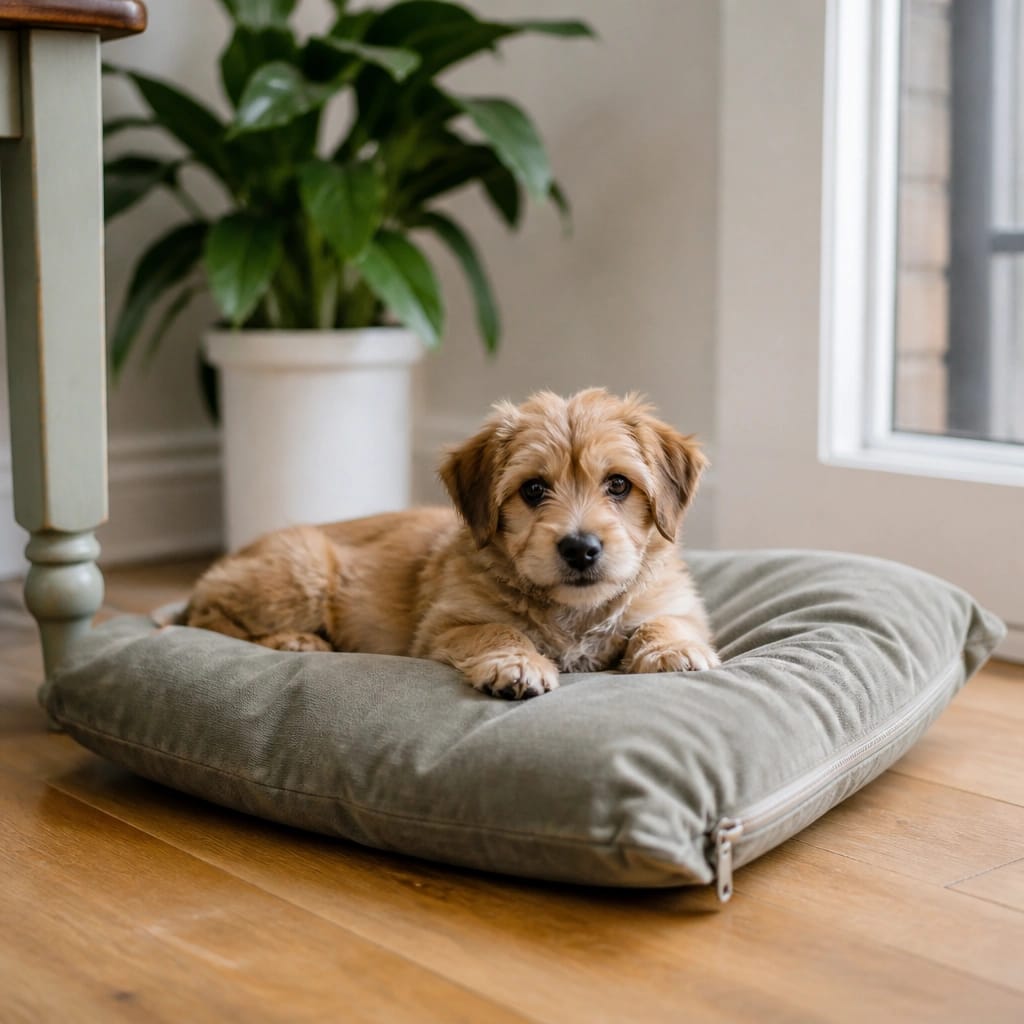
Is That Old Pillow Safe to Use for Your Dog?
Not every old pillow is safe for your dog. The fill type, condition, and construction all matter. If the pillow is lumpy, has mold, or smells musty, toss it.
A dirty pillow can cause skin irritation or respiratory issues for your dog.
Down and feather pillows are risky. Feather quills can poke through the fabric and injure your dog. They also flatten quickly and trap allergens.
Synthetic fiberfill pillows are the safest choice. They’re washable, hypoallergenic, and hold their shape better.
Memory foam pillows can work, but they’re heavy and may be too firm for small dogs. Shredded foam pillows are messy and can be ingested. If your dog is a chewer, avoid any fill that comes in small pieces.
A good rule of thumb: if you wouldn’t let your dog play with the pillow directly, don’t use it for bedding.
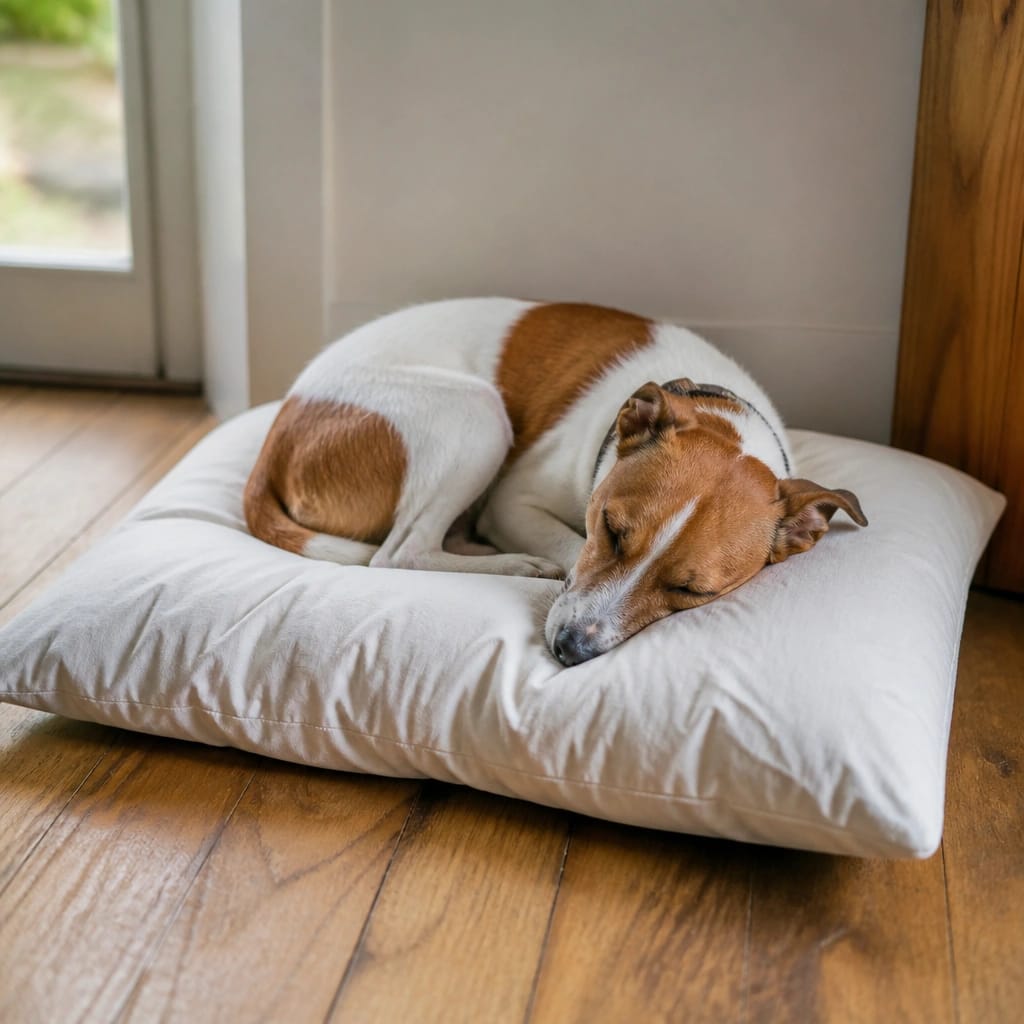
| Fill Type | Risk | Best For |
|---|---|---|
| Down/Feather | Quills, allergens, flattening | Light use, non-chewers |
| Synthetic Fiberfill | Low risk, washable | Most dogs, especially chewers |
| Memory Foam | Too firm for small dogs, heavy | Senior dogs, crate pads |
| Shredded Foam | Messy, can be ingested | Avoid for chewers |
If you’re unsure whether your dog really needs a pillow at all, check out our guide on basic sleep needs. It covers when a pillow helps and when it doesn’t.
What You’ll Need: Tools, Fabric, and Supplies
You don’t need much to make a pillow dog bed. The list depends on which method you choose. Here’s a quick overview of the basics.
| Item | Purpose | Notes |
|---|---|---|
| Measuring tape | Measure pillow and dog | Use inches or centimeters |
| Scissors | Cut fabric | Fabric scissors work best |
| Fabric | Outer cover | 1 to 3 yards depending on size |
| Pillow | Core fill | The old pillow itself |
| Closure | Fasten cover | Zipper, Velcro, or buttons |
You’ll also need sewing supplies if you sew, or fabric glue and hem tape for a no-sew method. A waterproof liner is a smart addition if your dog has accidents or drools. For crate-specific projects, compare crate pad vs. crate mat to see what fits your setup.
Step 1: Assess the Pillow — Fill Type, Condition, and Size

Start by checking the pillow’s fill type. If it’s down or feather, consider a different project. If it’s synthetic fiberfill, you’re good to go.
If it’s memory foam, make sure it’s not too thick for your dog.
Next, check the condition. Look for stains, tears, or odors. If the pillow is flat and doesn’t fluff up, it won’t provide enough support.
You can add extra fill, but a completely flat pillow is better off replaced.
Finally, measure the pillow. Compare it to your dog’s length and sleeping position. A pillow that’s too small will leave your dog hanging off the edges.
A pillow that’s too large may not fit in a crate. Use our dog bed size chart to find the right dimensions.
Step 2: Choose Your Cover Fabric Based on Your Dog’s Needs
The cover fabric is the most important part of the project. It protects the fill and gives your dog a comfortable surface. The best fabric depends on your dog’s habits.
Cotton is breathable and easy to wash. It works well for dogs that don’t chew. Canvas or denim is much more durable.
It handles scratching and digging better. Fleece is soft and warm, but it traps dirt and fur. It’s best for dogs that don’t spend a lot of time outside.
If your dog is a chewer, you need a heavy-duty fabric. Check our list of chew proof materials for options that resist tearing. For dogs with allergies, choose a hypoallergenic fabric like organic cotton.
For dogs that have accidents, use a waterproof fabric or add a waterproof liner inside the cover.
| Fabric | Durability | Washability | Best For |
|---|---|---|---|
| Cotton | Low | Excellent | Non-chewers, indoor use |
| Canvas | High | Good | Chewers, outdoor use |
| Fleece | Low | Good | Warmth, burrowing dogs |
| Waterproof | Medium | Excellent | Accidents, droolers |
Step 3: Pick Your Method — Sew, No-Sew, or Quick Wrap
You have three main options for making the cover. Each one has different levels of durability, time, and skill required.
Sewing is the most durable method. You can use a sewing machine or hand-sew. It takes about 30 minutes with a machine.
The seams are strong and won’t pull apart. This is the best option for dogs that scratch or dig.
No-sew methods use fabric glue, iron-on hem tape, or safety pins. They’re faster and require no sewing skills. The trade-off is less durability.
Glue can dry out over time, and tape can lose adhesion. This method works well for temporary beds or dogs that don’t stress the seams.
The quick wrap method is the simplest. Just put the pillow inside a pillowcase or duvet cover and tie it shut. No sewing, no glue, no pins.
It’s the fastest option, but the cover may slip off. It’s best for supervised use or for dogs that sleep calmly.
For a detailed no-sew tutorial, see our no-sew dog bed guide. It includes step-by-step instructions for glue and tape methods.
| Method | Time | Skill | Durability |
|---|---|---|---|
| Sew | 30 min | Intermediate | High |
| No-sew | 15 min | Beginner | Medium |
| Quick wrap | 5 min | None | Low |


