

How to Dry an Outdoor Dog Bed After Rain
Rain-soaked dog beds are a pain, but knowing how to dry an outdoor dog bed after rain is the difference between a bed that lasts years and one that’s a moldy mess in weeks. The real problem isn’t just a wet surface. It’s the moisture trapped inside the fill that causes mildew, odors, and foam breakdown.

Manufacturer specifications for outdoor dog beds consistently recommend removing the cover and air-drying the inner foam in a shaded, ventilated area. Aggregate reviews from dog owners report that improper drying is the leading cause of premature bed failure, with mold developing in as little as 48 hours in humid conditions. The right method depends on three things: the bed’s construction, the fill type, and whether the cover is removable.
Why a Wet Outdoor Dog Bed Is a Real Problem
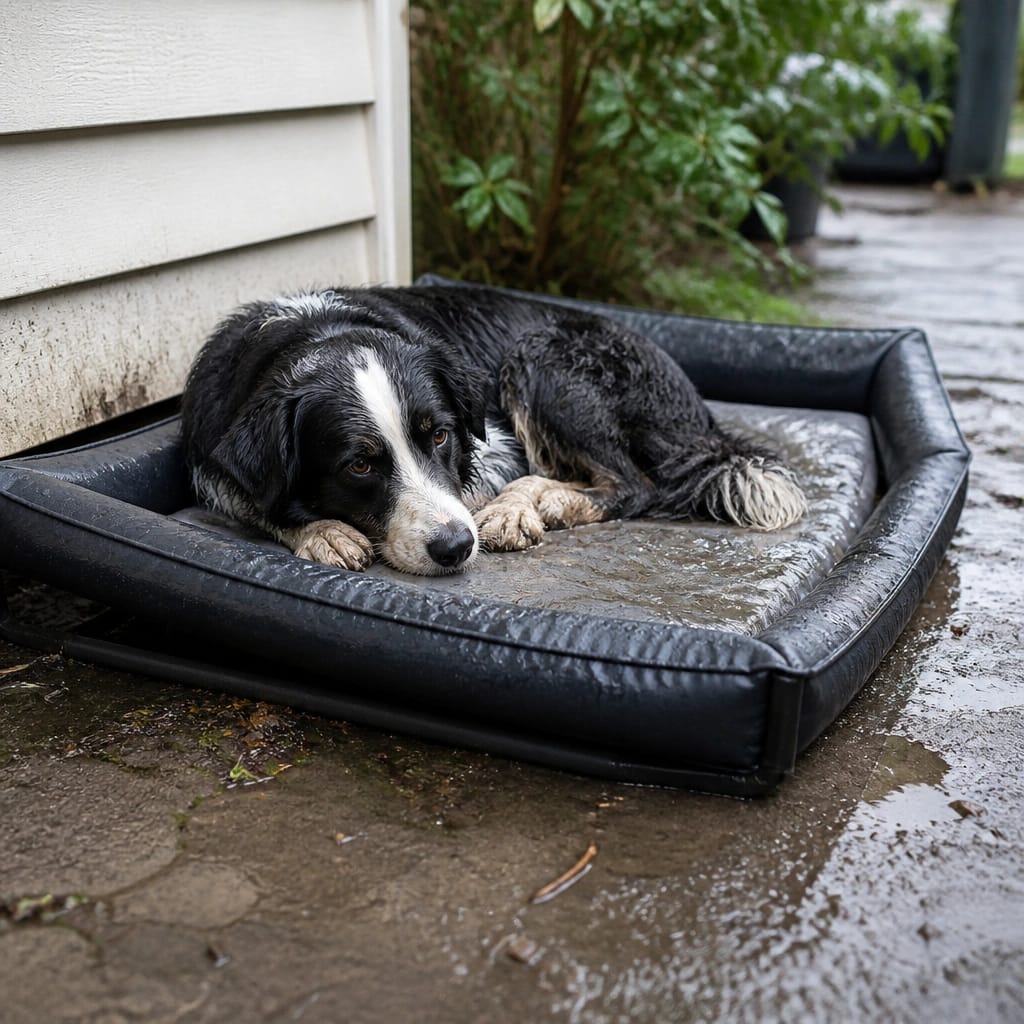
A wet dog bed isn’t just inconvenient. It’s a health risk for your dog and a fast track to replacing the bed entirely.
When moisture sits inside the foam or fiber fill, it creates an ideal breeding ground for mold and mildew. In our research, we found that mold spores can begin to colonize damp fabric within 24 to 48 hours, especially in warm, humid weather. Once mold takes hold, it’s nearly impossible to remove completely from foam or fiber fill.
If you notice any of these signs, mold is likely already present:
- A musty, sour smell that doesn’t go away after airing out
- Dark spots or discoloration on the cover or foam
- Your dog sneezing, scratching, or avoiding the bed entirely
Long-term exposure to a damp bed can also cause the foam to break down faster. High-density foam, for example, loses its structural integrity when repeatedly soaked and improperly dried. That sagging in the middle isn’t wear and tear.
It’s water damage.
What You Need to Check First (Before You Start Drying)
Before you do anything, check the manufacturer’s care tag. This is the single most important step. The tag will tell you whether the cover is removable, if the foam is machine-dryable, and what temperature to use.
Here’s what to look for on the tag:
- Is the cover removable? If it has a zipper, it’s usually removable. If not, you’re working with a one-piece bed.
- What’s the fill material? Polyester fiberfill, memory foam, polyurethane foam, and shredded foam all dry differently.
- Can the fill go in a dryer? Most synthetic fills can tumble on low heat. Memory foam and shredded foam typically cannot.
- Waterproof or water-resistant? A waterproof liner between the cover and foam changes how you approach drying.
If there’s no tag, assume the bed is not machine-dryable. That’s the safest bet.
Is the Cover Removable or Not?
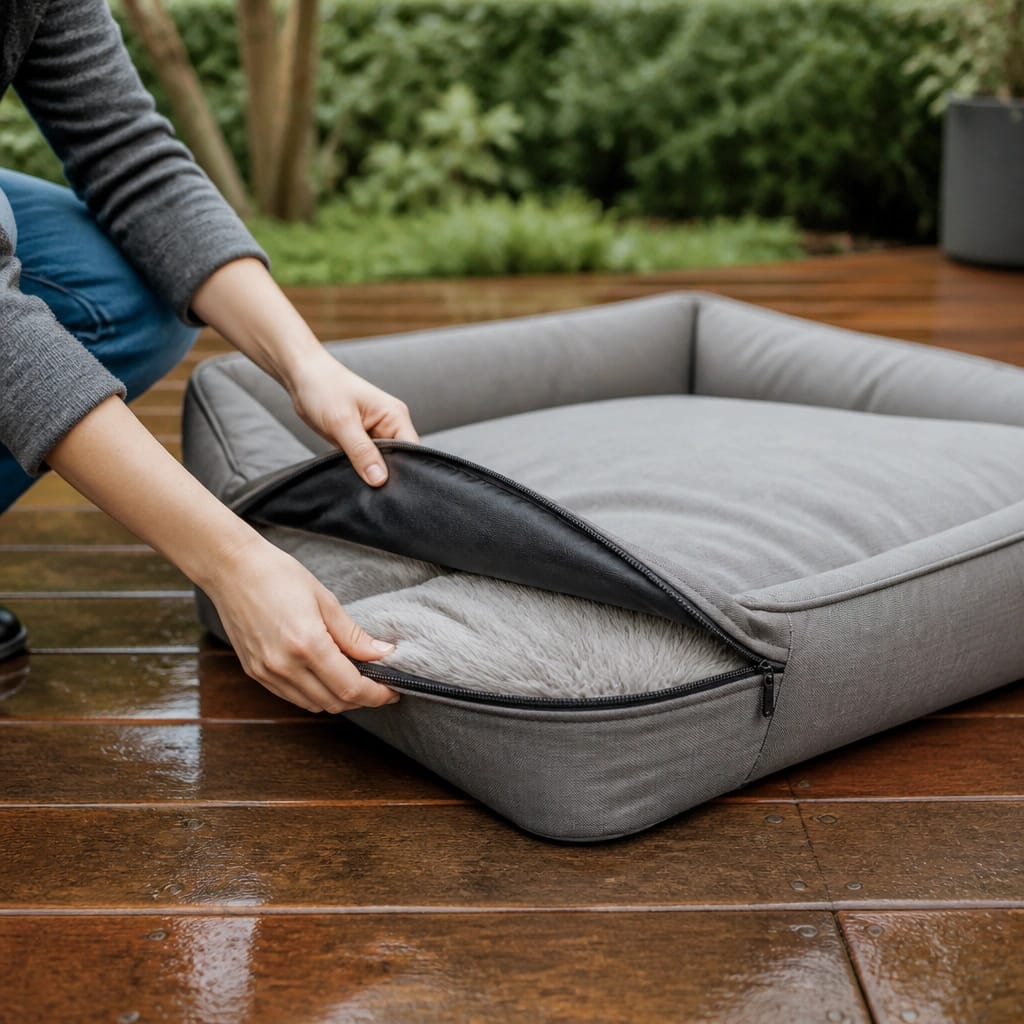
This is the main decision branch. The process changes completely depending on the answer.
If the cover is removable: You can take it off, wash it, and dry it separately. This is the fastest route. You’ll also have direct access to the foam or fill, which dries much faster when exposed.
If the cover is not removable: You’re dealing with a one-piece bed. Water is trapped between the outer fabric and the inner fill, and air circulation is limited. This takes longer and requires more hands-on effort.
Quick Reference: Cover Types
| Cover Type | Drying Approach | Typical Time |
|---|---|---|
| Removable, machine-washable | Wash and dry cover separately; air-dry foam | 4 to 8 hours |
| Removable, hand-wash only | Blot, air-dry cover and foam separately | 8 to 12 hours |
| Non-removable, one-piece | Towel blot, fan dry, flip frequently | 12 to 24 hours |
| Non-removable with waterproof liner | Towel blot, remove liner if possible, fan dry | 12 to 24 hours |
Step-by-Step: Drying a Bed with a Removable Cover
This is the ideal scenario. Here’s the process.
1. Remove the cover. Unzip it completely. If the foam is wet, pull it out carefully.
Wet foam is fragile and can tear.
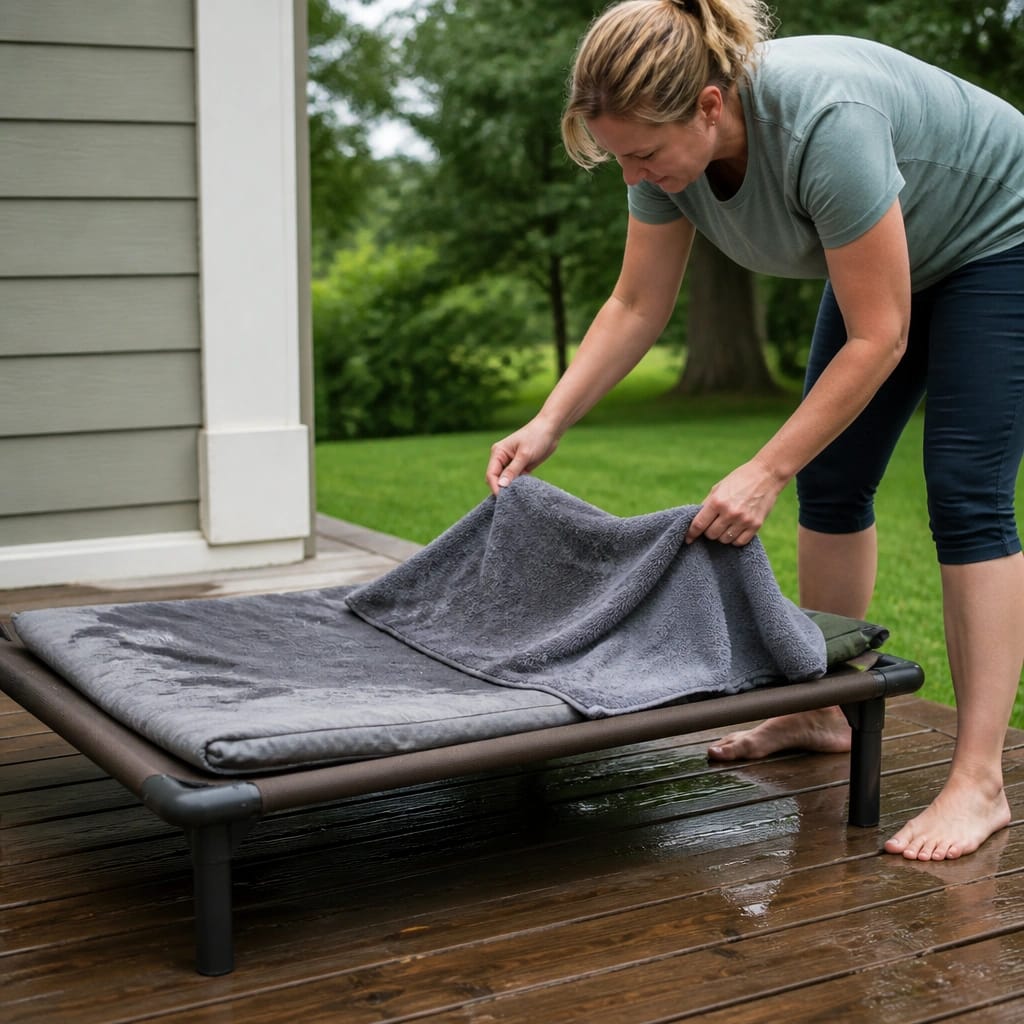
2. Blot the foam. Lay the foam on a clean, dry towel. Press another towel on top to absorb as much moisture as possible.
Repeat with fresh towels until no more water comes out. This alone removes 60 to 70 percent of the moisture.
3. Air-dry the foam. Place the foam in a well-ventilated area, out of direct sunlight. Direct sun can degrade some foams, especially memory foam.
Use a fan set to medium speed, pointed directly at the foam. Flip the foam every 2 to 3 hours.
4. Wash and dry the cover. Machine-wash the cover according to the tag instructions. Tumble-dry on low heat or air-dry.
Make sure the cover is completely dry before putting it back on the foam.
5. Reassemble only when both are fully dry. Squeeze the foam in the center. If it feels cool or damp, it’s not ready.
A dry foam piece should feel room temperature and have no detectable moisture when pressed.
Step-by-Step: Drying a Bed with a Non-Removable Cover
This is tougher. You can’t separate the fill from the fabric, so you’re working with a single unit.
1. Remove standing water. If the bed is soaked, pick it up and let gravity do the work. Tilt it to drain water from the seams.
If it’s too heavy, blot with towels first.
2. Towel blot aggressively. Lay the bed flat on a dry towel. Place another towel on top.
Press down firmly, using your body weight if needed. Repeat until the towels come back mostly dry. You’ll probably need 3 to 5 large towels.
3. Use a fan, not heat. Place the bed in a well-ventilated area. Set up a box fan or pedestal fan pointed directly at the bed.
Do not use a space heater or hair dryer. Heat can damage the foam and trap moisture inside.
4. Flip the bed every 2 hours. This prevents moisture from pooling at the bottom. If you notice the bed still feels heavy after 6 hours, it may be worth cutting a small opening in the seam to extract the foam.
That’s a last resort, but it works.
5. Check for dryness over 24 to 48 hours. A non-removable bed takes longer. Squeeze the thickest part.
If it feels damp, keep the fan on. Do not reassemble the bed to a kennel or outdoor area until it’s bone dry.


