

Low-Entry Dog Beds for Dogs With Limited Mobility
If your dog hesitates before climbing into their bed, or stumbles when they try to get up, the height of that bed could be the problem. Low-Entry Dog Beds for Dogs With Limited Mobility are designed with a lower profile that requires less effort to step onto and off of, making them a practical choice for senior dogs or those recovering from surgery. The difference between a bed that supports your dog’s independence and one that adds to their frustration often comes down to just a few inches.
Manufacturer specifications for low-entry beds typically list an entry height of 2 to 4 inches, compared to the 6 to 8 inches common on standard bolster beds. As of 2026, most major orthopedic bed brands now offer a low-profile version, reflecting the growing demand from owners of arthritic and aging dogs. The right height can make the difference between a bed your dog actually uses and one they avoid.
Yes, a low-entry dog bed can make a real difference for dogs with limited mobility. The lower height reduces the strain on sore joints when getting in and out. The right bed also provides proper support to prevent further discomfort. Look for a bed with an entry height of 2 to 4 inches and firm enough foam to help your dog push up from a standing position.
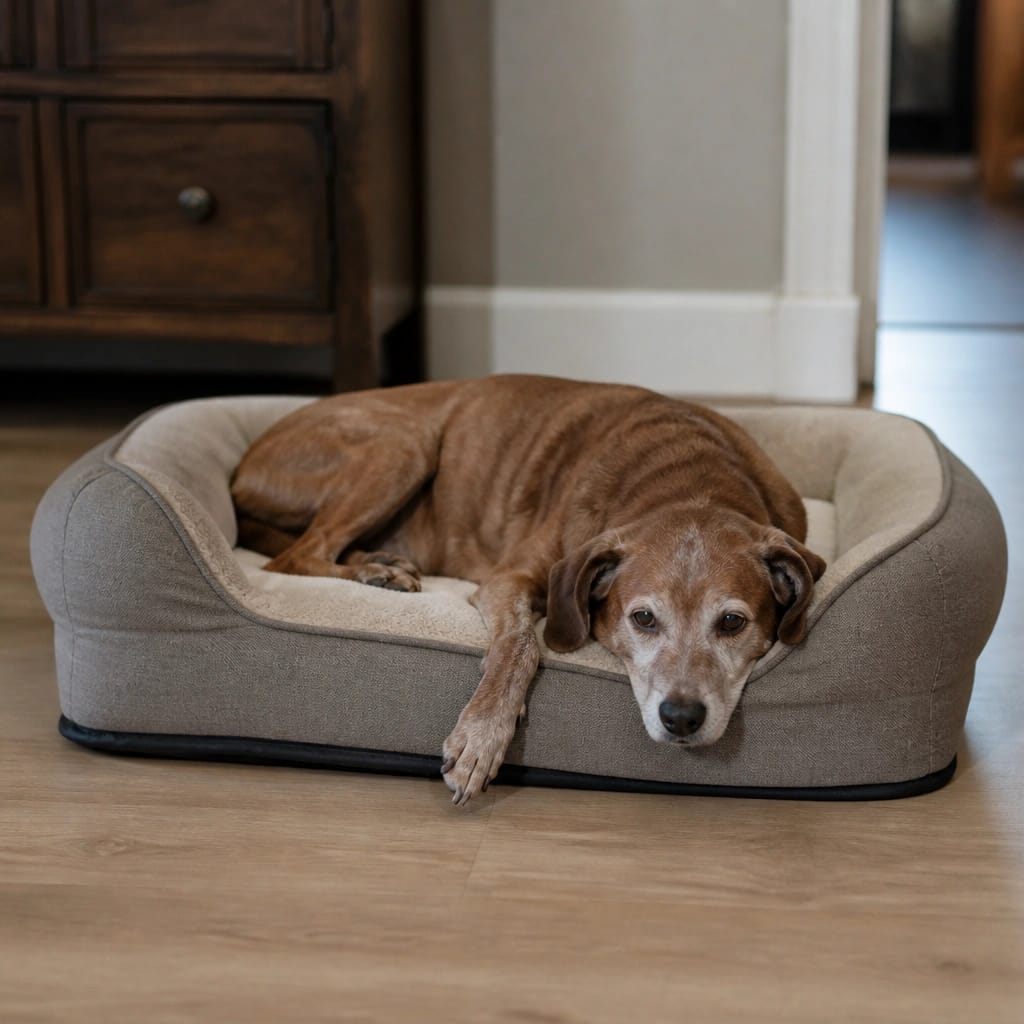
Why Low-Entry Matters for Dogs With Limited Mobility
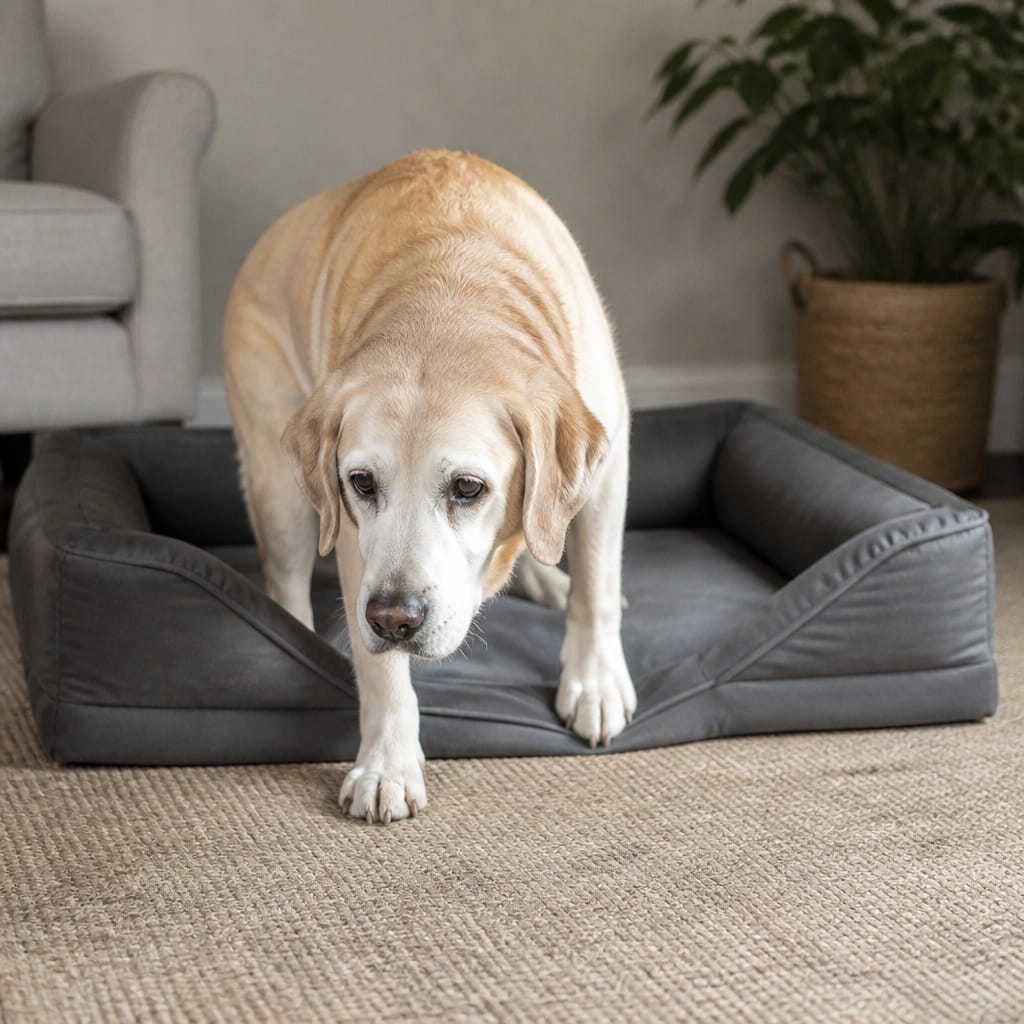
When a dog has arthritis, hip dysplasia, or is recovering from surgery, every movement requires extra effort. A standard bed with high bolsters forces them to lift their front legs higher, putting more strain on already painful joints. A low-entry bed reduces that lift, letting them step in and out with a more natural motion.
Veterinary research shows that dogs with osteoarthritis benefit from surfaces that minimize joint stress during transitions. The act of standing up from a lying position is one of the hardest movements for an arthritic dog. Lowering the height of the bed directly reduces the angle their hips and shoulders have to work against.
A low-entry bed also helps with the confidence factor. Dogs who struggle to get out of a high bed may start avoiding it altogether. Choosing the right bed can also affect where they prefer to rest in your home, which is a topic worth considering when you think about the best spot in your home.
What Makes a Dog Bed Truly Low-Entry
The term “low-entry” refers specifically to the height of the sleeping surface from the floor. A true low-entry bed sits at 2 to 4 inches high. That’s a significant drop from the 6 to 8 inches you’ll find on most standard orthopedic beds with bolsters.
But height alone isn’t the whole story. A bed that is low but made of soft, compressible foam can still be hard for a dog to get out of. When the foam sinks under their weight, their body sits lower than the bed’s edge, which means they have to push themselves out of a small depression.
That’s extra work for sore muscles.
A good low-entry bed combines a low profile with a firm enough foam to support your dog’s weight without excessive sinking. The base should also be non-slip, so the bed doesn’t slide on hardwood or tile floors when your dog pushes against it. If your dog tends to scratch or dig before lying down, the bed surface needs to be durable enough to handle that behavior without losing its shape.
Entry Height: The Most Important Number to Get Right
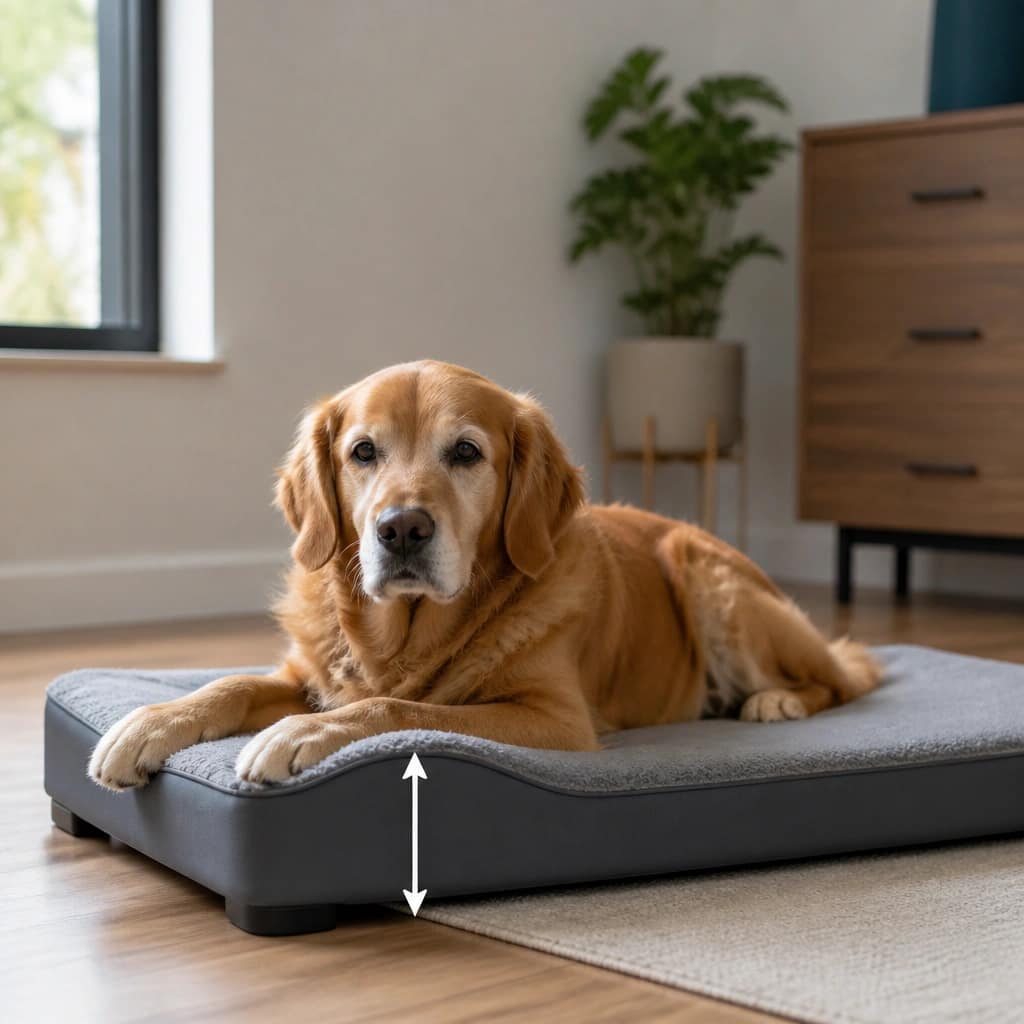
The entry height you need depends on your dog’s leg length and overall mobility. A small dog with short legs, like a French Bulldog or a Dachshund, will need a bed closer to 2 inches. A larger dog with longer legs, like a Labrador or a Golden Retriever, can manage a 3 to 4 inch entry height more easily.
To find the right height, measure your dog’s shoulder height from the floor. A good rule of thumb is that the bed’s entry height should be no more than a third of their shoulder height. If your dog already has significant trouble standing, aim for the lower end of that range.
It’s also worth checking the bed’s usable sleeping surface. A low-entry bed that is too small for your dog to stretch out on can cause joint stiffness from being cramped. Use a proper size guide to match your dog’s measurements to the bed dimensions.
Foam Firmness: Why Softer Isn’t Always Better
Many owners assume a softer bed is more comfortable for an older or sore dog. In reality, the opposite is often true. A bed that is too soft makes it harder for a dog to push themselves up.
Their legs sink into the foam, and they have to work harder to get their body weight upright.
For dogs with limited mobility, a medium-firm to firm foam is usually the better choice. Memory foam is a good option because it contours to the body while providing enough resistance to help with standing. Look for foam with a density of at least 1.5 pounds per cubic foot, though higher density foam (2 to 2.5 pounds) tends to hold up better over time.
Polyfill beds are generally too soft for dogs with mobility issues. They compress quickly and offer little support for getting up. If your dog has arthritis or joint pain, a polyfill bed is unlikely to provide the support they need.
The same principle applies to beds that are designed for other purposes, like a calming donut bed, which is better suited for anxiety than for orthopedic support.
Bolsters vs. Flat Surface: What Works Best for Your Dog
Bolsters are the raised edges around the sides of many dog beds. They provide a place for your dog to rest their head and can create a sense of security. But for a dog with limited mobility, high bolsters can be a barrier.
The choice comes down to your dog’s specific needs. If your dog has good strength in their front legs and can easily step over a low bolster, a bolster bed can still work. Look for a bed with bolsters that are no more than 4 to 6 inches high, and make sure the entry point between them is wide enough for your dog to step through without squeezing.
If your dog struggles to lift their legs at all, a flat or slightly raised bed with no bolsters is the better option. A flat surface allows them to step in from any side without an obstacle. Some dogs also prefer to sleep with their head lower than their body, which is a common sleeping position that a flat bed accommodates well.
If your dog tends to chew or scratch at the edges of their bed, a flat bed with a durable cover might be a better long-term investment. Chew proof materials can help the bed last longer, especially if your dog is anxious or has a habit of digging at the surface before lying down.
Ramp-Accessible Beds: Do You Need One?
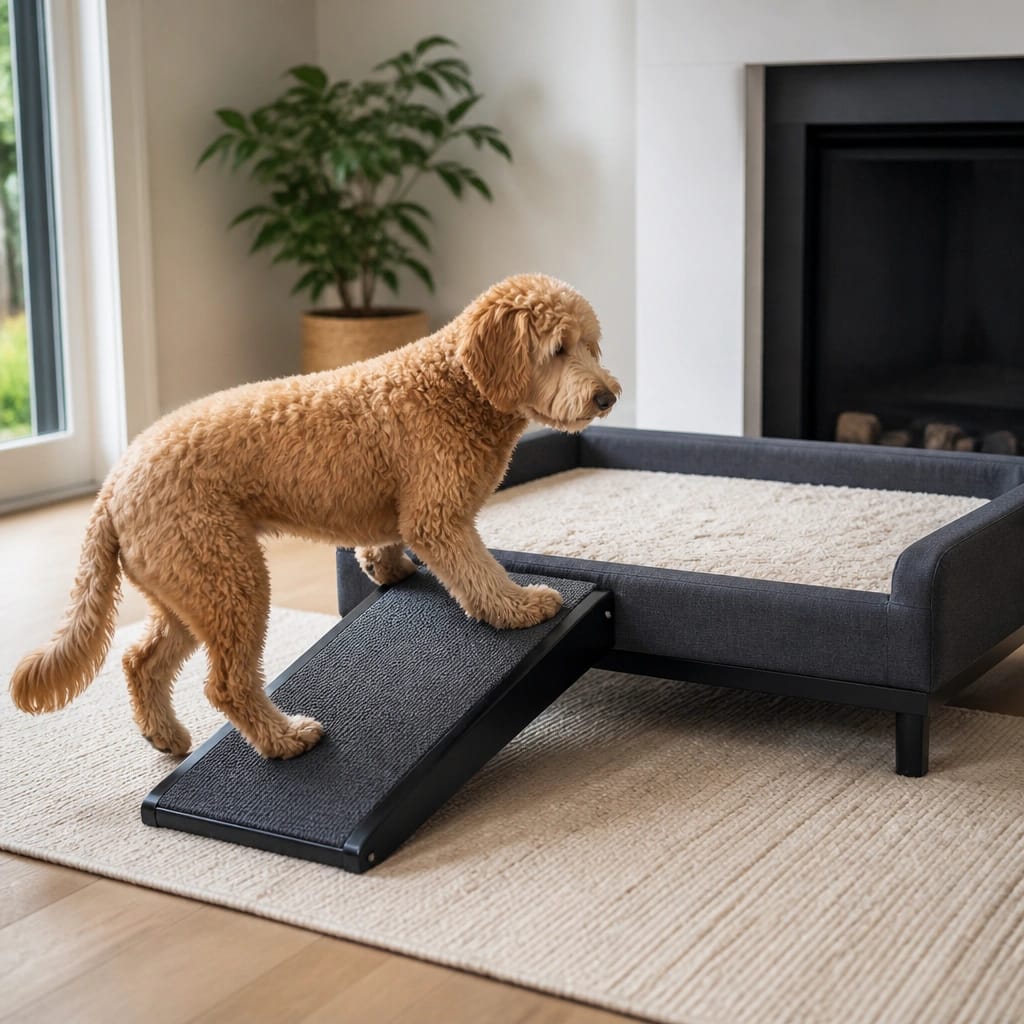
A ramp is worth considering if your dog needs a raised bed for joint relief but can’t manage the height. Raised beds keep pressure off pressure points, but they typically sit 6 to 10 inches off the floor.
A ramp with a gentle slope and a non-slip surface lets your dog walk up instead of jumping. Look for a ramp with a weight rating that matches your dog’s size. If your dog already uses a ramp for the car or the couch, a bed ramp is a natural extension.
Memory Foam vs. Polyfill: Which Supports Better
Memory foam is the clear winner for dogs with limited mobility. It contours to your dog’s body and provides consistent support that helps them push up from a lying position.
Polyfill beds compress quickly and lose their shape within weeks. Your dog ends up lying on a flat, unsupported surface that offers no help when standing. For a dog with joint pain, polyfill is a poor choice.
If budget is a concern, look for a memory foam bed with a removable cover. That way you can replace the foam insert later without buying a whole new bed. A waterproof liner underneath the cover also helps protect the foam from accidents.
The Best Bed Height for Different Dog Sizes

| Dog Size | Shoulder Height | Recommended Entry Height |
|---|---|---|
| Small (under 20 lbs) | 8 to 12 inches | 2 inches |
| Medium (20 to 50 lbs) | 12 to 18 inches | 2 to 3 inches |
| Large (50 to 90 lbs) | 18 to 24 inches | 3 to 4 inches |
| Extra Large (over 90 lbs) | 24+ inches | 4 inches |
These are general guidelines. If your dog has severe mobility issues, always choose the lower end of the range. The goal is to minimize the lift required for their front legs.
Common Mistakes When Choosing a Low-Entry Bed
The most common mistake is choosing a bed that is too soft. A plush bed feels good to us but makes it harder for a sore dog to stand up.
Another mistake is ignoring the bed’s total dimensions. A low-entry bed that is too small forces your dog into a cramped position, which can worsen joint stiffness. Measure your dog from nose to tail base and add 6 to 12 inches for a proper fit.
Some owners also forget to check the cover’s durability. A low-entry bed used by a senior dog will see a lot of wear from claws and repetitive movement. A machine-washable, durable cover will last longer and stay hygienic.
How to Get Your Dog Comfortable With a New Bed
Place the new bed next to their old one for the first few days. Let them explore it on their own terms.
You can encourage them with a familiar blanket or a treat placed on the bed. Some dogs need a few days to adjust to the different feel of memory foam. Be patient and avoid forcing them onto it.
If your dog still avoids the bed, check the location. A bed placed in a drafty area or too close to a busy hallway may not feel safe. Try moving it to a quieter spot where they already like to rest.
Keeping the Bed Clean and Supportive Over Time
Memory foam needs regular care to stay supportive. A waterproof liner underneath the cover protects the foam from urine and moisture.
Wash the cover every two weeks on a gentle cycle. Spot clean the foam itself with a damp cloth and mild soap. Never soak memory foam in water, as it can break down the internal structure.
Replace the foam insert every 2 to 3 years. A compressed foam bed loses its ability to support your dog when they push up to stand. If you notice the bed has a permanent dip where your dog sleeps, it’s time for a replacement.
Frequently Asked Questions
What is the ideal entry height for a senior dog?
A height of 2 to 3 inches works best for most senior dogs. Measure your dog’s shoulder height and choose a bed that is no more than one third of that measurement. Smaller dogs need the lower end of that range.
Can I use a ramp with any low-entry bed?
Yes, most low-entry beds work with a separate ramp. The ramp needs a non-slip surface and a gentle slope. Make sure the ramp’s weight rating matches your dog’s size.
How do I know if my dog needs a low-entry bed?
Watch how your dog gets in and out of their current bed. If they hesitate, stumble, or seem to struggle, a lower entry height can help. Dogs with arthritis, hip dysplasia, or post-surgery recovery are good candidates.
Is memory foam better than polyfill for mobility issues?
Yes, memory foam provides much better support. It holds its shape under your dog’s weight and helps them push up when standing. Polyfill compresses quickly and offers little resistance.
How often should I replace the foam in my dog’s bed?
Replace the foam every 2 to 3 years, or sooner if you notice a permanent dip. A compressed foam bed loses its support and can make it harder for your dog to stand up.
What if my dog still avoids the bed after switching?
Check the location first. Move the bed to a quieter, draft-free spot where your dog already likes to rest. Make sure the bed is not too large or too small for their comfort.


