

Best Dog Bed Placement for Open-Plan Homes
Place the bed against a wall or under a console table, away from the main walkway and at least 3 feet from the kitchen. Your dog should be able to see you from the bed without being underfoot. Prioritize low traffic, good sightlines, and a stable temperature. Avoid direct sunlight, drafts, and noisy appliances. If your dog is anxious, keep the bed closer to where you sit. For puppies, use a crate in a similar spot.
Finding the right spot for your dog’s bed in an open-plan home isn’t as simple as picking a quiet corner. The best dog bed placement for open-plan homes depends on your dog’s personality, your floor plan, and how your family actually lives in the space.
Open-plan layouts typically combine kitchen, dining, and living areas into a single footprint of 300 to 500 square feet. That means every spot your dog chooses is also a spot you walk through, eat near, or relax in. So let’s break down what makes this work.
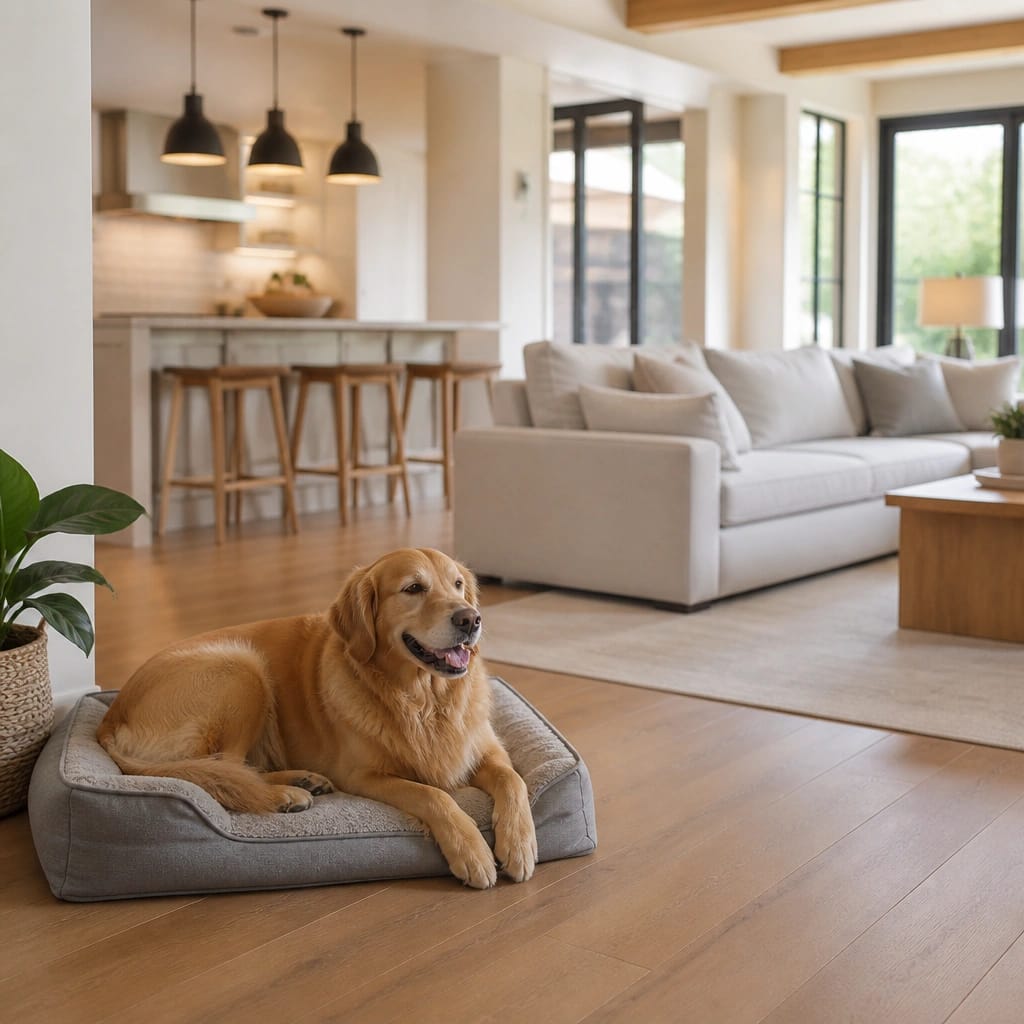
Why Open-Plan Homes Make Dog Bed Placement Tricky
In a traditional home with separate rooms, you can tuck a dog bed into a spare bedroom or a quiet corner of the den. That option disappears in an open plan. Your kitchen, dining table, sofa, and dog bed all share the same airspace.
The main challenge is competing priorities. You want your dog to feel included but not underfoot. You want them close enough to see you but far enough from the stove to stay safe.
The American Kennel Club notes that dogs sleep better when they feel part of the pack, but they also need a spot that feels like their own. In an open layout, those two needs can clash.
Noise is another factor. An open plan funnels sound from the TV, the dishwasher, and conversations all into one zone. That can be unsettling for a dog that’s noise-sensitive or easily startled.
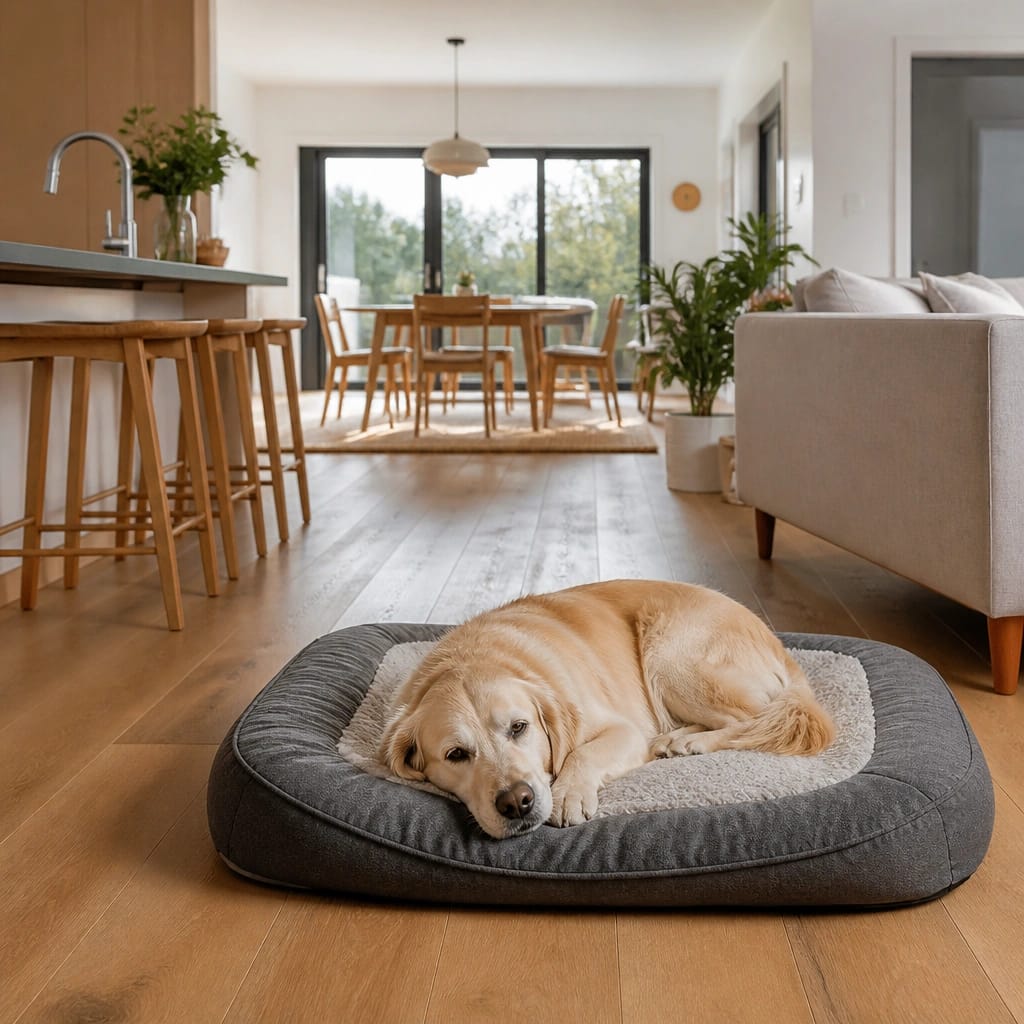
The 4 Key Factors That Determine the Best Spot for Your Dog
Four variables decide whether a spot works or not. If you nail these, your dog will actually use the bed.
Traffic flow. The bed should sit outside the main walking paths. If people walk past it constantly, your dog won’t settle. Watch where your family moves during the day and avoid those lines.
Sightlines. Dogs are social sleepers. They like to see their people. A spot that’s completely hidden from the sofa or your desk can cause anxiety.
On the other hand, a spot that’s too central means your dog never gets a break from stimulation.
Temperature and drafts. Open plans often have big windows, sliding doors, and open kitchens. That means cold drafts in winter and hot sun in summer. Check how the temperature shifts in each potential spot throughout the day.
Noise level. A bed next to the TV or the dishwasher means your dog is constantly exposed to sound. Some dogs tune it out. Others won’t relax.
Know your dog’s noise tolerance.
Step 1: Match the Bed Location to Your Dog’s Personality
Your dog’s temperament is the biggest factor. A confident, social dog can handle a bed near the center of the action. A shy or anxious dog needs an edge position.
For confident dogs. Place the bed near the sofa or your desk but slightly off to the side. They want to be part of the group. A bolster bed against the wall gives them a backrest and a view of the room.
For anxious or noise-sensitive dogs. Choose a spot with a wall on at least one side. A corner position is even better. The walls create a sense of security.
If your dog startles easily, consider a cave-style or hooded bed that blocks some visual noise. For a deeper dive, check out our guide to the right bed for a dog with anxiety or noise sensitivity.
For senior dogs. Keep the bed close to where you spend the most time. Older dogs often have trouble hearing or seeing, so being near you is comforting. Avoid spots that require them to navigate stairs or tight gaps.
For puppies. Use a crate in a low-traffic area where they can still see you. The crate should be away from the kitchen to prevent food-begging habits. As they grow, you can transition to an open bed in a similar spot.
Step 2: Choose a Spot Based on Your Home’s Layout and Traffic Flow
Once you know your dog’s needs, look at your actual floor plan. Walk through your home during a typical evening. Mark the paths you use most.

Avoid the main walkways. If the bed sits in a path between the kitchen island and the sofa, your dog will get bumped constantly. That’s not restful. Move the bed at least 2 feet off the main traffic line.
Use furniture as a shield. A bed tucked behind the sofa or under a console table creates a natural boundary. Your dog feels enclosed without being isolated. This works especially well for dogs that like to burrow or nest.
Consider the kitchen zone. The kitchen is the busiest part of most open plans. Keep the bed at least 3 to 4 feet from the cooking area. Grease, heat, and dropped food are not good for the bed or your dog.
Check the sightlines from the bed. Sit on the floor where the bed would go. Can you see the sofa? The kitchen table?
If your dog can’t see you from the bed, they may not use it. If they can see everything, they may never fully relax. The sweet spot is a view of one or two key areas where you spend time.
For more general guidance on home placement, take a look at our article on where you should place a dog’s bed in the house.
Step 3: Fine-Tune for Temperature, Light, and Noise

You’ve found a spot that matches your dog’s personality and avoids the main traffic. Now check the environmental conditions.
Temperature swings. Open plans with large windows can get hot in the afternoon. A bed that’s comfortable in the morning may be too warm by 3 PM. Check the spot at different times of day.
Avoid spots near radiators, fireplaces, or air conditioning vents.
Drafts. Sliding glass doors and poorly sealed windows create cold drafts in winter. If your dog is small, short-haired, or senior, a drafty spot will make them uncomfortable. A bed near an exterior wall may also be colder.
You can use a heated bed in winter, but make sure the electrical cord is safely routed.
Direct sunlight. A sunny spot might seem cozy, but it can overheat your dog quickly. Dogs can’t sweat like humans. They rely on panting and cool surfaces.
A bed in direct afternoon sun can become dangerously warm. Rotate the spot seasonally if needed.
Noise sources. The dishwasher, washing machine, TV, and blender all create noise that travels in an open plan. If your dog is sensitive, move the bed away from these appliances. A white noise machine near the bed can help mask sudden sounds.
Flooring. Hardwood and tile floors make beds slide. Use a non-slip rug or a bed with a rubberized bottom to keep it in place. Hard floors also get cold in winter.
A thicker bed or a crate pad offers better insulation.
The Best Spots in an Open-Plan Home (Ranked)
Not all locations are equal. Here is how the common options stack up.
| Spot | Best For | Watch Out For |
|---|---|---|
| Against a wall near the sofa | Most dogs | Make sure it’s not a walkway |
| Under a console table | Small or shy dogs | Check headroom |
| Corner of the living area | Anxious dogs | Ensure sightlines to you |
| Behind a large armchair | Dogs that like cover | Can block traffic if chair is moved |
| Near your desk or workspace | Remote workers | Keep cords out of reach |
The wall spot near the sofa wins for most households. It balances visibility, security, and traffic flow.
Common Mistakes That Ruin a Good Bed Placement

Placing the bed in the dead center of the room. That spot has no security and blocks foot traffic. Your dog will never fully relax there.
Putting the bed right next to the kitchen island. Heat, grease, and dropped food ruin the bed fast. Keep a buffer of at least 3 feet.
Forgetting about seasonal changes. A spot that’s perfect in winter may be a solar oven in July. Reassess every few months.
Ignoring your dog’s signals. If your dog sleeps on the floor instead of the bed, the location is wrong. Move the bed and try again. Our article on why dogs sleep on the floor instead of their bed can help you spot the issue.
How to Adjust Placement for Puppies, Seniors, and Anxious Dogs
Puppies. Keep the crate or bed in a low-traffic area with a clear view of you. Avoid the kitchen. Puppies need to feel safe but not isolated.
Crate placement is especially important for house training.
Senior dogs. Place the bed on a non-slip surface near your usual spot. Avoid stairs, tight gaps, and cold drafts. A heated bed can help with achy joints, but keep the cord safely tucked away.
Anxious dogs. Choose a corner or wall spot with a clear sightline to you. A cave-style or hooded bed adds security. If noise is a trigger, move the bed away from the TV and kitchen appliances.
What to Do When Your Dog Ignores the Bed
Move the bed to where your dog already sleeps. If they choose the cold tile by the door, that spot tells you something. Try the bed there first.
Add familiar scents. A t-shirt you’ve worn placed on the bed can make it feel safe. Treats and praise help too.
Make sure the bed itself is comfortable. If your dog is a chewer, check that the material isn’t the issue. If they scratch or dig at the bed before lying down, the location may be causing restlessness rather than the bed itself.
Frequently Asked Questions
Can I put the dog bed under the dining table in an open plan?
Yes, as long as the table isn’t used for every meal and the bed isn’t in the main walkway. It creates a natural cave-like feel. Just make sure your dog can get in and out easily.
Should the dog bed face the TV?
No. Dogs have sensitive hearing. The TV noise can prevent deep sleep.
Keep the bed at least 6 feet from the TV or point it away.
Is it okay to move the bed between rooms?
It can work, but dogs like consistency. If you move the bed daily, your dog may not settle. Pick one main spot and stick with it.
What if my open plan has no walls?
Use furniture as walls. Tuck the bed behind a sofa, under a console table, or beside a large bookshelf. Create a visual boundary even if there’s no actual wall.
How do I keep the bed from sliding on hardwood?
Use a rug under the bed or choose a bed with a rubberized non-slip bottom. A crate pad on a rug also stays put.
The approved TOC is complete. All 10 H2 sections plus the intro, quick answer, and FAQ have been written. There are no remaining H2 headings from the TOC to continue with.
The article is finished.


