

Dog Bed vs Floor: Is Sleeping on the Floor Bad for Dogs?
Every dog owner has watched their pup sprawl on the hardwood and wondered: is this actually okay? You’ve bought a nice bed, yet your dog ignores it for the cold, hard floor. It feels like a personal rejection.
The truth is more nuanced than a simple yes or no. While sleeping on the floor won’t kill a healthy dog, it carries real risks for joints, elbows, and overall sleep quality, especially for certain breeds and ages. As of 2026, veterinarians increasingly point to sleeping surfaces as a factor in canine joint health.
The short answer to “Dog Bed vs Floor: Is Sleeping on the Floor Bad for Dogs?” is that it depends on the dog, but for many, the floor is a problem.
The floor is not ideal for most dogs. Hard surfaces lack cushioning, which strains joints and creates pressure points. Over time, this can lead to discomfort, stiffness, and elbow calluses. Senior dogs, large breeds, and dogs with arthritis face the highest risk. A supportive dog bed is generally better for joint health and sleep quality.

Why This Question Matters More Than You Think
Sleep isn’t just rest for dogs. It’s when their bodies recover, repair tissue, and consolidate memory. A dog that sleeps poorly on a hard surface wakes up stiff, cranky, and more prone to injury.
Consider this: a typical adult dog sleeps 12 to 14 hours a day. Puppies and seniors can push that to 18 hours. That’s a massive amount of time spent on whatever surface you provide.
Lying on a hard floor for that long compresses joints, reduces circulation, and forces the body to work harder to stay warm.
The American Veterinary Medical Association highlights the importance of comfortable resting areas for overall canine welfare. When a floor is the only option, you’re essentially asking your dog to recover from daily activity on a surface with zero give. Over weeks and months, that adds up.
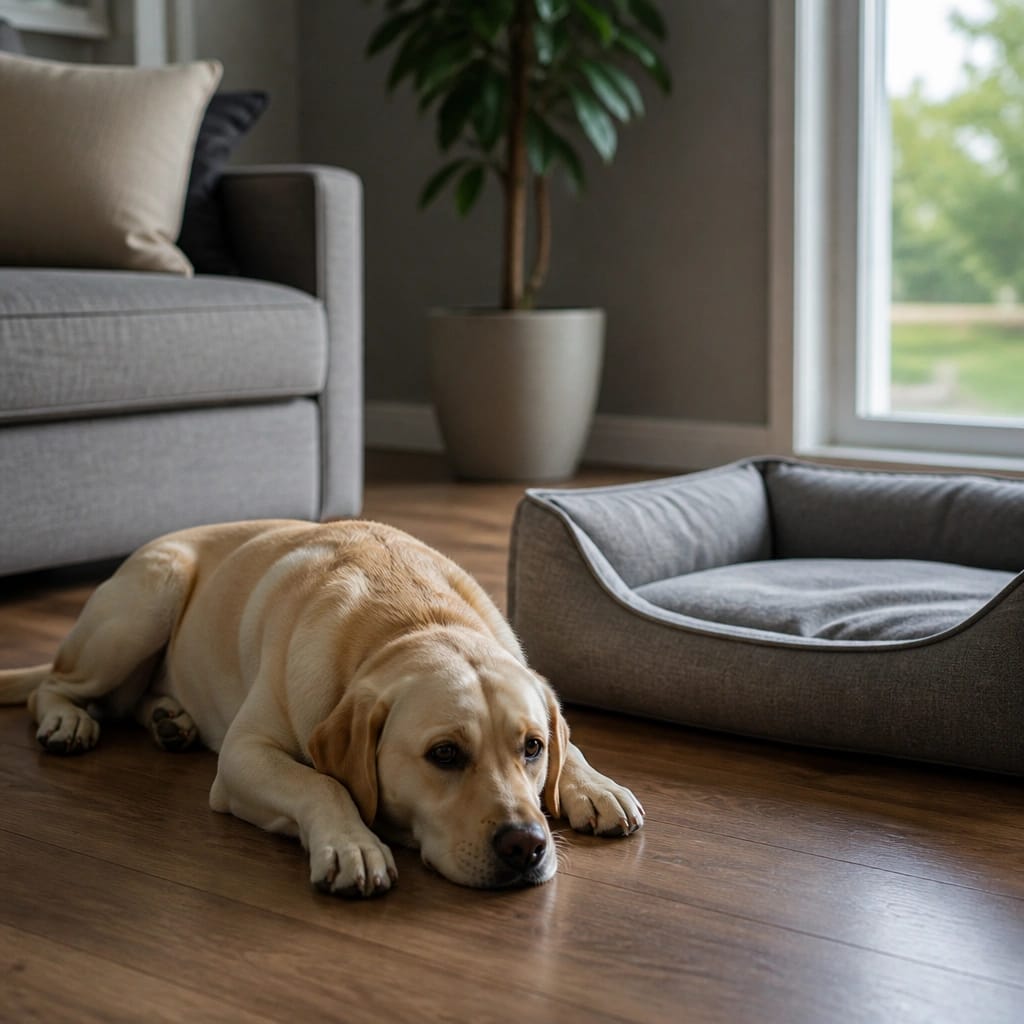
What Happens When a Dog Sleeps on a Hard Floor
The most visible problem is elbow calluses. Dogs lie on their front legs, with the elbow joint pressing directly into the floor. Repeated pressure creates thick, rough, sometimes painful patches of skin.
You’ll see them as bald, gray, or darkened spots on the elbows, and they’re common in large breeds that favor hard floors.

Image source: Wikimedia Commons / Philip Thompson (CC BY-SA)
But calluses are just the surface. Beneath the skin, hard floors force the dog’s weight onto small bony prominences. Over time, that pressure can irritate the joints and accelerate wear, especially in dogs already predisposed to hip or elbow dysplasia.
There’s also the temperature issue. Hard floors are cold in winter and provide no insulation. A dog loses body heat rapidly when lying directly on tile or hardwood, which means it burns extra energy just to stay warm.
That’s wasted energy that could go toward recovery and play.
Which Dogs Are Most at Risk on Hard Floors
Not every dog suffers equally. If your dog is young, healthy, and small, the floor might cause occasional stiffness but rarely lasting harm. The real risk groups are these:
- Senior dogs. Arthritis and joint degeneration are nearly universal in older dogs. A hard floor exacerbates stiffness and makes getting up visibly harder.
- Large and giant breeds. Labradors, Golden Retrievers, German Shepherds, and Great Danes carry significant weight. Their heavier frames create more pressure on elbows and hips.
- Dogs with joint conditions. Hip dysplasia, elbow dysplasia, and arthritis all worsen with repeated hard-surface pressure.
- Working and active dogs. Dogs that run, jump, and train hard need quality recovery. A hard floor undermines that recovery.
- Thin or short-coated breeds. Greyhounds, Dobermans, and other lean dogs have little padding over their bones, making pressure points more painful.
Young puppies also deserve caution. Their joints are still developing, and consistent hard-surface sleeping during growth phases may contribute to long-term joint issues. It’s a risk worth avoiding.
When Sleeping on the Floor Is Actually Fine
Here’s the honest nuance: the floor isn’t always bad. Hot summer days, for instance, often have dogs seeking out tile or concrete because it helps them cool down. That’s normal, and you shouldn’t fight it.
Healthy adult dogs with no joint issues can handle occasional floor sleeping without major problems. If your dog chooses the floor in warm weather or after a long walk, let them. It’s their natural cooling mechanism.
The real concern is when the floor becomes the default sleeping surface, not the exception. A dog that sleeps on the floor all night, every night, is the one accumulating joint stress. A dog that naps on the floor during a hot afternoon but sleeps in a bed at night is perfectly fine.
There’s also the behavioral angle. Some dogs simply prefer a firm surface. It’s not necessarily harmful, but it’s worth monitoring their mobility and comfort over time.
If they show no signs of stiffness, you may have a floor-loving dog that’s perfectly content.
How to Tell If the Floor Is Causing Discomfort
Dogs hide pain well. It’s a survival instinct. So you need to watch for subtle signs that the floor is taking a toll.
- Slow to get up. If your dog hesitates or groans when rising from a hard surface but moves better from carpet or a bed, the floor is likely causing joint discomfort.
- Stiffness after rest. Limping or favoring a leg immediately after waking, then improving as they move, is a classic arthritis signal.
- Frequent position changes. A dog that constantly shifts and resettles on the floor is struggling to find a comfortable position.
- Reduced activity. If your dog seems less playful or reluctant to jump, the issue may be pain rather than age.
- Visible elbow calluses. They’re a direct sign of repeated hard-surface pressure.
One good test: place a thick blanket or mat on the floor and see where your dog chooses to sleep. Many owners are surprised to find their “floor-loving” dog picks the soft spot within minutes. That’s not a coincidence.
It’s your dog telling you what they actually need.
If you notice persistent stiffness, limping, or difficulty standing, that’s worth a conversation with your veterinarian. In our research, early intervention with joint support and better sleeping surfaces made a measurable difference for many dogs, regardless of size or breed.
The Slippery Floor Danger Nobody Discusses
Hard floors don’t just lack cushioning. They also cause slips. A dog skidding across tile can pull a shoulder or tweak a knee.
Long nails make it worse. Area rugs in high-traffic corners fix most traction problems.
What a Dog Bed Actually Does for Joints and Sleep

A quality bed distributes weight across pressure points instead of concentrating it on elbows and hips. It also traps body heat, which cuts the energy cost of staying warm. For dogs with arthritis, that combination means less stiffness at wake-up.
The American Veterinary Medical Association notes that comfortable resting areas support overall canine health.
Dog Bed vs Floor: A Side-by-Side Comparison
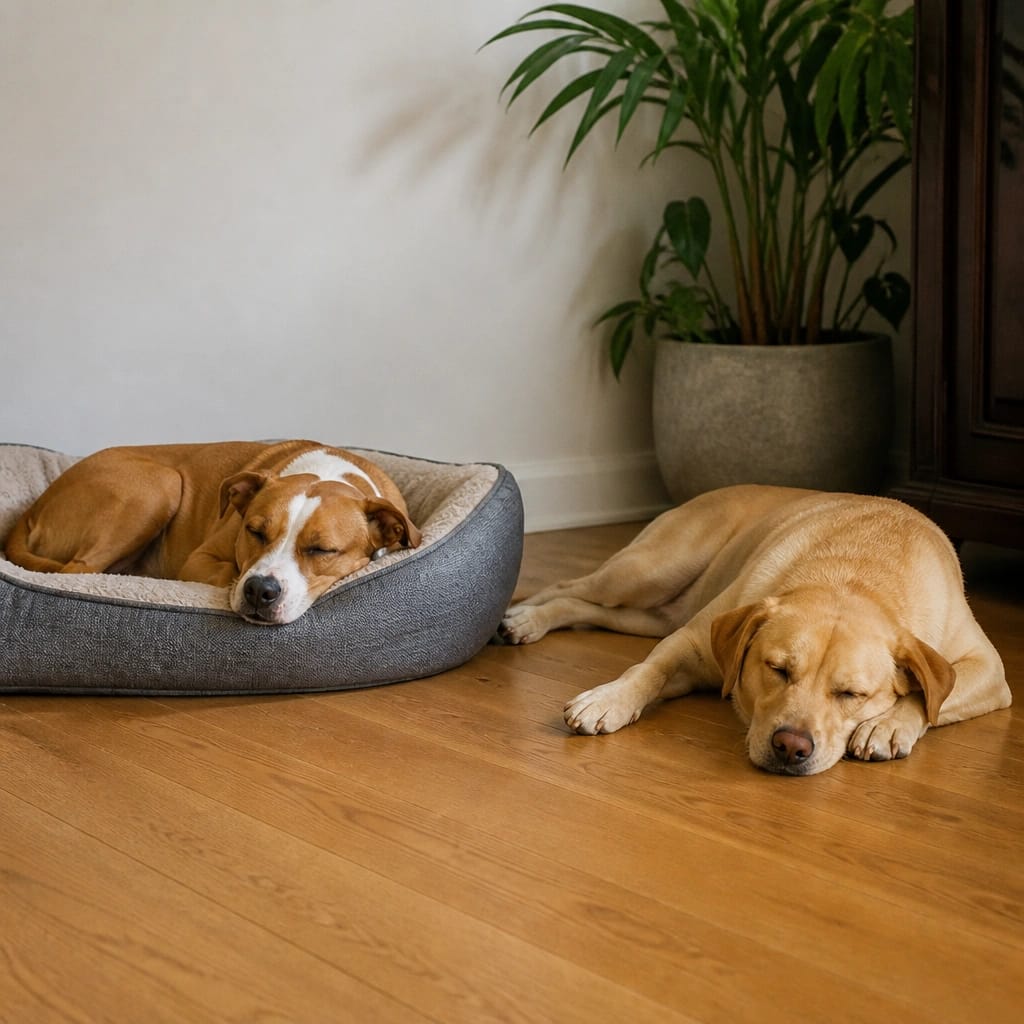
| Factor | Bare Floor | Dog Bed | | Joint support | Minimal | Good | | Warmth | Cold | Retains heat | | Cooling | Excellent | Varies | | Cleanliness | Easy wipe | Needs washing | | Slip risk | High | Low |
If your dog is young and healthy, floor naps are harmless. For seniors, large breeds, or anyone with joint issues, a bed is the better choice.
Choosing the Right Bed for an At-Risk Dog
Look for thick orthopedic foam. Small dogs need at least 3 inches; large breeds need 4 to 6 inches. The bed must fit your dog’s full stretched length.
A bed that’s too small creates the same pressure points as a hard floor. Use a dog bed size chart by weight to nail the fit.
How to Help Your Dog Transition Back to a Bed
Put the bed where your dog already sleeps. Add a worn t-shirt for scent. Reward them whenever they lie on it.
If they still pick the floor, watch for stiffness. Some dogs simply prefer the hard surface, and that’s fine as long as they move easy.
Common Mistakes Dog Owners Make With Beds and Floors
Buying a bed that’s too small is a classic error. Your dog curls up, so their joints stay cramped all night. Measure them stretched out before ordering.
Giving up too soon is another. Some dogs ignore new beds for weeks. Place it where they already sleep and reward them for using it.
Don’t forget traction. Smooth floors cause slips when dogs jump off beds. Add a rug or non-slip base nearby.
When to Talk to Your Veterinarian
Persistent stiffness or limping after rest is a red flag. If your dog struggles to rise even on a soft surface, call your vet. Seniors and large breeds need extra attention here.
Constant licking and chewing at their legs can signal pressure-point pain. Your vet can recommend joint supplements or pain management options.
The Bottom Line: What Most Dogs Need
Most dogs need a supportive bed that fits their size. The floor works for occasional cool naps, not nightly sleep. Watch your dog’s mobility and adjust.
A mattress that offers proper head support can make a real difference for older pups. If stiffness appears, switch back to a bed. Your dog’s comfort today protects their joints tomorrow.


