

Dog Bed vs Blanket: Which Is Better for Everyday Sleeping?
Every dog owner hits this moment: you’re staring at a $150 orthopedic bed on one side of the cart and a $12 fleece throw on the other. Dog Bed vs Blanket: Which Is Better for Everyday Sleeping? It’s a fair question.
It depends on your dog.
As of 2026, the pet bedding market is full of engineered options. Yet many vets still recommend simple layering for warmth and comfort. This guide breaks down when a structured bed wins, when a blanket is enough, and how to combine both for the perfect setup.

Why This Comparison Matters
A dog’s sleeping surface affects more than comfort. It impacts joint health, body temperature, anxiety levels, and even behavior. That’s why this choice matters.
Sleep is when dogs recover. Puppies build muscle. Senior dogs repair tissue.
A poor sleeping surface can mean extra pressure on elbows and hips, restless nights, and a tired, grumpy dog the next day.
But here’s the thing: not every dog needs the same setup. A 10-pound Chihuahua who curls into a tight ball has very different needs than a 70-pound Labrador who sprawls out like a starfish. The right answer changes with size, age, health, and habit.
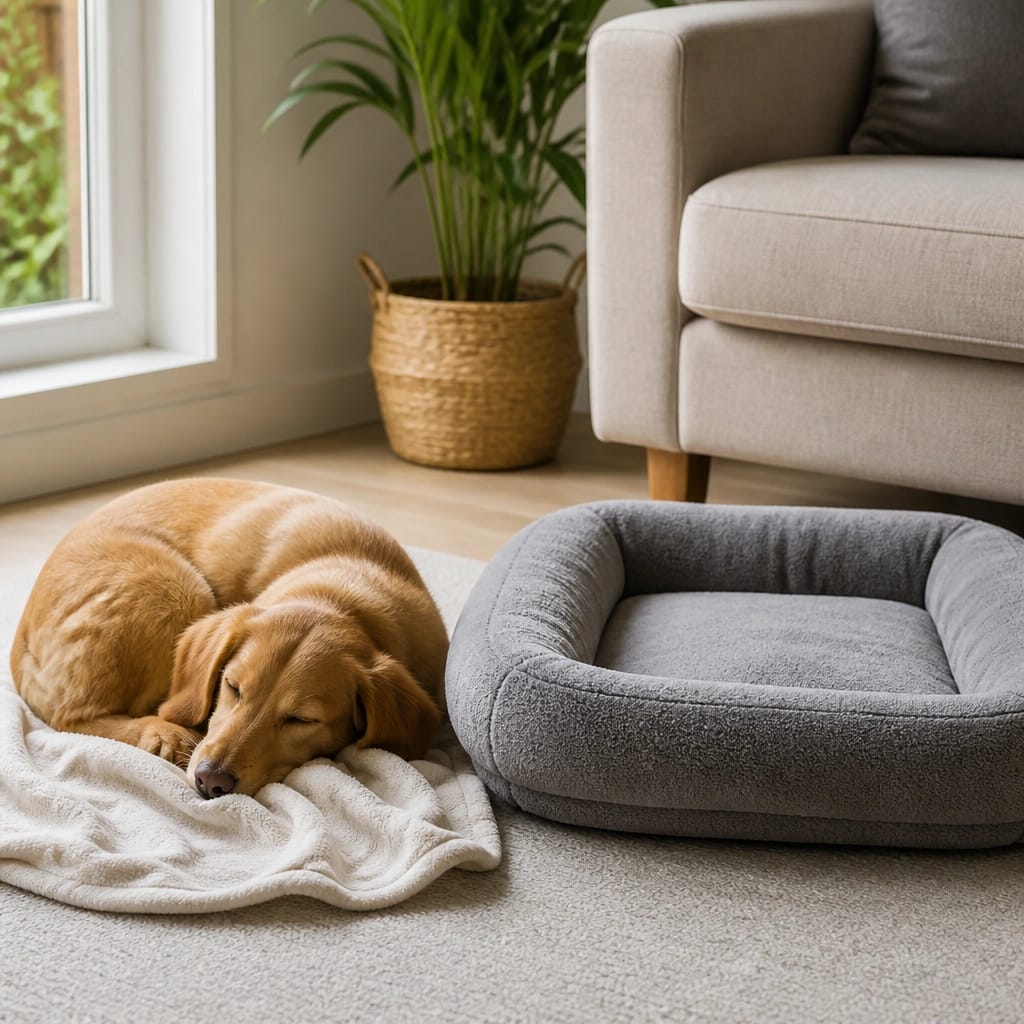
What a Dog Bed Actually Does
A quality dog bed is more than a padded rectangle. It gives consistent support, a defined space, and a durable surface that holds up to daily use.
Support and Joint Pressure Relief
Beds with memory foam or high-density support layers distribute body weight evenly. That reduces pressure on hips, elbows, and spine. For dogs with arthritis or joint discomfort, this makes a real difference.
Manufacturer specifications often list foam thickness in inches, usually 3 to 6 inches for orthopedic models. If your dog is older, consider whether they have trouble rising in the morning. It’s worth discussing options with your vet.
A Defined Sleeping Space
Dogs are den animals by instinct. A bed gives them a clear, personal spot. That helps with routine and security.
Many owners find their dogs settle faster when they have a designated area. Finding the right spot for their bed matters just as much as the bed itself.
Durability and Easy Maintenance
Most beds have removable, machine-washable covers. That’s huge for cleanliness. Keeping the bed itself fresh is easier when you can wash the outer layer.
And because beds are built for chewing and digging, they tend to outlast a lone blanket.
What a Blanket Actually Does
A blanket works differently. It’s soft, flexible, and familiar. For some dogs, that’s exactly what they need.

Warmth and Comfort Flexibility
Blankets trap body heat. That’s perfect for cold nights or drafty rooms. They’re also adjustable.
You can fold one, spread it out, or layer two for extra insulation. A dog who loves to burrow will naturally gravitate to a blanket.
Portability and Affordability
A blanket goes anywhere. The car, the couch, the crate, the camping trip. It costs a fraction of a bed, and if it gets ruined, the loss is minor.
For travel, nothing beats it.
Nesting and Burrowing Appeal
Many dogs scratch and circle before lying down. That’s called nesting. A blanket lets them dig, arrange, and shape their sleeping area.
It gives anxious dogs a sense of control. If your dog is anxious or noise-sensitive, a blanket can feel like a safe hideaway.
Side-by-Side Comparison: Dog Bed vs Blanket
| Factor | Dog Bed | Blanket |
|---|---|---|
| Support | Consistent, pressure-relieving | Minimal, no structural support |
| Cleanliness | Washable cover, waterproof options | Requires frequent washing, dries slow |
| Durability | Built for daily use and chewing | Thin fabric, tears easily |
| Warmth | Moderate, depends on material | Excellent insulating layer |
| Cost | Higher upfront | Very low, easy to replace |
| Portability | Bulky | Extremely portable |
Key Factors That Change the Answer
The right choice depends on your dog’s specific situation. Here’s how to decide.
Dog Size and Sleeping Position
If your dog curls up tightly, a soft blanket might be enough. The body folds into itself and creates natural cushioning. If your dog sprawls out and stretches, they need a larger, supportive surface.
Look at how your dog sleeps tonight. That’s your first clue.
Age and Health Considerations
Puppies and healthy adults can manage with blankets, especially in crates. Senior dogs and breeds prone to hip or elbow issues do better on structured beds. Comfort and support aren’t medical treatment.
Always check with a vet for ongoing pain.
Crate vs. Open Floor Sleeping
In a crate, a flat mat or blanket works well because space is limited. A bulky bed can reduce usable floor space. When a dog sleeps on hard floors or in a drafty corner, a raised bed with support layers is the better call.
Climate and Seasonal Temperatures
Summer heat means your dog may prefer a cooler surface. Thin cotton blankets or elevated beds breathe better. Winter calls for insulation.
That’s when cold-weather setups with extra layers really help.
Chewing, Digging, and Housebreaking Stage
Aggressive chewers destroy blankets quickly. Worse, they can swallow fabric and stuffing. That’s a choking hazard.
Puppies who aren’t fully house-trained also need waterproof, washable surfaces. A blanket alone gets soaked and becomes a hygiene problem. For heavy chewers, look into tougher materials.
Best Use Cases for a Dog Bed
A structured bed wins for senior dogs, breeds prone to joint issues, and large dogs that sprawl. The support distributes weight evenly, which relieves pressure on hips and elbows. Durable covers also handle daily scratching and chewing better than fabric ever will.
Best Use Cases for a Blanket
A blanket shines for travel, crate training, and burrowing breeds that love to nest. It’s cheap, portable, and easy to layer. For anxious dogs, a folded blanket creates a snug hiding spot that feels secure and den-like.
When the Right Answer Is Both: Layering a Blanket Over a Bed
Most owners land on a hybrid setup. Put a supportive bed down, then layer a blanket on top.

Image source: Wikimedia Commons / Mitch Barrie from Reno, NV, USA (CC BY-SA)
The bed provides joint support. The blanket adds warmth and a soft surface for nesting. If your dog digs and circles before lying down, the blanket takes the abuse without ruining the bed underneath.
Common Mistakes to Avoid
Using a blanket alone for a senior dog is a big one. Thin fabric can’t support aging joints. Another mistake is choosing a bed that’s too small.
Proper sizing matters every bit as much as the type.
Don’t overheat a heavy-coated dog, either. Stacking thick blankets invites overheating, especially in winter.
How to Choose for Your Dog in 5 Simple Steps

- Measure your dog’s body length from nose to tail base.
- Watch how they sleep tonight. Curled or sprawled?
- Factor in age and any joint concerns.
- Match the setup to your floor type and home temperature.
- Try one approach for a few nights, then adjust.
Matching the bed to your dog’s size guidelines makes this step easier. The American Kennel Club recommends measuring the dog from nose to tail base for accurate sizing (akc.org).
Frequently Asked Questions
Can a blanket replace a dog bed?
No, not for everyday use. A blanket offers warmth but lacks support. Older dogs and dogs with joint issues need a structured surface.
For healthy adult dogs, a blanket might work temporarily, but a bed supports long-term comfort much better.
Why does my dog prefer a blanket over a bed?
Some dogs love burrowing and nesting. A blanket lets them shape their sleeping area. It also traps body heat, which feels cozy.
If your dog digs before lying down, a blanket satisfies that instinct better than a firm bed surface.
Is it safe to put a blanket inside a crate?
Yes, with supervision. Skip loose threads and small parts. Puppies and aggressive chewers can tear fabric and swallow it.
If your dog chews, use a durable crate mat designed for tough use.
How often should I wash my dog’s bedding?
Wash blankets and bed covers weekly if used daily. Dogs with allergies or skin issues need it more often. Use hot water and a pet-safe detergent.
Let everything dry completely before putting it back in place.
Final Verdict: Which Is Better for Everyday Sleeping?
A bed is the better choice for everyday sleeping in most cases. It gives consistent support, lasts longer, and stays cleaner. A blanket works as an addition, not a replacement.
Layer both, watch your dog’s behavior, and let the answer evolve as they age.
Best Use Cases for a Dog Bed
Senior dogs and large breeds need the consistent support a bed provides. It also keeps them off cold floors and spreads pressure evenly across hips and elbows.
Best Use Cases for a Blanket
Blankets work best for travel, crates, and burrowing dogs. They’re also easy to swap out while a puppy is still learning house training.
When the Right Answer Is Both: Layering a Blanket Over a Bed
Use a bed for structural support and a blanket for warmth. The blanket takes the abuse from digging and nesting while the bed stays intact underneath.
Common Mistakes to Avoid
Don’t skip support for older dogs. Don’t choose a bed that’s too small. And watch for overheating if your dog has a thick coat.
How to Choose for Your Dog in 5 Simple Steps
Measure nose to tail, note the sleep position, factor in age, match the floor and room temperature, then try one setup and adjust after a few nights.


