

Dog Beds on Tile Floors: What to Consider
If you’ve ever watched your dog’s bed slide across the tile floor every time they jump on or off, you know the struggle is real. Dog Beds on Tile Floors: What to Consider isn’t just about picking a comfy cushion. It’s about safety, warmth, and making sure the bed stays put.
A bad choice can lead to falls, joint pain, and a bed that ends up in the corner.
Per the National Floor Safety Institute, hard surfaces like tile increase the risk of slips for pets, especially those with mobility issues. Cold tile can also sap body heat from dogs, making them uncomfortable. The right bed solves both problems at once.
Let’s break down why tile floors are a different ballgame for your dog’s bed.
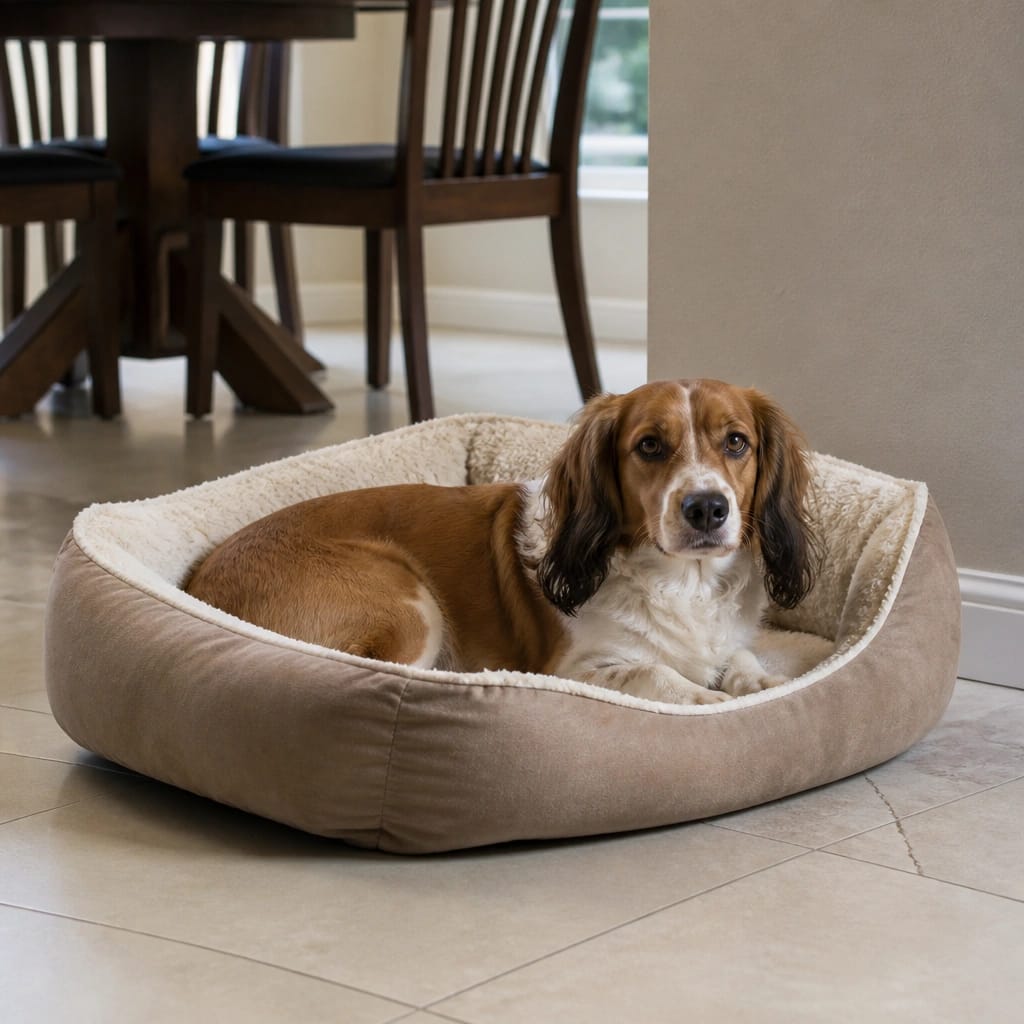
Why Tile Floors Make Dog Bed Shopping Different
Tile floors are slick, hard, and temperature-sensitive. That combination changes everything about a dog bed’s job.
On carpet, the bed’s bottom barely matters. On tile, it’s the difference between staying put and sliding across the room. A dog that struggles to get up on a slippery surface may avoid the bed entirely.
They might even injure themselves trying.
Cold tile draws heat away from your dog’s body. This hits short-haired breeds, seniors, and puppies hardest. Dogs sleeping on tile without insulation spend more time shivering and less time in restorative sleep.
As of 2026, most homes with tile flooring have it in high-traffic areas where temperatures fluctuate.
The hardness of tile also means less natural cushioning for joints. A bed that works fine on carpet can feel like concrete on tile. That’s why you need to think about the right spot in your home where you put the bed before you even start shopping.

The Short Answer: What Works on Tile (and What Doesn’t)
A bed with a non-slip bottom is the most important feature. Memory foam insulates better than thin mats. Elevated cots allow airflow underneath.
Avoid beds with smooth fabric bottoms that slide.
If your dog is older or has joint issues, a thick orthopedic bed with a rubber backing is your best bet. For dogs that overheat, a cot bed keeps them cool. The key is matching the size to your dog matching the size to your dog and the floor’s challenges.
The Decision Tree: Finding Your Dog’s Best Bed
There’s no universal best bed for tile floors. The right choice depends on your dog’s specific needs. Here’s how to narrow it down.
Dog Age and Joint Health
If your dog is young and healthy, almost any bed with a non-slip bottom works. A simple mat or cot is fine.
If your dog is senior or has arthritis, choose thick orthopedic foam. Look for at least 4 inches of memory foam. Cold tile makes joint pain worse, so insulation matters.
High sides can also help your dog feel secure. Consider breed-specific needs breed-specific needs when choosing support levels.
Coat Type and Temperature Needs
If your dog has a thick double coat, they may overheat on tile. An elevated cot or a cooling gel bed works best.
If your dog has a short coat or is hairless, they lose body heat fast. A self-warming bed or thick plush bed with a non-slip bottom is ideal. In very cold climates, a heated bed makes sense.
Bedtime Habits (Scratching, Nesting, Chewing)
If your dog scratches or digs before lying down, pick a bed with a tough, chew-resistant cover. Look for double-stitched seams and a waterproof liner. For dogs that nest, a bolster bed with high sides gives them something to push against.
Understanding their scratching behavior scratching behavior helps you choose the right cover.
Mobility and Getting Up From Tile
Dogs with hip dysplasia or weak legs struggle on smooth surfaces. A bed with a firm edge helps them stand up. A non-slip rug under the bed provides extra grip.
Keep the bed low to the ground for easy access. If your dog avoids the bed entirely why they avoid the bed, check their mobility first.
What to Look for in a Non-Slip Bed Base
The bottom of the bed is the most important part on tile floors. Look for a rubber backing, silicone grip dots, or a textured PVC bottom. These materials grip the tile and stop the bed from sliding.
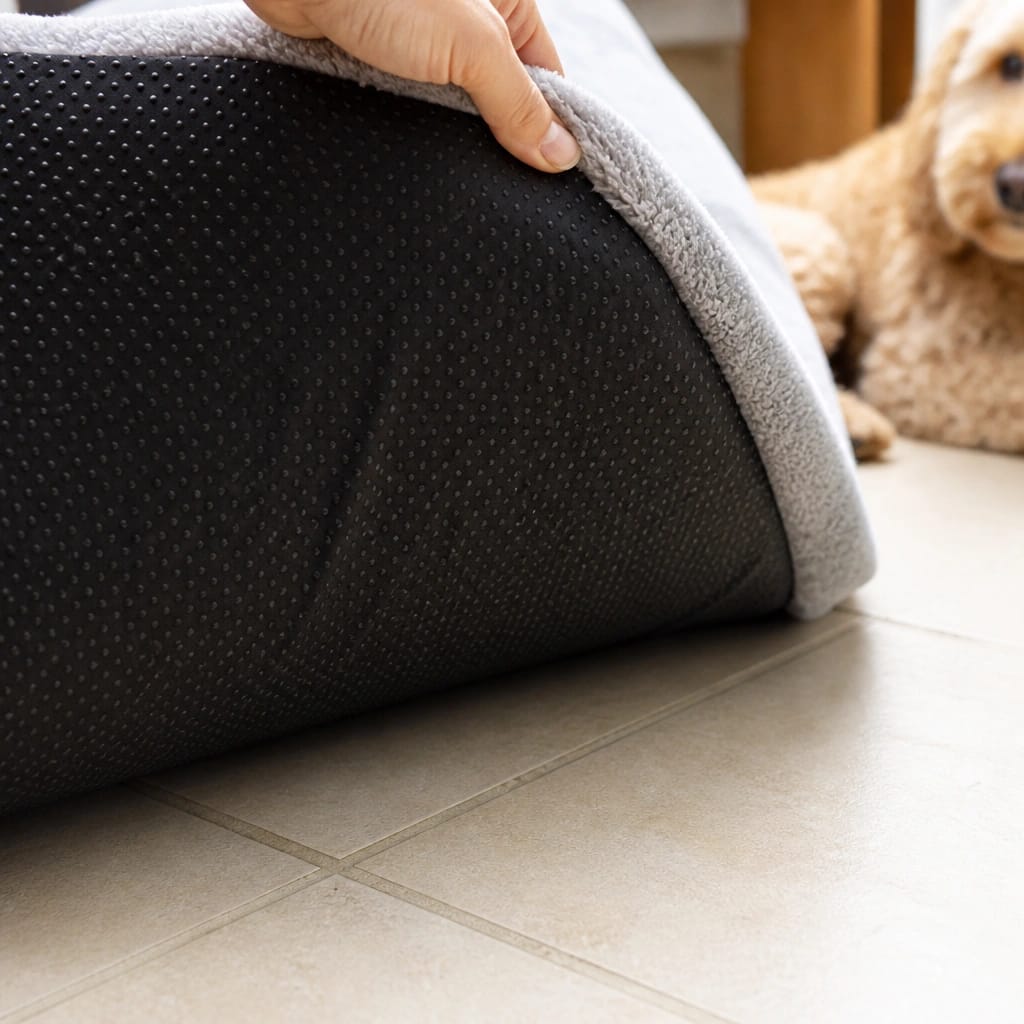
Avoid beds with a smooth polyester or nylon bottom. They slide on tile and can cause your dog to slip when getting on or off. Some beds come with a separate non-slip mat that you place underneath.
That’s a good option if you already have a bed you love.
Check the size of the grip area. A small patch of rubber in the center isn’t enough. The entire bottom should have grip coverage.
You can also add a rug pad or yoga mat under the bed for extra traction. For more on durable cover materials durable cover materials, see our guide on cover options. Always follow veterinary safety guidelines veterinary safety guidelines when choosing a bed for a dog with mobility issues.
Memory Foam, Cot, or Mat — Which Base Works Best on Tile?
Each bed type has strengths and weaknesses on tile floors. Here’s how they compare.

| Bed Type | Best For | Tile-Specific Drawback |
|---|---|---|
| Memory Foam | Joint support, insulation | Can harden in cold; needs non-slip bottom |
| Elevated Cot | Cooling, easy cleaning | Less insulation; can tip on slippery tile |
| Flat Mat | Portability, low cost | Thin cushioning; slides easily |
Memory foam beds are the top choice for most dogs on tile. They provide insulation from cold floors and support for joints. Just make sure the foam is rated for colder temperatures and the bottom has grip.
Couch-style beds couch-style beds offer similar benefits with added security.
Elevated cots are great for dogs that overheat. They allow air to circulate under the bed. But they can slide on tile if the legs don’t have rubber caps.
Look for a cot with non-slip feet. These work well for indoor and outdoor use indoor and outdoor use.
Flat mats are the simplest option. They’re easy to move and wash. But they offer little cushioning or insulation.
Use them only for healthy dogs that don’t need joint support. They work well as crate pad options crate pad options for short-term use.
Cooling vs. Insulating Beds for Tile Floors
Tile floors change temperature with the seasons. Your choice depends on your climate and your dog’s needs.
Insulating beds use thick foam or plush fill to trap body heat. They’re best for cold weather, short-haired breeds, and dogs that sleep curled up. A bed with a high loft and bolsters holds warmth better than a flat mat.
Cooling beds work by reflecting heat or allowing airflow. Elevated cots are the simplest option. Gel cooling mats absorb heat from your dog’s body.
They’re ideal for thick-coated breeds and summer months. Some dogs like to burrow for warmth even in warm weather, so watch their behavior.
If you live in a climate with big temperature swings, consider a two-bed system. Use an insulated bed in winter and a cot in summer. This is especially important for breeds that need temperature regulation.
Common Mistakes That Ruin a Dog Bed on Tile
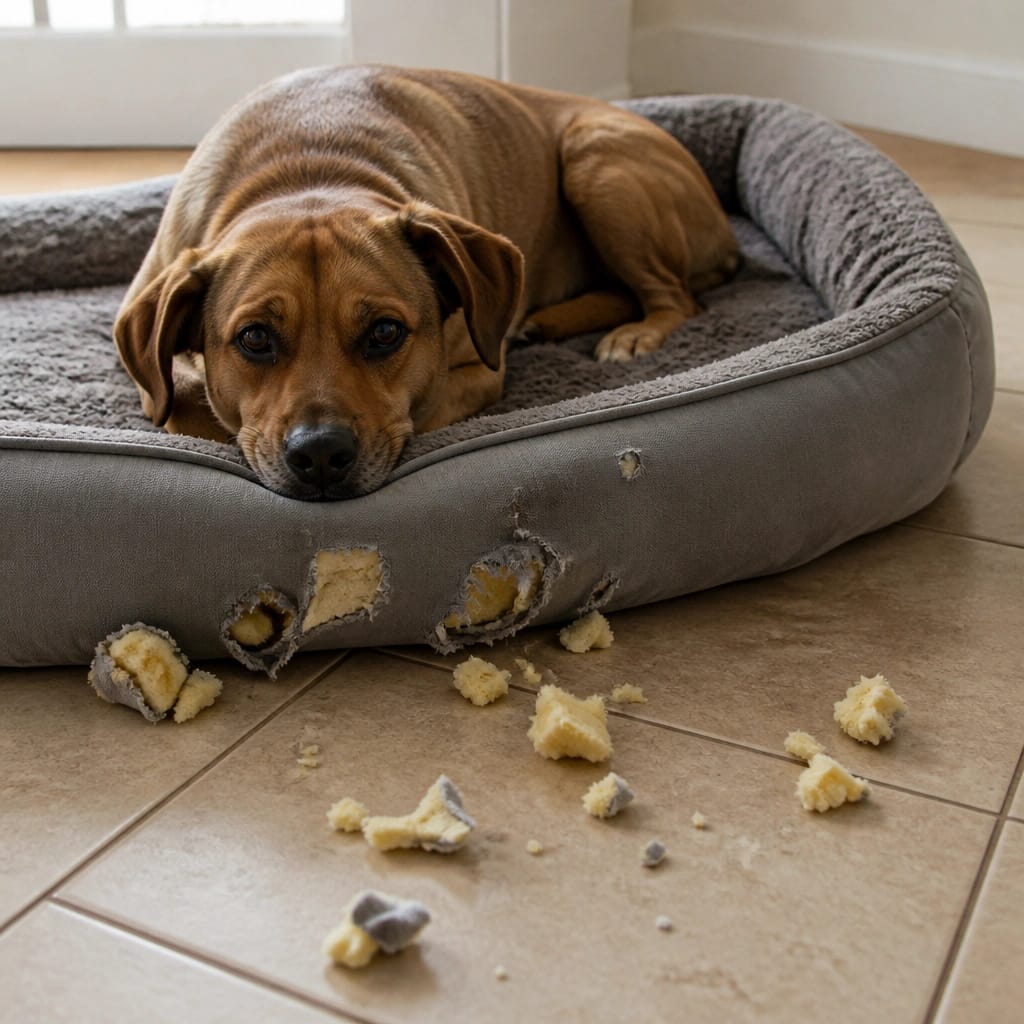
The biggest mistake is ignoring the bed’s bottom. A smooth fabric bottom slides on tile. Your dog slips getting on and off.
The bed ends up in a corner instead of where you want it.
Another mistake is buying a bed that’s too thin. A 2 inch mat on tile offers almost no cushioning. Your dog’s joints take the full impact.
For large breeds, aim for at least 4 inches of foam.
Skipping the waterproof liner is a third mistake. Tile floors don’t absorb moisture. If your dog has an accident, liquid pools on the tile and soaks into the bed.
A waterproof liner saves you from cleaning the floor repeatedly.
Finally, placing the bed directly against a cold wall makes it colder. Leave a gap for air circulation. This prevents mold and keeps the bed warmer.
Keeping the Bed Clean and the Floor Protected
Tile floors are easy to clean. Your dog’s bed should be too. Look for a removable cover that’s machine washable.
Wash it every two to four weeks.
The floor under the bed collects dust and hair. Slide the bed out and sweep underneath weekly. This prevents dirt from grinding into the tile and scratching it.
For dogs with incontinence, use a waterproof bed liner. It protects the foam core from urine. If the foam gets wet, remove the cover and let the foam air dry completely.
Direct sunlight helps kill bacteria. For stubborn smells, here’s how to handle urine odors in memory foam.
Rotate the foam core every few months. This prevents flat spots and extends the bed’s life. On tile, uneven wear happens faster because the hard surface doesn’t give.
Frequently Asked Questions
Will a dog bed with a non-slip bottom damage my tile floor?
No. Rubber or silicone grip bottoms are designed to grip without scratching. They won’t leave marks or residue.
Just make sure the backing is clean and dry before placing it down.
Can I use a regular rug under my dog’s bed instead of a non-slip bed?
Yes, but it’s not ideal. A rug can shift under the bed. A non-slip rug pad underneath helps.
A dedicated non-slip bed is safer and more stable.
How do I stop my dog’s bed from sliding on tile?
Choose a bed with a full rubber backing. If your current bed slides, add a non-slip rug pad underneath. Yoga mats cut to size also work well.
Is memory foam good for tile floors?
Yes, memory foam is excellent for tile floors. It provides insulation from cold and supports joints. Just make sure the foam is thick enough and the bed has a non-slip bottom.
Should I get a heated bed for my dog on tile floors?
Only if your dog struggles to stay warm. Heated beds help with arthritis and short coats. They must have safety features like auto shut-off and chew-resistant cords.
How often should I replace a dog bed on tile?
Every one to three years. Foam loses its support over time. If you see flat spots or your dog seems uncomfortable, replace it sooner.
Your Next Step: Choosing the Right Bed for Your Dog
Start with the floor. Then look at your dog. A senior dog with arthritis needs thick memory foam and a non-slip bottom.
A puppy that chews needs a durable cover and waterproof liner. A thick-coated dog stays cooler on an elevated cot.
Measure your dog’s length from nose to tail. Add a few inches for comfort. Check the bed’s bottom for grip.
Make sure the cover comes off for washing.
Tile floors don’t have to be a problem. The right bed keeps your dog safe, warm, and comfortable. Your dog will thank you by sleeping soundly instead of sliding around.


