

How to Wash a Dog Bed Cover Without Shrinking It
Wash the cover in cold water on a gentle cycle. Use a mild detergent without bleach or fabric softener. Dry on low heat or air dry.
Never use hot water or high heat. Check the care tag before every wash.
Knowing how to wash a dog bed cover without shrinking it is one of those things you don’t think about until you pull a shrunken, misshapen cover out of the dryer. Then you’re stuck with a cover that won’t fit the foam or a bed your dog won’t use. The good news is that shrinkage is almost always preventable once you understand what causes it.
Per FTC Care Labeling Rule standards, manufacturers are required to list safe washing instructions on the tag. Most covers are tested for shrinkage at specific temperatures and drying methods. Ignoring that tag is the number one reason covers shrink.
Let’s walk through what actually happens to the fabric and how to keep it fitting perfectly.
The Real Risk of Shrinking Your Dog Bed Cover
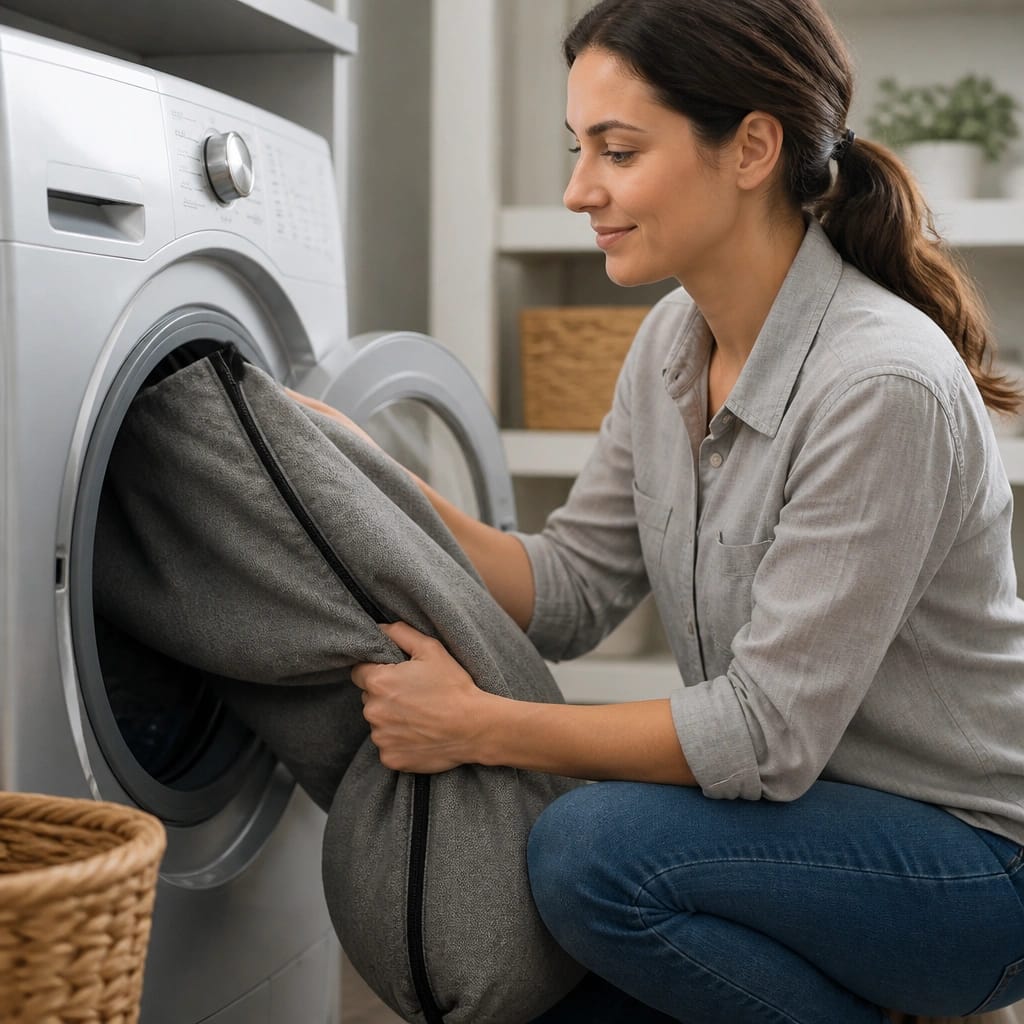
Shrinkage isn’t just a cosmetic problem. When a cover shrinks, it puts stress on the zipper and seams. It can also compress the foam insert, making the bed less comfortable for your dog.
A cover that’s too tight won’t come off easily for the next wash, which means you’ll be fighting with it every time.
Cotton covers are the most likely to shrink. Untreated cotton can contract by 5 to 10 percent in the first wash. Polyester and microfiber blends are much more stable, typically shrinking less than 2 percent.
The table below shows the typical shrinkage range for common cover fabrics:
| Fabric Type | Typical Shrinkage (First Wash) | Heat Sensitivity |
|---|---|---|
| Cotton (untreated) | 5–10% | High |
| Pre-shrunk cotton | 0–3% | Moderate |
| Polyester | 0–2% | Low |
| Microfiber | 0–2% | Low |
| Cotton-polyester blend | 1–5% | Moderate |
| Waterproof (PU-coated) | 1–3% | Low (coating sensitive) |
A cover that shrinks even 5 percent can be a struggle to zip back over the foam. If you’ve ever dealt with a poorly fitted cover, you know how frustrating it can be. That’s why the wash routine matters so much.
What Makes a Cover Shrink (and What Doesn’t)
Shrinkage happens when heat and moisture cause the fibers to contract. Two things trigger it: water temperature and dryer heat. Agitation plays a smaller role, but it can contribute if the cycle is too aggressive.
Hot water above 40°C (104°F) is the biggest culprit for cotton fibers. The heat relaxes the fiber structure, then the cooling and drying lock it into a tighter configuration. The same thing happens in the dryer when temperatures exceed 60°C (140°F).
Here’s what doesn’t cause shrinkage:
- Cold water (below 30°C / 86°F), safe for all fabrics
- Gentle machine agitation, no fiber relaxation
- Air drying, no heat to contract the fibers
- Vinegar rinses, doesn’t affect fiber structure
The key takeaway is simple: keep the heat low at every stage. Water temperature is step one, and drying is step two. Most people mess up the drying step, which is why we’ll spend extra time on it later.
Step-by-Step: How to Wash a Dog Bed Cover Without Shrinking It
Follow these steps in order. Skip one, and you risk damaging the cover or the foam insert.
Step 1: Read the Care Tag First
The care tag is your starting point. It tells you the maximum water temperature, the recommended cycle, and the drying method. Some covers are labeled “machine wash cold” and “tumble dry low.” Others say “line dry only.” Follow the tag exactly.

If the tag is missing or worn out, assume cold water and low heat. That’s the safest default for any fabric.
Step 2: Remove the Filling and Zip It Up
Take the foam insert or filling out of the cover before washing. Machine washing a cover with the foam inside can damage the foam and throw off the washer’s balance. Once the foam is out, zip the cover all the way closed.
This prevents the zipper from snagging on other items or the agitator.
Step 3: Turn the Cover Inside Out
Turning the cover inside out protects the outer surface. It also helps the zipper stay secure and reduces wear on the fabric. If your cover has a waterproof backing, this step is even more important.
It keeps the coating from rubbing against the drum.
Step 4: Choose the Right Water Temperature
Cold water is the safest choice for every fabric type. Warm water (30, 40°C / 86, 104°F) is okay for cotton covers that are pre-shrunk, but never use hot water. Hot water is the fastest way to shrink a cotton cover.
| Water Temperature | Safe For | Risk of Shrinkage |
|---|---|---|
| Cold (below 30°C / 86°F) | All fabrics | None |
| Warm (30–40°C / 86–104°F) | Pre-shrunk cotton, polyester | Low |
| Hot (above 40°C / 104°F) | No cover | High |
Step 5: Pick the Right Cycle and Detergent
Use the gentle or delicate cycle. This reduces agitation, which helps prevent fiber stress. For detergent, choose a mild liquid detergent without bleach or fabric softener.
Fabric softener can damage waterproof coatings and reduce the fabric’s breathability. A small amount of white vinegar in the rinse cycle can help remove odors without harming the fabric.
Step 6: Dry the Cover the Safe Way
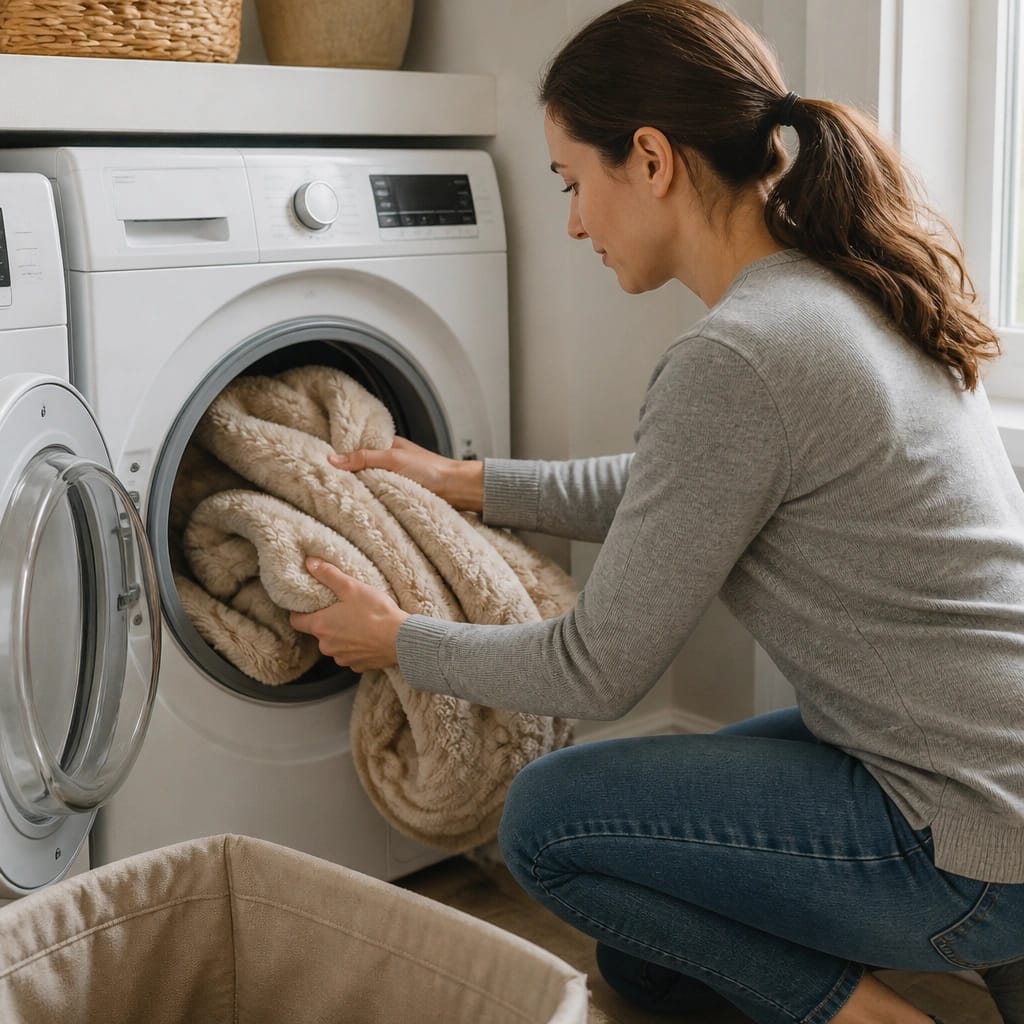
Drying is where most shrinkage happens. The safest option is to air dry the cover flat or on a line. If you use a dryer, set it to low heat or air fluff.
Never use medium or high heat. Check the cover halfway through the cycle and pull it out while it’s still slightly damp. Reshape it by hand and let it finish air drying.
This gives you full control over the final fit.
Common Mistakes That Ruin Covers (Even When You’re Careful)
Even experienced owners make these mistakes. Here are the most common ones to avoid.

Using hot water “to sanitize.” Hot water kills bacteria, but it also shrinks cotton covers. Use cold water with an enzyme-based laundry sanitizer instead. It’s just as effective and won’t damage the fabric.
Leaving the cover in the dryer too long. Overdrying is a guaranteed way to shrink a cover. Always remove it while it’s still slightly damp and let it finish air drying.
Using fabric softener. Fabric softener coats the fibers and can break down waterproof layers. It also reduces the fabric’s ability to wick moisture. Skip it entirely.
Washing the cover with the foam inside. This is a common mistake. The foam can absorb water, develop mold, and lose its shape. Always remove the foam before washing.
Overloading the washer. A single dog bed cover should be washed alone or with a few small items. Overloading prevents proper cleaning and increases friction, which can cause pilling and wear.
How to Handle Special Fabrics: Cotton, Waterproof, and Fleece

Different fabrics need slightly different care. Here’s what to know for the three most common types.
Cotton covers are the most prone to shrinkage. Always wash them in cold water and dry on low heat or air dry. If the cover is 100 percent cotton and not pre-shrunk, expect up to 10 percent shrinkage in the first wash.
You can minimize this by washing in cold water and removing the cover from the dryer while it’s still damp.
Waterproof covers (with a PU coating) need extra care. Never use fabric softener, bleach, or high heat. The coating can delaminate or peel if exposed to temperatures above 60°C (140°F).
Wash in cold water on a gentle cycle and air dry. If you use a dryer, use the no-heat air fluff setting.
Fleece and sherpa covers are generally more forgiving. They resist shrinkage well, but they can pill or mat if washed too aggressively. Wash in cold water on a gentle cycle and dry on low heat.
Avoid fabric softener, which can reduce the softness of the fleece over time.
If you’re dealing with a cover that’s already shrunken, don’t panic. Sometimes you can stretch it back into shape while it’s damp. Lay it flat, gently pull it to the original dimensions, and let it air dry.
It won’t always work, but it’s worth a try before replacing the cover.
What to Do If the Cover Already Shrank
Don’t toss it yet. Sometimes you can recover a shrunken cover while it’s still damp.
Lay the cover flat on a towel. Gently pull it back to its original dimensions. Focus on the corners and edges.
Let it air dry completely in that stretched position. This works best with cotton covers that haven’t been overdried.
If the cover is already dry and stiff, rewash it in cold water. Then stretch and reshape it before air drying. For a heavily shrunken cover, replacement is the only real fix.
To avoid this next time, check your washing routine.
FAQs About Washing Dog Bed Covers
Can I wash a dog bed cover with other laundry?
Yes, but keep the load small. Wash the cover alone or with a few towels. Overloading increases friction and can cause pilling.
How often should I wash my dog’s bed cover?
Every one to two weeks for most households. Wash more often if your dog has allergies, spends time outdoors, or has accidents.
Is it safe to use bleach on a dog bed cover?
No. Bleach weakens fibers and damages waterproof coatings. Use an enzyme-based stain remover instead for tough stains.
Can I put a dog bed cover in the dryer on high heat?
No. High heat is the fastest way to shrink a cotton cover. Always use low heat or air dry.
What if my dog bed cover has a waterproof layer?
Wash it in cold water on a gentle cycle. Never use fabric softener. Air dry or use the no-heat air fluff setting.
High heat can peel the coating.
Will washing shrink a memory foam dog bed cover?
Only if the cover is cotton or cotton blend. Memory foam covers are often polyester or microfiber, which resist shrinkage. Check the care tag to be sure.
The Bottom Line: One Wash Routine That Always Works
Here’s the routine you can use for any cover, every time.
Cold water, gentle cycle, mild detergent. Remove the foam first. Zip the cover closed and turn it inside out.
Dry on low heat or air dry. Take it out while it’s slightly damp and reshape it.
That’s it. No guesswork, no ruined covers as of 2026. If you’re choosing a new bed, look for covers with a pre-shrunk cotton or polyester blend.
They’re easier to care for and last longer. And if you’re dealing with lingering odors, a proper wash routine keeps the whole bed fresh for your dog.


