

How to Transition From Puppy Bedding to an Adult Dog Bed
Transition when your puppy no longer fits comfortably. Look for limbs hanging off the bed. Notice if they curl up tighter than before.
Measure your dog’s length and add 12 to 18 inches. That’s your target bed size.
Wondering when it’s time to transition from puppy bedding to an adult dog bed? You’re not alone. Most puppy owners hit this moment somewhere between eight and eighteen months, and the timing depends heavily on your dog’s breed and growth rate.
A Labrador retriever, for example, can triple in size within its first year, while a Chihuahua may reach adult size by six months. That’s why understanding your dog’s specific growth pattern matters more than following a generic timeline. Let’s walk through the signs that tell you it’s time to size up.

When to Make the Switch (Signs Your Puppy Has Outgrown Their Bed)
Most puppies outgrow their first bed faster than owners expect. The clearest sign is a physical mismatch. If your dog’s legs hang off the edge when they stretch out, the bed is too small.
If they curl into a tight ball when they used to stretch, they’re trying to fit.
Watch for behavior changes too. A dog that suddenly starts sleeping on the floor instead of their bed may be telling you the bed feels cramped. Some puppies start chewing or digging at the edges of a bed that’s too snug.
Others avoid it entirely.
If your dog is a large breed, check their growth against breed standards. A Great Dane puppy can outgrow a medium bed by four months. A small breed like a French Bulldog might stay in their puppy bed until twelve months without issue.
The right time also depends on the bed’s construction. A thin crate pad wears out faster than a thicker foam bed. If the padding has flattened or the seams are splitting, that’s another signal to move on.
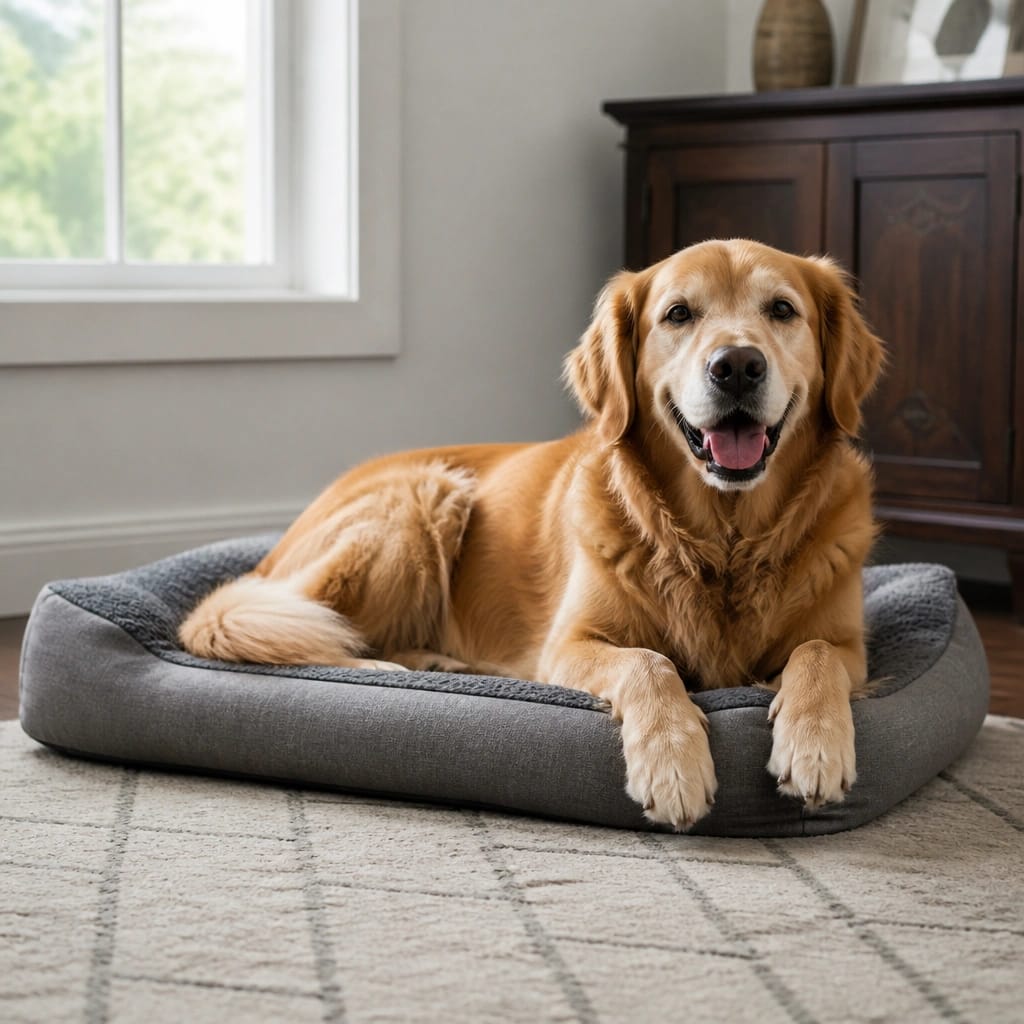
How to Choose the Right Adult Bed Size for Your Dog
Getting the size right is the most important part of this transition. An adult bed that’s too large won’t feel secure. One that’s too small will be uncomfortable again in a few months.
Measuring Your Dog for a Bed
Measure your dog while they sleep in their natural position. If they stretch out, measure from the tip of the nose to the base of the tail. If they curl up, measure the widest point of their curled body.
Add 12 to 18 inches to that measurement. That’s the minimum bed length you need. For a dog that stretches out fully, aim closer to 18 inches extra.
For a curler, 12 inches is usually enough.
If you’re unsure between two sizes, go with the larger option. A bed that’s slightly too big is better than one that’s too small. Your dog can learn to love extra space.
Using Breed Size and Growth Rate as a Guide
Breed size categories give you a useful starting point. The American Kennel Club groups dogs by size, and those categories correlate with bed dimensions.
Small breeds (under 20 pounds) usually need a bed around 24 by 18 inches. Medium breeds (20 to 50 pounds) need 30 by 20 inches. Large breeds (50 to 90 pounds) need 36 by 27 inches.
Giant breeds (over 90 pounds) need 48 by 36 inches or larger.
If you have a mixed breed, estimate based on their current weight and projected adult weight. Your vet can help predict final size. The difference between a puppy bed and an adult bed is often more than just inches, the support changes too.
What Type of Adult Bed Suits Your Dog’s Sleeping Style
Your dog’s sleeping position determines which bed shape and fill will work best. Matching the bed to the way they sleep makes the transition much smoother.

Curlers vs. Stretchers vs. Leaners
Curlers, dogs that sleep in a tight ball, do best with a donut or bolster bed. The raised edges provide a headrest and a sense of security. This shape mimics the den-like feeling of a crate.
Stretchers, dogs that sprawl out on their side or belly, need a flat, open bed. A flat mattress or a low-profile bolster bed works well. These dogs need plenty of uninterrupted surface area.
Leaners, dogs that sleep against a wall or furniture, benefit from a bolster bed with a sturdy rim. The bolster gives them something to lean against, which reduces anxiety.
Soft Bed vs. Orthopedic Bed vs. Bolster Bed
Soft beds are fine for small breeds under 25 pounds. They’re lightweight and easy to wash. But they don’t offer much support for larger dogs.
Orthopedic beds use memory foam or high-density foam. They’re ideal for large breeds, dogs with joint issues, and any dog over 40 pounds. The foam supports joints and helps prevent pressure points.
Bolster beds combine a flat base with raised sides. They’re versatile and suit most sleeping styles. The bolsters provide head support and a sense of enclosure.
If your dog is a chewer, look for chew-resistant materials. Some dogs go through a destructive phase around adolescence. A bed with reinforced seams and heavy-duty fabric can survive that stage.
Step-by-Step Transition Process
The transition should happen gradually, not overnight. A sudden change can confuse or stress your dog.
Step 1: Introduce the new bed without removing the old one. Place the adult bed next to the puppy bed in the same room. Let your dog explore it on their own terms. Drop treats or a favorite toy on the new bed.
Step 2: Layer familiar scents and toys. Rub a blanket or towel that smells like your dog over the new bed. Place their usual toys or a worn piece of your clothing on it. Familiar scents help the bed feel safe.
Step 3: Gradually phase out the puppy bedding. After a few days, move the puppy bed a few feet away. Encourage your dog to use the adult bed by rewarding them when they lie on it. Over the next week or two, move the puppy bed farther away until it’s removed entirely.
Step 4: Monitor for refusal or anxiety. If your dog avoids the adult bed, go back one step. Try adding a familiar blanket or placing the bed in a different location. Some dogs need a longer adjustment period.
If your dog shows signs of stress, excessive panting, whining, or avoiding the area, slow down. The transition isn’t a race. It’s better to take two weeks than to force a change that creates anxiety.
Common Mistakes Owners Make During the Transition

The biggest mistake is moving too fast. Ripping away the old bed and replacing it with a new one can confuse your dog. They may not understand why their comfortable spot is gone.
Another common error is buying a bed that’s too large. A giant bed in a small crate leaves no room for movement. A bed that’s too big for a corner of the living room can feel exposed and unsafe.
Skipping the measurement step is a frequent oversight. Owners guess the size based on their dog’s age rather than their actual body length. That leads to returns and wasted money.
Ignoring the sleeping position is another mistake. A flat bed for a dog that likes to curl up won’t provide the security they need. A bolster bed for a dog that stretches out will feel cramped.
Finally, some owners forget to clean the old bed before storing it. Residual urine or dirt can encourage inappropriate elimination on the new bed. Wash the old bed thoroughly if you plan to keep it as a backup.
Special Situations
Some transition scenarios need a slightly different approach. Here’s how to handle them.
Transitioning a large breed puppy. Large and giant breeds grow fast. A Labrador can outgrow a small bed by four months. Skip the intermediate size if you can.
Go straight to the adult bed size you’ll need at full growth. Use a rolled-up blanket or extra pillows to fill the extra space so your puppy still feels secure. As they grow, remove the fillers gradually.
Transitioning from crate pad to free-roaming bed. If your dog is moving out of the crate at night, place the new adult bed next to the crate first. Let them sleep on the crate pad inside the crate for a few more nights. Then move the adult bed to the spot where you want them to sleep.
Keep the crate nearby at first so they can retreat if they feel anxious.
Transitioning a chewer or destructive dog. Adolescence is a common time for destructive chewing. If your dog chews their bedding, delay the upgrade until they’ve passed this phase. Look for a bed with heavy-duty chew-resistant fabric and reinforced seams.
You can also use a durable crate pad during this phase and upgrade to a softer adult bed later.
Frequently Asked Questions
How do I know when my puppy has outgrown their bed?
Your puppy has outgrown their bed if their limbs hang off the edge when they stretch out. They may curl up tighter than before or start sleeping on the floor instead. For large breeds, check growth against breed standards every few months.
What size adult bed should I buy for my growing puppy?
Measure your dog’s body length from nose to tail base while they sleep stretched out. Add 12 to 18 inches for the minimum bed length. If you’re between sizes, choose the larger option.
For giant breeds, aim for a bed at least 48 inches long.
Can I skip the puppy bed and buy an adult bed right away?
You can, but it’s not ideal for small puppies. A very large bed can feel insecure and unsafe. If you do skip, use rolled-up blankets or pillows to fill the extra space.
Remove them gradually as your puppy grows.
How long does it take for a dog to adjust to a new bed?
Most dogs adjust within a few days to a week. Some anxious dogs may take up to two weeks. Go slowly, use familiar scents and rewards, and never force your dog onto the new bed.
If they refuse, try a different location or bed style.
What should I do if my dog refuses to use the new adult bed?
Go back to the previous step in the transition. Place the puppy bed next to the adult bed again. Add a worn piece of your clothing or a familiar blanket.
If refusal continues, consider whether the bed type or shape matches your dog’s sleeping style.
Quick Decision Guide: Which Bed and When
| Your Dog’s Situation | Recommended Bed Type | When to Switch |
|---|---|---|
| Small breed, fully grown | Soft or orthopedic bed | 6 to 12 months |
| Medium breed, still growing | Orthopedic with bolster | 8 to 14 months |
| Large breed, fast growth | Orthopedic bed, large size | 4 to 8 months |
| Giant breed, rapid growth | Orthopedic bed, extra large | 3 to 6 months |
| Chewer or adolescent | Chew-resistant crate pad | After chewing phase ends |
| Curler or burrower | Donut or hooded bed | Any age |
| Stretcher or leaner | Flat or low-bolster bed | Any age |
The timing depends on your dog’s breed, growth rate, and sleeping habits. Measure regularly. Watch for behavior changes.
And remember that the dog bed size chart by weight gives you a reliable starting point for any breed.


