

Can You Use Baking Soda on a Dog Bed?
Yes, you can use baking soda on a dog bed. It neutralizes odors without harsh chemicals. But you must remove every trace of powder afterward.
Dogs can inhale baking soda dust. Dogs can also ingest it by licking. Use this method carefully and only when needed.
Can you use baking soda on a dog bed? Yes, but you need to follow the right steps to keep your dog safe. Baking soda is a natural deodorizer that neutralizes odors without harsh chemicals.
Many dog owners reach for it as a quick fix between washes.
Per the ASPCA Animal Poison Control, sodium bicarbonate is safe in small amounts but can cause problems in large doses. As of 2026, it remains one of the most common household deodorizers for pet owners. The key is knowing how to use it without putting your dog at risk.
That’s what we’ll cover here.

Why This Question Matters More Than You Think
A dog bed collects more than fur. It traps drool, dander, urine, and oils from your dog’s coat. Over time, these create a musty smell that washing alone doesn’t always fix.
Baking soda seems like the perfect solution. It’s cheap, natural, and available in every grocery store. But the risks are real for your dog’s health.
The key is understanding that baking soda is safe only when used correctly. The wrong method can cause respiratory issues or skin irritation. That’s why this question deserves a careful answer, not a quick yes.
If your dog tends to chew on bed fabric, that’s a separate concern worth knowing about.

How Baking Soda Actually Works on Dog Odors
Baking soda is sodium bicarbonate. It’s a mild alkaline compound that reacts with acidic odors. When it contacts smelly particles, it neutralizes them rather than covering them up.
This is why it works well on pet urine, drool, and sweat. These are all acidic in nature. The baking soda lifts and traps the odor molecules inside its crystal structure.
The process requires direct contact with the source of the smell. That’s why sprinkling it on the surface and letting it sit is important. The longer it sits, the more odors it absorbs.
The Real Risks of Using Baking Soda on a Dog Bed
Inhalation Hazards for Brachycephalic Breeds
Dogs with flat faces, like pugs, bulldogs, and French bulldogs, have short nasal passages. They are more likely to inhale fine powder. Baking soda dust can irritate their airways and cause coughing or sneezing.
For a dog with existing respiratory issues, this can be more serious. Always keep your dog away from the bed while the powder is on it.
The right bed style matters for these breeds. A French bulldog may need a different type of bed.
Skin Irritation and Contact Dermatitis
Baking soda is abrasive. When rubbed into fabric, it can leave a gritty residue. For dogs with sensitive skin or allergies, this can cause redness and irritation.
If your dog has a history of skin problems, avoid this method. Stick to washing the bed cover instead.
Ingestion Dangers and Electrolyte Imbalance
Dogs explore the world with their mouths. If your dog licks the bed after treatment, they ingest baking soda. Small amounts are usually harmless.
Large amounts can disrupt electrolyte balance and cause vomiting.
Per the ASPCA Animal Poison Control, sodium bicarbonate ingestion can be problematic in high doses. Always vacuum thoroughly after treatment.
Residue Trapping and Moisture Problems
Baking soda can settle into seams, zippers, and foam layers. If any moisture gets trapped, the powder can clump. This creates a damp environment where mold and mildew grow.
This is especially risky for memory foam beds. Moisture damage can ruin the bed’s support.
When It’s Safe to Use Baking Soda
Baking soda is safe when you follow these conditions. First, use it only on beds with removable, washable covers. The cover should be machine washable and fully dry before you put it back.
Second, apply a thin layer. A thick pile of powder takes longer to vacuum and leaves more residue. A half cup is enough for a standard large bed.
Third, keep your dog away from the bed during treatment. Wait until you have vacuumed all the powder and aired out the bed.
Fourth, only use this method on dry beds. Wet or damp beds will cause the powder to clump and stick.
When You Should Avoid Baking Soda Entirely
Avoid baking soda on beds with waterproof liners. The powder can get trapped between the liner and the fabric. This creates a sticky mess that is hard to clean.
Do not use it on beds with broken seams or exposed foam. The powder will sink into the foam and become impossible to remove.
Avoid this method for dogs with respiratory conditions, skin allergies, or a history of eating non-food items. If your dog is a chewer, skip the baking soda entirely.
For beds that cannot be fully machine washed, consider other cleaning methods. Enzyme cleaners are a safer alternative.
How to Use Baking Soda on a Dog Bed (Step by Step)

Step 1: Vacuum thoroughly first. Remove all hair, dander, and loose dirt. A clean surface lets the powder reach the fabric.
Step 2: Apply a thin layer. Use about half a cup for a standard large bed. Sprinkle evenly across the surface. Avoid thick piles.
Step 3: Let it sit the right amount of time. Thirty minutes is enough for light odors. Give it two to three hours for stronger smells. Do not leave it overnight if you have a curious dog.
Step 4: Vacuum again until no residue remains. Use a brush attachment. Go over every seam and zipper. Check by running your hand across the fabric.
Step 5: Air out the bed. Leave it in a well-ventilated area for an hour. This removes any remaining fine dust.
Safer Alternatives to Baking Soda

Enzyme-based cleaners are the best option for urine and organic stains. They break down the odor at the molecular level. Spray the bed cover and let it sit before washing.
White vinegar solution works well for general freshening. Mix one part vinegar with three parts water. Lightly mist the cover and let it air dry.
The vinegar smell fades once dry.
Machine washing the cover is the safest method. Use hot water and pet-safe detergent. Make sure the cover is fully dry before putting it back on the bed.
Commercial pet-safe sprays are convenient for quick touch-ups. Look for products labeled as enzyme-based or odor-neutralizing. Avoid sprays with heavy fragrances that can irritate your dog.
Common Mistakes Dog Owners Make
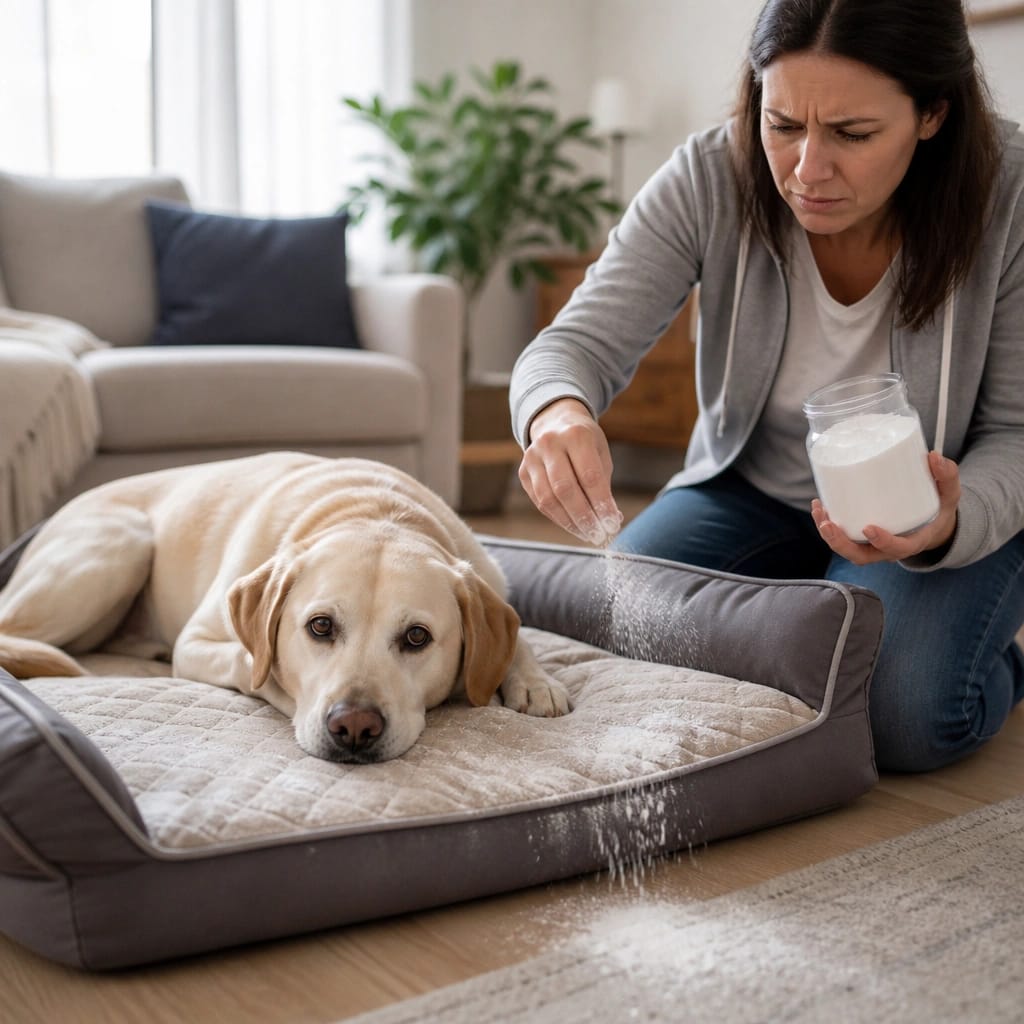
Using too much baking soda is the most common error. A thick layer is harder to vacuum and leaves more residue behind.
Skipping the final vacuum is another big mistake. Even a light dusting of powder can irritate your dog’s skin. Always check with your hand.
Applying baking soda to a wet bed causes clumping. The powder turns into a paste that sticks to the fabric and foam. This can trap moisture and lead to mold.
Forgetting to check the bed’s construction is a problem too. Beds with exposed foam or broken seams will trap powder inside. Stick to beds with intact, removable covers.
How Often Can You Do This?
Use baking soda no more than once a month between washes. More frequent use can dry out fabric fibers and leave buildup.
If your dog’s bed needs deodorizing every week, there is a deeper issue. The bed itself may be holding odors that washing alone cannot fix. In that case, consider replacing the foam or the entire bed.
Regular vacuuming and spot cleaning reduce the need for baking soda. A weekly vacuum keeps dander and hair from settling into the fabric.
What About Waterproof or Memory Foam Beds?
Waterproof beds have a lining that traps moisture between layers. Baking soda can get stuck in this space. It turns into a paste that is nearly impossible to remove.
Avoid using baking soda on waterproof beds entirely.
Memory foam beds are also risky. The foam acts like a sponge. If any moisture reaches the foam, it absorbs the baking soda along with the smell.
The powder can clump inside the foam and ruin its support.
For these beds, use an enzyme cleaner on the cover only. Wash the cover separately and let the foam air out completely.
When to Call the Vet
Call your vet if your dog shows signs of respiratory distress after being near baking soda. Watch for coughing, wheezing, or labored breathing. These symptoms are more serious in brachycephalic breeds.
Contact your vet if your dog vomits after licking the treated bed. Large amounts of baking soda can cause electrolyte imbalances. The ASPCA Animal Poison Control hotline is also available 24/7.
Seek help if your dog develops a rash or skin irritation. Redness, itching, or hair loss may indicate contact dermatitis. Your vet can recommend a soothing treatment.
Frequently Asked Questions
Can baking soda harm my dog?
Yes, if used incorrectly. Inhaling the dust can irritate airways. Ingesting large amounts can cause vomiting and electrolyte imbalance.
Always vacuum thoroughly and keep your dog away during treatment.
How long should I leave baking soda on a dog bed?
Thirty minutes for light odors. Two to three hours for stronger smells. Do not leave it overnight with a curious dog in the house.
Longer is not always better.
Can I use baking soda on a memory foam dog bed?
It is risky. The powder can sink into the foam and clump if any moisture is present. This can ruin the foam’s support.
Stick to washing the cover instead.
What is the best alternative to baking soda for dog beds?
Enzyme-based cleaners are the safest and most effective option. They break down organic odors at the molecular level. Machine washing the cover with hot water is also reliable.
How often should I clean my dog’s bed?
Vacuum the bed weekly. Wash the cover every two to four weeks. Use baking soda only once a month between washes if needed.
More frequent use can dry out fabric fibers.
The Bottom Line
Baking soda can work on a dog bed, but only if you follow the right steps. Apply a thin layer, let it sit, and vacuum every trace of powder. Keep your dog away during the process.
If your dog has a flat face, sensitive skin, or a habit of licking, skip the baking soda. Use an enzyme cleaner or wash the cover instead. A clean bed keeps your dog comfortable and healthy.


