

How Chewing, Scratching and Digging Affect Bed Lifespan
If you’ve ever watched your dog tear into their bed, you’ve probably wondered how chewing, scratching and digging affect bed lifespan. The short answer is that each behavior damages the bed in a different way and at a different speed. Understanding those differences is the first step to making your next bed last longer.
Manufacturer specifications indicate that a standard dog bed cover with 300 denier fabric may show visible wear from scratching within three months, while a 1680 denier ballistic nylon cover can resist chewing for a year or more. That kind of variance is why material choice matters as much as behavior management. Let’s break down what really happens when your dog works over their bed.
Yes, chewing, scratching, and digging all shorten a bed’s lifespan, but at very different rates. Chewing destroys fabric and foam fastest, often ruining a bed in weeks. Scratching causes gradual surface wear that weakens seams over months. Digging stresses the foam core and interior stitching, leading to lumps and sagging. The type of damage determines whether you can repair the bed or need to replace it.
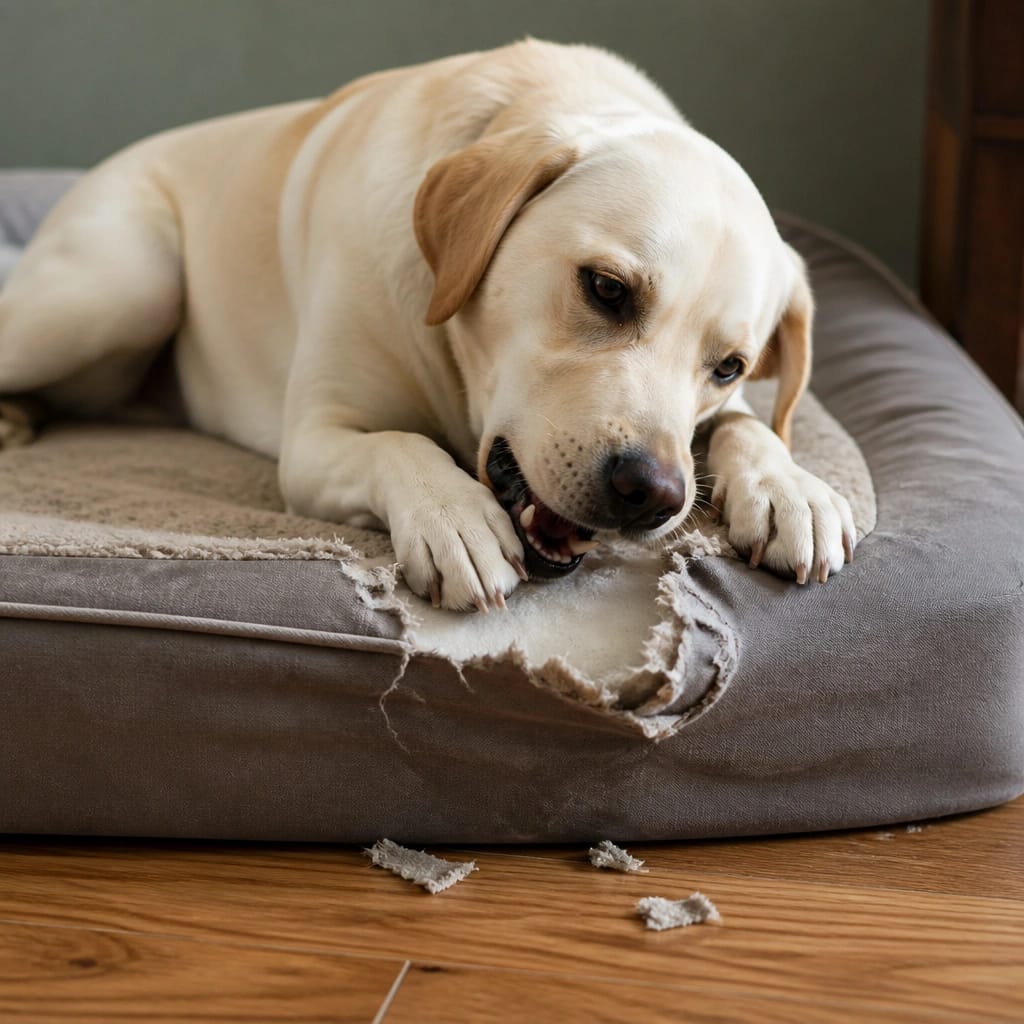
What’s Really Happening When Dogs Chew, Scratch, and Dig on Their Beds
Dogs aren’t trying to wreck your wallet. These behaviors are wired in, nesting instincts, teething relief, anxiety release, or sometimes simple boredom. But the mechanical impact on a bed is real and measurable.
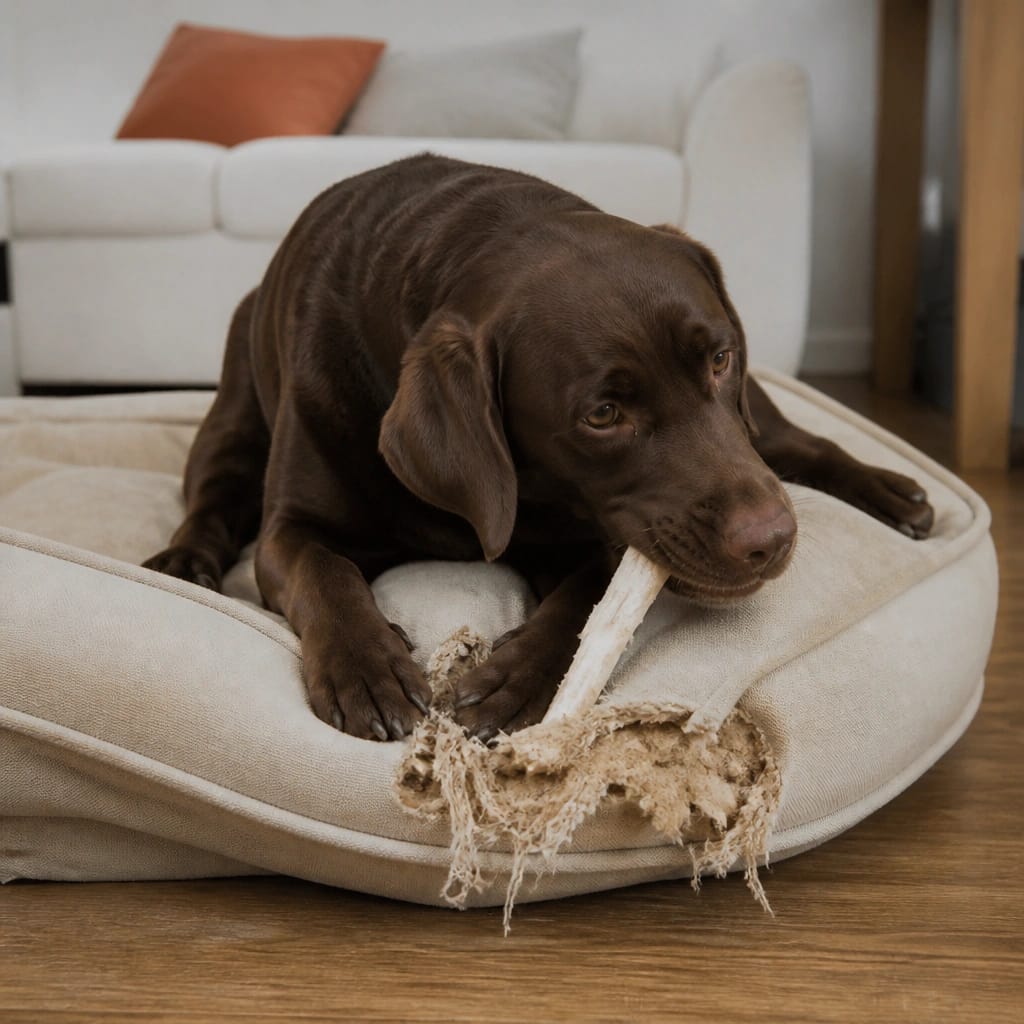
Chewing: The Fastest Way to Destroy a Bed
Chewing targets the weakest points first: corners, zipper edges, and seams. A focused chewer can punch a hole through a standard polyester cover in a single afternoon. Once the fabric is breached, foam or stuffing becomes the next target.
For heavy chewers, we’re talking a two-week to two-month lifespan on a standard bed. Even “chew-resistant” materials aren’t chew-proof, they just buy you time.
Scratching: Surface Wear That Starts Small
Scratching is repetitive friction. Claws snag individual threads, pilling forms, and over time the fabric thins. The damage is cumulative.
A dog that scratches nightly before settling can create visible thinning within six to eight weeks. The real danger: once the weave is compromised, a single enthusiastic scratch can turn a weak spot into a tear.
Digging: The Hidden Structural Threat
Digging looks like nesting, and it is. But those front paws apply repeated pressure to the foam core, accelerating compression. The foam may start to lose its shape and develop permanent divots.
Seams also take stress as the dog pushes fabric side to side. Aggregate reviews report that diggers can reduce the supportive lifespan of an orthopedic foam bed by 30 to 50 percent compared to a dog that just lies down.
For more on why dogs do this, our article on their natural denning instinct covers the full picture.
Which Bed Materials Actually Hold Up — and Which Don’t
Material choice directly dictates how long a bed survives. As of 2026, fabric denier ratings are the standard measure of durability. Here’s how the common options compare.

| Fabric Type | Denier | Typical Lifespan (with scratching) | Best For |
|---|---|---|---|
| Standard polyester | 150–300D | 2–4 months | Light use, low-destruct dogs |
| Cordura nylon | 600–1000D | 6–12 months | Moderate chewers and diggers |
| Ballistic nylon | 1680D | 12–24 months | Heavy chewers, working breeds |
| Canvas duck cloth | 400–600D | 6–9 months | Scratching, but not chewing |
Foam density matters too. High-resilience foam (2.0 lb/ft³ or higher) resists compression from digging much better than budget polyurethane foam (1.0 lb/ft³). If your dog digs heavily, look for a bed with a separate, replaceable foam core and a tough removable cover.
For tailored advice, see our guide on choosing a well-constructed bed for tough dogs.
The Biggest Mistake: Ignoring Small Damage
A loose thread, a tiny puncture, a seam that’s starting to separate. It looks minor. But that small breach invites a dog’s curiosity and teeth.
Once they realize they can pull at something, the damage accelerates exponentially.
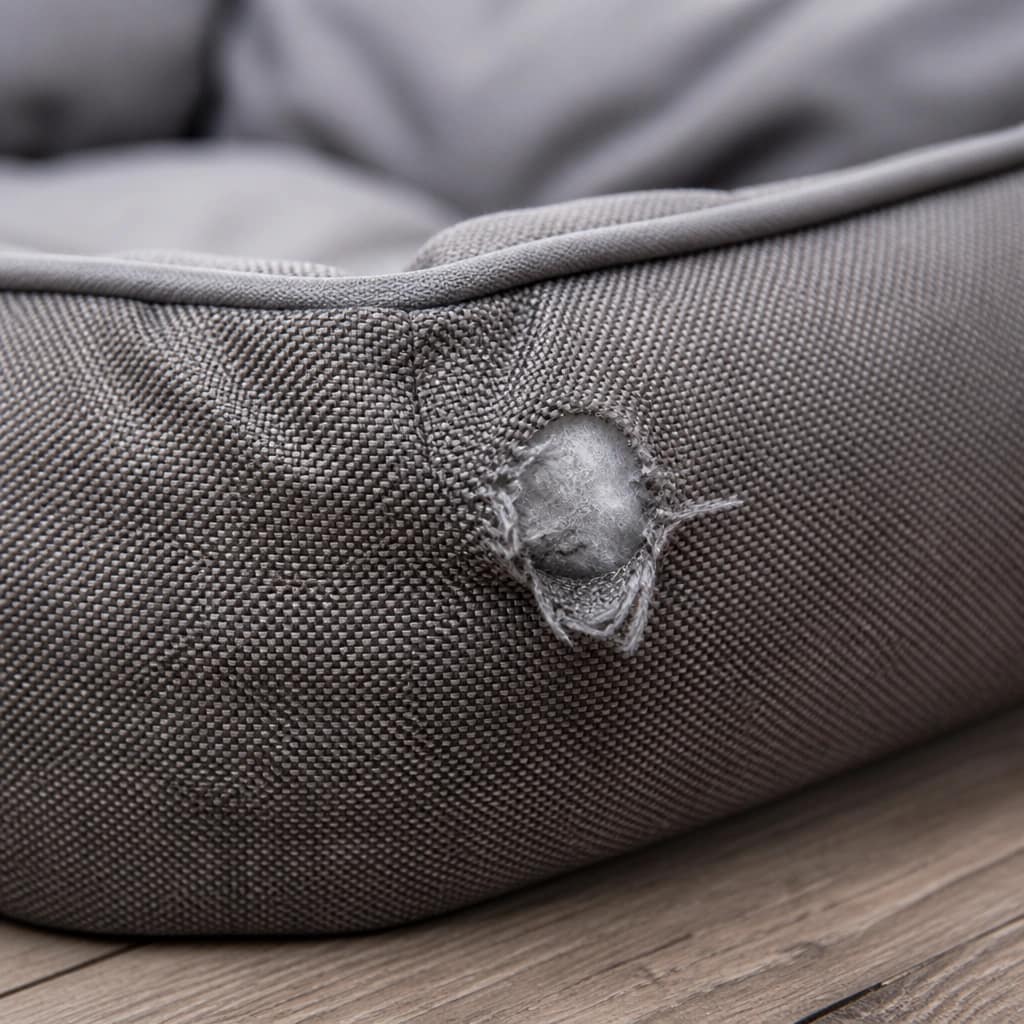
In our research, most bed failures follow this pattern: a week of tiny fraying, then a day of active tearing. Ignore it and you risk your dog ingesting fabric or stuffing, which can cause vomiting or intestinal blockage, a serious veterinary emergency. The American Kennel Club recommends checking your dog’s bedding weekly for any signs of damage and repairing or replacing it immediately.
How to Extend Your Bed’s Lifespan Based on Your Dog’s Behavior

Since each behavior attacks the bed differently, your prevention strategy should match the specific damage pattern.
For Chewers: What to Look For
Choose a bed with ballistic nylon or heavy-duty canvas. Look for double-stitched seams and a zipper that’s recessed or covered by a flap. Some manufacturers offer a chew-proof warranty, that’s a strong signal the material is built for punishment.
Avoid beds with loose tags or decorative stitching that tempt teeth. Also check our article on stopping bed destruction for more training tips.
For Diggers: What to Look For
Digging wears foam and seams. Prioritize a bed with high-density foam (2.5 lb/ft³ or higher) and a removable cover that’s easy to replace. A flat, firm cushion bed often holds up better than a plush donut or pillow style because there’s less fabric to shift around.
If you’re also dealing with a dog that burrows, see our piece on that specific habit.
For Frequent Nail Scratching: What to Look For
Scratching is mainly a fabric threat. Look for tightly woven fabrics like canvas or microfiber that resist snagging. A lower-pile fabric is better than fleece or faux fur, which shred easily under nails.
Keeping your dog’s nails trimmed short reduces the abrasion force significantly, something a lot of owners overlook.
Bed Repair vs. Replacement Decision Guide
Sometimes a damaged bed can be saved. The decision comes down to the type and location of the damage.
| Damage | Can You Repair It? | Action |
|---|---|---|
| Small hole in cover | Yes, if foam is intact | Patch or stitch; replace cover |
| Chewed corner, foam exposed | Maybe | Reinforce with patch; watch for foam damage |
| Foam compressed or torn | No | Replace the entire bed |
| Seam failure along edge | Yes | Restitch; reinforce with webbing |
| Dog has ingested any stuffing | N/A | Immediate vet visit; bed must be replaced |
A general rule: if the foam core is compromised, sagging, lumpy, or torn, the bed has lost its support function and needs to go. Covers are cheap to replace; foam cores and complete beds are not. Buying a bed with a separate replacement cover is one of the smartest moves for a dog that scratches or digs.
For more on sizing and fit when replacing a bed, check our measurement guide.


