What Causes Dog Bed Foam to Collapse?
If your dog’s bed has turned into a flat, sad pancake, you’re not alone. Foam collapse is the most common way dog beds die. So what causes dog bed foam to collapse?
In short, it’s a combination of weight, pressure, moisture, and the foam’s overall quality.
Manufacturer specifications show that density matters. Low-density foam under 1.5 pounds per cubic foot often develops visible indentations within months. As of 2026, many budget beds still hide this spec.
According to the ASTM D3574 standard, compression set is the key test for how well foam recovers after being compressed. Let’s unpack what actually happens inside the foam.
Why Dog Bed Foam Collapses: The Main Causes
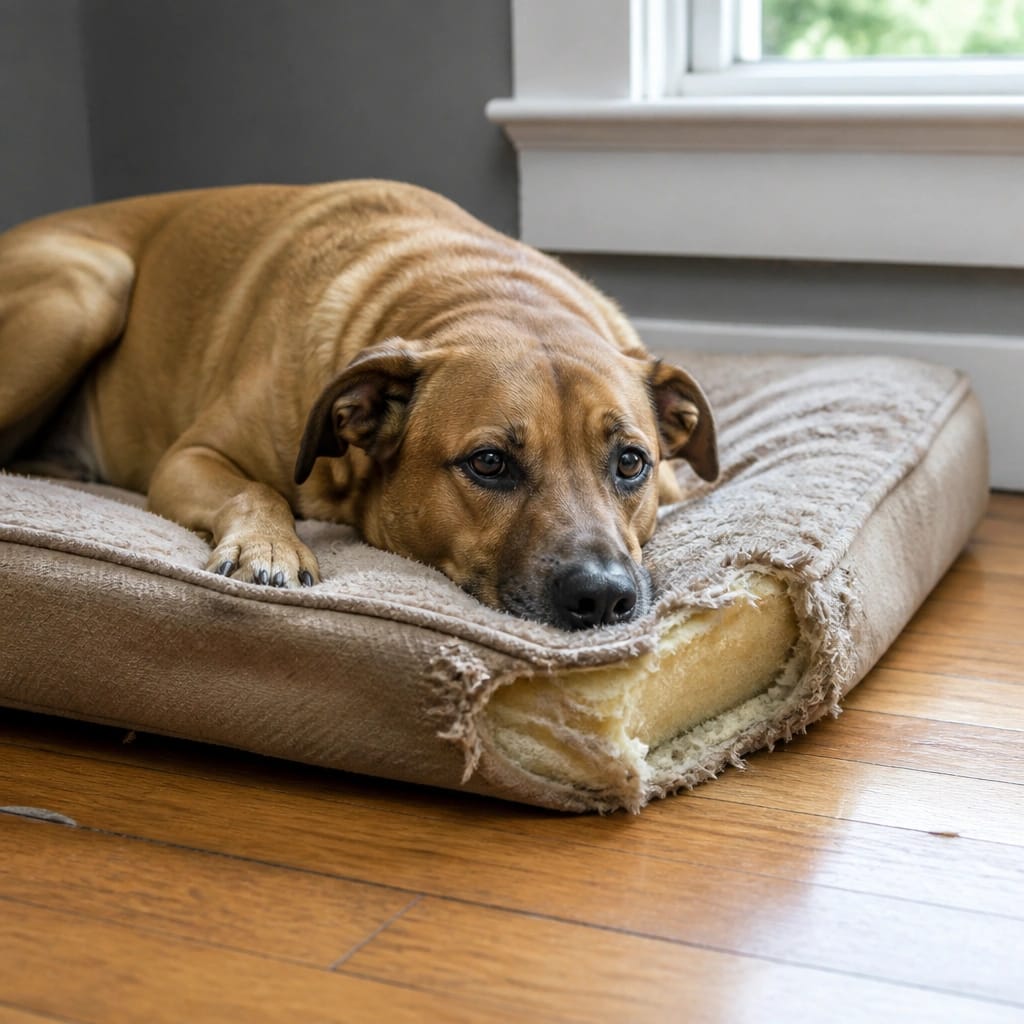
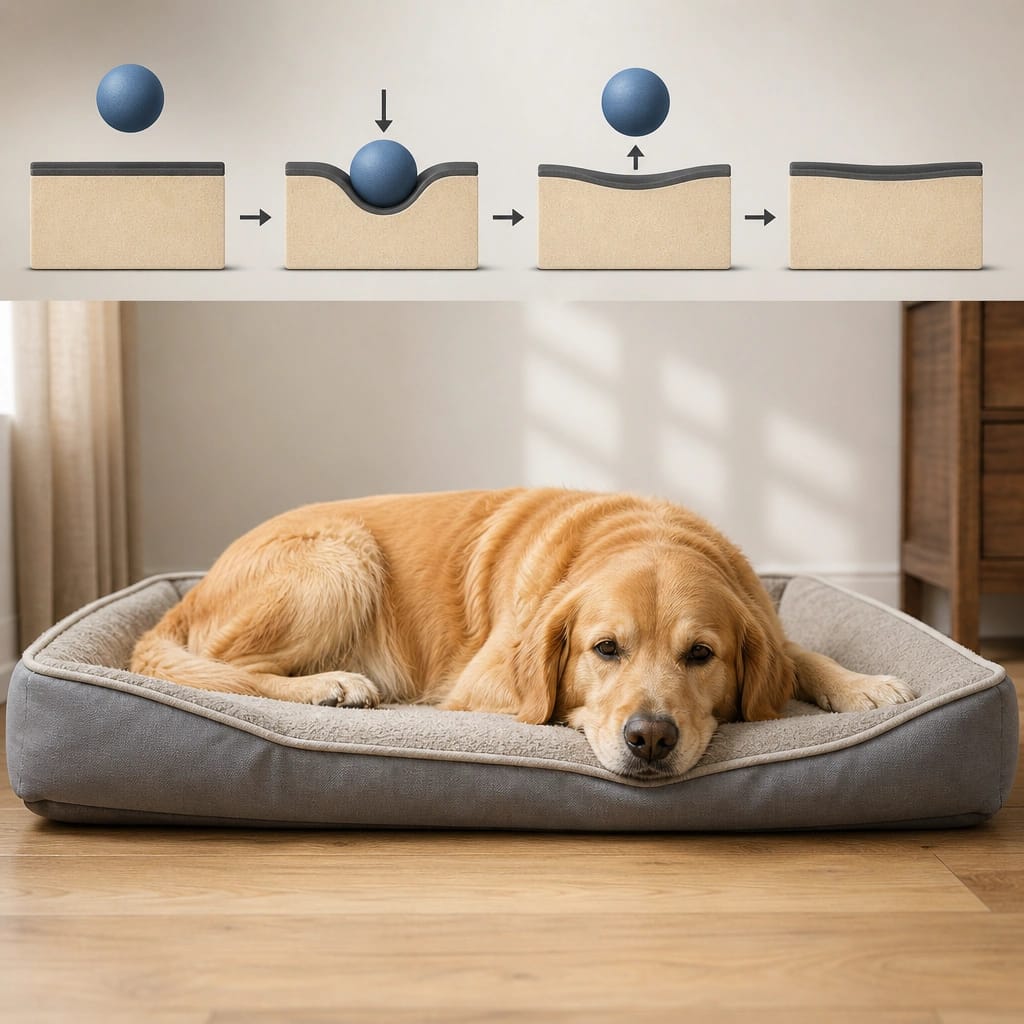
Foam collapse comes down to three things: compression set, low density, and cheap construction. Compression set is the industry term for foam losing its ability to spring back. A dog sleeps in the same spot for 8 to 14 hours each day.
That constant pressure flattens the open cells in the foam, and eventually they stop rebounding.
Density is the hidden culprit. Foam density is measured in pounds per cubic foot. Higher density means more material in the same volume, which translates into better support.
Low-density foam, often around 1.2 to 1.5 lb/ft³, has thin cell walls. They break down quickly under a heavy dog. High-density foam, 2.5 lb/ft³ and up, can last years.
Construction matters too. Many dog beds combine a thin foam slab over loose shredded fill. The shredded pieces shift and clump, leaving zero support in the center.
A bed that starts flat and firm often ends up lumpy and lopsided within weeks.
Is It the Foam or the Dog?
Sometimes the foam is fine. The dog is just too heavy for the bed. If a 40-pound beagle sleeps on a bed for a year without issues, then a 70-pound lab joins the household and the same bed sags in two months, the variable is the dog.
Sleeping position changes pressure distribution. Dogs that curl up spread their weight evenly. Dogs that stretch out on their side concentrate all their mass on the ribs and hips.
Those two pressure points press into the same foam every single night.
Multi-dog households make it worse. Two dogs sharing one bed means double weight and constant repositioning. The foam gets compressed more often and has less time to recover between uses.
Digging and scratching also contribute. If your dog circles and paws at the bed before lying down, those claws focus pressure on tiny areas. Over time, they tear the foam’s internal structure.
This is the same nightly digging ritual that many owners mistake for nesting.
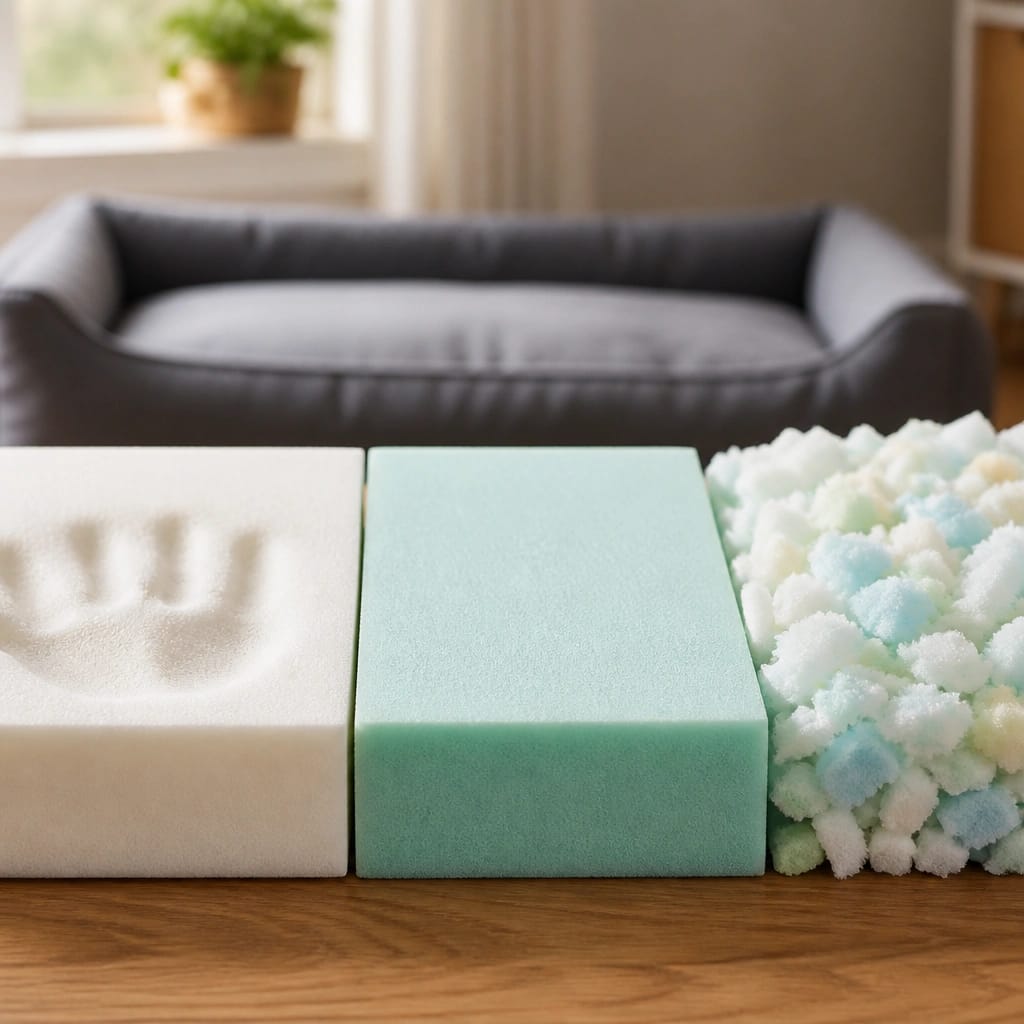
Memory Foam vs. High-Resilience Foam vs. Shredded Foam
Not all foam behaves the same way. The three main types found in dog beds collapse at very different rates.
Memory foam is the slow-rebound foam that molds to the body. It feels luxurious, but it’s easier to compress permanently. If the foam density is below 3 lb/ft³, it will likely develop a permanent hollow where your dog sleeps.
Higher density memory foam lasts longer but costs more.
High-resilience foam, often called HR foam, springs back quickly. It resists permanent indentation far better than memory foam. HR foam is usually the better choice for large, heavy dogs that need support without bottoming out.
Shredded foam is made from chopped-up scraps of polyurethane foam. It looks comfortable, but it lacks structural integrity. The shreds shift, clump, and migrate to the corners.
This is why shredded beds often feel flat in the middle while the edges stay poofy.
| Foam Type | Typical Density | Collapse Resistance | Best For |
|---|---|---|---|
| Memory foam | 2.5–4 lb/ft³ | Moderate | Small dogs that curl up |
| High-resilience foam | 2.0–3.5 lb/ft³ | High | Large and senior dogs |
| Shredded foam | Variable, often low | Low | Budget buyers, short-term use |
In our research, brands that advertise “orthopedic” without listing foam density are usually using low-density polyurethane foam. The real support comes from density and firmness, not the label.
How the Bed’s Construction Affects Foam Life
The foam sits inside a structure, and that structure protects it or destroys it. A removable cover with a good zipper makes washing easier. If the zipper breaks, you can’t remove the cover, and the foam gets exposed to dirt and moisture.
Bolster beds with raised edges often use a different fill in the sides. The edges may be stuffed with shredded foam or polyester fiber, not solid foam. When the dog rests its head or leans against the bolster, that fill compresses quickly.
Many owners blame the main foam when it’s actually the bolsters that collapse first.
The floor underneath the bed matters too. A bed placed directly on hardwood sees more pressure concentrated at the bottom. A carpeted underlayer absorbs some impact.
Also, the bed size should match your dog’s sleeping habits. A dog that sprawls needs more surface area than one that curls. Without enough room, the dog sleeps in one small spot, which accelerates wear.
Check our sizing guide to avoid that mismatch.
Another overlooked factor is the waterproof liner. Many beds say “washable” but the foam itself has no protection. If the cover leaks, moisture hits the foam directly.
Choosing a bed with a waterproof inner liner adds a serious layer of protection.
Moisture: The Hidden Foam Killer
Water and foam don’t mix. Dog saliva, urine, even humidity slowly break down the foam’s chemical structure. Polyurethane foam hydrolyzes when exposed to moisture.
The molecular bonds weaken, and the foam turns crumbly and soft.
Urine is especially damaging. It’s not just the liquid, it’s the enzymes and salts. They break down the foam faster than plain water.
If you see one side of the bed collapsed and feels harder than the rest, urine damage is often the cause.
Washing the foam directly is a common mistake. Some owners pull the foam insert out and throw it into the washing machine. That soaks the foam completely, and it takes days to dry.
In that damp condition, the foam continues to degrade and can develop a sour smell.
The right approach is to wash only the removable cover. If the foam itself gets stained, spot-clean it with a damp cloth and a mild detergent. Let it air dry in a well-ventilated room, away from direct sunlight.
For deep urine stains, we have a full guide on removing urine odors from memory foam. Sunlight helps kill bacteria, but prolonged UV exposure speeds up foam breakdown, so dry it fast and bring it back inside.
Troubleshooting by Collapse Pattern
A sagging middle means low-density foam is giving out under daily pressure. Flattened edges point to weak bolster fill or a dog that sleeps against the rim. Lumps signal shredded foam shifting into clumps.
If the bed never springs back, compression set has already set in.
When to Replace Foam vs. Buying a New Bed
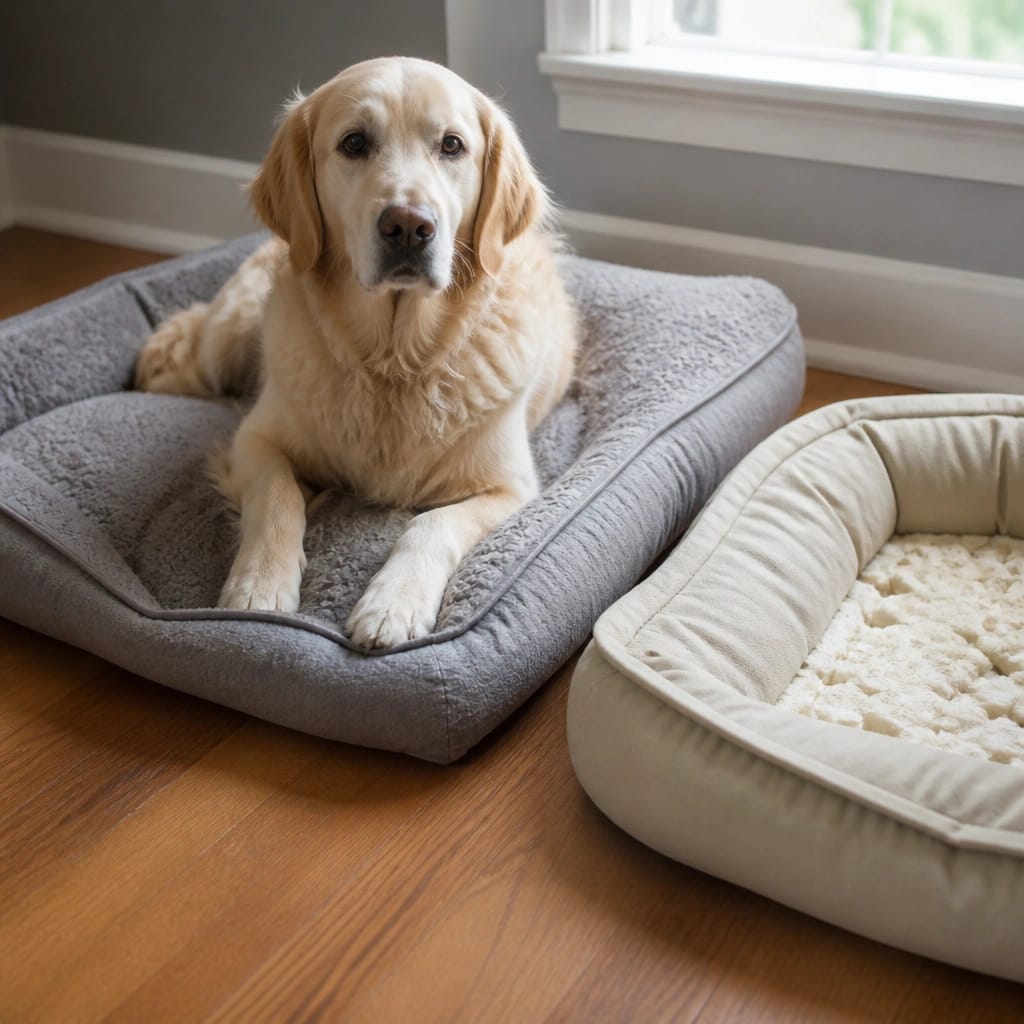
Replace just the foam if the cover is still in good condition and the zipper works. That saves money and keeps a bed your dog already likes. Buy a new bed if the cover is torn, stained, or the base frame is broken.
New foam won’t fix a failing shell.
How to Make Dog Bed Foam Last Longer
Pick high-density foam, around 2.5 lb/ft³ or higher, for dogs over 30 pounds. Use a waterproof liner to keep moisture away from the core. Rotate the bed every couple of weeks so wear spreads evenly.
Redirect digging and scratching early before it tears the foam.
Common Mistakes That Ruin Dog Bed Foam
Buying a bed too small concentrates all the weight into one spot. Washing the foam directly in a machine breaks down its cell structure. Leaving the bed in a damp basement encourages mold growth.
Ignoring destructive chewing habits until the foam is shredded is a costly mistake.
Frequently Asked Questions
Can flattened dog bed foam be restored?
No, once the foam cells break down, they can’t bounce back. A thick topper or blanket adds temporary comfort, but the bed will still feel flat. If it looks like a pancake, the structural support is gone.
Time to replace the insert.
How many years does dog bed foam last?
Low-density foam lasts one to two years with daily use. High-density foam lasts three to five years, depending on the dog’s weight. Press your palm into the foam.
If it doesn’t spring back quickly, it’s finished.
Is memory foam or high-resilience foam better for a heavy dog?
High-resilience foam is better for heavy dogs because it recovers quickly and resists permanent indentations. Memory foam feels softer but compresses more easily under weight. Choose high-resilience foam with a density above 2.0 pounds per cubic foot.
Are there dog bed foam replacement inserts?
Yes, many brands sell replacement inserts separately. You can also buy firm polyurethane foam sheets and cut them to fit your current cover. Check the thickness and density so the bed still offers real support underneath your dog.
Final Decision Guide: Should You Replace the Foam or the Bed?
If the foam is flat but the cover is in good condition, buy a replacement insert. That saves money and keeps a bed your dog already loves. If the cover is torn, the zipper is broken, or the base has lost its shape, a new bed is the smarter move.
For dogs over 30 pounds, choose high-density foam above 2.5 lb/ft³. That typically lasts three to five years with daily use. For diggers and chewers, look for chew-proof covers and waterproof liners to protect the core.
No bed lasts forever. But the right one will save you money, and your dog will get proper support instead of a sagging pancake. Check the foam specs before you buy, and you won’t be shopping for another bed next year.